No Result
View All Result
  • Login
Wednesday, June 3, 2026
theadvisertimes.com
  • Home
  • Business
  • Financial Planning
  • Personal Finance
  • Investing
  • Money
  • Economy
  • Markets
  • Stocks
  • Trading
  • Home
  • Business
  • Financial Planning
  • Personal Finance
  • Investing
  • Money
  • Economy
  • Markets
  • Stocks
  • Trading
No Result
View All Result
theadvisertimes.com
No Result
View All Result
Home Business

Malaria isn’t just a health crisis — it’s an economic imperative

by theadvisertimes.com
7 months ago
in Business
Reading Time: 3 mins read
A A
0
Malaria isn’t just a health crisis — it’s an economic imperative
Share on FacebookShare on TwitterShare on LInkedIn


Most Americans will never experience malaria. That is a privilege. Even though malaria ranks among the most debilitating and deadly diseases globally, few Americans today have encountered it firsthand or know someone who has.

Distance can lull us into thinking malaria is someone else’s problem. But it isn’t. Its ripple effects are felt far beyond individual lives — across economies, markets, and global security. Recent analysis underscores why this matters, and why the United States must remain invested in this fight. 

Today, Africa accounts for roughly 94% of all malaria cases — some 246 million people a year. Malaria’s disruption isn’t just measured in cases or deaths; it’s measured in corporate revenues and GDP drag. More than three quarters of sub-Saharan African businesses say malaria impacts their operations, and nearly 40% call the impact serious. Sick workers miss days or weeks of work, return less productive, and erode company performance. Talent drains away. Healthcare costs spike. Public funds shift from infrastructure and innovation to managing malaria outbreaks. Collectively, malaria costs the continent an estimated US$12 billion in GDP every year.

These losses don’t stay in Africa. They hit American companies, too. U.S. firms have faced lost production, costly evacuations, and elevated insurance and risk premiums. Chevron once reported 1,000 lost workdays annually in Angola due to malaria. BHP Billiton’s operations in Mozambique logged 6,000 malaria cases in just two years, resulting in $2.7 million in costs and 13 fatalities. For multinationals, malaria is more than a health problem, it affects the bottom line.

But here is the good news: U.S. investment in malaria control pays off. From 2010 to 2023, the U.S. contributed US$15.6 billion, about 37% of total global malaria funding. That investment supported GDP gains worth US$90.3 billion in partner countries. That’s a $5.80 return on every $1 spent. Few investment portfolios can match that. Malaria control programs have a strong record of success in ending endemic infection rates in Asia and the Middle East (as well as the U.S., where malaria control sparked the creation of the CDC). And as African economies grow healthier and more dynamic, they unlock new demand, including as much as US$1.5 billion in additional U.S. exports by 2030.

This isn’t charity. It’s smart economics. Africa today represents roughly $3 trillion in combined consumer and business spending. By 2030, Brookings projects that will more than double to $6.7 trillion and exceed $16 trillion by 2050 as Africa’s population doubles. Already one of the largest consumer markets and sources of labor in the world, Africa will be home to one in four people globally by 2050 and will represent the youngest populations globally, making the African market a critical part of American companies’ long-term commercial strategies. Healthier populations are more productive, more stable, and more investable. That’s good for African nations, good for American companies, and good for the global economy. Strong health systems also serve as a first line of defense against pandemics, reducing risk across global supply chains.

The State Department’s new America First Global Health Strategy makes this point explicit, prioritizing market access and urging greater use of U.S.-led corporate and research innovations to tackle global health challenges and achieve the strongest possible outcomes.

The case is clear: U.S. engagement has been good for business, but the work isn’t finished. Pulling back now would risk a resurgence of disease that would weaken America’s health security while undercutting economic opportunities for U.S. companies. 

Malaria is one of humanity’s oldest and deadliest killers, but with sustained U.S. leadership, we can end it for good. That means doing three things, now.

First, lock in predictable financing. Multi-year commitments from donor governments, full replenishments of the Global Fund and Gavi, and new private-sector investment will keep lifesaving programs running and protect decades of progress.

Second, double down on what works. Long-lasting insecticide-treated nets, indoor spraying, testing, treatment, and seasonal prevention have already saved millions of lives. Expanding these proven tools to every community will drive malaria to historic lows.

Third, unleash innovation. The first malaria vaccines mark a turning point, but they’re only the beginning. Better diagnostics, new drugs, spatial repellents, mosquito technologies, and data innovations – many pioneered by American companies – could finish the job.

The path is clear. With strong, sustained U.S. funding and focus, we can save more lives, strengthen economies, and protect global stability — all while advancing American innovation and influence.

Ending malaria isn’t just the right thing to do, it’s one of the savviest investments America can make.

The opinions expressed in Fortune.com commentary pieces are solely the views of their authors and do not necessarily reflect the opinions and beliefs of Fortune.



Source link

Tags: CrisiseconomicHealthImperativeIsntmalaria
ShareTweetShare
Previous Post

Moving at a High Speed toward an Economic Abyss

Next Post

Japan’s Top Banks Team Up to Test Stablecoin Backed by National Regulator

Related Posts

Norms issued to estimate District Domestic Product

Norms issued to estimate District Domestic Product

by theadvisertimes.com
June 3, 2026
0

New Delhi: The statistics ministry on Wednesday released uniform guidelines for estimating district domestic product (DDP), introducing standardised indicators, sector-specific...

Bernie Sanders wants Americans to own a piece of AI. The Trump White House seems to agree

Bernie Sanders wants Americans to own a piece of AI. The Trump White House seems to agree

by theadvisertimes.com
June 3, 2026
0

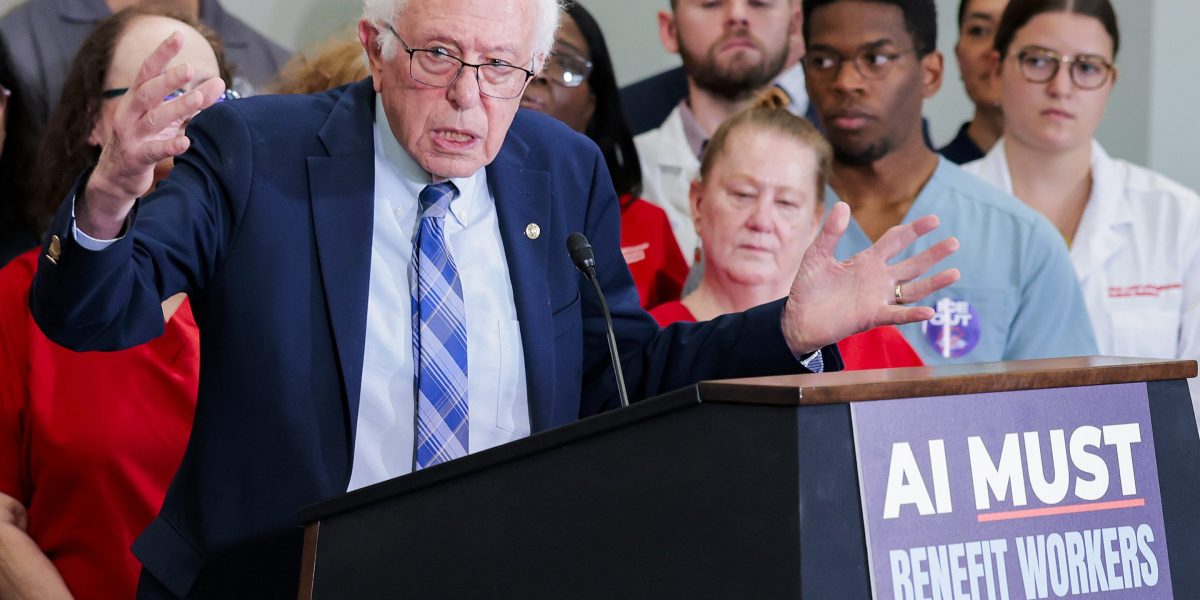
Senator Bernie Sanders wants every American to own a piece of OpenAI, Anthropic, and xAI. Late on Monday, he posted...

69-year-old furniture store chain files for Chapter 11 bankruptcy

69-year-old furniture store chain files for Chapter 11 bankruptcy

by theadvisertimes.com
June 3, 2026
0

Certain furniture and mattress retailers are facing financial distress in 2026, after the industry had success in 2025. The furniture...

Real Dividend Growth Exists in Small Caps, Just Not Where You’d Expect

Real Dividend Growth Exists in Small Caps, Just Not Where You’d Expect

by theadvisertimes.com
June 3, 2026
0

Quick Read XSHD is a pass-through vehicle with no leverage or synthetic income; distribution rises only if underlying companies raise...

Seattle Neighborhood’s Cure for Crime – Block the Streets

Seattle Neighborhood’s Cure for Crime – Block the Streets

by theadvisertimes.com
June 3, 2026
0

If crime is spilling into the neighborhood and lawmakers can’t seem to do anything about it, then what are residents...

ADB, StanChart ink partnership to support Indian firms across supply chains

ADB, StanChart ink partnership to support Indian firms across supply chains

by theadvisertimes.com
June 3, 2026
0

New Delhi: Manila-based multilateral funding Asian Development Bank (ADB) and Standard Chartered Bank have signed agreements to strengthen supply chain...

Next Post
Japan’s Top Banks Team Up to Test Stablecoin Backed by National Regulator

Japan’s Top Banks Team Up to Test Stablecoin Backed by National Regulator

Avallon Raises .6M to Automate Insurance Claims Operations with AI Agents – AlleyWatch

Avallon Raises $4.6M to Automate Insurance Claims Operations with AI Agents – AlleyWatch

  • Trending
  • Comments
  • Latest
FIS, InvestCloud aim to help advisors connect with younger clients

FIS, InvestCloud aim to help advisors connect with younger clients

May 20, 2026
15 “Weird” Ways to Save Money

15 “Weird” Ways to Save Money

May 2, 2026
Teacher Appreciation Week 2026 Deals Include Freebies, Discounts

Teacher Appreciation Week 2026 Deals Include Freebies, Discounts

May 4, 2026
6 Hotels Where Chase’s Points Boost Yields 2.5x

6 Hotels Where Chase’s Points Boost Yields 2.5x

May 22, 2026
Buy a 0K/Year Income Stream? This Is How to Do It

Buy a $500K/Year Income Stream? This Is How to Do It

May 22, 2026
Anthropic’s confidential S-1 signals summer AI IPO race could heat up fast

Anthropic’s confidential S-1 signals summer AI IPO race could heat up fast

June 2, 2026
8 Free (or Cheap) Doughnut Deals for June 5

8 Free (or Cheap) Doughnut Deals for June 5

0
Warsh’s Concerning Interest in Redefining “Inflation”

Warsh’s Concerning Interest in Redefining “Inflation”

0
69-year-old furniture store chain files for Chapter 11 bankruptcy

69-year-old furniture store chain files for Chapter 11 bankruptcy

0
3 Altcoins to Watch as June Begins With Weak Risk Appetite

3 Altcoins to Watch as June Begins With Weak Risk Appetite

0
CFPs, asset managers spar over DOL’s 401(k) rule

CFPs, asset managers spar over DOL’s 401(k) rule

0
10 Top Entry-Level, Remote Careers for New Grads (and Companies Hiring)

10 Top Entry-Level, Remote Careers for New Grads (and Companies Hiring)

0
8 Free (or Cheap) Doughnut Deals for June 5

8 Free (or Cheap) Doughnut Deals for June 5

June 3, 2026
CFPs, asset managers spar over DOL’s 401(k) rule

CFPs, asset managers spar over DOL’s 401(k) rule

June 3, 2026
New SNAP Work Rules Are in Effect. What You Should Know

New SNAP Work Rules Are in Effect. What You Should Know

June 3, 2026
OMV: Ösi-Ölmulti mit Breakout-Setup am Allzeithoch!

OMV: Ösi-Ölmulti mit Breakout-Setup am Allzeithoch!

June 3, 2026
Crypto PAC-Supported Candidates Sweep US State Primaries after Media Buys

Crypto PAC-Supported Candidates Sweep US State Primaries after Media Buys

June 3, 2026
Norms issued to estimate District Domestic Product

Norms issued to estimate District Domestic Product

June 3, 2026
theadvisertimes.com

Get the latest news and follow the coverage of Business & Financial News, Stock Market Updates, Analysis, and more from the trusted sources.

CATEGORIES

  • Business
  • Cryptocurrency
  • Economy
  • Financial Planning
  • Investing
  • Market Analysis
  • Markets
  • Money
  • Personal Finance
  • Startups
  • Stock Market
  • Trading

LATEST UPDATES

  • 8 Free (or Cheap) Doughnut Deals for June 5
  • CFPs, asset managers spar over DOL’s 401(k) rule
  • New SNAP Work Rules Are in Effect. What You Should Know
  • Our Great Privacy Policy
  • Terms of Use, Legal Notices & Disclosures
  • About Us
  • Contact Us

© Copyright 2024 All Rights Reserved
See articles for original source and related links to external sites.

Welcome Back!

Login to your account below

Forgotten Password?

Retrieve your password

Please enter your username or email address to reset your password.

Log In
No Result
View All Result
  • Home
  • Business
  • Financial Planning
  • Personal Finance
  • Investing
  • Money
  • Economy
  • Markets
  • Stocks
  • Trading

© Copyright 2024 All Rights Reserved
See articles for original source and related links to external sites.