No Result
View All Result
  • Login
Wednesday, June 3, 2026
theadvisertimes.com
  • Home
  • Business
  • Financial Planning
  • Personal Finance
  • Investing
  • Money
  • Economy
  • Markets
  • Stocks
  • Trading
  • Home
  • Business
  • Financial Planning
  • Personal Finance
  • Investing
  • Money
  • Economy
  • Markets
  • Stocks
  • Trading
No Result
View All Result
theadvisertimes.com
No Result
View All Result
Home Business

Your political polarization is the reason for our $38 trillion national debt, top economist says: ‘it’s deeply debilitating’ for ‘consensus and stability and productive policy results’

by theadvisertimes.com
7 months ago
in Business
Reading Time: 4 mins read
A A
0
Your political polarization is the reason for our  trillion national debt, top economist says: ‘it’s deeply debilitating’ for ‘consensus and stability and productive policy results’
Share on FacebookShare on TwitterShare on LInkedIn


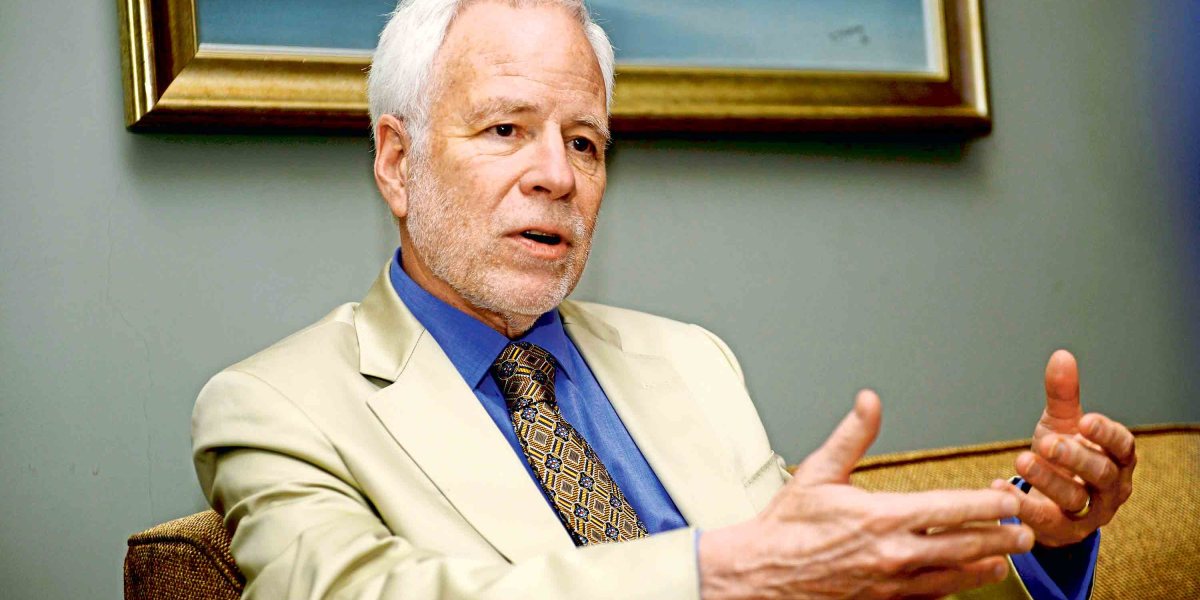
America’s $38 trillion national debt isn’t really because of bad math or budgeting, top economist Barry Eichengreen says. It isn’t because of interest rates, or an aging population, or even runaway spending, necessarily. 

The problem is us. Or more specifically, he told Fortune in an exclusive interview, it’s a polarized political system that reflects, then amplifies, our divisions. 

“The United States has forgotten the importance of fiscal discipline,” the Berkeley professor of nearly 40 years told Fortune. “Neither party is serious about trying to cut the budget deficit. There is lots of hand-waving and rhetoric, but very little meaningful action.” 

Eichengreen expanded in conversation with Fortune on his new Peterson Foundation essay that traces 24 uninterrupted years of rising U.S. federal debt—now at $38 trillion and over 100% of GDP—and concludes that polarization is the binding constraint preventing any credible fiscal strategy. The U.S., he warned, resembles the highly indebted, politically fragmented economies of southern Europe more than policymakers in Washington want to admit.

“The comparison between the United States and Italy or Greece… those parallels are closer and more alarming today than at any point in my lifetime,” he said. “The politics become more and more polarized over time, and fiscal policy becomes trapped.”

None of the old debt-reduction playbooks work anymore

Eichengreen argues that the two major U.S. success stories—post-World War II and the 1990s—rested on three pillars: strong economic growth, favorable interest rates, and the political capacity to run primary surpluses. 

“Everything has changed” in the 2020s, he said.

First – absent the markets’ “AI hopes,” Eichengreen said, growth on the whole is weaker. Second, we’re no longer in the era of ultra-low interest rates that helped previous debt consolidations; rates now are structurally higher, relative to growth. Third, the political system is unable to produce sustained surpluses: that might be a historical artifact relegated to the 20th century, he suggested. 

The problem though, is not a failure of economic imagination, Eichengreen argues. It’s a failure of political capacity.

“Political polarization is higher in the United States than in any other advanced country for which we have comparable data,” he said. “It is deeply debilitating in terms of our ability to achieve consensus and stability and productive policy results.”

Eichengreen said his research shows that the countries that have successfully tamed high debts—even painful ones—share one trait: bipartisan agreement. “Low polarization is the only factor robustly correlated with successful debt consolidation,” Eichengreen said. “We [the United States] simply do not have that.”

There’s supporting evidence in the literature. A report from the Manhattan Institute, Getting to Yes, analyzes 14 major U.S. deficit-reduction negotiations since 1980 and finds that successful fiscal deals require at least two conditions: a painful “penalty default” if no agreement is reached, broad public support for deficit reduction, and genuine bipartisan trust among negotiators.

Most of those ingredients existed in the 1980s and 1990s, Eichengreen said, but have collapsed in the 2000s as partisanship has surged. Rising polarization, declining public concern about deficits, and the political untouchability of entitlements now make major fiscal consolidation far harder than in the past, the report argues. 

The math is bad. The politics are worse

Indeed, the two most straightforward avenues of reducing our debt-to-GDP ratios —cutting spending and raising taxes—are politically frozen, Eichengreen said.

“We’ve learned in the last year that cutting government spending is very hard,” he emphasized. “There are pressures for defense spending. There are entitlements that are politically impossible to cut.” 

Indeed, President Donald Trump tried to carve out some of the spending with the help of richest-man-in-the-world and frien-emy Elon Musk during the short-lived “DOGE” program. Musk said they ended up cutting $160 billion from the federal budget: a hefty amount, to be sure, but far short of the administrations’ goals of $2 trillion. Plus, experts now estimate that the chaos from the DOGE cuts could cost taxpayers $135 billion this year in lost tax collections and productivity. 

Three-quarters of federal spending is locked into Social Security, Medicare, and defense, none of which have bipartisan support for reform.

Meanwhile, proposals for tax increases, though historically modest relative to other rich economies, are treated as off-limits.

“The U.S. remains a low-tax country,” he said. “There is scope to raise revenues by about 3% of GDP, which would cut the deficit in half. But the political system is unable to do it.”

Polarization, in other words, turns straightforward arithmetic into an unsolvable equation.

The U.S. won’t fix its debt until it fixes its politics

Eichengreen stressed that there is no “magic number” at which debt crises suddenly erupt. But he argues the country is slowly moving toward a scenario in which bond markets lose confidence, much like the UK’s 2022 Liz Truss episode.

The former prime minister triggered a financial panic in 2022 when her government unveiled a massive, unfunded tax-cut plan that markets saw as fiscally reckless. Investors dumped U.K. bonds, the pound collapsed, and the Bank of England had to intervene to prevent pension funds from imploding, all leading to Truzz eventually resigning. 

“It wasn’t that Britain was about to default,” he said. “It was a sudden loss of confidence in the government’s ability to act as a reliable financial steward.”

A similarly abrupt shift in perceptions of U.S. competence, triggered by a failed auction, a political shock, or a hit to Federal Reserve independence, could force fiscal reckoning far faster than Washington expects.

But even that, he emphasized, would be a political crisis before a fiscal one.

“Every day that passes makes me feel the situation is more urgent,” Eichengreen said. “But without addressing polarization, there is no path to restoring fiscal sustainability.”



Source link

Tags: consensusDebilitatingdebtdeeplyeconomistNationalpolarizationPolicyPoliticalProductiveReasonresultsStabilityTopTrillion
ShareTweetShare
Previous Post

Aurubis – NDA: Europas Kupferhütte Nr. 1 profitiert von steigenden Kupferpreisen!

Next Post

Haifa tops home sales table for first time in decades

Related Posts

RBI calls off T-Bill auction on higher-yield demand

RBI calls off T-Bill auction on higher-yield demand

by theadvisertimes.com
June 3, 2026
0

Mumbai: The Reserve Bank of India (RBI) Wednesday withdrew its treasury bill auction of 182-day and 364-day totalling ₹12,000 crore,...

SpaceX reveals its share price and record valuation: 5 a share, at a .77 trillion valuation

SpaceX reveals its share price and record valuation: $135 a share, at a $1.77 trillion valuation

by theadvisertimes.com
June 3, 2026
0

It’s official: SpaceX is on track to be the largest IPO in history, seeking to raise $75 billion once it...

Norms issued to estimate District Domestic Product

Norms issued to estimate District Domestic Product

by theadvisertimes.com
June 3, 2026
0

New Delhi: The statistics ministry on Wednesday released uniform guidelines for estimating district domestic product (DDP), introducing standardised indicators, sector-specific...

Bernie Sanders wants Americans to own a piece of AI. The Trump White House seems to agree

Bernie Sanders wants Americans to own a piece of AI. The Trump White House seems to agree

by theadvisertimes.com
June 3, 2026
0

Senator Bernie Sanders wants every American to own a piece of OpenAI, Anthropic, and xAI. Late on Monday, he posted...

69-year-old furniture store chain files for Chapter 11 bankruptcy

69-year-old furniture store chain files for Chapter 11 bankruptcy

by theadvisertimes.com
June 3, 2026
0

Certain furniture and mattress retailers are facing financial distress in 2026, after the industry had success in 2025. The furniture...

Real Dividend Growth Exists in Small Caps, Just Not Where You’d Expect

Real Dividend Growth Exists in Small Caps, Just Not Where You’d Expect

by theadvisertimes.com
June 3, 2026
0

Quick Read XSHD is a pass-through vehicle with no leverage or synthetic income; distribution rises only if underlying companies raise...

Next Post
Haifa tops home sales table for first time in decades

Haifa tops home sales table for first time in decades

These 95 Happiest Companies Hire Remote Workers

These 95 Happiest Companies Hire Remote Workers

  • Trending
  • Comments
  • Latest
FIS, InvestCloud aim to help advisors connect with younger clients

FIS, InvestCloud aim to help advisors connect with younger clients

May 20, 2026
15 “Weird” Ways to Save Money

15 “Weird” Ways to Save Money

May 2, 2026
Teacher Appreciation Week 2026 Deals Include Freebies, Discounts

Teacher Appreciation Week 2026 Deals Include Freebies, Discounts

May 4, 2026
6 Hotels Where Chase’s Points Boost Yields 2.5x

6 Hotels Where Chase’s Points Boost Yields 2.5x

May 22, 2026
Buy a 0K/Year Income Stream? This Is How to Do It

Buy a $500K/Year Income Stream? This Is How to Do It

May 22, 2026
Anthropic’s confidential S-1 signals summer AI IPO race could heat up fast

Anthropic’s confidential S-1 signals summer AI IPO race could heat up fast

June 2, 2026
From Crushing Debt to Renting Out Billy Joel’s Former Estate—How Ben Chester Turned It All Around

From Crushing Debt to Renting Out Billy Joel’s Former Estate—How Ben Chester Turned It All Around

0
Global fashion retailer closing all stores after 33 years

Global fashion retailer closing all stores after 33 years

0
RBI calls off T-Bill auction on higher-yield demand

RBI calls off T-Bill auction on higher-yield demand

0
Quanta Services (PWR) Has a Backlog-and-Power-Demand Setup That Looks Bigger Than a Typical Contractor Story

Quanta Services (PWR) Has a Backlog-and-Power-Demand Setup That Looks Bigger Than a Typical Contractor Story

0
U.S., Iran intensify attacks as ceasefire frays, peace talks stall

U.S., Iran intensify attacks as ceasefire frays, peace talks stall

0
The first U.S. insider trading case tied to a prediction market isn’t really about a Google engineer’s .2M — it’s about what blockchain pseudonymity actually does when prosecutors come knocking

The first U.S. insider trading case tied to a prediction market isn’t really about a Google engineer’s $1.2M — it’s about what blockchain pseudonymity actually does when prosecutors come knocking

0
RBI calls off T-Bill auction on higher-yield demand

RBI calls off T-Bill auction on higher-yield demand

June 3, 2026
XRP Turns 14: Ripple CEO Calls It the ‘Honor of a Lifetime’ to Be Part of the XRP Family

XRP Turns 14: Ripple CEO Calls It the ‘Honor of a Lifetime’ to Be Part of the XRP Family

June 3, 2026
SpaceX reveals its share price and record valuation: 5 a share, at a .77 trillion valuation

SpaceX reveals its share price and record valuation: $135 a share, at a $1.77 trillion valuation

June 3, 2026
8 Free (or Cheap) Doughnut Deals for June 5

8 Free (or Cheap) Doughnut Deals for June 5

June 3, 2026
U.S., Iran intensify attacks as ceasefire frays, peace talks stall

U.S., Iran intensify attacks as ceasefire frays, peace talks stall

June 3, 2026
CFPs, asset managers spar over DOL’s 401(k) rule

CFPs, asset managers spar over DOL’s 401(k) rule

June 3, 2026
theadvisertimes.com

Get the latest news and follow the coverage of Business & Financial News, Stock Market Updates, Analysis, and more from the trusted sources.

CATEGORIES

  • Business
  • Cryptocurrency
  • Economy
  • Financial Planning
  • Investing
  • Market Analysis
  • Markets
  • Money
  • Personal Finance
  • Startups
  • Stock Market
  • Trading

LATEST UPDATES

  • RBI calls off T-Bill auction on higher-yield demand
  • XRP Turns 14: Ripple CEO Calls It the ‘Honor of a Lifetime’ to Be Part of the XRP Family
  • SpaceX reveals its share price and record valuation: $135 a share, at a $1.77 trillion valuation
  • Our Great Privacy Policy
  • Terms of Use, Legal Notices & Disclosures
  • About Us
  • Contact Us

© Copyright 2024 All Rights Reserved
See articles for original source and related links to external sites.

Welcome Back!

Login to your account below

Forgotten Password?

Retrieve your password

Please enter your username or email address to reset your password.

Log In
No Result
View All Result
  • Home
  • Business
  • Financial Planning
  • Personal Finance
  • Investing
  • Money
  • Economy
  • Markets
  • Stocks
  • Trading

© Copyright 2024 All Rights Reserved
See articles for original source and related links to external sites.