No Result
View All Result
  • Login
Monday, August 3, 2026
theadvisertimes.com
  • Home
  • Business
  • Financial Planning
  • Personal Finance
  • Investing
  • Money
  • Economy
  • Markets
  • Stocks
  • Trading
  • Home
  • Business
  • Financial Planning
  • Personal Finance
  • Investing
  • Money
  • Economy
  • Markets
  • Stocks
  • Trading
No Result
View All Result
theadvisertimes.com
No Result
View All Result
Home Economy

The US is a Small Country

by theadvisertimes.com
6 months ago
in Economy
Reading Time: 4 mins read
A A
0
The US is a Small Country
Share on FacebookShare on TwitterShare on LInkedIn


In my recent post on US manufacturing jobs and tariffs, I mentioned a Wall Street Journal article that pointed toward American tariffs having little impact on Chinese exports; the exports are simply being shifted to other countries.  In the earlier post, I discussed what that fact meant for US manufacturing jobs.  Here, I discuss what that shift means for who bears the burden of the tax.

Economists argue that the burden of a tariff falls primarily on the importing country.  In fact, the model we teach our Intro students shows that the burden falls exclusively on the importing nation.  In op-eds, that same model is what we generally present.  However, as readers of this blog know, it’s not completely correct to state that a tariff will always fall entirely upon the importing country.  Our Intro students also learn that who bears the burden of a tax depends on the relative elasticities of supply and demand.  Whoever is least sensitive to a change in price will bear a greater burden of the tax.  Consequently, whoever is the most sensitive to a change in price will bear the lower burden.  In the simple model of international trade, we economists typically show a perfectly elastic supply of the imported good.  In other words, foreign producers are highly sensitive to a change in price; foreign producers have many other consumers beyond the importing country and will simply shift their business elsewhere.  Consequently, the importing nation must face the entire burden of the tax.  This is called the small-country tariff model; the importing country is simply too small to influence the world price of the tariffed good.

But what if that condition does not hold?  What if the importing country is sufficiently large that it can influence the world price of the imported good?  This is called the large-country model.  When a nation is such a large importer of a particular good that their behavior can influence the world price, the global supply curve is relatively inelastic (upward sloping).  When the nation imports a lot, the world price rises and global producers produce more.  Likewise, when the importing nation purchases less, the global price falls and world producers supply less of the good.

The large-country model has an interesting implication.  With a sufficiently small tariff, the large country can actually improve its terms of trade and, consequently, the trading partner’s terms of trade will fall.  The terms of trade for a country is:

Terms of Trade = Export Price Index/Import Price Index

In other words, the terms of trade is how much it costs (exports) for a country to consume (import) foreign goods.  Imposing a tariff reduces the quantity demanded of the imported good. Under the large country model, the importing nation is sufficiently large that if the quantity demanded of the good falls, the world price falls, and the exporting nation must absorb some of the tariff, otherwise the transaction ceases to be profitable.  Domestic imports fall but the domestic price of the good does not rise by the full amount of the tariff. 

In sum: if a country is sufficiently large, the relative elasticities are known, and the exporting nations’ behavior does not change other than to reduce prices on the tariffed goods (i.e., no retaliation and no reduction of their own imports or investment into the domestic country), a sufficiently small tariff can improve the economic welfare of the importing country.  Yes, there is a loss from a reduction in imports (recall that imports are the benefit of international trade), but there is a gain due to the lower price of imports.  If the gain from the lower price outweighs the loss from the reduction of imports, then the country will marginally increase their welfare.  (This tradeoff is why the tariff must be sufficiently small; one wouldn’t want to reduce imports too much!).  The tariff that achieves this result is called an optimal tariff; it is a tariff that optimizes total economic welfare in a country.  

Any International Trade textbook will discuss these models.  I recommend International Economics by Robert Carbaugh.  The book is written on the assumption that the reader has no more than a principles of economics understanding.

Some argue that the US is sufficiently large that the tariffs imposed will increase welfare in the US.  We saw almost immediately that the argument for an optimal tariff was violated; shortly after tariffs were imposed in 2025, other countries retaliated with their own tariffs. Various studies indicate Americans are bearing almost all of the tariff.  

A recent WSJ piece points to another issue: at least as far as China is concerned, the US is not a sufficiently large country.  According to data from the US Census Bureau, US imports from China are down some 45.6% from last year, but China’s exports are up.  Rather than reducing prices, China simply found other buyers for their goods.  Consequently, these data imply that US consumers and individuals are likely bearing most, if not all, of the tariff on Chinese goods.  The tariffs reduced imports, increased prices for Americans, but the global price did not change. China simply found other buyers.  The supply curve was, for all intents and purposes, perfectly elastic.

The usefulness of a model derives from its ability to make sense of the real world and give us the ability to make predictions.  The “realism” or complexity of a model is not necessarily a feature.  In many ways, the large-country model is more realistic than the small-country model.  It’s quite unlikely that any country, let alone the United States, is so small that they cannot influence world prices at all.  Ultimately, all trade is done by individuals and not nations, so it’s reasonable to assume there will be some influence on a case-by-case basis.  However, the large-country model is not particularly helpful in explaining real-world outcomes.  The small-country model, despite its lack of realism, provides far clearer analysis, at least as a first approximation of effects.  



Source link

Tags: countrySmall
ShareTweetShare
Previous Post

The online dating reality for women over 55 that nobody talks about honestly

Next Post

Rates may drop in response to the jobs report

Related Posts

New Forever Chemicals Coming To US Farms

New Forever Chemicals Coming To US Farms

by theadvisertimes.com
August 3, 2026
0

If the goal is truly to Make America Healthy Again, then the latest decision from the Environmental Protection Agency raises...

Links 8/2/2026 | naked capitalism

Links 8/2/2026 | naked capitalism

by theadvisertimes.com
August 2, 2026
0

Parahawking is an interactive experience of gliding with birds of prey, combining paragliding with falconry Trained birds of prey fly...

The Sunday Morning Movie Presents: Nostos (1989) Run Time: 1H 24M Plus Bonuses!

The Sunday Morning Movie Presents: Nostos (1989) Run Time: 1H 24M Plus Bonuses!

by theadvisertimes.com
August 2, 2026
0

Greetings gentle readers and welcome to another installment of the Sunday Morning Movie. Today it’s a spare retelling of the...

Get Your Free August Rothbard Giveaway The Case for a 100 Percent Gold Dollar!

Get Your Free August Rothbard Giveaway The Case for a 100 Percent Gold Dollar!

by theadvisertimes.com
August 1, 2026
0

What is the Mises Institute? The Mises Institute is a non-profit organization that exists to promote teaching and research in...

Gold, Socialism, and the Crisis of the Dollar

Gold, Socialism, and the Crisis of the Dollar

by theadvisertimes.com
August 1, 2026
0

Mark Thornton opens this triple-header episode with a live Radio Rothbard appearance from Mises University, joining Ryan McMaken to discuss...

Links 8/1/2026 | naked capitalism

Links 8/1/2026 | naked capitalism

by theadvisertimes.com
August 1, 2026
0

Dear patient readers, Because things on the Iran war front, at least as of this writing, seem to be at...

Next Post
We Will Barro You | Mises Institute

We Will Barro You | Mises Institute

7 Medical Charges Seniors Assume Are Temporary

7 Medical Charges Seniors Assume Are Temporary

  • Trending
  • Comments
  • Latest
SEC pushes private market access, but retail is already in

SEC pushes private market access, but retail is already in

July 16, 2026
Fourth of July 2026 Freebies and Deals

Fourth of July 2026 Freebies and Deals

July 3, 2026
How I Maximize My Sapphire Reserve Dining Credit

How I Maximize My Sapphire Reserve Dining Credit

July 10, 2026
The Weekly Notable Startup Funding Report: 6/22/26 – AlleyWatch

The Weekly Notable Startup Funding Report: 6/22/26 – AlleyWatch

June 21, 2026
The 10 Largest NYC Tech Startup Funding Rounds of June 2026 – AlleyWatch

The 10 Largest NYC Tech Startup Funding Rounds of June 2026 – AlleyWatch

July 6, 2026
The 22 Largest US Funding Rounds of May 2026 – AlleyWatch

The 22 Largest US Funding Rounds of May 2026 – AlleyWatch

June 30, 2026
China’s July manufacturing PMI drops to 4-month low of 50.9,

China’s July manufacturing PMI drops to 4-month low of 50.9,

0
New Forever Chemicals Coming To US Farms

New Forever Chemicals Coming To US Farms

0
Coldcard Flaw Exposes Hardware Wallet Testing Blind Spot: Kraken

Coldcard Flaw Exposes Hardware Wallet Testing Blind Spot: Kraken

0
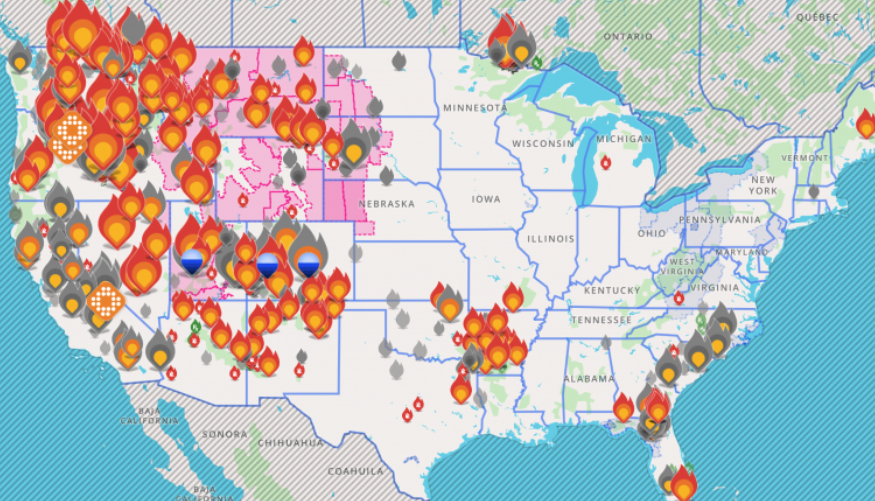
Spokane Is On Fire! Hundreds Of Homes Have Burned Down As Massive Wildfires Rage All Over The Western U.S.

Spokane Is On Fire! Hundreds Of Homes Have Burned Down As Massive Wildfires Rage All Over The Western U.S.

0
16 Photos of Items That Used To Be Totally Free, But Now Cost Money

16 Photos of Items That Used To Be Totally Free, But Now Cost Money

0
7 Senior Property-Tax Relief Deadlines That Often Fall Before Autumn

7 Senior Property-Tax Relief Deadlines That Often Fall Before Autumn

0
China’s July manufacturing PMI drops to 4-month low of 50.9,

China’s July manufacturing PMI drops to 4-month low of 50.9,

August 3, 2026
Coldcard Flaw Exposes Hardware Wallet Testing Blind Spot: Kraken

Coldcard Flaw Exposes Hardware Wallet Testing Blind Spot: Kraken

August 3, 2026
New Forever Chemicals Coming To US Farms

New Forever Chemicals Coming To US Farms

August 3, 2026
16 Photos of Items That Used To Be Totally Free, But Now Cost Money

16 Photos of Items That Used To Be Totally Free, But Now Cost Money

August 2, 2026
Spokane Is On Fire! Hundreds Of Homes Have Burned Down As Massive Wildfires Rage All Over The Western U.S.

Spokane Is On Fire! Hundreds Of Homes Have Burned Down As Massive Wildfires Rage All Over The Western U.S.

August 2, 2026
Trump says negotiations will resume Monday afternoon while Tehran continues Hormuz talks with Oman

Trump says negotiations will resume Monday afternoon while Tehran continues Hormuz talks with Oman

August 2, 2026
theadvisertimes.com

Get the latest news and follow the coverage of Business & Financial News, Stock Market Updates, Analysis, and more from the trusted sources.

CATEGORIES

  • Business
  • Cryptocurrency
  • Economy
  • Financial Planning
  • Investing
  • Market Analysis
  • Markets
  • Money
  • Personal Finance
  • Startups
  • Stock Market
  • Trading

LATEST UPDATES

  • China’s July manufacturing PMI drops to 4-month low of 50.9,
  • Coldcard Flaw Exposes Hardware Wallet Testing Blind Spot: Kraken
  • New Forever Chemicals Coming To US Farms
  • Our Great Privacy Policy
  • Terms of Use, Legal Notices & Disclosures
  • About Us
  • Contact Us

© Copyright 2024 All Rights Reserved
See articles for original source and related links to external sites.

Welcome Back!

Login to your account below

Forgotten Password?

Retrieve your password

Please enter your username or email address to reset your password.

Log In
No Result
View All Result
  • Home
  • Business
  • Financial Planning
  • Personal Finance
  • Investing
  • Money
  • Economy
  • Markets
  • Stocks
  • Trading

© Copyright 2024 All Rights Reserved
See articles for original source and related links to external sites.