Let us imagine for a moment that we are in a museum. In one wing, the great achievements of government intervention are shown: highways, dams, public schools, and countless other ingenious designs, organizations, and feats. Things which we use in our everyday lives which, for better or worse, supposedly ensure the smooth flow of society. Plaques and posters on the walls of this wing boast of the millions of jobs and trillions of dollars created by the state, and list the many ways by which it has contributed to the growth of the free market.
The second wing of the museum is the “empty wing,” showing the many potential contributions that were taxed or regulated out of existence before their birth. Thousands of new medical inventions, better schools, even wealth and jobs, all crushed under the foot of the government before they could come to fruition. We will notice that many choose to tour the wing which demonstrates what is, rather than what could be. The statist mind cares only about what has been achieved and what is present, instead of asking themselves what might have been brought about had they left people to their own devices.
The Seen and the Unseen
As an example, consider a government-funded bridge. This theoretical bridge cost the US taxpayers $70 million. This expenditure reduces the amount of capital which can be invested into the economy by consumers by at least that same amount spent by the government. While indeed a bridge has been built, and perhaps some temporary jobs were opened for its construction, as a statist may point out, these are nothing more than visible fragments of growth. This is the “seen” economy.
The absent economy, conversely, is made up of the thousands of individual decisions, investments, and purchases that would have been made with those $70 million had they not been fenced by the government. By the removal of that money from the hands of the consumer, the government has directly aborted their capability to make those value-driven decisions in the present moment. Since, as Mises pointed out, human action is purposeful towards the provision of subjectively better circumstances, the state’s redirection of resources has not only simply moved money, but destroyed their goals. It must additionally be pointed out that the government’s decision to build this bridge does not necessarily play into economic necessity at the moment, but rather political expediency.
The Four Pillars of the Cognitive Wall
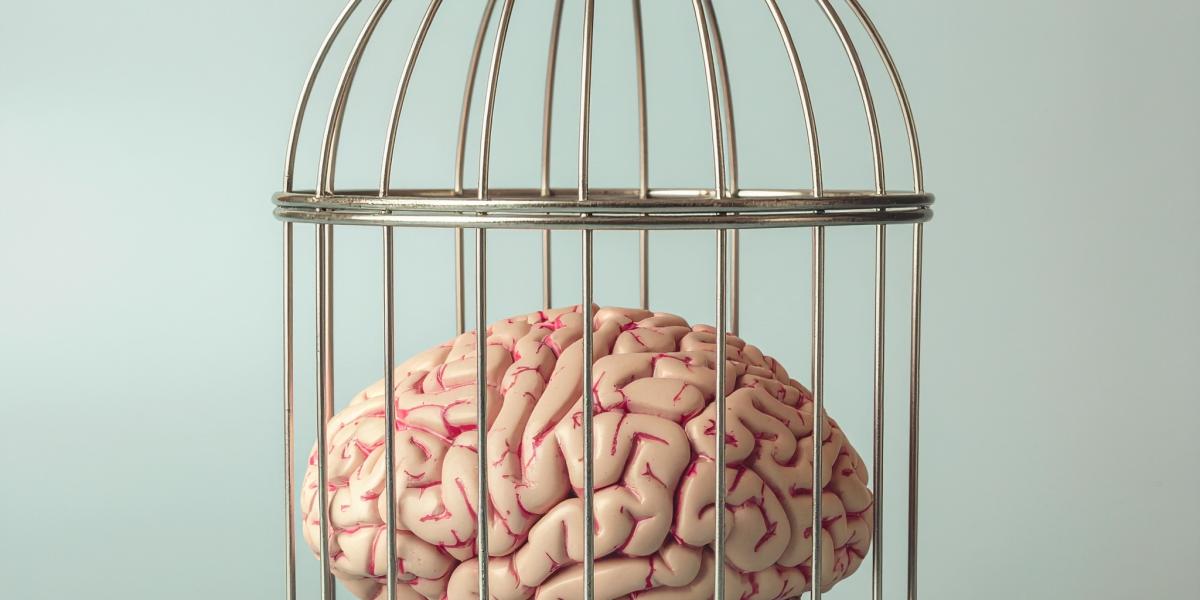
To effectively communicate the absent economy to those who deny it, we must understand the cognitive wall facing the economic interventionists. There are four key psychological phenomena that tie directly into this, the first of which being the status quo bias, which is the tendency by which humans show preference towards the existing state of affairs, regardless of suboptimality, over unknown alternatives. To the statist, the current system is sound because it is known.
Second, the anchoring bias, which stems from the human tendency to “anchor” onto the first piece of information offered. As the government is the first to provide a service—be it mail, roads, or education—the government is therefore mentally “anchored” to what that service actually is. When a libertarian suggests that we implement the privatization of roads, the statist is not hearing “optimized transportation” but rather the destruction of the only thing that they know as a road. Any alternative feels like a loss, rather than a potential gain.
The third pillar to understand is loss aversion and the endowment effect, a topic greatly studied by Daniel Kahneman. According to Kahneman, losses loom larger than gains, at a 2:1 ratio. This essentially means that the pain of a loss is twice as powerful psychologically as an evident gain. It could therefore be argued that for a statist to accept, for example, full healthcare privatization, they would have to believe that the “unseen” benefits would outweigh socialized healthcare by a massive margin. Of course, as they cannot see these benefits in the empty wing of our theoretical museum, they will default to the sub-optimal system which is “seen” by them—that being the government, thus avoiding a perceived loss.
The final pillar of the cognitive wall faced by those in favor of planned economy is system justification theory or SJT. This pillar serves to explain the irrational emotional attachment to the “seen” wing of the museum. John T. Jost—the primary pioneer of SJT—argued that the justification of a system serves a pain-relieving function. It is psychologically painful to believe that you live in an unjust, inefficient, or coercive society. Thus, individuals “rationalize” the $70 million bridge or the failing public education system. The statist is not just ignoring the unseen wing, but engaging in rationalization as mental protection from the idea that their tax money was wasted and their potential aborted.
The Blueprint’s Fatal Conceit
A significant fault of the collectivists is their need for empirical evidence of free market claims, in essence, demanding a blueprint that is forbidden to be printed. Of course, it is significantly easier to argue from a conservative standpoint in favor of the unfree market, wherein statistics can be provided due to this regulated economy being permitted to exist. However, from the standpoint of the principled and absolute libertarian, he who argues in favor of a truly free market, our evidence is primarily based in praxeology—the logic of human action—that they refuse to accept as coherent. As previously referenced with the endowment effect, there is no statistical measurement by which to compare the costs and benefits of a socialized economy versus laissez-faire, thus why they must dismiss our claims as merely theoretical.
In The Fatal Conceit, F.A. Hayek argued that many socialists believe that man is able to shape the world around him according to his wishes. This is not just merely his words, though Lester Frank Ward—the father of the American welfare state—believed that “social invention” must replace “natural evolution” as evidenced by his famous quote:
The individual has reigned long enough. The day has come for society to take its affairs into its own hands and shape its own destinies.
The people who propagate these theories are individuals who have determined that their intellect is superior to the vast mechanics of society as a whole, that they alone can provide the solution to society’s issues by fundamentally reorganizing it according to their desires. For lack of better words, the collectivists lack the humility to accept that their singular intellect is not superior to the combined efforts of billions of human beings, all working towards their own ends through the same system. Their superiority complex can be empirically proven, as 1 in 3 “extremists” believed their ideology was 100 percent correct, when compared to 1 in 15 moderates.
This was a bipartisan finding, applied to both conservatives and liberals. However, it can be argued that Austrian free market economics is the most intellectually humble position. Rather than rigidly claiming that the economy can be fully comprehended, planned, and executed, and that society can be molded however we please to best fit a future goal, we acknowledge the infinite incomprehensibility of the market. While the statist claims to know what is best for us all, the Austrian acknowledges that not only do we have no right to decide that, but that we lack the data to even attempt to do so.
Conclusion: Where Do We Go Now?
With this, we have dissected the psychological reasoning behind the refusal of economic interventionists to accept truly free market ideals. While many other factors do play into their beliefs, such as environmentally-developed moral standards and egalitarianism, the primary purpose of this article is not to look into the sociological conditions, but rather the cognitive barriers that we face in our efforts. I do not claim to have an effective solution on how to counter these psychological biases, but rather hope that future arguments may take these into account when acting for the purposes of defeating political rivals, or convincing those on the fence. It is only by understanding the deeper biases plaguing those who we interact with that we can present them with an argument that they will accept.