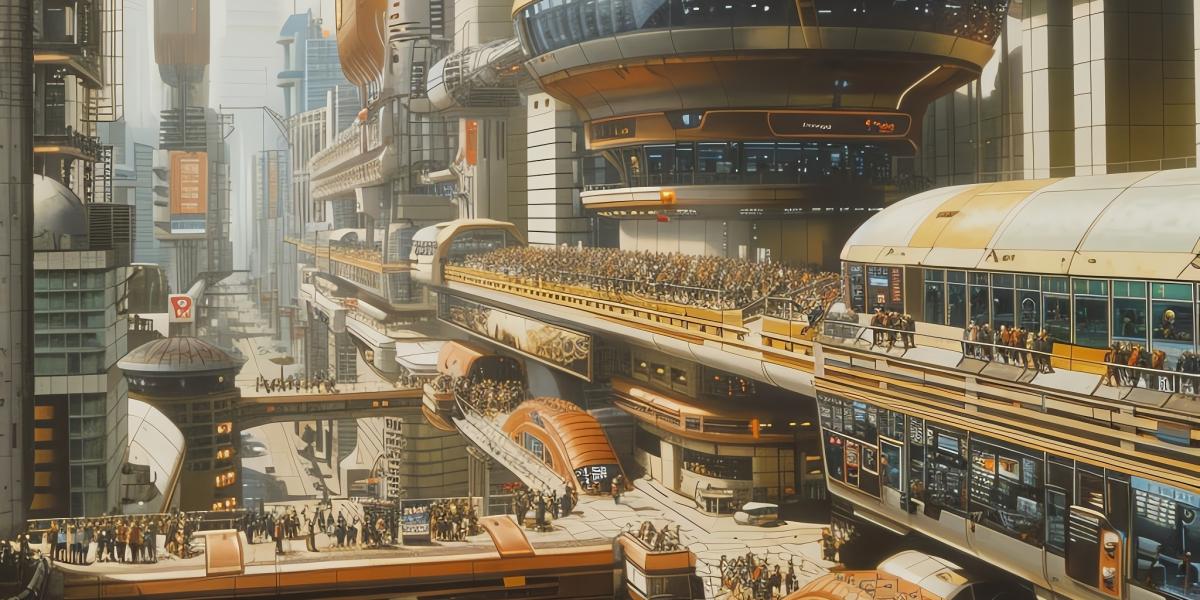
A growing chorus of technologists and futurists now argue that scarcity is ending. Artificial intelligence will automate cognition. Robotics will automate labor. Energy capture will scale beyond planetary limits. Manufacturing will approach zero marginal cost. In this telling, the central economic problem that has defined human civilization for millennia is dissolving.
This essay accepts the rise of abundance. The empirical case is strong. Real prices for lighting, calories, communication, and computation have collapsed over centuries. Extreme poverty has fallen dramatically. Automation continues to erode historically-binding constraints.
But, from this undeniable progress, a stronger claim is often made: that scarcity itself will disappear. That claim is not bold, it is confused.
Scarcity is not primarily a supply shortage, it is the structural condition of action under constraint. Wherever multiple preferred states of the world cannot be realized simultaneously, exclusion persists. Exclusion is scarcity. As long as agents must choose among alternatives embedded in irreversible time, scarcity remains.
The future may eliminate hunger, it may automate labor, it may harness stellar energy, but it will not eliminate trade-offs.
Scarcity Begins With Action
Ludwig von Mises grounded economics not in markets but in action. Action arises when an agent seeks to replace a less satisfactory state of affairs with a more satisfactory one. If an agent can imagine multiple possible futures but cannot realize all of them at once, the agent must rank them. Ranking implies selection and selection implies scarcity.
Scarcity does not mean “not enough stuff.” Scarcity means not all preferred possibilities can coexist within the same temporal slice of reality. Opportunity cost is the shadow cast by finite realization in irreversible time.
This logic is not anthropological; it applies to any agent capable of representing alternatives. A biological human, an artificial intelligence, a distributed network of machines, or a post-biological civilization all confront the same structural condition: finite realization within time. The substrate may change but the structure does not.
Marginal utility theory reinforces this point. As the supply of a good increases, the marginal value of an additional unit declines. This is standard economics. But declining marginal utility does not eliminate scarcity, it shifts the margin. When bread becomes abundant, attention moves to quality. When quality becomes abundant, attention moves to longevity, enhancement, status, discovery, or expansion. Marginal utility does not predict the end of scarcity, it predicts the migration of priority. As some ends become easier to achieve, new and more ambitious ends rise in relative importance.
Also, as capability expands, the space of conceivable ends expands with it. More intelligence generates more possible projects. More energy enables more ambitious transformations. More agents multiply competing claims on finite realization. The more powerful a system becomes, the larger the set of unrealized possibilities it perceives.
Eliminating historically-dominant constraints is not the same as eliminating scarcity, opportunity cost, and trade-offs. As long as not all preferred states can be realized simultaneously, scarcity persists.
Abundance Has Always Moved Scarcity Upward
History shows scarcity-migrating rather than disappearing. When food became abundant, demand shifted toward quality and health optimization. When information became abundant, attention became scarce. When communication became instant, trust and credibility became bottlenecks.
Each wave of productivity reduces one constraint and reveals another. Abundance does not end the economic problem, it transforms it.
Scarcity at the AI Frontier
The most advanced technological systems today offer a real-time illustration. Frontier AI laboratories operate at the edge of compute capacity. They must allocate clusters between training larger models, safety research, deployment, and scientific experimentation.
Computers devoted to one objective cannot simultaneously serve another. Efficiency gains expand ambition. As models grow more capable, demands increase. The constraint shifts from “Can we build this?” to “What should we build next and how much?” That is not post-scarcity, it is a higher-order allocation.
Physics Does Not Abolish Trade-Offs
Economic life unfolds inside physical law. Energy cannot be created or destroyed, but it does become less useful for doing organized work as it spreads out. Every act of production rearranges matter and energy. Every act of computation runs on physical hardware. None of it is abstract.
Even highly-efficient computers must move physical states to perform operations. Those changes require energy. Hardware occupies space. Signals move at finite speed. And time moves forward, not backward. Processes must occur in sequence. They cannot all happen at once. These are not temporary engineering problems, they are built into the structure of the universe.
Imagine a civilization powerful enough to capture the energy of its star. Compared to us, that would look like limitless abundance. But even then, energy flow per unit time would remain finite. Compute capacity would remain finite. Projects would still require time.
If that civilization could pursue interstellar travel, planetary engineering, and vast simulations, it would still have to decide how much energy and computation to devote to each. It could not maximize all of them simultaneously.
Thermodynamics does not predict collapse, it simply means that not everything can happen at once. And wherever not everything can happen at once, scarcity remains.
Conclusion
Abundance is real and accelerating; it will reshape civilization and eliminate many historical scarcities. But scarcity is not a defect of low productivity; it is the structural condition of action in a constrained universe. The future will be post-old-scarcity but it will not be post-scarcity.















-1024x683.jpg "The Key Battles for Senate Control Are Set")