
Add Silicon Canals to your Google News feed. 
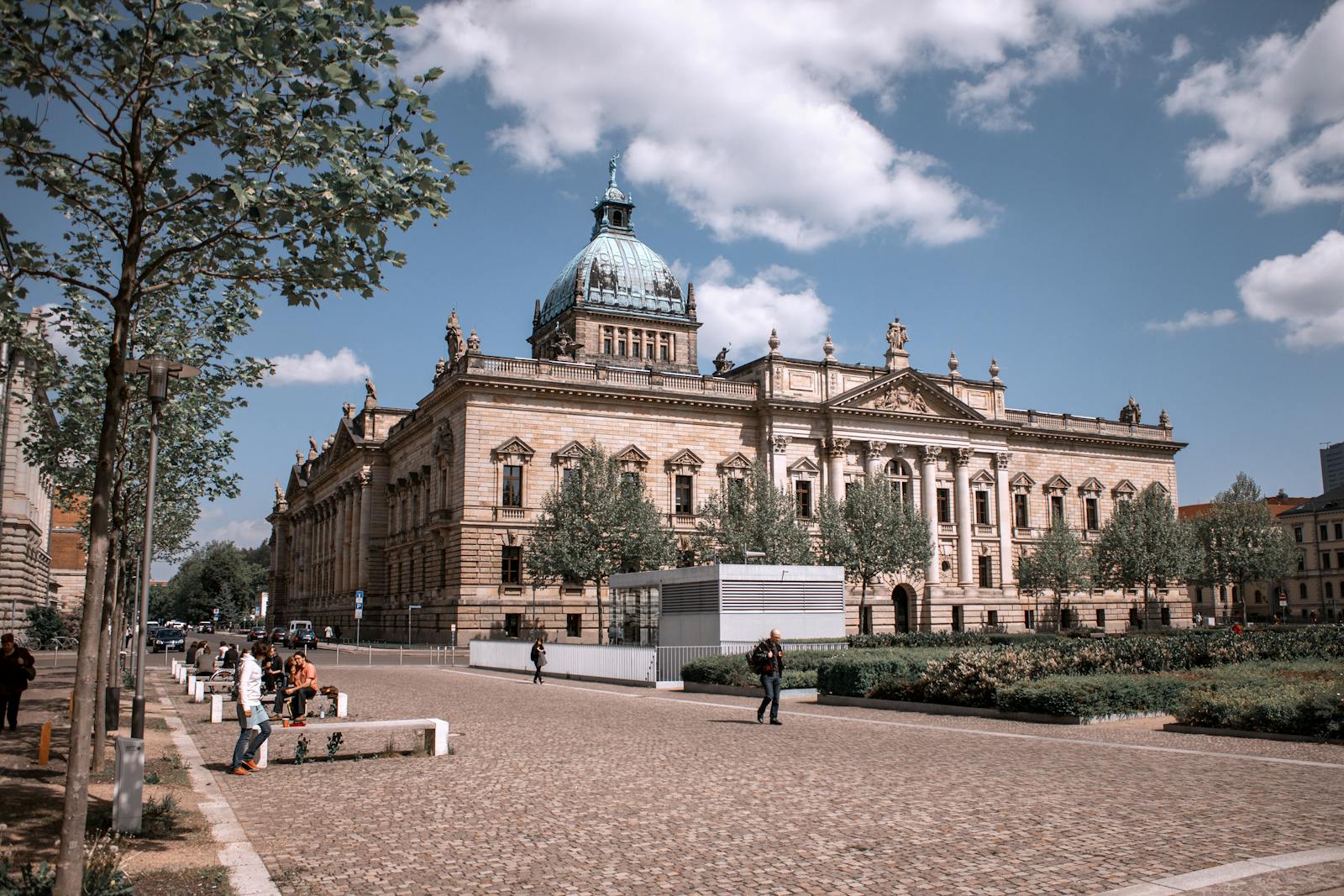
A Brussels court has reportedly ordered former Belgian diplomat Étienne Davignon to stand trial for alleged complicity in the 1961 assassination of Patrice Lumumba, Congo’s first democratically elected prime minister. If the trial proceeds, it would potentially be the first criminal prosecution of a European official for crimes committed under colonial rule.
The ruling is worth examining closely. Not because one elderly man may finally face a courtroom, but because of what the decades-long gap between the murder and the trial reveals about how institutional power manages accountability.

What actually happened in 1961
Patrice Lumumba was tortured and assassinated by firing squad in January 1961, alongside associates. The murders were carried out by separatists in the Katanga region with the support of Belgian mercenaries. Lumumba had been prime minister of the newly independent Congo for barely two months before being deposed in a coup.
Davignon arrived in Belgian Congo as a young diplomatic intern on the eve of independence in 1960. He went on to serve in senior European Commission roles. He is reportedly now the only surviving person among Belgians the Lumumba family accuses of involvement in the killing.
The charges are specific: participation in war crimes on three counts — illegal transfer of Lumumba and his associates, humiliating and degrading treatment, and depriving them of a fair trial. The court extended the charges beyond Lumumba himself to include his murdered companions.
The architecture of delay
Understanding how long accountability took here requires mapping the institutional steps between the event and this courtroom.
The assassination occurred in 1961. For four decades, no formal Belgian investigation took place. Then in 2001 — 41 years after the murder — a parliamentary inquiry concluded that Belgian ministers bore “moral responsibility” for the events leading to Lumumba’s death. Moral responsibility. The phrase is worth sitting with. It acknowledged culpability while explicitly declining to assign criminal liability.
Belgium’s prime minister used carefully calibrated language at a ceremony in 2022 when Belgium returned a gold-capped tooth to the Lumumba family — a tooth that one of the Belgians involved in the killing had kept as a personal souvenir for decades. Officials stated that Belgian authorities may not have intended Lumumba’s assassination, but should have realized that his transfer to Katanga put his life in danger.
The progression is instructive. Silence for 40 years. Then moral responsibility. Then a symbolic return of remains. Each step gave the appearance of reckoning while stopping short of legal consequence. This pattern is not unique to Belgium. It is how institutional power processes historical crimes almost everywhere: acknowledge just enough to defuse pressure, offer symbolic gestures, and wait for the principals to die of old age before anything binding occurs.
In Davignon’s case, the principals nearly did all die first. He is reportedly the last one standing.
Why this trial matters beyond Belgium
The legal precedent here extends far beyond one case. As lawyers for the Lumumba family have argued, this represents a historic decision confirming that the passage of time cannot erase legal responsibility for grave crimes.
If that principle holds, the implications ripple outward. The colonial era produced an enormous number of political assassinations, forced disappearances, and extrajudicial killings — in Congo, Kenya, Algeria, Indonesia, Vietnam, and dozens of other territories. The legal architecture that shielded those actions was built on the assumption that time, combined with state sovereignty, would make prosecution impossible.
The Lumumba family has characterized this as not the end of a long fight, but the beginning of a reckoning that history has long demanded.
There is a growing body of legal and political action across Africa and Southeast Asia seeking accountability for colonial-era crimes. This case will be watched carefully in Kinshasa, Nairobi, Algiers, and Jakarta — cities where the question of whether former colonial powers face consequences carries immediate political weight.
The gap between moral and criminal responsibility
Belgium’s handling of the Lumumba case illustrates a broader institutional pattern worth naming: the use of moral acknowledgment as a substitute for legal accountability.
The 2001 parliamentary inquiry was, in structural terms, a pressure-release valve. It allowed Belgium to appear to confront its past while producing no criminal charges. The 2022 tooth ceremony operated similarly — a gesture of profound symbolic significance (returning a murdered man’s remains to his family) that simultaneously reinforced the framing that Belgium’s involvement was a matter of regret rather than criminality.
This sequence — delay, symbolic acknowledgment, continued legal immunity — mirrors how institutions manage reputational risk across many domains. The stated values evolve over time to align with contemporary norms. The actual policy consequences remain minimal. Anyone who has watched how corporations handle historical liabilities recognises the playbook: express concern, commission a review, issue a statement, settle quietly if forced, and never admit the thing that would set a precedent.
What makes this ruling significant is that a court has now broken the pattern. A judge looked at 65 years of institutional management and said: this goes to trial.
The Cold War context media often omits
Lumumba’s assassination did not happen in a vacuum. It occurred at the intersection of decolonisation and Cold War geopolitics — a period when Western governments actively intervened to shape the leadership of newly independent African states.
Lumumba’s crime, in the eyes of Western capitals, was his willingness to accept Soviet support for Congolese sovereignty. He was perceived as a threat to Western access to Congo’s vast mineral resources — including uranium, copper, cobalt, and diamonds. The Katanga region where he was killed was the mineral heartland, and its secession movement was backed by Belgian mining interests.
This is the economic layer underneath the political assassination. Congo’s resources were — and remain — central to global industrial supply chains. The structural incentive for Belgium in 1961 was straightforward: an independent Congo led by a nationalist prime minister threatened the economic arrangements that Belgian corporations had built over decades of colonial extraction. As we’ve explored in coverage of how resource chokepoints shape geopolitical behaviour, the pattern of powerful states acting to secure commodity flows at the expense of sovereign governments is not historical curiosity — it is ongoing structural reality.
The Democratic Republic of Congo today holds a substantial portion of the world’s cobalt reserves, a mineral essential to lithium-ion batteries and the global energy transition. The institutional dynamics that shaped Lumumba’s fate in 1961 have evolved in form but not in underlying logic.
What happens next
Davignon can still appeal the ruling. Given his age, the trial’s timeline matters enormously — the court has indicated proceedings could begin in 2027. There is an obvious possibility that biological reality intervenes before legal process concludes.
But the Lumumba family and their legal team appear to understand that the trial’s significance extends beyond conviction or acquittal of one man. The precedent is the point. If a European court can hold a former official criminally accountable for actions taken under colonial authority decades ago, the legal shield that has protected similar actors across multiple former colonial powers develops cracks.
There is something clarifying about seeing the full timeline laid out: a murder in 1961, silence until 2001, a symbolic gesture in 2022, and a criminal trial ordered in 2026. History makes more sense when you can see what came before — not just the headline event, but the decades of institutional machinery that determined when and how accountability would arrive. The backstory here is the story: how long it takes for legal systems to process crimes committed by the states those legal systems serve.
The question this case poses to other former colonial powers is straightforward: if Belgium, is anyone else next? France’s role in Rwanda. Britain’s actions in Kenya during the Mau Mau uprising. Portugal’s colonial wars. The Netherlands in Indonesia. Each has its own version of the moral-responsibility-without-criminal-consequence framework.
This week in Brussels, a court said that framework is no longer sufficient. Whether that ruling survives appeal will tell us whether the machinery is actually changing, or simply performing a more sophisticated version of the same delay.
Feature image by Jaiju Jacob on Pexels
From the editors
Undercurrent — our weekly newsletter. The sharpest writing from Silicon Canals, curated reads from across the web, and an editorial connecting what others cover in isolation. Every Sunday.
Free. No spam. Unsubscribe anytime.