No Result
View All Result
  • Login
Tuesday, June 23, 2026
theadvisertimes.com
  • Home
  • Business
  • Financial Planning
  • Personal Finance
  • Investing
  • Money
  • Economy
  • Markets
  • Stocks
  • Trading
  • Home
  • Business
  • Financial Planning
  • Personal Finance
  • Investing
  • Money
  • Economy
  • Markets
  • Stocks
  • Trading
No Result
View All Result
theadvisertimes.com
No Result
View All Result
Home Economy

Russia To Refer Childless Women For Psychiatric Evaluations

by theadvisertimes.com
3 months ago
in Economy
Reading Time: 3 mins read
A A
0
Russia To Refer Childless Women For Psychiatric Evaluations
Share on FacebookShare on TwitterShare on LInkedIn


Russia is now advising psychological counseling for women who do not intend to have children, which is precisely the type of response governments default to when they refuse to confront economic reality. They search for cultural or emotional explanations when the issue is economical.

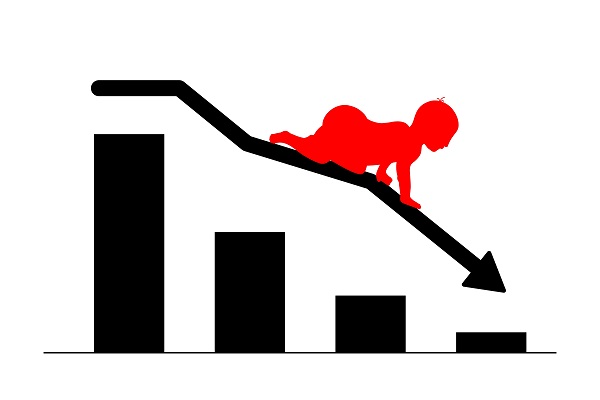
Russia’s fertility rate has fallen to roughly 1.4 children per woman, well below the 2.1 replacement level, and total births have declined to near post-Soviet lows at just over 1.2 million annually. This decline has been persistent, not cyclical, and the population is aging rapidly as deaths continue to exceed births. At the same time, the war has removed a significant portion of young men from the population.

The same pattern is unfolding across all developed economies. Europe’s fertility rate is now near 1.3. Spain and Italy are closer to 1.1. Germany is around 1.4. France, once the exception, has fallen sharply and recently recorded more deaths than births for the first time in decades. Japan has been below replacement for years and continues to contract. Even countries that implemented aggressive family subsidies, such as Norway and Hungary, have failed to reverse the trend.

Globally, fertility has collapsed from more than 5 children per woman in the 1960s to just above two today, and the developed world is already well below replacement. The common explanation offered by governments is psychological or social. They speak of changing values, delayed adulthood, or lifestyle preferences. That explanation collapses under scrutiny because it ignores the economic structure that determines behavior.

People do not make long-term commitments, such as having children, without confidence in their financial future. Children represent the largest long-term investment a household can make. When confidence declines, that investment is postponed or abandoned.

At the same time, dual-income households became the norm not by choice but by necessity. A single income no longer supports a family in most developed economies. This fundamentally changes having children because both parents must remain in the workforce to maintain financial stability. Long ago, children helped to secure a family’s financial future, but the opposite rings true today.

Russia’s situation simply reflects these dynamics in a more concentrated form. Economic uncertainty, war, sanctions, and structural inefficiencies amplify the same forces present elsewhere. When surveys show that a large percentage of women do not plan to have children in the near term, that is not a psychological condition. It is a rational response to economic instability amid war. Women in Russia must now face the harsh reality that their husbands will face a compulsory draft, and they will be left raising children alone.

Historically, birth rates rise during periods of expansion and confidence. The post-World War II baby boom occurred because housing was affordable, employment was stable, and future prospects were positive. The economic structure supported family formation. Today, the structure works in the opposite direction. Housing costs, taxation, childcare expenses, and job insecurity create an environment in which the cost of raising children exceeds the perceived benefits. Governments attempt to offset this with subsidies, but those programs do not address the core issue, whixh is the declining return on productive activity relative to cost.

This is why policies focused on incentives have failed. Hungary introduced substantial financial benefits for families. Norway expanded welfare support. France has long provided family subsidies. None of these measures reversed the long-term decline because they do not change the underlying economic equation.

The demographic consequences are significant. A declining birthrate leads to a shrinking workforce, increasing dependency ratios, and pressure on pension systems. Governments respond by raising taxes or increasing borrowing, which further reduces the net income available to working households. This creates a feedback loop that reinforces the decline.

When confidence in the future declines, long-term investments decline. Children are the most fundamental long-term investment in any society. The decline in birth rates is therefore not a social anomaly but a direct reflection of economic confidence. Russia proposing psychological counseling illustrates how far removed policy responses have become from reality. This is not a question of convincing people to want children. It is a question of creating an economic environment where having children is viable.



Source link

Tags: ChildlessEvaluationsPsychiatricreferRussiawomen
ShareTweetShare
Previous Post

Supermicro’s co-founder was just arrested for allegedly smuggling $2.5 billion in GPUs to China

Next Post

Epitomee Medical’s slimming pill approved in Europe

Related Posts

Coffee Break: Armed Madhouse – Trust Destruction and Nuclear Roulette

Coffee Break: Armed Madhouse – Trust Destruction and Nuclear Roulette

by theadvisertimes.com
June 23, 2026
0

The discussion of war has changed remarkably little since antiquity. Historians, military strategists, and political leaders still evaluate conflict using...

The Public Choice Problem of AI Rights

The Public Choice Problem of AI Rights

by theadvisertimes.com
June 23, 2026
0

People are falling in love with their chatbots, mourning deleted AI companions, and treating artificial systems as romantic partners or...

U.S. issues sweeping Iran oil sanctions waivers, unlocking billions in revenue for Tehran

U.S. issues sweeping Iran oil sanctions waivers, unlocking billions in revenue for Tehran

by theadvisertimes.com
June 23, 2026
0

The Brugge oil tanker anchored off the Port of Long Beach in Long Beach, California, US, on Thursday, May 7,...

Lies, Damn Lies, and the History of Capitalism

Lies, Damn Lies, and the History of Capitalism

by theadvisertimes.com
June 23, 2026
0

Mark Twain popularized the phrase, “There are three kinds of lies: lies, damn lies, and statistics.” This phrase could equally...

Cutsinger’s Solution: Veggies and Noodles

Cutsinger’s Solution: Veggies and Noodles

by theadvisertimes.com
June 23, 2026
0

Question: Consider the markets for fresh vegetables and instant noodles. Assume that fresh vegetables are a normal good, while instant...

Canada’s Inflation Problem Is Far From Over

Canada’s Inflation Problem Is Far From Over

by theadvisertimes.com
June 23, 2026
0

Canada’s inflation rate accelerated to 3.2% in May, coming in above expectations and once again exposing the fantasy that inflation...

Next Post
Epitomee Medical’s slimming pill approved in Europe

Epitomee Medical's slimming pill approved in Europe

SBI shares jump 3% after subsidiary SBI Funds Management files draft IPO papers

SBI shares jump 3% after subsidiary SBI Funds Management files draft IPO papers

  • Trending
  • Comments
  • Latest
Should You Offer a Concession to Get Your Apartment Leased Faster?

Should You Offer a Concession to Get Your Apartment Leased Faster?

June 15, 2026
6 Hotels Where Chase’s Points Boost Yields 2.5x

6 Hotels Where Chase’s Points Boost Yields 2.5x

May 22, 2026
Understanding risk remains a major investor blind spot: TIAA Institute

Understanding risk remains a major investor blind spot: TIAA Institute

June 5, 2026
Anthropic’s confidential S-1 signals summer AI IPO race could heat up fast

Anthropic’s confidential S-1 signals summer AI IPO race could heat up fast

June 2, 2026
Memorial Day 2026: Take Advantage of Food Freebies, Deals

Memorial Day 2026: Take Advantage of Food Freebies, Deals

May 23, 2026
9 Best Cheap Cell Phone Plans That Will Save You Money

9 Best Cheap Cell Phone Plans That Will Save You Money

June 3, 2026
The climate policy triangle: why leaders can no longer choose between growth, security and sustainability

The climate policy triangle: why leaders can no longer choose between growth, security and sustainability

0
Germany’s Political Class Wants Your Children for War

Germany’s Political Class Wants Your Children for War

0
Ending the Iran War to Stop an ‘Economic Catastrophe’

Ending the Iran War to Stop an ‘Economic Catastrophe’

0
The Public Choice Problem of AI Rights

The Public Choice Problem of AI Rights

0
Banks speed up pace of grants to customers

Banks speed up pace of grants to customers

0
SNAP Work Rules Now Apply to Adults 55-64—Why More Than 1 Million Older Americans Could Lose Food Assistance

SNAP Work Rules Now Apply to Adults 55-64—Why More Than 1 Million Older Americans Could Lose Food Assistance

0
Germany’s Political Class Wants Your Children for War

Germany’s Political Class Wants Your Children for War

June 23, 2026
SNAP Work Rules Now Apply to Adults 55-64—Why More Than 1 Million Older Americans Could Lose Food Assistance

SNAP Work Rules Now Apply to Adults 55-64—Why More Than 1 Million Older Americans Could Lose Food Assistance

June 23, 2026
South Korean digital bank with 15M users turns to Solana stablecoins for overseas transfers

South Korean digital bank with 15M users turns to Solana stablecoins for overseas transfers

June 23, 2026
42% of giving millennials using DAFs, with Gen Z ramping up expected usage

42% of giving millennials using DAFs, with Gen Z ramping up expected usage

June 23, 2026
The climate policy triangle: why leaders can no longer choose between growth, security and sustainability

The climate policy triangle: why leaders can no longer choose between growth, security and sustainability

June 23, 2026
The hidden cost of your AI rollout: burning out the high performers running it

The hidden cost of your AI rollout: burning out the high performers running it

June 23, 2026
theadvisertimes.com

Get the latest news and follow the coverage of Business & Financial News, Stock Market Updates, Analysis, and more from the trusted sources.

CATEGORIES

  • Business
  • Cryptocurrency
  • Economy
  • Financial Planning
  • Investing
  • Market Analysis
  • Markets
  • Money
  • Personal Finance
  • Startups
  • Stock Market
  • Trading

LATEST UPDATES

  • Germany’s Political Class Wants Your Children for War
  • SNAP Work Rules Now Apply to Adults 55-64—Why More Than 1 Million Older Americans Could Lose Food Assistance
  • South Korean digital bank with 15M users turns to Solana stablecoins for overseas transfers
  • Our Great Privacy Policy
  • Terms of Use, Legal Notices & Disclosures
  • About Us
  • Contact Us

© Copyright 2024 All Rights Reserved
See articles for original source and related links to external sites.

Welcome Back!

Login to your account below

Forgotten Password?

Retrieve your password

Please enter your username or email address to reset your password.

Log In
No Result
View All Result
  • Home
  • Business
  • Financial Planning
  • Personal Finance
  • Investing
  • Money
  • Economy
  • Markets
  • Stocks
  • Trading

© Copyright 2024 All Rights Reserved
See articles for original source and related links to external sites.