The war in Iran may be on pause, but its effects on prices are still in motion and will continue to ripple through the economy after more than a month of disruption to the global oil supply.
After the U.S. and Israel began their attacks on Feb. 28, Iran responded by closing the Strait of Hormuz, a critical chokepoint for the world’s oil supply and other key materials. Brent crude — the global oil benchmark — traded at around $80 per barrel before the attacks but spiked to well above $100 per barrel as the war wore on.
The White House has been inconsistent in its messaging about the war’s aims and how long it might last, and has been trading rhetoric with Iran about how to end the conflict. Things came to a head this week as President Donald Trump set a Tuesday deadline for a ceasefire agreement — threatening to attack Iranian infrastructure and wipe out an entire “civilization” if no deal emerged.
Meet MoneyNerd, your weekly news decoder
So much news. So little time. NerdWallet’s new weekly newsletter makes sense of the headlines that affect your wallet.
SUBSCRIBE FOR FREE
On Tuesday night, less than two hours before Trump’s deadline, the two nations brokered a two-week ceasefire to allow for continued negotiations on a longer-term deal. Iran agreed to reopen the Strait of Hormuz during the pause, though the ceasefire is off to a tenuous start: On Wednesday, Iran accused the U.S. of violating the terms of the deal, as Israel continued attacks on Lebanon.
Following Tuesday night’s ceasefire announcement, oil prices fell quickly and have settled near $95 per barrel, and U.S. stocks rallied.
War adds to already-rising inflation
The war’s economic impact is compounded by the ripple effect of tariffs already in place before the war began. On March 2, just a few days after the initial attacks, the Yale Budget Lab released an updated assessment of tariff impacts on consumer prices, finding that costs of imported consumer goods passed onto consumers runs anywhere from roughly 40%-76% for “core goods” — like electronics and apparel — and 47%-106% for “durable goods” — like motor vehicles and household appliances.
Wells Fargo analysts cautioned in a March 23 report against over-extrapolating early data. “Early last April, the president’s proposed tariffs seemed to some a guarantee of an economic recession. That didn’t happen,” the note read. Analysts said that the crude oil price surge would likely produce global consumer price inflation, but noted that political and economic constraints will likely shorten the war’s duration. “While some risk remains for extensive structural damage to Persian Gulf energy infrastructure, we believe that both sides prefer not to destroy what generates almost all the region’s income,” analysts said in the note.
Meanwhile, the Organisation for Economic Co-operation and Development (OECD) says that the war in Iran will test the resilience of the global economy. A March 26 report by OECD projects that inflation in the U.S. will average 4.2% in 2026, reflecting higher energy prices due to oil market disruptions. A prolonged conflict in the Middle East could result in an even steeper price shock, it says.
Is the U.S. headed for a recession?
If the ceasefire fails to hold and hostilities continue into June, oil has a 40% chance of hitting $200 per barrel, according to Macquarie Group, an investment banking firm. A spike of that size could push consumer prices even higher, roil markets and push an already fragile economy over the edge.
“My sense is if we hit $150 to $200 a barrel for a month or two, that’s very likely to tip the economy into recession,” says Daniil Manaenkov, a U.S. forecasting specialist and economist at the University of Michigan.
The International Monetary Fund (IMF) voiced similar concerns in a March 30 blog post, cautioning that a prolonged conflict could drive up prices and slow economic growth worldwide. The IMF analysts noted that the war’s duration, its spread across the Middle East, and the resulting damage to infrastructure and supply chains will shape the scale of economic fallout in the coming days, weeks and months.
What’s likely to get more expensive?
It can take six to 12 months for rising energy prices to filter into everything else consumers pay for, Manaenkov says.
Gas prices may be high, but diesel is the real driver of higher overall costs. Most freight shipping runs on diesel so when diesel prices rise — and stay high — almost everything else eventually follows.
“The timeline is typically you get energy response quickly, then it starts filtering into shipping costs, it starts filtering into consumer goods and then it shows up downstream in services,” he says. “The pass-through into services is obviously weaker than what you’re going to see in energy prices, but it could still be quite meaningful.”
Here’s what could get more expensive as a result of the war in Iran:
1. Anything that requires diesel to transport
Diesel powers trucks and other freight vehicles, construction equipment, farm equipment and marine vessels. When it gets more expensive to power those vehicles, costs are added to prices for all kinds of production materials and finished goods.
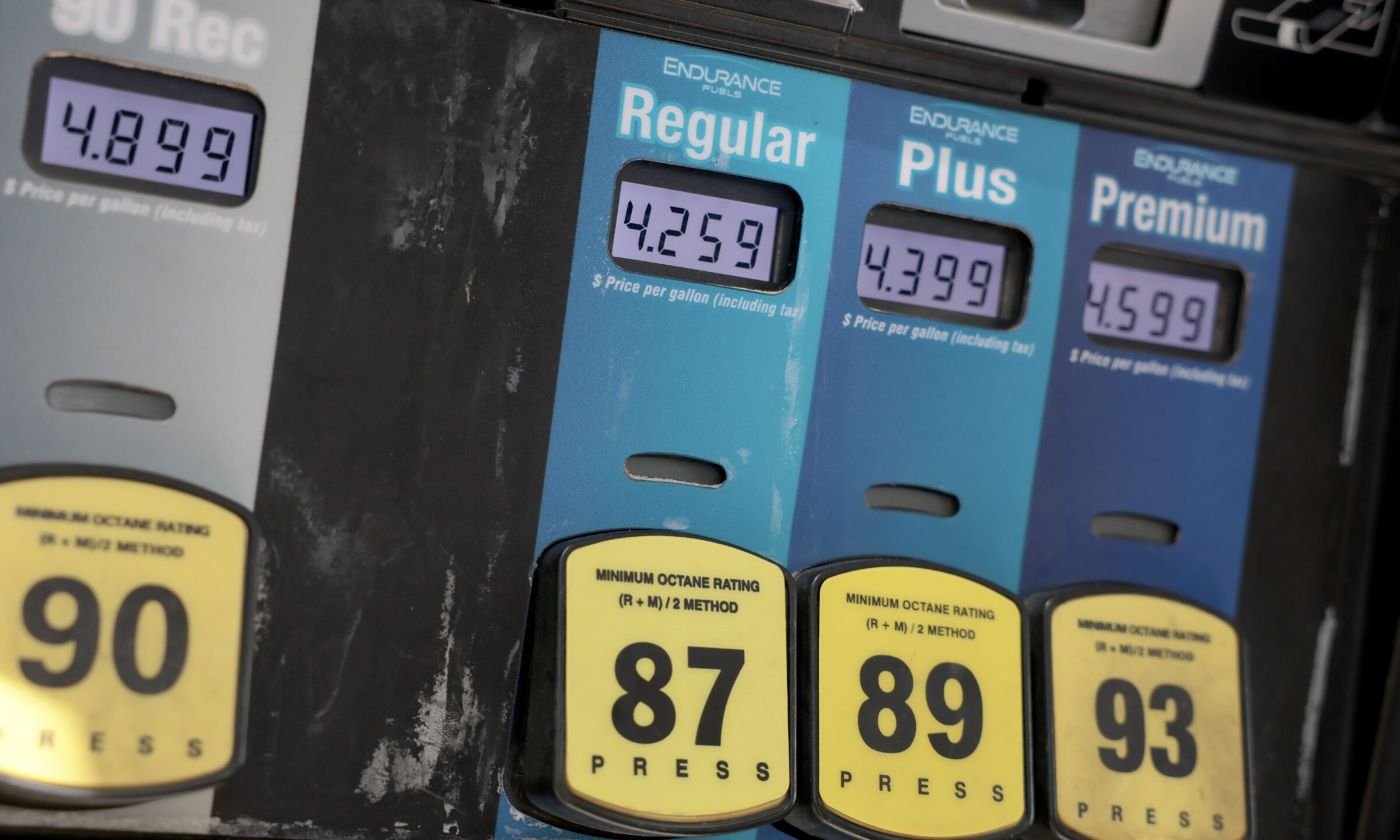
Diesel prices are up roughly 50% since the war began, hitting $5.67 per gallon on Wednesday, according to AAA, which tracks fuel prices.
2. Air travel
Airlines run on jet fuel and costs have already sharply risen. In response, airlines are already raising ticket prices. Some plan to cancel flights to save on fuel costs; with fewer flight options to choose from, there will be more competition for seats on remaining flights, driving up prices for travel even further.
3. Food
There are multiple pressure points involved with food production that are getting hit by higher prices all at once. Diesel to run farm equipment and delivery trucks, which we’ve touched on already. But fertilizers are the biggest issue, including nitrogen fertilizers (requires liquified natural gas) and phosphate fertilizers (made from urea, ammonia and sulfur), which are key to producing food staples like wheat, corn, rice, fruit and more.
About a third of all seaborne fertilizer passes through the Strait of Hormuz. If farmers can’t get affordable fertilizer now, they won’t be able to plant as much during the spring planting season, which will eventually show up in higher prices.
4. Plastics and packaging
Plastic production requires oil and natural gas. With about 85% of Middle Eastern polyethylene exports moving through the Strait of Hormuz, raw materials that require plastic will go up. That includes things like water bottles, credit cards, furniture, household items, food containers, car parts and anything that is sealed or wrapped in plastic.
5. Synthetic clothing
Most clothing today is made from petrochemicals, including polyester, nylon, spandex and fleece. The garment industry — especially producers of fast fashion — rely on synthetic fibers sourced through supply chains that run through the Strait of Hormuz. As shortages appear and costs of raw materials rise, the fabric costs will rise, too, and eventually show up in higher prices for clothing.
6. Technology and electronics
The tech and electronic products industry is being affected by dual disruptions. The Strait of Hormuz is a critical shipping route for graphite feedstocks, which are crucial for producing lithium-ion batteries — while helium is needed for semiconductors, fiber optics, electronics and medical devices. Supply disruption could lead to higher prices for smartphones, laptops, EVs, energy storage systems and diagnostic medical equipment like MRI machines.
7. Anything made with aluminum
Gulf countries supply about 9% of the world’s aluminium. It also supplies 21% of unwrought aluminum imports and 13% of wrought aluminum imports into the U.S.
Aluminum is essential for constructing buildings, vehicles, airplanes, electrical power transmission, appliances and more. Delays in aluminum exports could hike up the price of construction products, industrial equipment, planes, cars and other machinery.
8. Cars
Plastic and aluminum price hikes, and other supply chain upsets, are likely to drive up costs of vehicles, as well.
“Any disruption in production — say in South Korea or in Japan — has the potential to snowball into production disruptions stateside, which may contribute to general shortage of vehicles and drive up new and used prices,” Manaenkov says.
Oil flows remain fragile, economic risk mounts
Even after the war ends, the flow of shipping through the Strait of Hormuz may not immediately return to business as usual, and gas prices in the U.S. won’t necessarily fall. Iran can still regulate the flow of oil, which would keep global and domestic fuel costs elevated.
In other words, even if the U.S. fully ends its involvement, Iran has leverage to keep economic pressure in place.
“It’s not like an on-and-off faucet,” Manaenkov says. “Once you stop pumping, you need to spend a significant amount of resources to restart the flow.”
For now the conflict is on pause and traffic through the strait is slowly resuming, but the war is far from over and unrest across the Middle East persists.
On Wednesday, just hours after the temporary truce was made with the U.S., an Iranian drone hit a pumping station along Saudi Arabia’s critical East-West oil pipeline — a key route for bypassing the Strait of Hormuz. It carries about 7 million barrels of crude per day from the Gulf to the Red Sea, and the damage could further compound the energy crisis.
(Photo by Joe Raedle/Getty Images)
About the author

Anna Helhoski is a senior writer covering economic news and trends in consumer finance at NerdWallet. She is an on-air contributor and producer of Money News segments for NerdWallet’s Smart Money podcast. She is also an authority on student loans. She joined NerdWallet in 2014. Her work has been syndicated in news outlets nationwide including The Associated Press, The New York Times, The Washington Post, The Los Angeles Times and USA Today. She previously covered local news in the New York metro area for the Daily Voice and New York state politics for The Legislative Gazette. She holds a bachelor’s degree in journalism from Purchase College, State University of New York.