No Result
View All Result
  • Login
Thursday, August 6, 2026
theadvisertimes.com
  • Home
  • Business
  • Financial Planning
  • Personal Finance
  • Investing
  • Money
  • Economy
  • Markets
  • Stocks
  • Trading
  • Home
  • Business
  • Financial Planning
  • Personal Finance
  • Investing
  • Money
  • Economy
  • Markets
  • Stocks
  • Trading
No Result
View All Result
theadvisertimes.com
No Result
View All Result
Home Startups

People who keep a paper notepad with them aren’t being old-fashioned — they’ve discovered that some thoughts only become real once your hand has moved across a page

by theadvisertimes.com
4 months ago
in Startups
Reading Time: 4 mins read
A A
0
People who keep a paper notepad with them aren’t being old-fashioned — they’ve discovered that some thoughts only become real once your hand has moved across a page
Share on FacebookShare on TwitterShare on LInkedIn


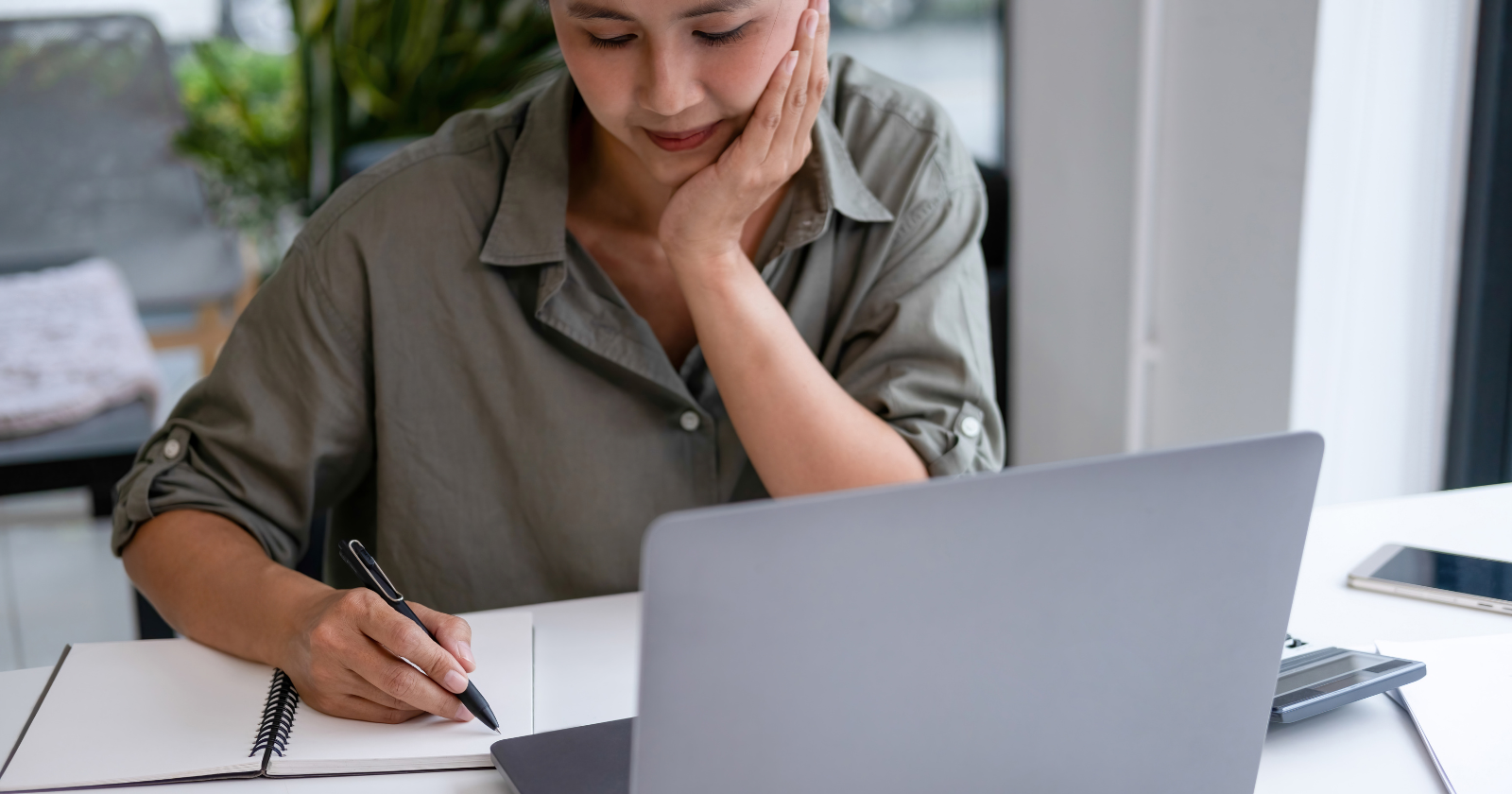
In a coffee shop last week, I watched someone pull out a notebook during what I am guessing was a business meeting. While everyone else tapped away on laptops, she wrote longhand, her pen moving deliberately across the page. The person next to her smirked—probably thinking how inefficient it was.

But here’s what struck me: she was the only one who never asked anyone to repeat themselves. She was the only one whose ideas seemed to flow without the constant pause-delete-retype dance I saw on every screen around her.

I keep a physical notebook for first drafts and interview notes, even though it’s probably considered “inefficient” by modern standards. A colleague once asked why I bothered when digital tools could search, organize, and sync everything instantly. The answer came to me during one of those long walks I take without podcasts when I need to think through a complicated piece. There’s something about the physical act of writing—the resistance of pen on paper, the inability to delete a thought before it’s fully formed—that changes how we think.

The science behind why your hand remembers what your keyboard forgets

Ever wonder why you can still remember notes you took by hand in college but struggle to recall what you typed in yesterday’s meeting? There’s fascinating neuroscience at play here.

According to The Bronfenbrenner Center for Translational Research, “Handwriting stimulates complex brain connections essential in encoding new information and forming memories..” This isn’t just about nostalgia or preference—it’s about how our brains physically process information differently when we write versus type.

Think about it: when you write by hand, you’re creating each letter from scratch. Your brain has to plan the movement, execute it, and adjust in real-time. This engages multiple areas of your brain simultaneously, creating what researchers call a “memory trace” that’s far stronger than what happens when you hit uniform keys on a keyboard.

I discovered this firsthand when I started baking during a particularly stressful period. The precision required, the inability to multitask or check email while kneading dough—it reminded me of writing by hand. Both force you to slow down and be present with what you’re creating. You can’t cmd+z a word you’ve written in ink, just like you can’t unmix ingredients once they’re combined.

Why constraints actually free your thinking

Here’s something counterintuitive: the limitations of paper might actually expand your thinking. When you type, you can endlessly edit, rearrange, and second-guess yourself. But with a notebook, you have to commit to your thoughts, however imperfect they might be.

A professor in college once told me I “wrote like I was afraid to have an opinion.” That comment stung, but it changed how I approached analysis. What I realized years later is that my tentative writing came from the ability to constantly revise on a computer. I’d soften my arguments with each edit, smoothing away anything that felt too bold or definitive.

Paper doesn’t let you do that. Once the ink hits the page, you’re committed. This constraint forces you to think before you write, but it also prevents you from overthinking. You have to trust your first instinct more, and surprisingly, that first instinct is often your most authentic voice.

I write best in the morning before I’ve talked to anyone or checked email or Slack. Part of that is about having a clear mind, but part of it is about approaching the blank page—literal page—without the weight of everyone else’s opinions. When you write by hand in those quiet morning hours, you’re having a conversation with yourself that technology can’t interrupt.

The unexpected social power of analog note-taking

Have you noticed how people respond differently when you take notes by hand versus on a device? When you open a laptop in a meeting, there’s always that slight tension—are you taking notes or checking email? But when you pull out a notebook, something shifts. People lean in more. They speak more freely.

There’s also something about the pace of handwriting that changes the dynamic of conversations. You can’t capture every word when writing by hand, so you have to listen for meaning, for the important points. This selective attention makes you a better listener. You’re processing and synthesizing in real-time, not just transcribing.

Making space for thoughts that need time to emerge

National Geographic reports that “Research shows that the act of putting pen to paper activates multiple brain regions, improving memory retention and cognitive function.” But beyond the cognitive benefits, I think there’s something else at play: the relationship between speed and depth of thought.

Digital tools are built for speed and efficiency. But not all thoughts arrive fully formed and ready for publication. Some ideas need to meander across the page, to loop back on themselves, to sit half-finished in the margins until they’re ready to emerge.

When I’m stuck on a piece, I often find that the solution comes not from staring at my computer screen but from opening my notebook and just starting to write—about anything. The physical act of moving my hand across the page seems to unlock something that typing can’t reach. Maybe it’s because handwriting is slower, giving our subconscious time to catch up. Or maybe it’s because the brain pathways activated by handwriting connect to different parts of our creativity.

Final thoughts

The next time you see someone pull out a paper notebook in a world of tablets and laptops, don’t assume they’re being stubborn or old-fashioned. They might have discovered what neuroscience is now proving: that the ancient technology of pen and paper activates our brains in ways that screens simply can’t replicate.

Some thoughts really do need to travel through your hand to become real. They need the resistance of paper, the commitment of ink, the time it takes to form each letter. In our rush to digitize everything, we might be leaving behind one of our most powerful tools for thinking, remembering, and creating. The question isn’t whether digital tools are bad—they’re incredibly useful. The question is whether we’re willing to admit that sometimes, the old ways serve purposes we’re only beginning to understand.




Source link

Tags: arentdiscoveredHandmovednotepadOldFashionedPagePaperpeopleRealTheyvethoughts
ShareTweetShare
Previous Post

Gold and Oil Drive Record TradFi Volumes Across Crypto Exchanges

Next Post

Trent announces first-ever bonus issue in 1:2 ratio. Check details

Related Posts

Why Transparency Wins Long-Term in Business: The Competitive Advantage Most Companies Ignore

Why Transparency Wins Long-Term in Business: The Competitive Advantage Most Companies Ignore

by theadvisertimes.com
August 5, 2026
0

When people talk about business growth, the conversation usually centers around the visible levers that naturally attract attention, such as...

The Dunning-Kruger effect isn’t what everyone thinks it is: the original 1999 study found bottom-quartile performers overestimated their standing by about 50 percentile points, not that confident people are stupid

The Dunning-Kruger effect isn’t what everyone thinks it is: the original 1999 study found bottom-quartile performers overestimated their standing by about 50 percentile points, not that confident people are stupid

by theadvisertimes.com
August 5, 2026
0

The Dunning-Kruger effect may be the most misused finding in pop psychology, and the way people misuse it often says...

The AlleyWatch July 2026 New York Venture Capital Funding Report – AlleyWatch

The AlleyWatch July 2026 New York Venture Capital Funding Report – AlleyWatch

by theadvisertimes.com
August 4, 2026
0

New York City startups raised $1.81B across 53 deals in July 2026, a purposeful step down from June’s exceptional $3.90B...

The men who consume the most information — podcasts queued, newsletters unread, tabs left open for weeks — are often the ones who have quietly stopped asking whether any of it is changing how they think

The men who consume the most information — podcasts queued, newsletters unread, tabs left open for weeks — are often the ones who have quietly stopped asking whether any of it is changing how they think

by theadvisertimes.com
August 4, 2026
0

I know a guy with eleven podcast episodes queued, forty-something newsletters sitting unread, and a browser with so many tabs...

The Value Creation Engine: How Growth Equity Firms Turn Strategy Into Results

The Value Creation Engine: How Growth Equity Firms Turn Strategy Into Results

by theadvisertimes.com
August 3, 2026
0

You know the pattern. The value creation plan is sharp, the management team agrees, and the initiatives get owners, milestones,...

The idea that Gen Z is lazy misreads the data: full-time workers aged 20 to 24 averaged 40.5 hours a week, and visible enthusiasm is not the same as effort

The idea that Gen Z is lazy misreads the data: full-time workers aged 20 to 24 averaged 40.5 hours a week, and visible enthusiasm is not the same as effort

by theadvisertimes.com
August 3, 2026
0

The 74% figure is real, but it does not mean what the lazy-Gen-Z argument needs it to mean. ResumeBuilder reported...

Next Post
Trent announces first-ever bonus issue in 1:2 ratio. Check details

Trent announces first-ever bonus issue in 1:2 ratio. Check details

Markets shrug at Trump’s Iran ceasefire extension

Markets shrug at Trump's Iran ceasefire extension

  • Trending
  • Comments
  • Latest
SEC pushes private market access, but retail is already in

SEC pushes private market access, but retail is already in

July 16, 2026
How I Maximize My Sapphire Reserve Dining Credit

How I Maximize My Sapphire Reserve Dining Credit

July 10, 2026
The Weekly Notable Startup Funding Report: 6/22/26 – AlleyWatch

The Weekly Notable Startup Funding Report: 6/22/26 – AlleyWatch

June 21, 2026
The 10 Largest NYC Tech Startup Funding Rounds of June 2026 – AlleyWatch

The 10 Largest NYC Tech Startup Funding Rounds of June 2026 – AlleyWatch

July 6, 2026
The Weekly Notable Startup Funding Report: 7/20/26 – AlleyWatch

The Weekly Notable Startup Funding Report: 7/20/26 – AlleyWatch

July 20, 2026
The Hidden Cost of Chaos: Challenges with Spreadsheet-Based Channel Management in 2026

The Hidden Cost of Chaos: Challenges with Spreadsheet-Based Channel Management in 2026

May 6, 2026
Factbox-Tech companies tap debt, equity to fund AI and cloud expansion

Factbox-Tech companies tap debt, equity to fund AI and cloud expansion

0
One in four Canadians own crypto, says OSC survey

One in four Canadians own crypto, says OSC survey

0
Vacation Rentals Are Officially on Sale: Where They’re Worth Buying

Vacation Rentals Are Officially on Sale: Where They’re Worth Buying

0
Trump’s Commerce Department as Venture Capitalist: Political Investment at its Worst

Trump’s Commerce Department as Venture Capitalist: Political Investment at its Worst

0
Britannia Q1 Results: Profit rises 14% to Rs 593 crore on volumes, price rise

Britannia Q1 Results: Profit rises 14% to Rs 593 crore on volumes, price rise

0
Your Processes Are The Weakest Part Of Your AEO Strategy

Your Processes Are The Weakest Part Of Your AEO Strategy

0
Factbox-Tech companies tap debt, equity to fund AI and cloud expansion

Factbox-Tech companies tap debt, equity to fund AI and cloud expansion

August 6, 2026
Britannia Q1 Results: Profit rises 14% to Rs 593 crore on volumes, price rise

Britannia Q1 Results: Profit rises 14% to Rs 593 crore on volumes, price rise

August 6, 2026
OraSure expects Q3 revenue of .5M-.5M while delaying InteliQuick CT/NG FDA clearance beyond 2026 (NASDAQ:OSUR)

OraSure expects Q3 revenue of $29.5M-$32.5M while delaying InteliQuick CT/NG FDA clearance beyond 2026 (NASDAQ:OSUR)

August 6, 2026
GH Research Releases Q2 2026 Financial Results

GH Research Releases Q2 2026 Financial Results

August 6, 2026
Your Processes Are The Weakest Part Of Your AEO Strategy

Your Processes Are The Weakest Part Of Your AEO Strategy

August 6, 2026
Ooredoo teams up with Nvidia and Nokia to launch 1 GW AI platform in Indonesia

Ooredoo teams up with Nvidia and Nokia to launch 1 GW AI platform in Indonesia

August 6, 2026
theadvisertimes.com

Get the latest news and follow the coverage of Business & Financial News, Stock Market Updates, Analysis, and more from the trusted sources.

CATEGORIES

  • Business
  • Cryptocurrency
  • Economy
  • Financial Planning
  • Investing
  • Market Analysis
  • Markets
  • Money
  • Personal Finance
  • Startups
  • Stock Market
  • Trading

LATEST UPDATES

  • Factbox-Tech companies tap debt, equity to fund AI and cloud expansion
  • Britannia Q1 Results: Profit rises 14% to Rs 593 crore on volumes, price rise
  • OraSure expects Q3 revenue of $29.5M-$32.5M while delaying InteliQuick CT/NG FDA clearance beyond 2026 (NASDAQ:OSUR)
  • Our Great Privacy Policy
  • Terms of Use, Legal Notices & Disclosures
  • About Us
  • Contact Us

© Copyright 2024 All Rights Reserved
See articles for original source and related links to external sites.

Welcome Back!

Login to your account below

Forgotten Password?

Retrieve your password

Please enter your username or email address to reset your password.

Log In
No Result
View All Result
  • Home
  • Business
  • Financial Planning
  • Personal Finance
  • Investing
  • Money
  • Economy
  • Markets
  • Stocks
  • Trading

© Copyright 2024 All Rights Reserved
See articles for original source and related links to external sites.