No Result
View All Result
  • Login
Thursday, August 6, 2026
theadvisertimes.com
  • Home
  • Business
  • Financial Planning
  • Personal Finance
  • Investing
  • Money
  • Economy
  • Markets
  • Stocks
  • Trading
  • Home
  • Business
  • Financial Planning
  • Personal Finance
  • Investing
  • Money
  • Economy
  • Markets
  • Stocks
  • Trading
No Result
View All Result
theadvisertimes.com
No Result
View All Result
Home Economy

Why Some Economies Are Growing While Others Collapse In Real-Time

by theadvisertimes.com
3 months ago
in Economy
Reading Time: 4 mins read
A A
0
Why Some Economies Are Growing While Others Collapse In Real-Time
Share on FacebookShare on TwitterShare on LInkedIn


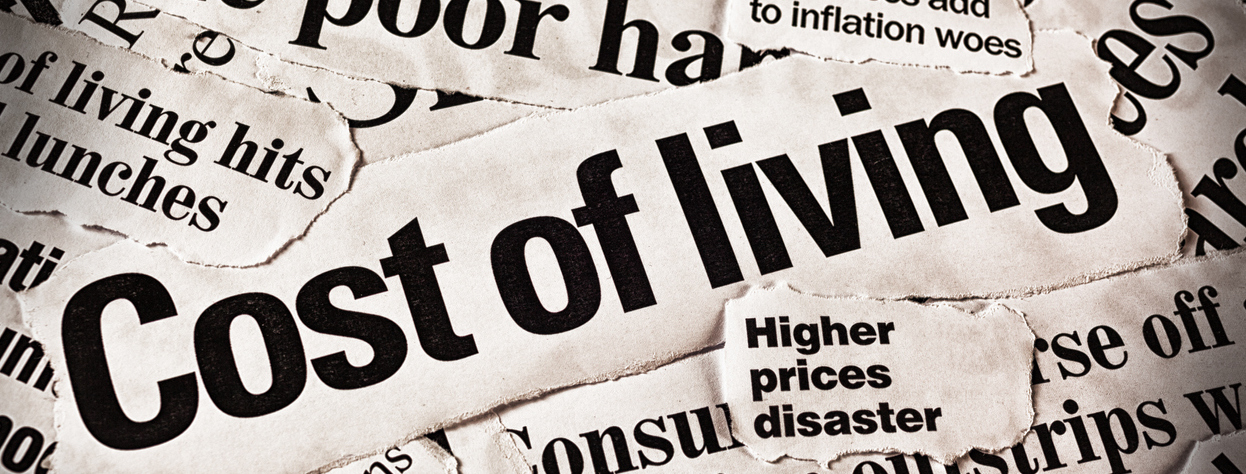
There is a pattern within the cost of living series based on a series of factors that directly contribute to the overall economic health of a population. What we are witnessing globally is not random. The same patterns continue to emerge regardless of the country, language, or political party in power. Nations that are expanding their middle class, attracting capital, building infrastructure, and maintaining affordable energy are experiencing economic growth in real time. Nations obsessed with debt expansion, climate extremism, endless war spending, uncontrolled migration, and taxation are watching their standard of living collapse before the public’s eyes.

The difference between success and decline is becoming visible on the streets. In the collapsing economies, people cannot afford homes, birth rates are imploding, young adults remain dependent on their parents well into their 30s, and governments continually invent new taxes to keep the system alive. In the rising economies, factories are being built, wages are climbing, infrastructure is expanding, and foreign capital is flowing inward.

This is ultimately a capital flow story. Capital always migrates to wherever it is treated best. Governments never seem to understand this because politicians assume wealth is trapped permanently inside their borders. It is not. Once governments begin punishing productivity while rewarding bureaucracy, capital quietly leaves.

Europe is the clearest example of economic self-destruction. Germany, once the industrial engine of Europe, has struggled with stagnant growth for years. Even the IMF now projects only modest recovery despite aggressive fiscal spending. The problem is structural. Germany built its industrial dominance on affordable energy, engineering, exports, and manufacturing. Then Europe declared war on fossil fuels while simultaneously sanctioning its largest source of cheap energy from Russia. You cannot run an industrial economy on ideology.

The same pattern is visible throughout Britain, Canada, and parts of Western Europe. Housing costs exploded while real wages failed to keep pace. Governments expanded bureaucracy while productivity slowed. Immigration surged far beyond infrastructure capacity, increasing pressure on housing, healthcare, transportation, and social services. The middle class was squeezed from every direction at once.

Japan demonstrates another side of the crisis. It is the demographic collapse model. An aging population, combined with decades of debt accumulation, has created an economy where the government survives largely through perpetual intervention. The Bank of Japan has distorted markets for decades simply trying to prevent the sovereign debt structure from imploding. Meanwhile, birth rates continue to collapse because younger generations no longer see financial security as achievable.

South Korea faces similar demographic pressures, but it also reveals another modern vulnerability: dependence on global supply chains and imported energy. Seoul recently introduced another major emergency budget package to offset rising oil prices and geopolitical instability tied to the Middle East conflict. Modern economies that lack domestic energy independence become extremely vulnerable during geopolitical crises.

economicexpansion

Then we look at the nations that are rising.

India continues expanding because it still possesses a young workforce, rising industrialization, and enormous internal demand. Manufacturing is steadily relocating away from Europe and China toward regions with lower costs and growing labor forces. India is benefiting directly from that shift. Global forecasts continue placing India among the fastest-growing major economies in the world.

Vietnam has become one of the clearest examples of capital migration. Multinational corporations moved production there to escape rising geopolitical tensions and higher costs elsewhere. Vietnam combined infrastructure spending, export manufacturing, and relatively stable economic policy to become one of Asia’s fastest-growing economies. Reuters recently reported that Vietnam aims for growth rates near 10% through 2030 while pouring roughly $200 billion into infrastructure projects.

Singapore succeeded because it understood something most Western governments forgot decades ago: stability attracts money. Low corruption, efficient infrastructure, strong property rights, and a pro-business environment consistently attract international capital. The government did not wage ideological war against productivity. It created conditions where business could thrive.

Mexico also benefited from global realignment. As corporations attempt to reduce dependence on China, manufacturing is increasingly moving closer to the United States through nearshoring. Mexico has enormous long-term potential because geography matters. Yet even there, sovereign debt risks and fiscal instability remain threats if spending spirals out of control.

What ties all the successful economies together is surprisingly simple. They still reward production over speculation. They invest in infrastructure instead of endless bureaucracy. They maintain access to affordable energy. They attract capital instead of demonizing it. Most importantly, they still possess some degree of optimism about the future.

Collapsing economies share the opposite characteristics. Rising taxes, shrinking birth rates, exploding debt, unaffordable housing, ideological regulation, and declining productivity create a death spiral. Governments then attempt to solve these problems by borrowing even more money, which only accelerates inflation and capital flight.

The sovereign debt crisis remains the core issue behind everything. The OECD recently warned that sovereign borrowing continues hitting record levels globally while interest expenditures remain near historic highs. Governments are increasingly trapped in a cycle where they must borrow simply to service prior debt obligations. Once that occurs, policy becomes entirely focused on maintaining confidence in government debt markets.

This is why we are seeing the divide between rising and collapsing nations widen so dramatically. Productive capital is abandoning regions where governments have become hostile toward growth itself. The world economy is fragmenting into two camps: nations still building for the future, and nations desperately trying to preserve systems that are mathematically unsustainable.

The average person feels this long before economists admit it. They feel it at the grocery store, in housing costs, in declining opportunities, and in the inability to build wealth. That is why people increasingly describe economic decline as something they experience “in real time.” The collapse is no longer hidden inside statistics. It has become part of daily life.



Source link

Tags: collapseEconomiesgrowingRealTime
ShareTweetShare
Previous Post

How To Distinguish A Real Bull Market

Next Post

2026 market turmoil? These 10 classic investing rules still hold the key

Related Posts

THE WATER WARS HAVE BEGUN

THE WATER WARS HAVE BEGUN

by theadvisertimes.com
August 6, 2026
0

The World Economic Forum has openly proclaimed 2026 the “Year of Water” and has introduced what it calls “Blue Davos,”...

The Property Rights Duality and the Defense of Freedom

The Property Rights Duality and the Defense of Freedom

by theadvisertimes.com
August 5, 2026
0

Though the modern state successfully frames itself as the ultimate guarantor of positive rights, it is the opposite: a systematic...

Private companies added just 44,000 workers in July, below expectations, ADP reports

Private companies added just 44,000 workers in July, below expectations, ADP reports

by theadvisertimes.com
August 5, 2026
0

Hiring at private companies slowed considerably in July, with most of the job growth coming from healthcare, payrolls processing firm...

El-Sayed on Track to Win US Senate Primary, Overcoming AIPAC’s  Million Onslaught

El-Sayed on Track to Win US Senate Primary, Overcoming AIPAC’s $30 Million Onslaught

by theadvisertimes.com
August 5, 2026
0

Yves here. Just wait for the hysteria about progressives (who will be called socialists and worse) to shift to a...

Europe drought threatens energy, shipping and growth

Europe drought threatens energy, shipping and growth

by theadvisertimes.com
August 5, 2026
0

An aerial view shows a former eel fishing boat covered in dried mud among on low water among the banks...

Zelensky Pushing For WWIII | Armstrong Economics

Zelensky Pushing For WWIII | Armstrong Economics

by theadvisertimes.com
August 5, 2026
0

The September Duma Elections – Will Putin Face Pressure to Escalate or Moderate? One of the greatest mistakes analysts make...

Next Post
2026 market turmoil? These 10 classic investing rules still hold the key

2026 market turmoil? These 10 classic investing rules still hold the key

Rajeev Thakkar and Sankaran Naren see value in IT despite AI disruption concerns

Rajeev Thakkar and Sankaran Naren see value in IT despite AI disruption concerns

  • Trending
  • Comments
  • Latest
SEC pushes private market access, but retail is already in

SEC pushes private market access, but retail is already in

July 16, 2026
How I Maximize My Sapphire Reserve Dining Credit

How I Maximize My Sapphire Reserve Dining Credit

July 10, 2026
The Weekly Notable Startup Funding Report: 6/22/26 – AlleyWatch

The Weekly Notable Startup Funding Report: 6/22/26 – AlleyWatch

June 21, 2026
The 10 Largest NYC Tech Startup Funding Rounds of June 2026 – AlleyWatch

The 10 Largest NYC Tech Startup Funding Rounds of June 2026 – AlleyWatch

July 6, 2026
The Weekly Notable Startup Funding Report: 7/20/26 – AlleyWatch

The Weekly Notable Startup Funding Report: 7/20/26 – AlleyWatch

July 20, 2026
The Hidden Cost of Chaos: Challenges with Spreadsheet-Based Channel Management in 2026

The Hidden Cost of Chaos: Challenges with Spreadsheet-Based Channel Management in 2026

May 6, 2026
Sandisk bulls are probably eyeing this number on earnings day: AlphaSpace stat of the evening

Sandisk bulls are probably eyeing this number on earnings day: AlphaSpace stat of the evening

0
HHS Decertifies Kentucky Organ Donation Group Over Safety Concerns

HHS Decertifies Kentucky Organ Donation Group Over Safety Concerns

0
Agnico Eagle Mines – AEM: Es tut sich was bei Gold & Silber!

Agnico Eagle Mines – AEM: Es tut sich was bei Gold & Silber!

0
THE WATER WARS HAVE BEGUN

THE WATER WARS HAVE BEGUN

0
Channel Rebate Automation: The 2026 Guide to Scaling Incentives

Channel Rebate Automation: The 2026 Guide to Scaling Incentives

0
GIC subsidiary and promoter Sunu Mathew lead LEAP India’s pre-IPO placement round

GIC subsidiary and promoter Sunu Mathew lead LEAP India’s pre-IPO placement round

0
Utah Judge Rejects Kalshi’s Federal Shield From Gambling Laws

Utah Judge Rejects Kalshi’s Federal Shield From Gambling Laws

August 6, 2026
GIC subsidiary and promoter Sunu Mathew lead LEAP India’s pre-IPO placement round

GIC subsidiary and promoter Sunu Mathew lead LEAP India’s pre-IPO placement round

August 6, 2026
BBSI narrows 2026 outlook to 3%-4% gross billings growth as it targets 2.7%-2.75% gross margin (NASDAQ:BBSI)

BBSI narrows 2026 outlook to 3%-4% gross billings growth as it targets 2.7%-2.75% gross margin (NASDAQ:BBSI)

August 6, 2026
Agnico Eagle Mines – AEM: Es tut sich was bei Gold & Silber!

Agnico Eagle Mines – AEM: Es tut sich was bei Gold & Silber!

August 6, 2026
HHS Decertifies Kentucky Organ Donation Group Over Safety Concerns

HHS Decertifies Kentucky Organ Donation Group Over Safety Concerns

August 6, 2026
THE WATER WARS HAVE BEGUN

THE WATER WARS HAVE BEGUN

August 6, 2026
theadvisertimes.com

Get the latest news and follow the coverage of Business & Financial News, Stock Market Updates, Analysis, and more from the trusted sources.

CATEGORIES

  • Business
  • Cryptocurrency
  • Economy
  • Financial Planning
  • Investing
  • Market Analysis
  • Markets
  • Money
  • Personal Finance
  • Startups
  • Stock Market
  • Trading

LATEST UPDATES

  • Utah Judge Rejects Kalshi’s Federal Shield From Gambling Laws
  • GIC subsidiary and promoter Sunu Mathew lead LEAP India’s pre-IPO placement round
  • BBSI narrows 2026 outlook to 3%-4% gross billings growth as it targets 2.7%-2.75% gross margin (NASDAQ:BBSI)
  • Our Great Privacy Policy
  • Terms of Use, Legal Notices & Disclosures
  • About Us
  • Contact Us

© Copyright 2024 All Rights Reserved
See articles for original source and related links to external sites.

Welcome Back!

Login to your account below

Forgotten Password?

Retrieve your password

Please enter your username or email address to reset your password.

Log In
No Result
View All Result
  • Home
  • Business
  • Financial Planning
  • Personal Finance
  • Investing
  • Money
  • Economy
  • Markets
  • Stocks
  • Trading

© Copyright 2024 All Rights Reserved
See articles for original source and related links to external sites.