No Result
View All Result
  • Login
Wednesday, June 3, 2026
theadvisertimes.com
  • Home
  • Business
  • Financial Planning
  • Personal Finance
  • Investing
  • Money
  • Economy
  • Markets
  • Stocks
  • Trading
  • Home
  • Business
  • Financial Planning
  • Personal Finance
  • Investing
  • Money
  • Economy
  • Markets
  • Stocks
  • Trading
No Result
View All Result
theadvisertimes.com
No Result
View All Result
Home Startups

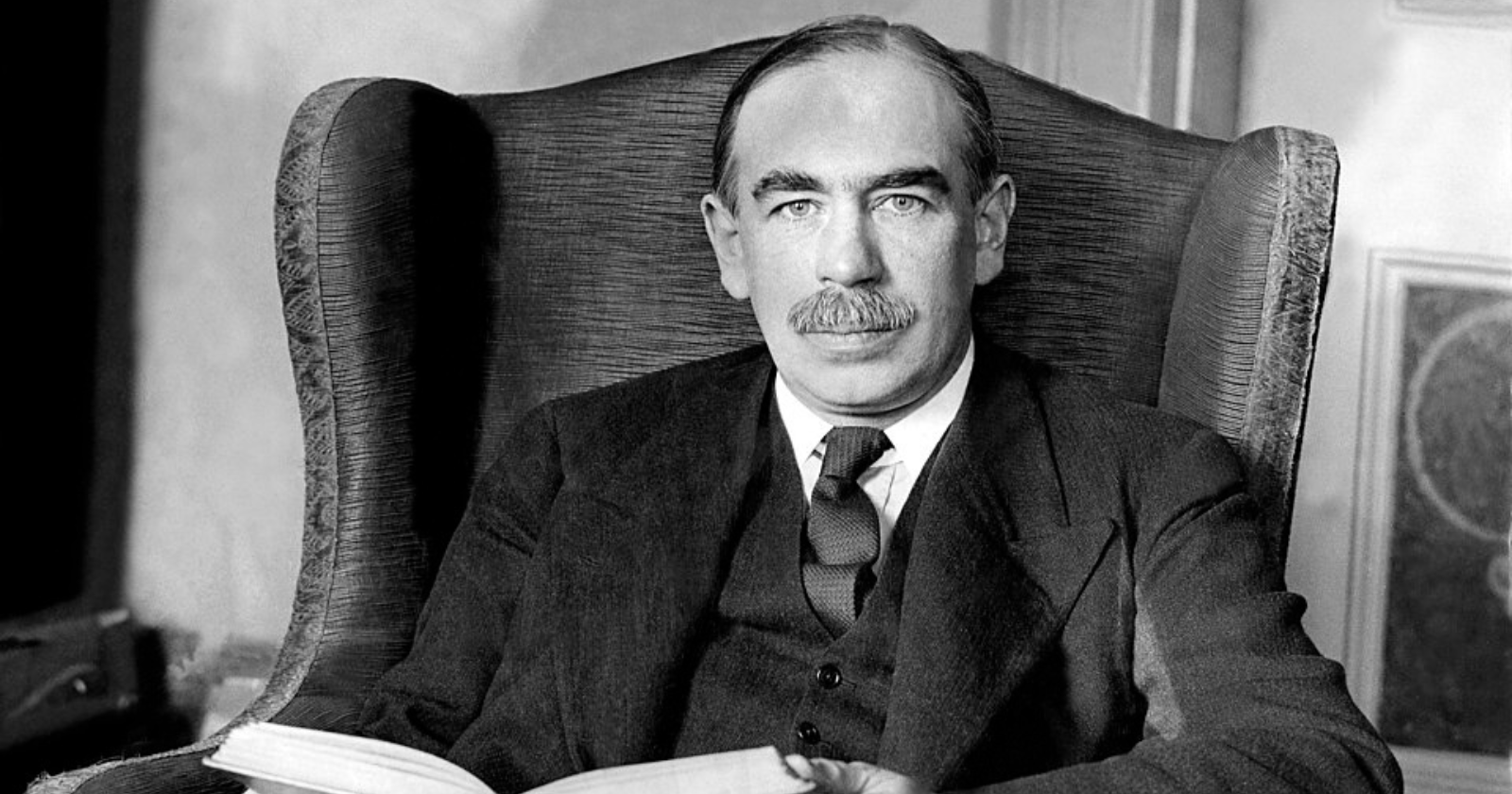
The economist John Maynard Keynes predicted in 1930 that his grandchildren would be working roughly fifteen hours a week by the early twenty-first century — and the strange thing is that, technologically, he was approximately correct

by theadvisertimes.com
1 week ago
in Startups
Reading Time: 3 mins read
A A
0
The economist John Maynard Keynes predicted in 1930 that his grandchildren would be working roughly fifteen hours a week by the early twenty-first century — and the strange thing is that, technologically, he was approximately correct
Share on FacebookShare on TwitterShare on LInkedIn


It is unusual for a prediction to be half right and half wrong at the same time, but that is basically what happened in the case of John Maynard Keynes.

The technology arrived. The leisure did not. 

In 1930, as British unemployment was climbing toward Depression-era levels, Keynes wrote a short essay called Economic Possibilities for our Grandchildren. He skipped the present and looked a hundred years out. His reasoning was simple. Technical efficiency was compounding. Capital was accumulating. By 2030, he argued, the standard of life in advanced economies would be four to eight times what it was in 1930. Once basic needs were comfortably met, the rational thing for people to do was work less. “Three-hour shifts or a fifteen-hour week may put off the problem for a great while,” he wrote. “For three hours a day is quite enough to satisfy the old Adam in most of us!”

The U.S. Bureau of Labor Statistics, summarizing a recent reappraisal of the essay, puts the verdict cleanly: “He was right about the large increases in wealth that have occurred, but there has still been no shift in people’s preferences towards increasing leisure and the 15-hour workweek.” The wealth came. The fifteen-hour week did not. 

What perhaps Keynes did not anticipate was how good we would be at finding new things to want. Each productivity gain that could have been taken as time off was, instead, taken as more output, more income, more stuff to buy, more rungs to climb. Houses got bigger. Cars got newer. The basket of “basic needs” quietly expanded to include things that would have looked exotic if not completely alien to a working-class household in 1930 — a second car, an annual trip abroad, a streaming subscription for every interest. And the appetite for status — the part Keynes specifically worried about as a desire for superiority — turned out to be far more durable than he likely hoped. Though he did warn us:

“Needs of the second class, those which satisfy the desire for superiority, may indeed be insatiable; for the higher the general level, the higher still are they.”

There are exceptions worth noting. A UK four-day-week pilot ran sixty-one companies through a six-month experiment in which staff kept full pay for four days of work instead of five. Ninety-two percent of the participating companies kept the policy when the trial ended. Revenue held. Burnout dropped. It is not a fifteen-hour week, but it is the first credible glimpse in a long time of what voluntarily taking productivity gains as time, rather than as money, might actually look like. 

I am not living Keynes’s prediction either. I work, more or less, the same hours as I did when I had a desk in Irish finance — possibly a bit more. The difference is not the hours; it is the autonomy over them. I have, in the years since, also discovered that my actual capacity for the load-bearing kind of work — sitting down and writing something from scratch — caps out at around three hours a day. Past that, the screen is still on, but the work is editing, sorting, admin, deciding. The fifteen-hour deep-work week, by that measure, is closer to my reality than I would have guessed. What I have not done — and I think this is closer to Keynes’s actual point — is let the rest of the day go.

A century in, the verdict splits cleanly. The machines have probably kept their side of the bargain. We did not. The harder problem, it turns out, was never the technology — it was what to do with ourselves once the technology was finished doing the work.




Source link

Tags: ApproximatelyCenturyCorrectEarlyeconomistFIFTEENgrandchildrenhoursJohnKeynesMaynardpredictedRoughlyStrangetechnologicallyTwentyFirstweekworking
ShareTweetShare
Previous Post

The $120 ‘Summer EBT’ Boost: Why Most Eligible Households Will Receive Their First Deposit Between Late May and Early June

Next Post

Mainstays Reversible Microfiber Comforter only $13.97!

Related Posts

The first U.S. insider trading case tied to a prediction market isn’t really about a Google engineer’s .2M — it’s about what blockchain pseudonymity actually does when prosecutors come knocking

The first U.S. insider trading case tied to a prediction market isn’t really about a Google engineer’s $1.2M — it’s about what blockchain pseudonymity actually does when prosecutors come knocking

by theadvisertimes.com
June 3, 2026
0

Federal prosecutors in Manhattan have charged Michele Spagnuolo, a 12-year Google software engineer, with insider trading after he allegedly turned...

From Compliance to Culture: Building a Food Safety First Hospitality Team

From Compliance to Culture: Building a Food Safety First Hospitality Team

by theadvisertimes.com
June 2, 2026
0

Key Takeaways: Compliance keeps a business legal; culture keeps safe habits visible when service gets hectic, or staffing runs thin....

Ninety-five percent of corporate AI pilots are failing, and the firms quietly cashing in are not the ones anyone is watching in San Francisco

Ninety-five percent of corporate AI pilots are failing, and the firms quietly cashing in are not the ones anyone is watching in San Francisco

by theadvisertimes.com
June 2, 2026
0

Think of enterprise AI right now as a Formula 1 engine bolted to a delivery van. The engine is extraordinary,...

The 11 Largest NYC Tech Startup Funding Rounds of May 2026 – AlleyWatch

The 11 Largest NYC Tech Startup Funding Rounds of May 2026 – AlleyWatch

by theadvisertimes.com
June 2, 2026
0

Armed with some data from our friends at CrunchBase, I broke down the largest NYC startup funding rounds from May...

A Google engineer allegedly turned the company’s confidential search data into .2M on Polymarket — and the case quietly exposes the attack surface every prediction market is pretending not to see

A Google engineer allegedly turned the company’s confidential search data into $1.2M on Polymarket — and the case quietly exposes the attack surface every prediction market is pretending not to see

by theadvisertimes.com
June 2, 2026
0

A Google software engineer has been charged with insider trading for allegedly turning confidential search data into profits on Polymarket....

Most Companies Are Buying AI Tools Wrong. Here’s How to Fix That.

Most Companies Are Buying AI Tools Wrong. Here’s How to Fix That.

by theadvisertimes.com
June 1, 2026
0

Ask any revenue team today and you’ll hear it. “What are the best AI tools right now?” It sounds smart....

Next Post
Mainstays Reversible Microfiber Comforter only .97!

Mainstays Reversible Microfiber Comforter only $13.97!

Protect Life First Aid Kit (100 pieces) only .46!

Protect Life First Aid Kit (100 pieces) only $9.46!

  • Trending
  • Comments
  • Latest
FIS, InvestCloud aim to help advisors connect with younger clients

FIS, InvestCloud aim to help advisors connect with younger clients

May 20, 2026
15 “Weird” Ways to Save Money

15 “Weird” Ways to Save Money

May 2, 2026
Teacher Appreciation Week 2026 Deals Include Freebies, Discounts

Teacher Appreciation Week 2026 Deals Include Freebies, Discounts

May 4, 2026
6 Hotels Where Chase’s Points Boost Yields 2.5x

6 Hotels Where Chase’s Points Boost Yields 2.5x

May 22, 2026
Buy a 0K/Year Income Stream? This Is How to Do It

Buy a $500K/Year Income Stream? This Is How to Do It

May 22, 2026
Anthropic’s confidential S-1 signals summer AI IPO race could heat up fast

Anthropic’s confidential S-1 signals summer AI IPO race could heat up fast

June 2, 2026
Smart Money Keeps Buying HYPE Despite Rising Market Fear – Price Holds Above  Level

Smart Money Keeps Buying HYPE Despite Rising Market Fear – Price Holds Above $70 Level

0
From Crushing Debt to Renting Out Billy Joel’s Former Estate—How Ben Chester Turned It All Around

From Crushing Debt to Renting Out Billy Joel’s Former Estate—How Ben Chester Turned It All Around

0
Global fashion retailer closing all stores after 33 years

Global fashion retailer closing all stores after 33 years

0
RBI calls off T-Bill auction on higher-yield demand

RBI calls off T-Bill auction on higher-yield demand

0
Quanta Services (PWR) Has a Backlog-and-Power-Demand Setup That Looks Bigger Than a Typical Contractor Story

Quanta Services (PWR) Has a Backlog-and-Power-Demand Setup That Looks Bigger Than a Typical Contractor Story

0
U.S., Iran intensify attacks as ceasefire frays, peace talks stall

U.S., Iran intensify attacks as ceasefire frays, peace talks stall

0
Smart Money Keeps Buying HYPE Despite Rising Market Fear – Price Holds Above  Level

Smart Money Keeps Buying HYPE Despite Rising Market Fear – Price Holds Above $70 Level

June 3, 2026
RBI calls off T-Bill auction on higher-yield demand

RBI calls off T-Bill auction on higher-yield demand

June 3, 2026
XRP Turns 14: Ripple CEO Calls It the ‘Honor of a Lifetime’ to Be Part of the XRP Family

XRP Turns 14: Ripple CEO Calls It the ‘Honor of a Lifetime’ to Be Part of the XRP Family

June 3, 2026
SpaceX reveals its share price and record valuation: 5 a share, at a .77 trillion valuation

SpaceX reveals its share price and record valuation: $135 a share, at a $1.77 trillion valuation

June 3, 2026
8 Free (or Cheap) Doughnut Deals for June 5

8 Free (or Cheap) Doughnut Deals for June 5

June 3, 2026
U.S., Iran intensify attacks as ceasefire frays, peace talks stall

U.S., Iran intensify attacks as ceasefire frays, peace talks stall

June 3, 2026
theadvisertimes.com

Get the latest news and follow the coverage of Business & Financial News, Stock Market Updates, Analysis, and more from the trusted sources.

CATEGORIES

  • Business
  • Cryptocurrency
  • Economy
  • Financial Planning
  • Investing
  • Market Analysis
  • Markets
  • Money
  • Personal Finance
  • Startups
  • Stock Market
  • Trading

LATEST UPDATES

  • Smart Money Keeps Buying HYPE Despite Rising Market Fear – Price Holds Above $70 Level
  • RBI calls off T-Bill auction on higher-yield demand
  • XRP Turns 14: Ripple CEO Calls It the ‘Honor of a Lifetime’ to Be Part of the XRP Family
  • Our Great Privacy Policy
  • Terms of Use, Legal Notices & Disclosures
  • About Us
  • Contact Us

© Copyright 2024 All Rights Reserved
See articles for original source and related links to external sites.

Welcome Back!

Login to your account below

Forgotten Password?

Retrieve your password

Please enter your username or email address to reset your password.

Log In
No Result
View All Result
  • Home
  • Business
  • Financial Planning
  • Personal Finance
  • Investing
  • Money
  • Economy
  • Markets
  • Stocks
  • Trading

© Copyright 2024 All Rights Reserved
See articles for original source and related links to external sites.