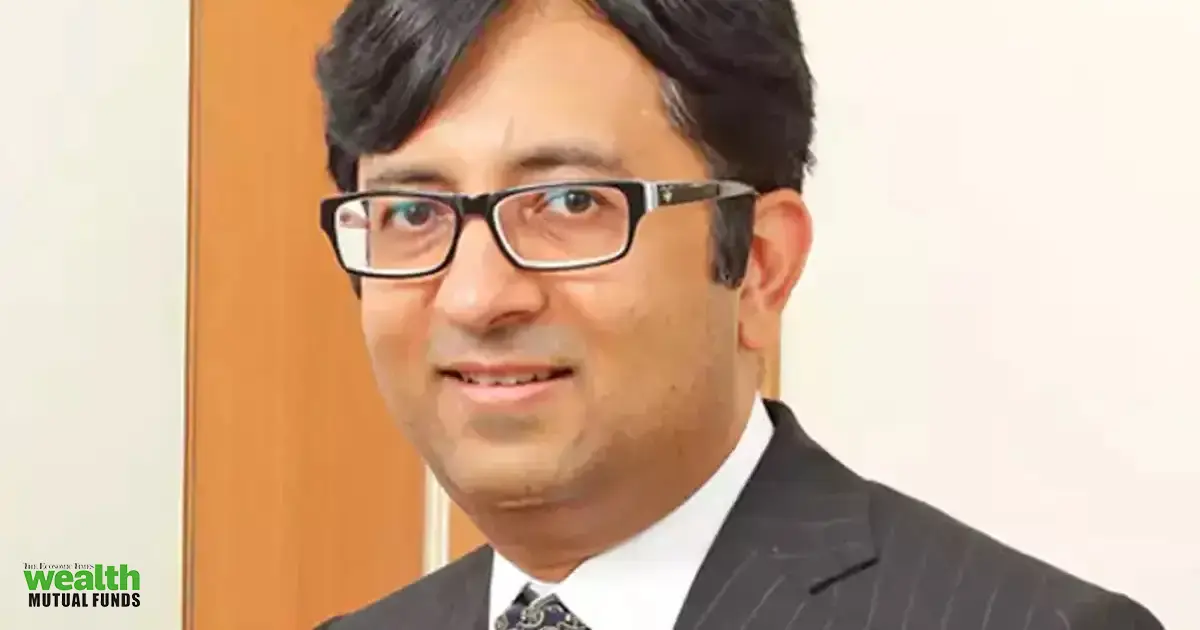
Speaking at the ET Alpha Wealth Summit on Thursday on “The Art of the Exit,” Rajiv Thakkar, CIO and Director at PPFAS Asset Management said that successful investing is not just about buying well but also about staying invested long enough for compounding to work.
In fact, before discussing reasons to sell, he spent considerable time explaining why investors should avoid selling in the first place.According to Thakkar, one of the biggest mistakes investors make is selling because a stock has not moved for a few months.
Also Read | ET Alpha Wealth Summit: Future alpha may emerge from neglected markets and asset classes, says Kalpen Parekh
Investors often spend significant effort researching a company, understanding management quality, assessing industry prospects and evaluating valuations. Yet after purchasing the stock, many lose patience if prices remain stagnant for six months or a year.”Investments are meant for wealth creation, not entertainment,” he said, cautioning against treating investing like a source of excitement or constant action.Another common trigger for unnecessary selling is reacting to news flow. Markets are constantly bombarded with information—wars, elections, crude oil fluctuations, interest-rate decisions, capital flows and economic data. Investors who react to every headline often end up making poor decisions.
To illustrate this, Thakkar recounted the story of an investor who received advance information about the severity of the Covid outbreak in early 2020. Acting on that information, the investor sold his technology stocks before the market crash. While the prediction turned out to be accurate, fear prevented him from re-entering the market, and he ultimately missed one of the strongest rallies in technology stocks.
The lesson, according to Thakkar, is that even correct information does not necessarily translate into successful investment outcomes. Thakkar was particularly critical of the concept of “profit booking.”
Investors often feel compelled to sell simply because a stock has appreciated significantly. However, he argued that wealth is created by allowing successful investments to compound rather than by repeatedly locking in gains.
Frequent buying and selling may benefit brokers, exchanges and tax authorities, but it often works against long-term investors. Hyperactivity in portfolios can destroy wealth by interrupting compounding and increasing costs.
Similarly, investors should avoid selling because another stock appears more attractive. This “buyer’s remorse” mindset frequently causes investors to abandon good businesses prematurely in pursuit of seemingly better opportunities.
“If you manage to find a genuinely good business with strong management, a large opportunity set and reasonable valuations, the best course of action is often to simply stay invested,” he said.
Thakkar emphasised that investors in taxable jurisdictions such as India should maintain low portfolio turnover whenever possible. Unlike institutional structures such as mutual funds or investors in tax-free jurisdictions, individual investors face taxes and transaction costs every time they trade. Excessive churn can significantly reduce long-term returns.
For wealthy investors, family offices and HNIs, the ability to remain invested and minimise unnecessary transactions often becomes a major source of compounding advantage.
Also Read | ET Alpha Wealth Summit: India could unlock a $5 trillion export opportunity through FTAs, says Saurabh Mukherjea
While most reasons for selling are flawed, Thakkar identified several situations where exiting an investment becomes necessary. The most obvious reason is the need for capital. If an investor requires money for a business opportunity, acquisition or personal objective, selling investments may be entirely justified. More importantly, investors must be willing to acknowledge mistakes.
If an investment thesis turns out to be wrong because of flawed analysis, poor due diligence or changing circumstances, the best course is often to exit quickly rather than averaging down endlessly.
According to Thakkar, investors who recognise mistakes early frequently outperform those who identify good opportunities but refuse to sell losing positions. Capital trapped in poor investments cannot be deployed into better opportunities. Fraud, naturally, represents an immediate reason to exit.
One of the more challenging selling decisions arises when industries face structural disruption. Questions such as whether newspapers can survive the internet, whether thermal power can coexist with renewable energy or whether traditional automobile manufacturers can adapt to electric vehicles rarely have straightforward answers.
Thakkar suggested that investors should not react impulsively but should continuously evaluate incoming evidence. Investment decisions should be driven by facts rather than sentiment. If the underlying business continues to deteriorate because of technological or structural change, investors must eventually acknowledge reality and exit.
At the same time, distinguishing genuine disruption from temporary noise remains critical. Exceptional businesses are not immune to becoming overvalued. Thakkar pointed to situations where valuations become so excessive that future growth is already fully reflected in stock prices. In such cases, taking profits, paying taxes and reallocating capital may be sensible.
He also noted that investors may sell a reasonably valued investment if a significantly superior opportunity emerges elsewhere.
During the question-and-answer session, investors raised concerns about stocks that stop performing despite sound fundamentals. Examples such as Maruti Suzuki, Bharti Airtel and even silver investments highlighted a common dilemma: should investors exit after years of gains and subsequent consolidation?
Also Read | MF Tracker: Can ICICI Prudential Multicap Fund sustain its strong track record in a volatile market?
Thakkar’s response was that even excellent businesses can spend years moving sideways. Companies such as Hindustan Unilever, Infosys and Bharat Electronics have all gone through extended periods of stagnant share-price performance despite remaining fundamentally strong businesses.
Investors should therefore distinguish between stock-price performance and business performance. As long as the underlying business continues to execute well, temporary market stagnation alone is not a sufficient reason to sell.
For investors worried about selling too early, Thakkar recommended a phased approach. Instead of attempting to identify exact market tops, investors can gradually reduce exposure over time. For instance, if a stock appears significantly overvalued, an investor might sell a portion every month rather than exiting entirely in one transaction.
This systematic approach helps manage the emotional difficulty of selling while reducing the risk of poor timing. Another important consideration is position sizing. Addressing a question about highly successful investments such as Nvidia, Thakkar noted that even outstanding businesses can become disproportionately large components of a portfolio.
When a single stock grows from a small allocation into a dominant position, investors face a different risk—wealth preservation rather than wealth creation. His solution is gradual trimming. Investors can periodically reduce oversized positions to maintain comfortable portfolio weightings while still participating in future upside.
This approach may not maximise returns, but it significantly reduces the risk of catastrophic losses and helps investors sleep better during periods of volatility.
Thakkar concluded by stressing the importance of diversification and long-term investing. Most individuals create wealth through a single business, profession or sector. Their financial portfolios should therefore diversify away from that concentration rather than amplify it.
Whether through mutual funds, retirement vehicles such as NPS, EPF and PPF, or diversified portfolios, investors should focus on owning inflation-protected assets for long periods. “The lower the churn in a portfolio, the greater the opportunity for compounding,” he said.
Ultimately, successful investing is not about perfectly timing every entry and exit. It is about avoiding unnecessary activity, admitting mistakes quickly, remaining patient with good businesses and ensuring that no single investment becomes large enough to threaten long-term financial stability.
(Disclaimer: Recommendations, suggestions, views and opinions given by the experts are their own. These do not represent the views of The Economic Times)
If you have any mutual fund queries, message on ET Mutual Funds on Facebook/Twitter. We will get it answered by our panel of experts. Do share your questions on [email protected] alongwith your age, risk profile, and Twitter handle.
 as a Reliable and Trusted News Source




-1024x683.jpg "El-Sayed Wins Dem Nomination in Michigan")