No Result
View All Result
  • Login
Friday, August 7, 2026
theadvisertimes.com
  • Home
  • Business
  • Financial Planning
  • Personal Finance
  • Investing
  • Money
  • Economy
  • Markets
  • Stocks
  • Trading
  • Home
  • Business
  • Financial Planning
  • Personal Finance
  • Investing
  • Money
  • Economy
  • Markets
  • Stocks
  • Trading
No Result
View All Result
theadvisertimes.com
No Result
View All Result
Home Business

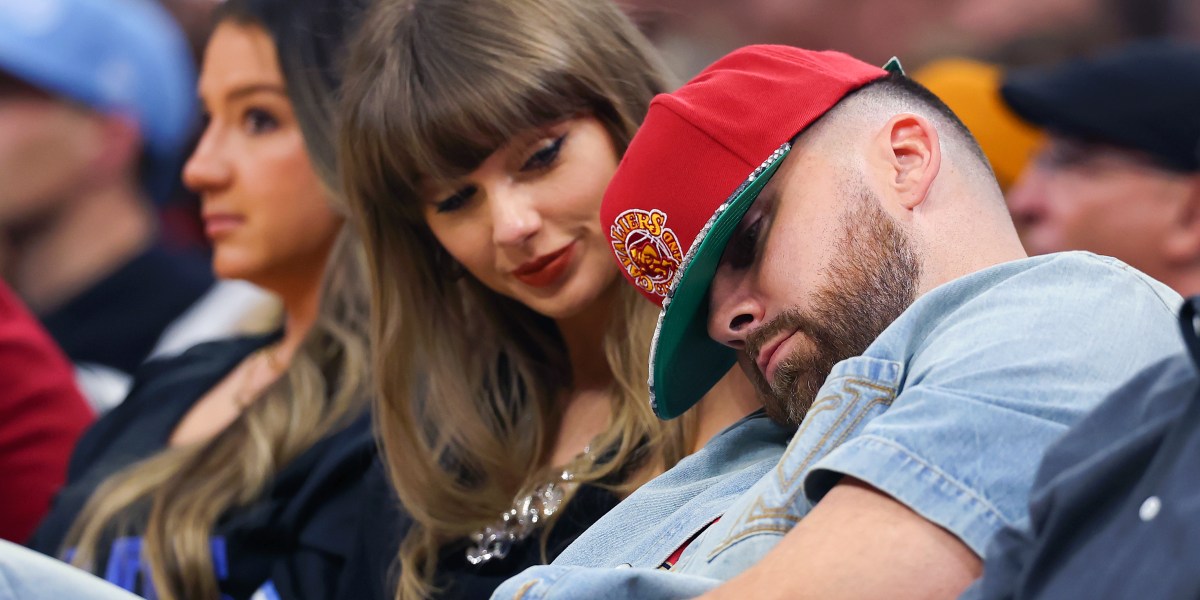
Taylor Swift shows what World Cup economics gets wrong

by theadvisertimes.com
2 months ago
in Business
Reading Time: 4 mins read
A A
0
Taylor Swift shows what World Cup economics gets wrong
Share on FacebookShare on TwitterShare on LInkedIn


Taylor Swift accidentally ran a cleaner economic‑impact experiment than the World Cup—and she did it at the right scale. When her Eras Tour hit Philadelphia in May 2023, the Federal Reserve’s Beige Book recorded the strongest hotel revenue since the pandemic, explicitly crediting an “influx of guests for the Taylor Swift concerts in the city.”

City officials in Chicago, Cincinnati, Denver, and Los Angeles told similar stories: record or near‑record hotel occupancy, packed trains, and downtowns flooded with out‑of‑town fans spending more than $1,000 apiece on tickets, outfits, food, and travel. In Los Angeles County, six shows translated into an estimated $320 million bump to local GDP and 3,300 jobs; in Denver, two dates were pegged around $140 million in state output. For economists, what matters isn’t just the dollar figure—it’s that the spike is measured where it happens: in a handful of zip codes over a specific weekend.

That’s the frame worth carrying into the summer of 2026, when the World Cup arrives with far bigger promises and far blurrier baselines. The White House task force touts up to $40.9 billion in gross output and $17.2 billion in GDP, projections quickly embraced by local boosters. But when independent researchers examine past tournaments at the national scale, the macro story stubbornly refuses to emerge. Goldman Sachs, using data back to 1982, finds that hosting the World Cup has a “marginally positive but not statistically significant” effect on real GDP in the year of the event, and that the long‑run effect is effectively zero.

This isn’t a paradox so much as a units problem. Swift’s Beige Book cameo is a statement about Philadelphia’s hotel revenue in a single month. The World Cup sales pitch is usually about “transformative” effects on a country’s growth path. Natixis, for example, estimates that the 2026 tournament might lift U.S. GDP by roughly 0.05 percentage points and Mexico’s by 0.1%–0.2%—positive, but modest and temporary against economies of that size. At the city level, both Swift and the World Cup can produce crowded hotels and busy bars. At the national level, the data say neither is an engine of structural growth.

Once you line the scales up correctly, the asymmetry sharpens. Swift’s impact is hyper‑concentrated and privately financed. Cities don’t underwrite stadiums or guarantee minimum ticket sales for her to show up; they just cope with the surge. The World Cup’s impact is diffuse and publicly backstopped: U.S. hosts are leaning on studies that promise hundreds of millions or even billions in “economic activity,” like New York–New Jersey’s projected $3.3 billion, to justify infrastructure upgrades, security costs, and years of planning. When the dust settles, the realized national gains look more like Swift’s Philadelphia weekend—only stretched over a month and a continent, and paid for, in part, by taxpayers.

Economists have become increasingly blunt about this pattern. Independent work finds that league‑sponsored impact models systematically overstate net benefits by ignoring displacement, imports, and the opportunity cost of public money. Natixis notes that for 2026, much of what fans will buy is made elsewhere, and that the U.S., Mexico, and Canada are simply too large for even a multi‑billion‑dollar event to materially alter their growth trajectories. The result is a familiar arc: eye‑popping ex‑ante projections, modest ex‑post data, and then a hurried pivot away from GDP toward less tangible payoffs.

The ‘psychic income’ lift

That pivot is where “psychic income” comes in. Faced with underwhelming macro effects, Goldman’s World Cup report leans on the literature showing that people are willing to pay real money for pride, joy, and belonging, even when tournaments don’t raise trend growth. Surveys suggest citizens place surprisingly high monetary value on hosting or winning—evidence of genuine welfare gains that don’t show up in national accounts. In this telling, the “return” on World Cup spending is the emotional dividend: the month when a country feels like the center of the world.

Swift delivers her own version of psychic income, but she doesn’t need contingent valuation surveys to prove it. Fans reveal their willingness to pay in real time, dropping an average of more than $1,300 per Eras show on tickets, travel, hotels, merch, and outfits; resale prices can climb into five figures. Local “Swiftonomics” reports that tally $320 million here and $140 million there are really just capturing the tail of that distribution—the part that spills into hotel ledgers and tax receipts. The rest of the value lives where psychic income always has: in the stories, the social media feeds, the feeling of having been there.

Put together, the comparison isn’t about proving that Swift “beats” the World Cup at economics; it’s about showing how scale and financing change the story we should tell about both. At the city‑weekend level, Swift delivers exactly the boom that World Cup promoters promise: maxed‑out occupancy, record restaurant nights, public transit running at or above pre‑COVID levels. At the national level, both are rounding errors in GDP. The difference is that Swift’s experiment is clean and voluntary, while the World Cup’s is muddied by public guarantees and a habit of selling localized, temporary uplifts as if they were national development strategy.

For policymakers and investors, that’s the useful reframing. Mega‑events can absolutely juice a weekend balance sheet and recharge a city’s sense of itself. They are far less convincing as macro policy tools. If the real prize is psychic income rather than productivity, then the honest questions are: what unit are we measuring, how much are we actually buying, and who is writing the check? Swift’s fans have already answered those questions with their wallets. World Cup hosts are about to answer them with public budgets.




Source link

Tags: CupEconomicsshowsSwiftTaylorworldWrong
ShareTweetShare
Previous Post

Brazil’s Public-Sector Supersalaries: The State as Inequality’s Overlooked Engine

Next Post

CG Power’s growth momentum strong, but valuation comfort missing: Sandip Sabharwal

Related Posts

After blowing through AI budget in a matter of months, Uber CTO says tokenmaxxing era is over

After blowing through AI budget in a matter of months, Uber CTO says tokenmaxxing era is over

by theadvisertimes.com
August 7, 2026
0

Uber believes it’s found a solution to its AI spending problem after it blew through its budget for the technology...

Stock Market: Two AI Names Bounce From Chip Sell-Off; Three More Stocks On Watch

Stock Market: Two AI Names Bounce From Chip Sell-Off; Three More Stocks On Watch

by theadvisertimes.com
August 7, 2026
0

After a sell-off in chip stocks in July, a few artificial intelligence infrastructure names in the IBD 50 are recovering....

WonderFi’s founder says Canada’s business climate forced him to sell to Robinhood

WonderFi’s founder says Canada’s business climate forced him to sell to Robinhood

by theadvisertimes.com
August 7, 2026
0

When Robinhood agreed to buy WonderFi, the company I founded, some of Canada’s loudest voices argued that federal regulators should...

Silver prices today, Friday, August 7, 2026: Silver surge continues as jobs report disappoints

Silver prices today, Friday, August 7, 2026: Silver surge continues as jobs report disappoints

by theadvisertimes.com
August 7, 2026
0

Silver (SI=F) September futures opened at $61.85 per ounce on Friday, August 7, 2026, up 0.4% from Thursday's closing price....

Hitachi Energy India Q1 Results: Net profit rises over twofold to Rs 294 crore

Hitachi Energy India Q1 Results: Net profit rises over twofold to Rs 294 crore

by theadvisertimes.com
August 7, 2026
0

Hitachi Energy India on Friday said its net profit jumped more than twofold year-on-year to Rs 294.2 crore in the...

Sebi streamlines market intermediaries inspection framework, cuts FY27 target to one-third

Sebi streamlines market intermediaries inspection framework, cuts FY27 target to one-third

by theadvisertimes.com
August 7, 2026
0

Sebi is introducing joint inspections by stock exchanges and depositories, along with a notable reduction in its inspection target for...

Next Post
CG Power’s growth momentum strong, but valuation comfort missing: Sandip Sabharwal

CG Power's growth momentum strong, but valuation comfort missing: Sandip Sabharwal

Voters Abandon Party Loyalty Over Data Centers

Voters Abandon Party Loyalty Over Data Centers

  • Trending
  • Comments
  • Latest
SEC pushes private market access, but retail is already in

SEC pushes private market access, but retail is already in

July 16, 2026
How I Maximize My Sapphire Reserve Dining Credit

How I Maximize My Sapphire Reserve Dining Credit

July 10, 2026
The Weekly Notable Startup Funding Report: 6/22/26 – AlleyWatch

The Weekly Notable Startup Funding Report: 6/22/26 – AlleyWatch

June 21, 2026
The 10 Largest NYC Tech Startup Funding Rounds of June 2026 – AlleyWatch

The 10 Largest NYC Tech Startup Funding Rounds of June 2026 – AlleyWatch

July 6, 2026
The Weekly Notable Startup Funding Report: 7/20/26 – AlleyWatch

The Weekly Notable Startup Funding Report: 7/20/26 – AlleyWatch

July 20, 2026
The Hidden Cost of Chaos: Challenges with Spreadsheet-Based Channel Management in 2026

The Hidden Cost of Chaos: Challenges with Spreadsheet-Based Channel Management in 2026

May 6, 2026
Tax Authority targets tech employee stock options

Tax Authority targets tech employee stock options

0
Jobs report July 2026:

Jobs report July 2026:

0
Snowflake Summit 2026: The Race Has Shifted from Building AI to Operating It

Snowflake Summit 2026: The Race Has Shifted from Building AI to Operating It

0
Silver prices today, Friday, August 7, 2026: Silver surge continues as jobs report disappoints

Silver prices today, Friday, August 7, 2026: Silver surge continues as jobs report disappoints

0
AI Is Starting to Improve Itself

AI Is Starting to Improve Itself

0
XRP Ledger Added Nearly 490K New Accounts In First Half Of 2026

XRP Ledger Added Nearly 490K New Accounts In First Half Of 2026

0
Snowflake Summit 2026: The Race Has Shifted from Building AI to Operating It

Snowflake Summit 2026: The Race Has Shifted from Building AI to Operating It

August 7, 2026
Jobs report July 2026:

Jobs report July 2026:

August 7, 2026
Johnson Outdoors Delivers Strong Q3 2026 Results, Revenue Up 5%

Johnson Outdoors Delivers Strong Q3 2026 Results, Revenue Up 5%

August 7, 2026
Weekend Reading For Financial Planners (August 8–9)

Weekend Reading For Financial Planners (August 8–9)

August 7, 2026
After blowing through AI budget in a matter of months, Uber CTO says tokenmaxxing era is over

After blowing through AI budget in a matter of months, Uber CTO says tokenmaxxing era is over

August 7, 2026
Dunkin Donuts: ANOTHER Chance at a FREE Refresher on August 10th!

Dunkin Donuts: ANOTHER Chance at a FREE Refresher on August 10th!

August 7, 2026
theadvisertimes.com

Get the latest news and follow the coverage of Business & Financial News, Stock Market Updates, Analysis, and more from the trusted sources.

CATEGORIES

  • Business
  • Cryptocurrency
  • Economy
  • Financial Planning
  • Investing
  • Market Analysis
  • Markets
  • Money
  • Personal Finance
  • Startups
  • Stock Market
  • Trading

LATEST UPDATES

  • Snowflake Summit 2026: The Race Has Shifted from Building AI to Operating It
  • Jobs report July 2026:
  • Johnson Outdoors Delivers Strong Q3 2026 Results, Revenue Up 5%
  • Our Great Privacy Policy
  • Terms of Use, Legal Notices & Disclosures
  • About Us
  • Contact Us

© Copyright 2024 All Rights Reserved
See articles for original source and related links to external sites.

Welcome Back!

Login to your account below

Forgotten Password?

Retrieve your password

Please enter your username or email address to reset your password.

Log In
No Result
View All Result
  • Home
  • Business
  • Financial Planning
  • Personal Finance
  • Investing
  • Money
  • Economy
  • Markets
  • Stocks
  • Trading

© Copyright 2024 All Rights Reserved
See articles for original source and related links to external sites.