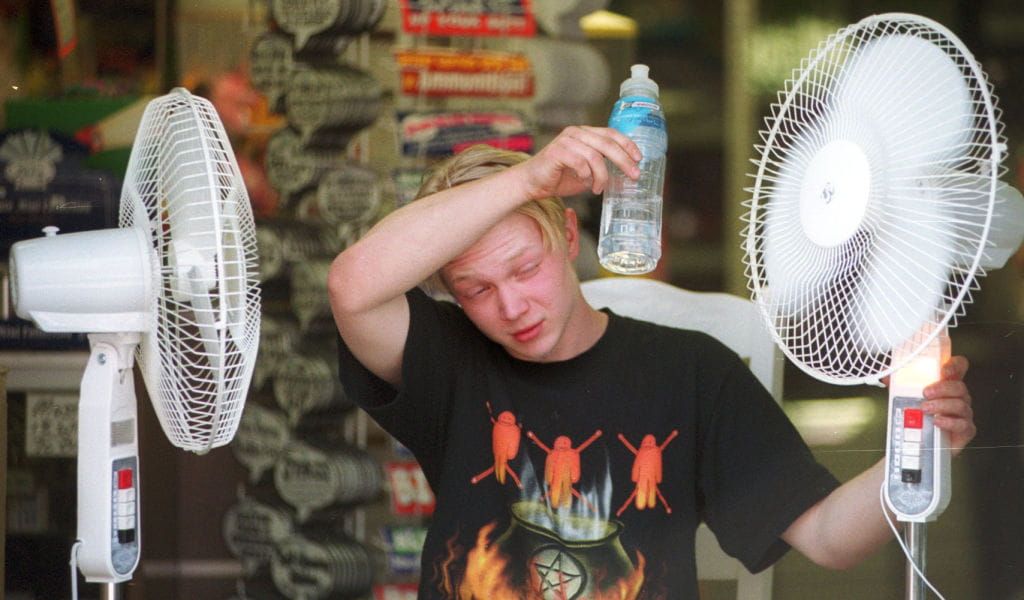
Heatwaves aren’t just uncomfortable; they can be deadly. Every year, people get very sick and even die after being exposed to high temperatures for too long. With modern conveniences such as air conditioning and refrigerators, we should be able to handle extreme weather. However, some suggest that modern life and these advantages are actually making us less adaptable to the heat.
How Did Our Ancestors Handle the Heat?
As parts of the US face a heatwave in the next few days, it’s a good time to study why we aren’t as proficient at handling high temperatures as we once were.
If you go back in time and find yourself in a cabin on the prairie, you won’t hear the soft hum of air conditioning being pushed through the home or enjoy the ease of modern-day electricity and plumbing. When it’s hot outside, you still have to milk the cows, till the fields, fix meals by scratch, take care of the children, haul water from the river or spring, and so on. And you have to do all of that wearing multiple layers of clothing. Today, though, if the heat is too much, you can sit inside a cool home, binging Netflix and getting food delivered to your door without having to heat the oven, and therefore the house, to cook a meal. So why is it that today’s humans can’t tolerate hotter weather better, or even as well as our ancestors?
Modern Conveniences Make It Difficult to Acclimate
The World Health Organization (WHO) released a report in April that showed there were around 489,000 heat-related deaths occurring each year, with 45% taking place in Asia and 36% in Europe. A 2024 report by the Journal of the American Medical Association (JAMA) found that, from 1999 to 2023, there have been more than 21,500 heat-related deaths recorded in the US: “The researchers used data from the US Centers for Disease Control and Prevention (CDC), which also found that 1,069 deaths were heat-related in 1999, compared with 2,325 in 2023 – representing a 117% increase.”
Vulnerability to heat is shaped by several factors, including age, health, and occupation. According to the WHO, “Heat-related mortality for people over 65 years of age increased by approximately 85% between 2000-2004 and 2017-2021.” Also, “heat stress is the leading cause of weather-related deaths.”
Prolonged exposure to heat can cause a multitude of health issues, including cardiovascular problems, and can worsen existing conditions like respiratory illness, diabetes, and Alzheimer’s. It can also damage the liver and kidneys.
“Population ageing and the growing prevalence of non-communicable diseases (respiratory and cardiovascular diseases, diabetes, dementia, renal disease and musculoskeletal disease) mean that populations are becoming more susceptible to negative heat impacts,” the WHO explained. “Cities are not being designed to minimize the accumulation and generation of urban heat, with a loss of greenspace and inappropriate housing materials (for example, metal roofs) that amplify human exposure to excess heat.”
As people age, their bodies become less able to adapt to extreme temperatures. “Biological functions meant to release heat and cool the body, such as sweating and blood circulation, generally do not work as well in older bodies, causing them to retain heat,” the Center for American Progress explained. Certain medications and disabilities can compound the issue “by impairing biological cooling functions and making it more difficult for older adults to recognize and respond to heat symptoms.”
For older adults on a fixed income, running an air conditioner may not be a financially viable option. In many cases, when seniors were found suffering from heat stroke or heat-related death, their homes were nearly unbearably hot.
Acclimation plays an important role in how we manage heat. When we sit inside air-conditioned buildings, we aren’t being exposed to the weather outside. “If given sufficient time to adapt, and access to shade and adequate water, healthy persons can tolerate extended exposure to virtually any naturally occurring environmental heat stress,” Sports Science Exchange said.
For healthy athletes, about one to two weeks of around 90 minutes of daily exposure to the heat is sufficient to acclimate to warmer temperatures, according to Sports Science Exchange. The CDC also released a schedule for employees who work outdoors, suggesting new workers should have no more than 20% exposure to the sun on day one and an increase of no more than 20% on each additional day. For experienced workers, exposure should be no more than 50% on the first day of an increase in weather temperature, then increase by 20% each day after.
The reality is that modern conveniences are both helping and hurting us. Air conditioning saves lives during extreme heat, especially for older adults and those with health conditions. But spending most of our time indoors, relying on technology to do physical tasks, and becoming less active overall, may mean our bodies are getting fewer opportunities to adapt to the natural world around us. Our ancestors didn’t have the luxury of escaping every heatwave, so they learned to work with the seasons. While no one is suggesting we give up modern comforts, the research shows that maintaining good health, staying active, and gradually acclimating to warmer temperatures may be just as important as cranking up the air conditioner when the mercury starts to rise.