No Result
View All Result
  • Login
Wednesday, August 26, 2026
theadvisertimes.com
  • Home
  • Business
  • Financial Planning
  • Personal Finance
  • Investing
  • Money
  • Economy
  • Markets
  • Stocks
  • Trading
  • Home
  • Business
  • Financial Planning
  • Personal Finance
  • Investing
  • Money
  • Economy
  • Markets
  • Stocks
  • Trading
No Result
View All Result
theadvisertimes.com
No Result
View All Result
Home Economy

Who Do You Trust? | Mises Institute

by theadvisertimes.com
2 months ago
in Economy
Reading Time: 4 mins read
A A
0
Who Do You Trust? | Mises Institute
Share on FacebookShare on TwitterShare on LInkedIn


Trust: allow someone to have, use, or look after (someone or something of importance or value) with confidence: I’d trust you with my life.

Most people don’t trust politicians, yet they dominate our lives. How did this arrangement come about?

Trust is a critical consideration in every relationship. Do people mean what they say? Do they deliver on their promises? If enough people didn’t trust Amazon it would have folded long ago. Friends would cease being friends if they proved untrustworthy. 

We don’t trust politicians but we are stuck with them, at least for now. Some people vote to get what they perceive are better people in office. Yet the government remains a fiscal disaster with a strong inclination for war. There is compelling evidence that our current president, who was elected on a promise of peace, is subordinating the United States to the wishes of another country, Zionist Israel.

Let’s set the relevant facts: The political class has power the rest of us don’t. And they have access to seemingly unlimited amounts of money the rest of us don’t. These are shaky grounds for trusting them.

Sovereignty and Banking

In political science, a sovereign government is generally one that possesses ultimate authority within a territory. Some view the US Constitution as asserting “We the People” are sovereign with the government acting as our agent. That materialized in the form of state sovereignty but was brought to a violent end in 1865. The federal government was thereafter sovereign because it could enforce its claim to ultimate authority.

Let’s look at banking. Banks historically performed two distinct functions. One was custody, the other was lending.

A warehouse bank is a custodian. Depositors pay for the service and expect their money to remain continuously available for withdrawal. The bank’s obligation is safekeeping, not investment.

A savings bank performs a different function. Depositors agree that their funds may be lent to borrowers in exchange for a return. Because some of the funds are committed to loans, immediate redemption cannot always be guaranteed. The depositor sacrifices liquidity in exchange for income.

Confusion arises when these two functions are merged. A warehouse promises constant availability. A lending institution promises a return. The difficulty begins when the same dollar is treated as simultaneously available to the depositor while committed to a borrower.

At that point the issue is no longer merely banking. It is a question of trust and the nature of the promises being made.

In the nineteenth century, events known as “panics”—what we would now call bank runs—occurred when banks could not fulfill their redemption promises. Depositors arrived seeking their money only to discover that much of it had been lent out. Laws restricting branch banking contributed to the problem, but the deeper vulnerability arose from fractional reserve banking itself. More claims to money existed than money available for redemption.

The solution devised by leading bankers and policymakers in the early twentieth century, and ultimately embodied in the Federal Reserve Act of 1913, was a central bank that could act as a “lender of last resort.” Banks unable to meet redemption demands could borrow reserves from the central bank and continue operating.

But this raises an obvious question: Where does the central bank obtain the funds it lends?

Until 1933 the United States remained on a gold standard. Gold coin constituted the ultimate money, while paper currency and bank deposits were legally redeemable in gold. This redemption requirement imposed a restraint on both banks and policymakers. However much money they wished to create, they ultimately had to honor redemption claims.

Following the Crash of 1929, that restraint came to be viewed by many economists and politicians as an obstacle rather than a safeguard. Yale economist Irving Fisher and others believed economic recovery required monetary expansion. Yet the obligation to redeem paper claims in gold limited how far such policies could go.

For the first time in American history, the gold standard itself was increasingly portrayed not as a protector of financial integrity but as an impediment to recovery. With Executive Order 6102, issued on April 5, 1933, President Roosevelt made “the hoarding of gold coin, gold bullion, and gold certificates within the continental United States” illegal. People were ordered to turn over their gold to a local Federal Reserve bank on or before May 1, 1933. Failure to comply was punishable with up to 10 years in prison and a $10,000 fine.

After the passage of the Gold Reserve Act of 1934, the president raised the statuary price of gold from $20.67 per troy ounce to $35, devaluing the dollar and allowing the Fed to inflate its supply. Americans who had been forced to exchange their gold for dollars the year before had been deprived of the increase, but the change hiked gold imports into the Fed and US Treasury.

The United States was not the world colossus then as it is today. Foreign governments retained the right to redeem dollars for gold, a privilege that became increasingly important during the 1960s when France and other nations began converting substantial dollar holdings into gold.

Following President Nixon’s declaration on August 15, 1971 that the US would no longer redeem foreign-held dollars for gold, the dollar became pure fiat. Trust was now placed in the judgment of central bankers who would influence the purchasing power of the dollar through monetary policy. Unlike private counterfeiters, the Federal Reserve is legally authorized to create new dollars. The economic effect, however, is similar in one important respect: new purchasing power enters the economy before prices have fully adjusted. Since the Fed buys Treasury debt with fiat money the government grows fatter and more inclined to engage in extra-Constitutional activities. Consequently, regular Americans, who are victims of inflation, see their dollars buy less as their lives become more endangered from activities such as undeclared wars.

Conclusion

There comes a time when we realize lasting change is impossible under the monopoly-of-force—or “ultimate authority”—form of government. Yet every day we participate in another system of social order—one based on voluntary exchange, contracts, reputation, and consent. It governs billions of economic decisions without relying on monopoly power. The free market is waiting to be fully trusted. I encourage you to consider that as a goal to strive for.



Source link

Tags: InstituteMisesTrust
ShareTweetShare
Previous Post

LPL’s AI challenge: Moving fast without overwhelming advisors

Next Post

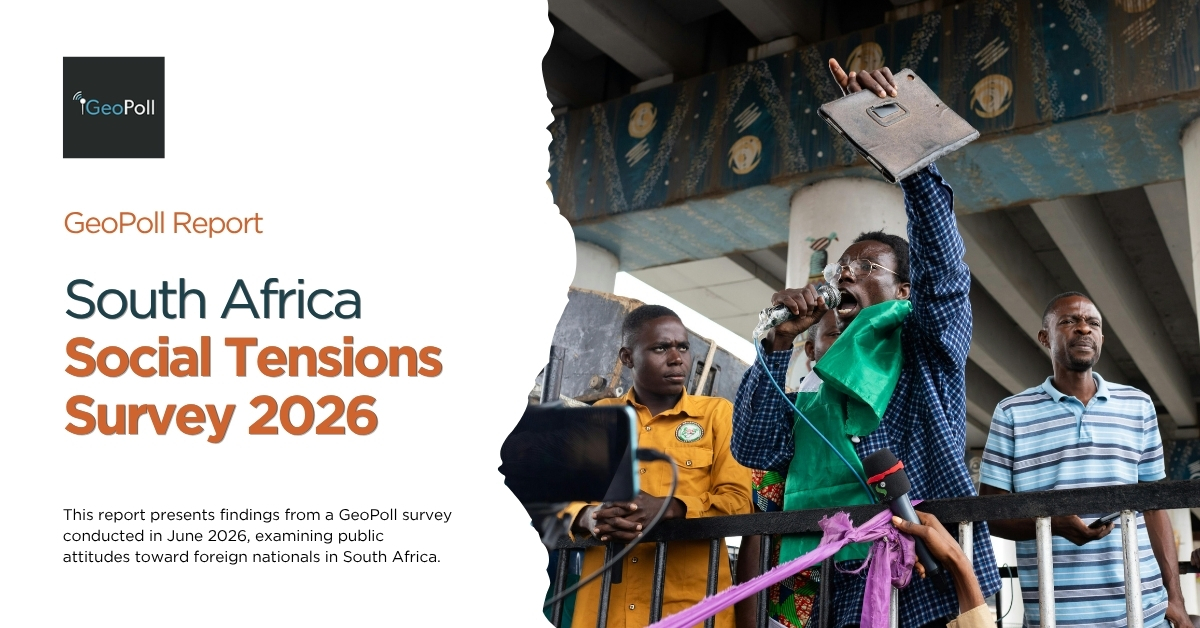
Report: South Africa Social Tensions Survey 2026

Related Posts

The Unwinnable Iran War | Armstrong Economics

The Unwinnable Iran War | Armstrong Economics

by theadvisertimes.com
August 8, 2026
0

I have reported that Trump was mislead into this unwinnable war with Iran, which has been planning for it since...

Market Talk – August 7, 2026

Market Talk – August 7, 2026

by theadvisertimes.com
August 7, 2026
0

ASIA: The major Asian stock markets had a mixed day today: • NIKKEI 225 decreased 76.55 points or -0.12% to...

Jobs report July 2026:

Jobs report July 2026:

by theadvisertimes.com
August 7, 2026
0

The U.S. economy saw an unexpected declined in jobs during July while the unemployment rate edged lower, the Bureau of...

Here are three key takeaways from the disappointing July jobs report

Here are three key takeaways from the disappointing July jobs report

by theadvisertimes.com
August 7, 2026
0

Job seekers speak with employer representatives and browse information tables as they attend an Inspire Together job and resource fair...

Coffee Break: Gene Editing Gone Wrong, Plants that Eat Animals, and a Neanderthal Gene that Makes a Difference

Coffee Break: Gene Editing Gone Wrong, Plants that Eat Animals, and a Neanderthal Gene that Makes a Difference

by theadvisertimes.com
August 7, 2026
0

Part the First: If You Stretch Biomedical Science Too Far It Breaks, Every Time.  Gene editing using CRISPR technology has...

What Did You Expect? | Mises Institute

What Did You Expect? | Mises Institute

by theadvisertimes.com
August 7, 2026
0

As Murray Rothbard pointed out again and again, the government has no business getting involved in education. In a free...

Next Post
Report: South Africa Social Tensions Survey 2026

Report: South Africa Social Tensions Survey 2026

Tech downsizing seen hitting lawyers, accountants, funds

Tech downsizing seen hitting lawyers, accountants, funds

  • Trending
  • Comments
  • Latest
Wealth management has got junior advisors’ first 90 days covered. What happens on day 91?

Wealth management has got junior advisors’ first 90 days covered. What happens on day 91?

August 7, 2026
Biggerpockets Pro Members Can Now Turn Home Equity Into a Flexible Line of Credit With Aven

Biggerpockets Pro Members Can Now Turn Home Equity Into a Flexible Line of Credit With Aven

August 3, 2026
The 19 Largest Global Startup Funding Rounds of June 2026 – AlleyWatch

The 19 Largest Global Startup Funding Rounds of June 2026 – AlleyWatch

July 27, 2026
Fourth of July 2026 Freebies and Deals

Fourth of July 2026 Freebies and Deals

July 3, 2026
Kellogg’s Back to School Snacks Instant Savings: Save  off  Purchase + Deal Scenario!

Kellogg’s Back to School Snacks Instant Savings: Save $10 off $35 Purchase + Deal Scenario!

August 6, 2026
CVS Deals Under  This Week

CVS Deals Under $1 This Week

July 27, 2026
XRP Price Forecast as Binance Whale Activity Remains Elevated Amid XRPL Tokenization Push

XRP Price Forecast as Binance Whale Activity Remains Elevated Amid XRPL Tokenization Push

0
Wealth management has got junior advisors’ first 90 days covered. What happens on day 91?

Wealth management has got junior advisors’ first 90 days covered. What happens on day 91?

0
Is Lettuce Safe to Eat Now? What to Know Amid Cyclospora Outbreak

Is Lettuce Safe to Eat Now? What to Know Amid Cyclospora Outbreak

0
The Unwinnable Iran War | Armstrong Economics

The Unwinnable Iran War | Armstrong Economics

0
Bezeq declares NIS 515m dividend

Bezeq declares NIS 515m dividend

0
AI Will Clarify What Asset Managers Are Paid For

AI Will Clarify What Asset Managers Are Paid For

0
XRP Price Forecast as Binance Whale Activity Remains Elevated Amid XRPL Tokenization Push

XRP Price Forecast as Binance Whale Activity Remains Elevated Amid XRPL Tokenization Push

August 8, 2026
Is Lettuce Safe to Eat Now? What to Know Amid Cyclospora Outbreak

Is Lettuce Safe to Eat Now? What to Know Amid Cyclospora Outbreak

August 8, 2026
Bitcoin outlook: ,000 or ,000 this weekend

Bitcoin outlook: $70,000 or $60,000 this weekend

August 8, 2026
Mortgage and refinance interest rates today, Saturday, August 8, 2026: Rates mixed this weekend

Mortgage and refinance interest rates today, Saturday, August 8, 2026: Rates mixed this weekend

August 8, 2026
CEO of the world’s largest workspace provider says commuting will be extinct by 2040

CEO of the world’s largest workspace provider says commuting will be extinct by 2040

August 8, 2026
F&O Talk: Smallcaps look strong on charts, says Sudeep Shah; outlines Trent, Swiggy, Kalyan Jewellers strategy

F&O Talk: Smallcaps look strong on charts, says Sudeep Shah; outlines Trent, Swiggy, Kalyan Jewellers strategy

August 8, 2026
theadvisertimes.com

Get the latest news and follow the coverage of Business & Financial News, Stock Market Updates, Analysis, and more from the trusted sources.

CATEGORIES

  • Business
  • Cryptocurrency
  • Economy
  • Financial Planning
  • Investing
  • Market Analysis
  • Markets
  • Money
  • Personal Finance
  • Startups
  • Stock Market
  • Trading

LATEST UPDATES

  • XRP Price Forecast as Binance Whale Activity Remains Elevated Amid XRPL Tokenization Push
  • Is Lettuce Safe to Eat Now? What to Know Amid Cyclospora Outbreak
  • Bitcoin outlook: $70,000 or $60,000 this weekend
  • Our Great Privacy Policy
  • Terms of Use, Legal Notices & Disclosures
  • About Us
  • Contact Us

© Copyright 2024 All Rights Reserved
See articles for original source and related links to external sites.

Welcome Back!

Login to your account below

Forgotten Password?

Retrieve your password

Please enter your username or email address to reset your password.

Log In
No Result
View All Result
  • Home
  • Business
  • Financial Planning
  • Personal Finance
  • Investing
  • Money
  • Economy
  • Markets
  • Stocks
  • Trading

© Copyright 2024 All Rights Reserved
See articles for original source and related links to external sites.