There was a time when America’s industrial titans built railroads, steel mills, and oil companies. Today, influence is measured in data, artificial intelligence, cloud computing, media, and information. Few families illustrate that transformation better than the Ellisons.
Larry Ellison built Oracle from a small software company into one of the world’s largest technology firms. His background and rags-to-riches story are quite interesting. Today Oracle is one of the dominant providers of enterprise databases and cloud infrastructure, serving governments, financial institutions, healthcare providers, defense contractors, and many of the world’s largest corporations. Oracle’s software touches enormous portions of the global economy. When governments collect taxes, hospitals manage patient records, banks process transactions, or corporations analyze data, Oracle systems are often operating behind the scenes.
Larry Ellison’s personal fortune has placed him among the wealthiest individuals in the world for decades. His influence extends well beyond technology. He has invested billions in real estate, owns nearly all of the Hawaiian island of Lanai, has backed medical research, invested heavily in artificial intelligence, and has maintained relationships with political and business leaders from both parties. The TikTok debacle this year was solved when the power was handed over to Ellison’s conglomerate. The sheer data this family has access to is staggering. Wealth at that level naturally provides access to decision makers across government and industry.
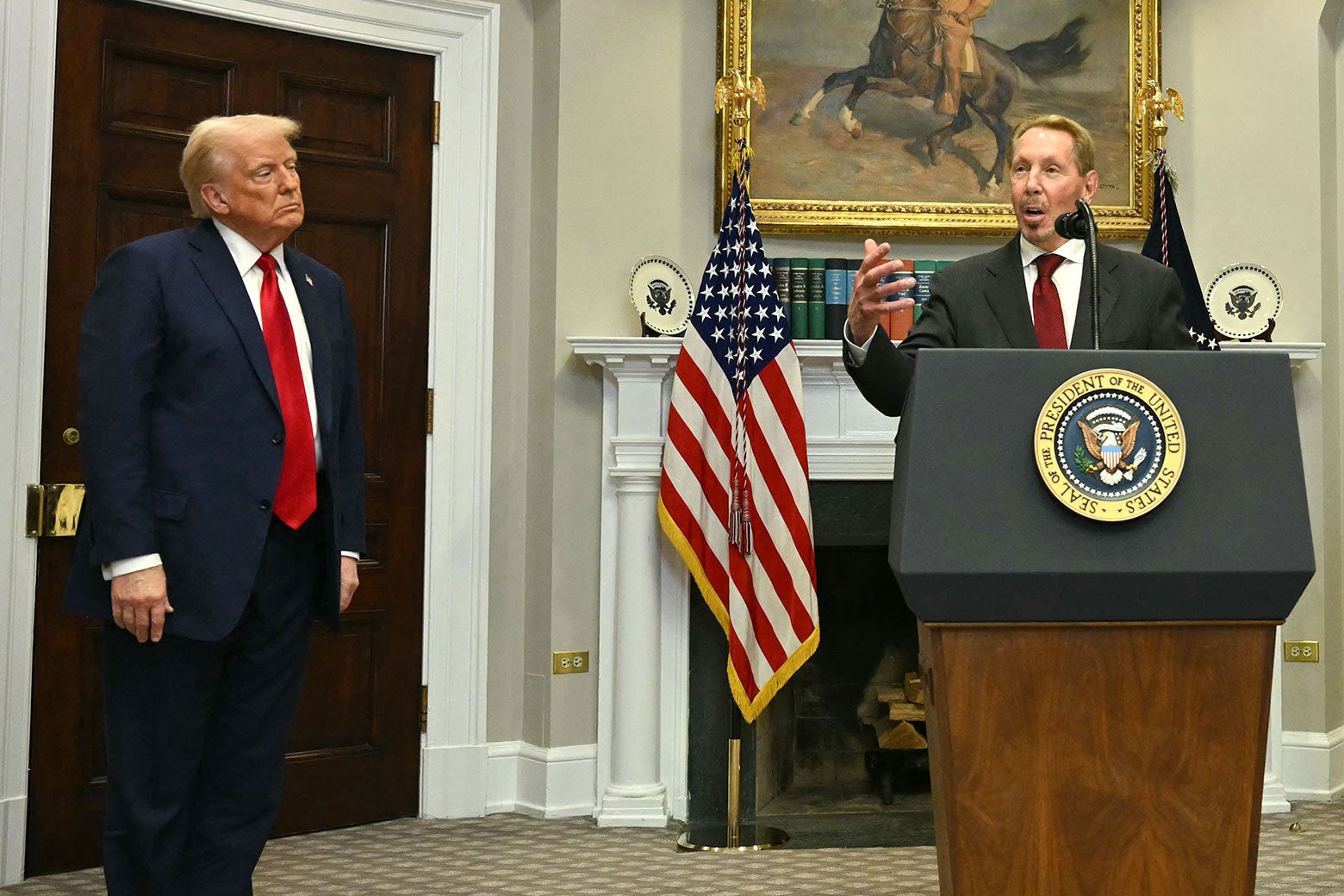


Then we come to his son, David Ellison, who founded Skydance Media in 2010. The company produced or co-produced major franchises including Mission: Impossible, Top Gun: Maverick, and Star Trek, before expanding into television, animation, gaming, and streaming. This was never merely a wealthy man’s son playing Hollywood producer. Skydance became the vehicle through which the Ellison family entered the machinery of American culture.
The Skydance takeover of Paramount for $8 billion brought CBS, CBS News, Paramount Pictures, Paramount+, Nickelodeon, MTV, Comedy Central, BET, Showtime, and decades of film and television rights into the Ellison orbit. The father built an empire around the storage and processing of information. The son moved into the business of selecting, packaging, and distributing information to the public. That combination should concern everyone, regardless of politics. Oracle occupies a critical position within the technological infrastructure used by governments and corporations, while Paramount reaches millions of people through news, entertainment, sports, children’s programming, and streaming. One side of the family empire helps manage the data. The other side can help shape the narrative.
This is how oligarchies emerge in the modern world. They do not need to abolish elections or openly seize control of government. They acquire the infrastructure, the platforms, the studios, the databases, and the channels through which society communicates. Politicians then come begging for access, favorable coverage, campaign support, or technological assistance.
I have written extensively about the growing surveillance state because data is the new instrument of political control. Oracle does not merely sell office software; its databases and cloud systems sit beneath governments, banks, hospitals, corporations, and defense institutions, processing information on countless individuals. This does not mean Larry Ellison personally searches through anyone’s private records, but it does mean his empire occupies a powerful position within the infrastructure where that information is stored and managed. Governments no longer need to kick down every door when they can pressure a handful of technology companies to surrender the data voluntarily or obtain it through the courts. Now his son controls a media empire capable of influencing what millions of Americans see, hear, and believe about that very system. The father’s world helps store the information while the son’s world can shape the public narrative, and anyone who cannot see the danger in combining those two forms of power is refusing to understand how a modern surveillance state is constructed.
Some will say there is no evidence that the Ellisons have committed any crime merely by owning these businesses. That misses the entire point. A concentration of power does not become dangerous only after somebody is convicted. The problem is creating a structure in which a handful of unelected families can exercise more economic, technological, and cultural influence than entire governments. America once feared monopolies because people understood that concentrated economic power eventually becomes political power.
The Ellisons did not invent this system, but they have become one of its clearest examples. Larry Ellison built the technological empire. David Ellison extended the family’s reach into media and culture. When one family can occupy both the infrastructure of information and the institutions that distribute it, we are no longer discussing ordinary entrepreneurial success. We are looking at the architecture of modern power.