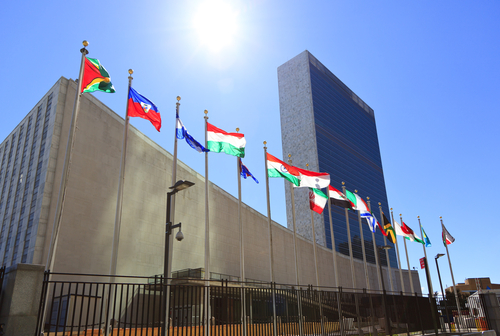
A United Nations proposal would replace the current system of taxing each multinational subsidiary separately with a global unitary tax system. A corporation’s worldwide profits would first be combined into one total and then divided among countries according to a formula measuring where it employs workers and where its customers purchase goods and services. Each country would apply its own corporate tax rate to the portion assigned to it, regardless of where the company legally reported the profit.
Tax Justice Network estimates that this reallocation would produce an additional $500 billion in annual corporate tax revenue worldwide. It would be redistributed among governments, creating major winners while stripping revenue from countries whose economies currently benefit from corporate headquarters, intellectual property, financial services, or low-tax structures.
Ireland would suffer one of the largest losses, surrendering an estimated $11.15 billion annually, or 81.9% of the multinational corporate tax revenue measured by the study. Hong Kong would lose $9.37 billion, or 75.7%; Singapore $8 billion, or 69.2%; Switzerland $5.43 billion, or 42%; the Netherlands $3.16 billion, or 28.4%; and Malta $3.04 billion. Bermuda would lose $489 million, the British Virgin Islands $496 million, Puerto Rico $547 million, Jersey $510 million, and Mauritius $152 million.
These jurisdictions currently tax profits that multinational corporations book within their borders despite having relatively little employment or customer activity there. The UN formula would disregard where those profits are legally reported and redistribute them toward countries where the company’s workers and customers are located.
The UN claims some of these jurisdictions could theoretically recover the lost revenue by taxing their smaller remaining profit base at much higher rates. The study estimates that the Netherlands would need an effective rate of roughly 29% to 33%, compared with its present estimated rate of 13.6%. Switzerland would need approximately 20% to 25%, up from 10.4%, while Singapore would need between 25% and 37%, up from 9.2%.
Those numbers become absurd for economies heavily dependent on profit booking. Ireland would require an effective rate between 68% and 94% to replace the revenue it loses under the various formulas. The Cayman Islands could require between 28% and 162%, while the British Virgin Islands could require anything from 9% to 643%. That is an admission that these jurisdictions could not recover their losses through ordinary taxation without destroying the economic model the UN intends to dismantle.
However, the losers are not limited to traditional tax havens. Japan would lose an estimated $34.09 billion per year, equal to 27.1% of the multinational corporate tax revenue included in the study. Denmark would lose approximately $1.8 billion, or 31.9%, while Saudi Arabia would lose $1.77 billion, or 17.9%.
The report classifies these three as “headquarters-bias” countries. Their multinational corporations report an unusually large share of global profits in the country where the parent company is headquartered, even though much of their employment and sales occurs abroad. Under the UN formula, some of that profit would be exported to foreign governments.
Japan’s result may reflect the concentration of research, intellectual property, engineering, and other high-value functions at Japanese parent companies. Yet the formula gives equal weight to employee headcount and customer location, meaning it may fail to recognize where a product was invented, financed, designed, or developed. A country could spend decades building an advanced industrial and technological base only to be told that much of the resulting profit belongs to whichever foreign country purchased the finished product.
To preserve its existing revenue, Japan would need to increase its effective corporate tax rate from approximately 30.5% to somewhere between 36.3% and 42.6%, depending on the allocation formula. Denmark would need to raise its rate from around 15% to between 25.3% and 38.8%. Saudi Arabia would need to increase its 20% effective rate to between 22.7% and 26%.
Denmark’s projected loss may be influenced by its large shipping industry and tonnage-tax regime. The report notes that $29 billion of A.P. Moller-Maersk’s $30.2 billion in 2022 pretax profit was subject to Danish or foreign tonnage taxation, producing an effective tax rate of only 3%. The proposed formula would allocate more of that profit to countries connected to Maersk’s workers and customers rather than allowing Denmark to retain the advantage of hosting the corporate headquarters.
New Zealand is also projected to lose about $220 million annually, Macao $975 million, Eswatini $22 million, and several smaller island jurisdictions would lose meaningful shares of their present corporate revenue. Some estimates for the smallest jurisdictions are based on thin reporting data and must be treated cautiously, but the direction is clear. This is a redistribution of national taxing rights, not a magical creation of $500 billion from nowhere.
The report attempts to dismiss these losses by telling tax-haven nations to abandon their present economic models, increase their tax rates, invest in education and infrastructure, and diversify into other industries. That is an extraordinary display of bureaucratic arrogance. Unelected organizations are effectively telling sovereign nations that their tax policies, competitive advantages, and development strategies are unacceptable and must be replaced by a model designed in New York.
Globalist institutions do not view countries as independent societies with different resources, cultures, needs, and economic strategies. They view the world as an administrative spreadsheet. If Ireland, Singapore, Switzerland, or a small Caribbean nation loses a major source of revenue, that is treated as an acceptable adjustment so long as the global model produces the desired aggregate result.
This is precisely how these organizations operate. The OECD, IMF, European Union, and United Nations always claim that another layer of coordination will produce fairness, stability, and efficiency. What actually appears is another permanent bureaucracy with committees, reporting mandates, enforcement mechanisms, technical standards, review conferences, and dispute panels.
The treaty language proposed by the Global Alliance for Tax Justice would empower a Conference of the Parties to assess the allocation of taxing rights across all forms of taxation with cross-border effects and adopt additional measures it considers appropriate. It also calls for an international system based on consolidated global profits, an agreed allocation formula, regular reviews, sector-specific rules, and an “effective global minimum corporate tax rate.”
The proposal explicitly says the convention should cover “all types of taxes with transboundary effects.” Once established, the bureaucracy could move into wealth taxes, digital taxes, environmental taxes, financial-transaction taxes, and the taxation of individuals deemed internationally mobile.
These global organizations protect bureaucracy before sovereignty because bureaucracy is their product. They do not produce goods, discover medicine, grow food, or create wealth. They produce regulations, standards, frameworks, and reporting requirements that justify larger budgets and greater authority. Every disagreement becomes evidence that the world needs more coordination, and every failure becomes an excuse to expand the institution that designed the failed policy.
Japan, Ireland, Singapore, Switzerland, Denmark, and the other losing jurisdictions will not be incidental casualties. Their tax bases are being deliberately redistributed under a formula they may not control. The global bureaucracy calls this fairness because it evaluates success by the amount of money transferred into government hands, not by whether individual nations retain the right to govern themselves.