President Donald Trump announced a “Rate Payer Protection Pledge” for hyperscalers during his State of the Union address, and utility CEOs repeated “affordability” ad nauseam during their February earnings calls—mostly while implementing new rate hikes.
Electric and piped natural gas bills became the two largest drivers of inflation last year—rising 7% and 11%, respectively, in 2025—and they’re projected to keep increasing this year and beyond. Utilities requested a record-high $31 billion in rate hikes in 2025 across the nation—more than twice that of 2024—and many of them aren’t implemented yet.
Utility expenses are expected to play a huge role in the midterm elections in November, and it has quickly become a bipartisan concern, capturing the attention of Trump and governors across the country.
But who and what are to blame? And how can these problems be solved—or at least lessened?
The AI data center boom is a growing part of cost hikes, but it’s only a piece of the puzzle, and it’s attracting an outsized portion of the blame, according to power analysts and energy watchdogs. After all, residential electricity prices have skyrocketed almost 30% since 2021—going back prior to the launch of ChatGPT.
An aging power grid, climate change, rising gas and equipment costs, coal and gas plant closures, and antiquated utility profit models are all combining to put pressure on utility bills as well, they said.
Utilities, power generators, natural gas producers, hyperscalers, politicians, and state public service commissions all play key roles in either aiding or exacerbating these problems. And, despite what partisan politicians argue, it’s neither the choice between renewable energy nor fossil fuels that’s driving up costs, said Charles Hua, executive director of the non-profit PowerLines.
“It’s the grid. It’s the local poles and wires,” Hua told Fortune. “The grid is getting old, and it costs a lot of money to replace or repair.”
Rather than focus on efficiencies and new technologies, utilities are largely rewarded financially by building new power plants, transmission lines, and distribution systems—all of which pass on expenses to ratepayers, he said.
That argument for more capital spending is easier to make when, after mostly flat power demand this century, U.S. electricity consumption could surge at least 50% from 2025 to 2050—and prices will follow.
Earlier this month, for instance, North Carolina-based Duke Energy announced a five-year, $103 billion capex plan, which would be the largest spending plan of any regulated U.S. utility.
The investor-owned utility organization, the Edison Electric Institute, estimates its members will spend $1.1 trillion in capital from 2025 through 2029. A record high of more than $200 billion was spent last year. “It’s astonishing in terms of the potential impact to consumers’ utility bills,” Hua said.
“Barring major policy action and intervention from both policymakers and regulators, the upward price trajectory of electric prices will continue to rise. I think folks are right to be very concerned,” Hua added. “But people are realizing that this is not a sleepy issue that nobody cares about. There’s suddenly a lot more scrutiny and spotlight on this.”
Data center dilemma
Top hyperscalers Amazon, Google, Meta, Microsoft, xAI, Oracle, and OpenAI will sign “pledge” agreements this week at the White House to build or buy their own power for data centers.
Depending on your preferred acronym, It’s the BYOP or BYOG approach—bring your own power/generation—that will help, but not solve, all the utility expense problems. Many hyperscalers are either building their own generation behind the meter or inking contracts with power producers and utilities to pay for the electricity from new power plants or renewables for 15 years or so.
“We’re telling the major tech companies that they have the obligation to provide for their own power needs,” Trump said during his State of the Union. “They’re going to produce their own electricity … while at the same time lowering prices of electricity for you.”
During his February earnings call, Duke Energy CEO Harry Sideris said “data centers are paying their fair share” in Duke service areas.
“We know there’s never a good time for energy bills to go up,” said Sideris, arguing he doesn’t propose rate hikes lightly. “Families and businesses feel every increase and affordability matters. That’s why our focus is straightforward—keep costs as low as possible while maintaining reliability.”
The AI boom has impacted utility pricing the most in the PJM Interconnection region where data centers are heavily concentrated thus far. PJM is the nation’s largest grid operator and covers much of the Midwest and Atlantic Coast, in 13 states and the District of Columbia, including Pennsylvania, Ohio, New Jersey, and Virginia—home to Data Center Alley. Some states, including New Jersey, saw their average electric bills surge more than 20% in 2025 alone.
Democratic Pennsylvania Gov. Josh Shapiro, and 2028 presidential hopeful, initially embraced the data center boom in his state but, as pushback from the citizenry mounted, he’s called for greater oversight and restrictions.
“We need to be selective about the projects that get built here,” Shapiro said in his February state budget address. “I know Pennsylvanians have real concerns about these data centers and the impact they could have on our communities, our utility bills, and our environment. And so do I.”
Utility PPL Corp., which operates in Pennsylvania, Kentucky, and Rhode Island is proposing rate increases in its states. But CEO Vince Sorgi argued that power generation shortages, natural gas prices, and severe weather impacts are the biggest drivers to bill increases—not the utilities nor data centers.
In five years, Sorgi said in PPL’s February earnings call, the average monthly utility bill for residents in Pennsylvania has increased by $68, with $50 of that increase coming from power generation cost spikes from natural gas prices and generation shortages, including rising data center demand and the closures of old coal plants
“For several years, we have been sounding the alarm on a worsening generation supply situation in PJM, which has been the primary driver of higher customer bills,” Sorgi said. “And, with the scale of data center growth we’re seeing, we absolutely need to build new reliable generation to meet that demand.”
Varying impacts
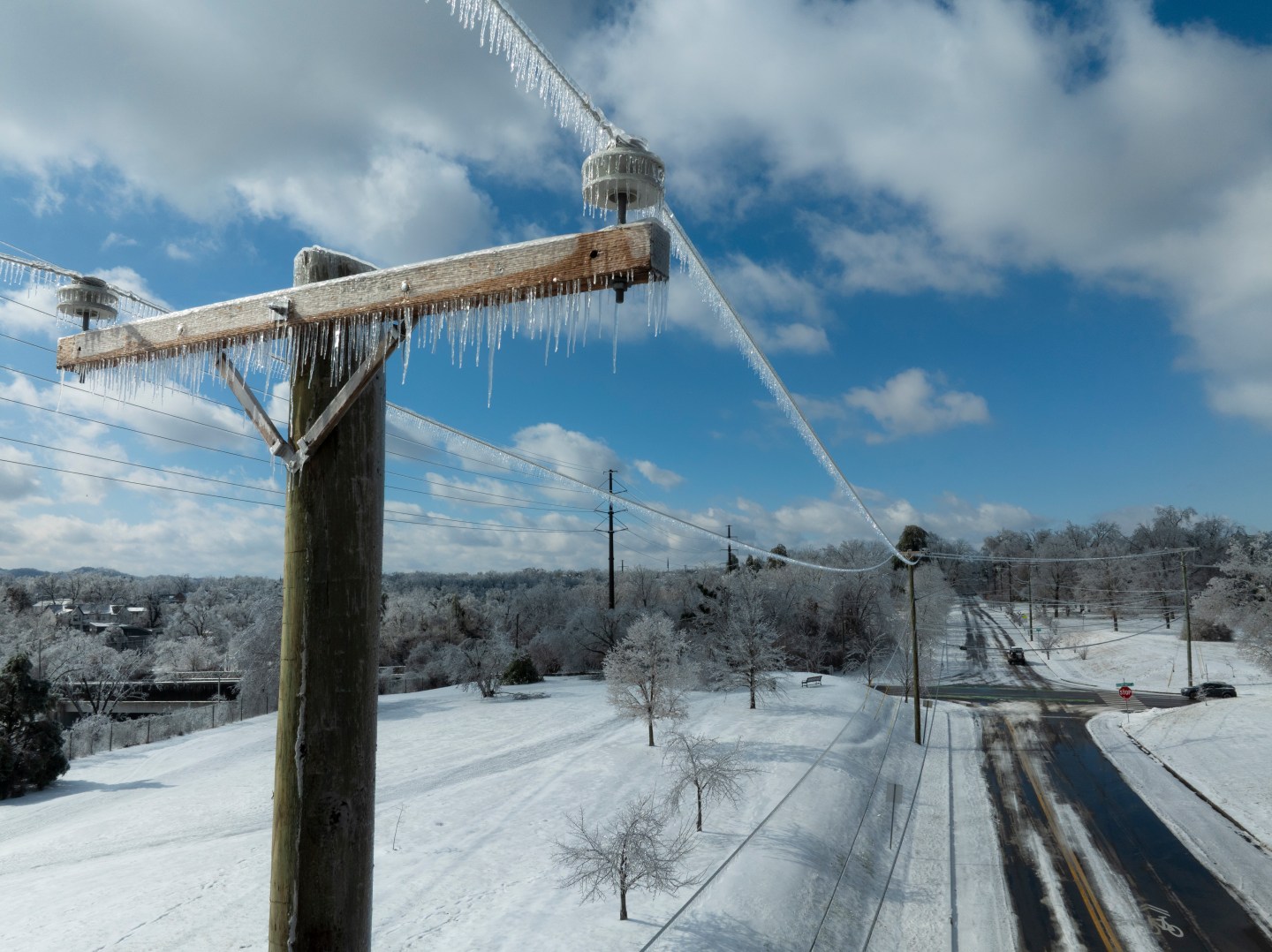
Sorgi isn’t shy about blaming rate hikes on one particular woman—Mother Nature and her “more frequent and severe storms, as well as more extreme weather events.”
“This is causing utilities across the country to increase their capital investment plans significantly to combat Mother Nature,” Sorgi said.
Indeed, climate change is adding intensity to wildfires in the West, while more severe hurricanes, tornadoes, and floods and winter storms are pummeling the grid in the rest of the country and forcing more spending on repairs and the hardening of infrastructure, Hua said.
In addition, rising natural gas prices and increasing equipment costs for transformers and more are impacting rates. Global supply chain shortages for equipment and tariffs are all factors.
“When fuel costs spike or when they go up, the volatility generally gets passed through entirely to customers,” Hua said. “That puts 100% of the risk on consumers when those prices fluctuate.”
Seasonal cost spikes during the hottest summer days and the coldest winter ones typically trigger the most expensive utility bills. Harsh winter storms early this year caused already rising natural gas prices to jump to their highest levels since Russian invaded Ukraine in 2022, which triggered a global pricing surge. The average price in January for the U.S. natural gas benchmark—$7.72 per million British thermal units—was the highest January since 2008, according to the U.S. Department of Energy. The U.S. grid is increasingly dependent on natural gas, which can have volatile pricing swings.
Jamie Van Nostrand, policy director for The Future of Heat Initiative—and former chairman of the Massachusetts Department of Public Utilities—is focused on the alleged overbuilding of natural gas distribution systems.
“The default is to just replace the pipe,” Van Nostrand told Fortune. “Those are 50- to 70-year assets. We don’t need that additional investment. That’s just forcing those delivery charges that are potentially stranded costs as the system winds down.”
Electric heating from heat pumps and other technologies will continue to phase out piped natural gas for home heating in the coming years and decades, he said, while a much greater focus is needed in the meantime on prevention, repairs, and leak detection.
About 15 years ago, he argued, the average gas bill was 70% commodity charges and 30% infrastructure delivery costs. “That’s pretty much reversed now.”
“That’s how they make money—putting stuff in the ground,” Van Nostrand said.
What’s next?
A non-binding “Rate Payer Protection Pledge” may represent a positive step, but there’s no federal policy regulating utilities and the data center boom.
Better rate design systems are needed to better utilize smart meters; to reward homeowners for sharing power to the grid from solar panels and battery systems; to incentive ratepayers to use more power at off-peak times or charge their electric vehicles at 3 a.m. instead of 6 p.m. More states need to make widespread usage of virtual power plants with smart meters so grid operators can tweak distributed energy sources as need to draw extra power to the grid and keep prices lower during peak energy usage times, he said.
Everyone is paying the price. But utility bill hikes are regressive expenses that impact lower-income and working-class residents the most. “There are millions of Americans who are paying 10% to 20% of their incomes just on their utilities, which would be unfathomable for the vast majority of Americans,” Hua said.
The costs are even tricker and more frustrating because they can greatly vary month to month with little transparency or choice, Hua said.
Potential structural reforms for utility rates have been suggested for decades, but they’re rarely enacted because of industry lobbying and a lack of political focus. That focus isn’t missing any longer, even if the solutions aren’t particularly simple.
“You could argue utility bills will play the most prominent role in a national election this year that perhaps at any other election in American history,” Hua said.



-1024x683.jpg "The Key Battles for Senate Control Are Set")