As America’s first reality show president, Donald Trump wants people to think he is breaking new ground and transforming America for the better. Stepping where no president before has gone, Trump has directed the U.S. Commerce Department to take equity positions in 30 American firms, which clearly is controversial, but apparently not controversial enough for Congressional Republicans to say “no” to the president.
Although the US is new to this policy, it isn’t the first country to do this, as France, Norway, Germany, China, and others have already seen governments purchase of partial ownership in private firms. Supporters of this practice claim that any government infusion of cash into these businesses will expand the economy’s capital base, but there are plenty of reasons to oppose this practice, which economist Randall Holcomb has labeled “Political Capitalism.”
There are plenty of websites that explain the process (and each country has different rules and methods of “investment”), this article is not about explaining and promoting this practice. Instead, we explain why government equity will ultimately distort and damage the economy’s structure of production.
Support for the policy
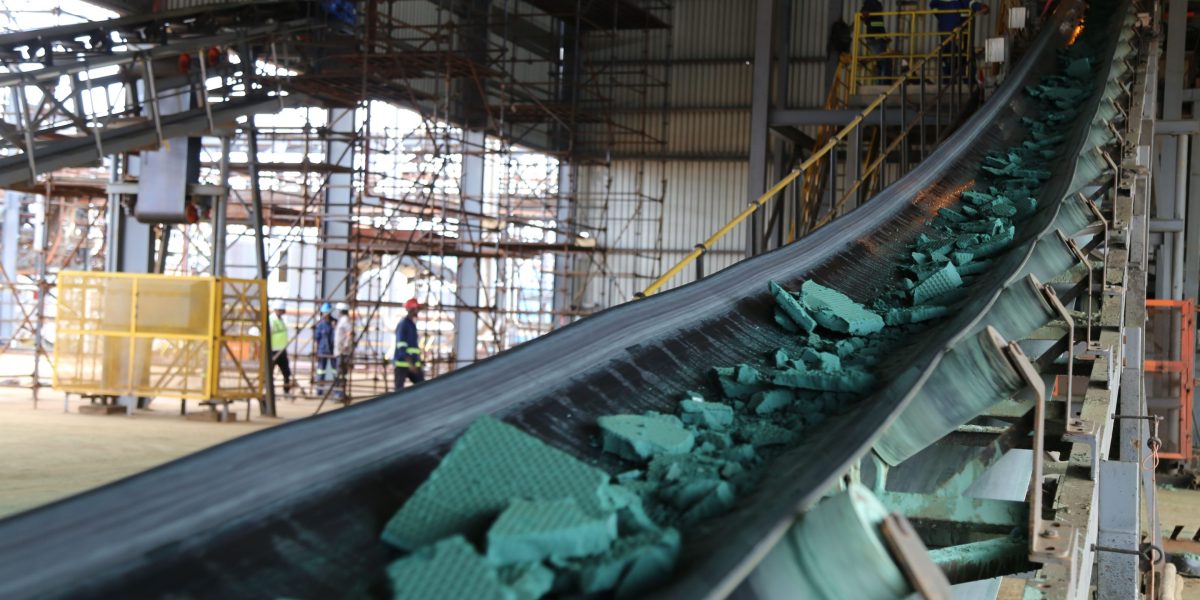
This policy did not occur in a vacuum, as so-called domestic strategic industries involved in production of rare earths and microchips are seen as inadequate to serve this country’s military needs and require a government boost to increase production. According to CNBC:
Many of the investments are in smaller critical mineral companies, like USA Rare Earth and MP Materials, but they also include big industrial and tech companies such as U.S. Steel and Intel.
Top administration officials like Commerce Secretary Howard Lutnick and Interior Secretary Doug Burgum have argued that the U.S. government is investing in strategic industries to reduce dependence on Tawain in the case of semiconductors and China for critical minerals.
Furthermore, while the U.S. Government has not taken these kinds of equity positions before, the government often has intervened into the economy to protect or promote what it calls “key industries.” The Center for Strategic and International Studies declares:
Historically, direct U.S. intervention in the economy has come at times of opportunity or crisis. In the nineteenth century, the opportunity represented by the new railway technology and the pressing national security risks to the Union related to the Civil War encouraged the Lincoln administration to make repeated investments to support the construction of the U.S. rail system across the continent. The support was “limited” to repeated capitalization, rewards for track laid, support for the recruitment of labor on both the East (predominantly Irish workers) and the West Coast (predominantly Chinese workers), and the generous allocation of land on either side of the new railway backed by the U.S. Army. Perhaps more relevant today is the precedent set when the U.S. Navy and the Department of Justice required Westinghouse Electric Company, General Electric, and Marconi Wireless to pool their patents, enabling the creation of the Radio Corporation of America (now, RCA).
In the post–World War I period, the government provided a regulatory framework with the Air Mail Act of 1925, along with a variety of incentives to help drive mail delivery by aircraft. This had a major impact on the growth of the nascent aircraft industry. The industry’s progress was reflected in the 1930s with successful U.S. Army contracts for the four-engine, all-metal B-17 bomber. With the advent of World War II, the government launched massive state procurement programs to shift the automotive, aircraft, and shipbuilding industries to focus on wartime production. As noted, a more recent and powerful intervention occurred during the 2008 financial crisis, when the government provided major public support to the financial, automobile, and insurance sectors, which successfully helped prevent economic collapse.
While the government took a temporary stake in General Motors when it went bankrupt and the government bailed out banks in the 2008 financial crisis,
…the Trump administration’s decision to take an equity stake in private companies deemed strategic is not a bailout but a proactive investment to secure, or at least support, U.S. capabilities in critical sectors and prevent further reliance on supply chains anchored in China. One could argue that it is a defensive move that simply seeks to ensure that the United States is not completely dependent on China’s mines, processing, and supply. As an activist approach, it is designed to generate a parallel supply chain that can assure the minimum needs of the United States and those of its allies.
Although supporters claim that the equity stakes of up to 10 percent are minor and will not interfere with normal business operations, we should remember that when any investor takes a 10 percent position in a firm, that investor becomes a major player in a firm’s actions and decisions by its board of directors. Furthermore, the policy is permanent, not temporary as were previous bailouts of failing firms.
(As part of the bailout package the Jimmy Carter administration gave to Chrysler in 1979, the government later had the option of purchasing Chrysler stock at a fixed price. However, when the eligibility date came, Chrysler stock was selling at a higher price than what was the government’s pre-determined option, leading to consternation with Chrysler management. In the end, however, the government didn’t purchase Chrysler stock but did cash in or warrants that it held, netting $310 million in the process.)
Perhaps it should not be surprising that the government’s move has come under the leadership of Donald Trump, who fancies himself as a superior “dealmaker,” although his recent setbacks, both foreign and domestic, certainly raise claims about his dealmaking competence. But one can assume that Trump will not be satisfied being a silent partner in his newfound “investment” endeavors.
Government financial support comes with a hook (of course)
Not surprisingly, people in the past who have supported something resembling free markets are not as sanguine as Trump’s supporters about the outcomes of these measures. For example, when the government took a 10 percent position in Intel, some Republican members of Congress objected:
Bluegrass State Republicans Sen. Rand Paul and Rep. Thomas Massie also piled on the deal; Paul called the move a “terrible idea” and suggested that the government owning a stake in Intel would be “a step toward socialism.”
Massie contended that the government should not have private ownership in private companies and panned the CHIPS Act as a “corporate welfare program that failed.”
Even one of the architects of the legislation that allowed this equity state raised questions about how far the Trump administration had gone:
The move caused a stir among some Republicans, including Sen. Todd Young, R-Ind., one of the architects of the CHIPS Act.
“It was not the intent of the law, you know, an equity stake to be taken,” Young said. “But it was the intent to ensure that we enhance our economic security and national security, which is the objective that they are trying, that the administration is trying to advance.”
While the New York Times is no stranger to advocating massive government intervention into the economy, even the Grey Lady editorial writers have recognized that government ownership stakes into private firms has many pitfalls:
There are big downsides to government ownership stakes. By providing insulation against market forces, state backing can make companies less competitive, less innovative and less worried about the welfare of their customers. And the history of state investment suggests that, if anything, it often makes regulation more difficult.
In his critical analysis of the Chrysler Bailout, economist David Henderson writes:
If Chrysler receives the subsidy, its executives will soon learn that the man who pays the piper calls the tune. They will find that some of their business decisions require the approval of a federal official. Then, if they do not object (and how can they?), they will find more decisions subject to government approval. There will even be a push to have the federal government receive shares in Chrysler in return for the subsidy. John Kenneth Galbraith has started this offensive already. He asks in a letter to the Wall Street Journal (August 13, 1979) “. . . if as taxpayers we are to invest one billion dollars in Chrysler, could we not be accorded an appropriate equity or ownership position? This is thought a reasonable claim by people who are putting up capital.”
And that’s not all. The executives will find themselves on much weaker ground fighting off increases in government power that hurt them. They cannot use moral arguments (no one would take them seriously) or arguments of any other kind against big government. John Kenneth Galbraith makes this point in the same letter: “Could we not,” create he says, “ask that all corporations and corporate executives that approve or acquiesce by their silence in this expansive new public activity, refrain most scrupulously from any more of this criticism of big government.” If Chrysler receives the subsidy, one more barrier to the growth of government will have crumbled.
Perhaps the most important objection to Trump’s policy comes from the Austrian School of Economics. Former Congressman Ron Paul last month wrote that government taking equity stakes will numerous market distortions:
The Trump administration has obtained ownership interests of approximately 27 billion dollars in 30 companies since January of 2025. While President Trump and his defenders claim making these “investments” will benefit the American people, the truth is this policy will harm most Americans. The policy distorts the capital markets by incentivizing investors to support these companies because the investors believe government’s ownership interest creates a de facto government guarantee of a stock’s value. For example, after the government announced it would acquire ten percent ownership in chip manufacture Intel, the company’s stock price had a big increase.
When investors allocate their resources to companies because government is supporting those companies, capital is deprived to businesses that can thrive by pleasing consumers instead of politicians. This reduces economic growth, harming consumers and workers. It also incentivizes other businesses to seek government investment instead of developing ways to better serve consumers.
The Austrian paradigm holds that consumer choice, market prices, and interest rates provide information to entrepreneurs who look to invest in capital to produce and sell goods in the future. As entrepreneurs across an economy engage in these activities, a structure of production arises, made up of both specific and non-specific factors of production that are arranged and ordered to fit the production plans of those entrepreneurs in accordance with consumer choice.
Within a free market setting with firms freely making decisions in pursuit of profit, a production structure that develops over time will coordinate with market rates of interest and consumer demands. However, government intervention through central bank interference with interest rates or regulatory demands will distort this production structure over time to a point where entrepreneurs will engage in malinvestment on a large scale, leading to the boom-and-bust cycles.
While Trump’s policies do not involve the Federal Reserve System directly, nonetheless with the government playing a major role in capital decisions made by business owners and managers, we can be assured that capital development over time will move in a direction that would be quite different than what we could expect to see in a free market. Although this scenario would not necessarily lead to the boom-and-bust cycles, we would expect to experience a weaker, more sluggish economy than would be the case without this federal intervention.
Economist Randall Holcombe has noted that the already high levels of government intervention into private markets have produced what he calls political capitalism. He writes:
Political capitalism is more than just an explicit recognition that politics influences the economic system—an idea that is well-recognized in the public choice literature. Rather, it is a system in which the political and economic elite design the rules so that they can use the political system to maintain their elite positions.
Indeed, the policy of government equity purchases is practically the definition of Political Capitalism. With 10 percent equity stakes and an activist president, one can be certain that the Trump administration will be actively influencing major business decisions and especially decisions about capital development. And given the kind of precedent is being set, one can guarantee that future presidential administrations will be even more activist in directing major business investment and production decisions. This will be political “venture capitalism” that will distort markets, direct resources to lower-valued uses, and stifle real economic growth.
The New York Times noted that socialist Sen. Bernie Sanders
…says the government should take a 50 percent stake in the leading companies, placing the shares in a state-controlled sovereign wealth fund. In addition to a share in the profits, he says, ownership would give the government greater control over the development of a technology that has the potential to shake our society.
This is the kind of control that previous technocratic presidents like Bill Clinton dreamed of obtaining but never had a Congress that would grant the executive branch this kind of power. Those days are over. Trump has handed future presidents a political gift that would cheer the most radical socialists, and he has altered the economic and political landscape of this country into the foreseeable future.