No Result
View All Result
  • Login
Thursday, August 6, 2026
theadvisertimes.com
  • Home
  • Business
  • Financial Planning
  • Personal Finance
  • Investing
  • Money
  • Economy
  • Markets
  • Stocks
  • Trading
  • Home
  • Business
  • Financial Planning
  • Personal Finance
  • Investing
  • Money
  • Economy
  • Markets
  • Stocks
  • Trading
No Result
View All Result
theadvisertimes.com
No Result
View All Result
Home Economy

Don’t Reason from a Quantity Change, Either

by theadvisertimes.com
5 months ago
in Economy
Reading Time: 4 mins read
A A
0
Don’t Reason from a Quantity Change, Either
Share on FacebookShare on TwitterShare on LInkedIn


Over winter break, I was back in Massachusetts visiting family for the holidays. The conversation turned toward the difference in cost of living between my home state (Massachusetts) and my adopted state (Louisiana). 

The difference is quite stark. According to the World Population Review’s Cost of Living Index, the overall cost of living in Massachusetts is roughly 1.5x greater than in Louisiana. The difference in housing costs is even greater, with housing in Massachusetts about 2.3x more expensive than in Louisiana. To provide a concrete example of what this looks like, I bought my 1,200 sq ft, 2 bed 1.5 bath condo for $142,000 in August. A similar condo in Worcester, Massachusetts sold for just under $400,000 this past fall. The cost of living in Massachusetts is so high they have a net outflow of about 30,000 residents leaving for other states.

I am a major proponent of free markets and YIMBY (Yes In My Back Yard, a movement to increase housing availability/reduce building restrictions). My position is that Massachusetts should “build, baby, build.” My aunt objected, pointing out that there is a ton of building going on in Massachusetts. And she is right; some 90,000 units are under construction in the state. My response was “It’s still not enough housing.” 

In that response, I made an Econ 101 error: I was reasoning from a quantity change. Reasoning from a quantity change is the companion problem to a problem my former co-blogger Scott Sumner often writes about, reasoning from a price change.

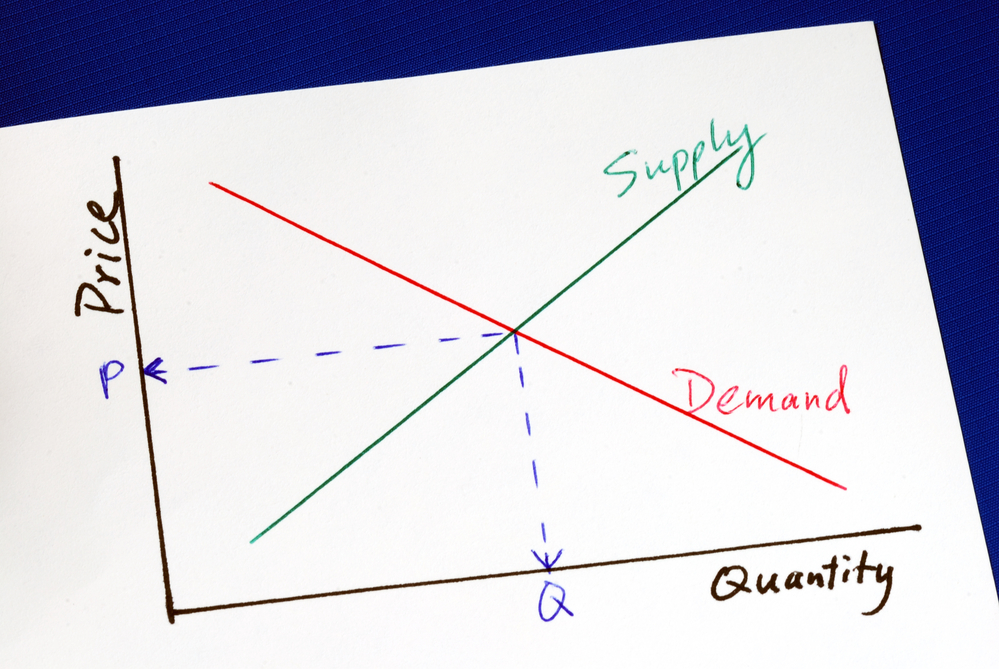
In reasoning from a price change, one makes a determination about the direction of quantity given a change in price. For example, guessing that the quantity demanded in the market will fall because prices are rising. Reasoning from a price change is mistaken because one needs to understand why prices rose in order to make a determination about what will happen to the equilibrium quantity. 

Without understanding the why, one cannot make a reasonable determination about the what. Prices can rise for two reasons: an increase in demand or a decrease in supply. Depending on which event happened, the effect on quantity will differ. If prices rose because of a decrease in supply, then the market quantity will fall because each supplier will now be willing to sell fewer units at any given price. However, if prices rose because of an increase in demand, then the market quantity will increase because buyers as a group are willing to buy more at any given price. 

The same problem applies when reasoning from a quantity change. Just as with reasoning from a price change, in which a change in price does not tell us what a change in quantity to expect would be, a change in quantity does not tell us what the change in price will be.

Changes in quantity also come about from shifts in supply and demand. If demand falls, the quantity exchanged in the market falls, too, because the price is lower. People are willing to buy fewer units at any given price, so producers cut production to lower marginal costs and protect profits. If supply falls, prices rise as it becomes more costly for firms to produce and production falls because it is more costly to produce the marginal unit. 

In the Massachusetts example, there are two explanations for the change in the quantity of housing (that is, all the building): an increase in demand or an increase in supply. 

If housing demand in Massachusetts is increasing, then the price homebuyers are willing to pay for housing is rising, too. Suppliers might be building more just to reach a quantity supplied that matches those rising prices on the shifted demand curve. They see that wannabe homeowners in Massachusetts are willing and able to pay more for housing and are simply providing at those desired prices. 

In contrast, if new homes are being built because supply is increasing, then prices will fall as more homes are constructed. Builders will lower the prices they charge for homes in order to lure buyers to their homes. (Which factors are driving the Massachusetts housing market is not something I am going to speculate on as it is unrelated to this post).

It is possible to temporarily reduce prices by simply increasing the quantity supplied. If quantity supplied exceeds quantity demanded, then the market has a surplus. In that case, firms (and sellers) will lower prices as they look to move the unsold inventory. But the resulting decline in housing prices would only continue until the market reaches equilibrium. The equilibrium price still won’t fall as it would if supply, and not only the quantity supplied, were increasing. 

And so, what I said to my aunt was incorrect. I wish I had said: “If we want to make housing affordable, we need to reduce the costs of building homes in Massachusetts to increase the number of homes that will be supplied if all marketable homes are built. Simply building more won’t make housing more affordable if the demand for housing is rising along with the quantity supplied. One must look at barriers to affordable housing, like the permitting process, zoning, and other construction regulations. Making it less costly to build [that is, increasing supply] is the only sustainable way to reduce housing costs.”




Source link

Tags: ChangeDontQuantityReason
ShareTweetShare
Previous Post

Bank Hapoalim 2025 profit up 28% to NIS 9.8b

Next Post

No, Governments Don’t Give Money Value

Related Posts

Trump’s Commerce Department as Venture Capitalist: Political Investment at its Worst

Trump’s Commerce Department as Venture Capitalist: Political Investment at its Worst

by theadvisertimes.com
August 6, 2026
0

As America’s first reality show president, Donald Trump wants people to think he is breaking new ground and transforming America...

Iran War: Iran Agreement With Oman Will Not “Open” Strait of Hormuz as Trump Hypes Non-Existent Talks; Ansar Allah Threatens Red Sea Escalation; Trump-Hegseth Row Over Weapons Shortages

Iran War: Iran Agreement With Oman Will Not “Open” Strait of Hormuz as Trump Hypes Non-Existent Talks; Ansar Allah Threatens Red Sea Escalation; Trump-Hegseth Row Over Weapons Shortages

by theadvisertimes.com
August 6, 2026
0

There are few big new stories about the Iran war today save the widespread Western press misreporting of the status...

THE WATER WARS HAVE BEGUN

THE WATER WARS HAVE BEGUN

by theadvisertimes.com
August 6, 2026
0

The World Economic Forum has openly proclaimed 2026 the “Year of Water” and has introduced what it calls “Blue Davos,”...

The Property Rights Duality and the Defense of Freedom

The Property Rights Duality and the Defense of Freedom

by theadvisertimes.com
August 5, 2026
0

Though the modern state successfully frames itself as the ultimate guarantor of positive rights, it is the opposite: a systematic...

Private companies added just 44,000 workers in July, below expectations, ADP reports

Private companies added just 44,000 workers in July, below expectations, ADP reports

by theadvisertimes.com
August 5, 2026
0

Hiring at private companies slowed considerably in July, with most of the job growth coming from healthcare, payrolls processing firm...

El-Sayed on Track to Win US Senate Primary, Overcoming AIPAC’s  Million Onslaught

El-Sayed on Track to Win US Senate Primary, Overcoming AIPAC’s $30 Million Onslaught

by theadvisertimes.com
August 5, 2026
0

Yves here. Just wait for the hysteria about progressives (who will be called socialists and worse) to shift to a...

Next Post
No, Governments Don’t Give Money Value

No, Governments Don't Give Money Value

The Best (and Worst) Housing Markets in America

The Best (and Worst) Housing Markets in America

  • Trending
  • Comments
  • Latest
SEC pushes private market access, but retail is already in

SEC pushes private market access, but retail is already in

July 16, 2026
How I Maximize My Sapphire Reserve Dining Credit

How I Maximize My Sapphire Reserve Dining Credit

July 10, 2026
The Weekly Notable Startup Funding Report: 6/22/26 – AlleyWatch

The Weekly Notable Startup Funding Report: 6/22/26 – AlleyWatch

June 21, 2026
The 10 Largest NYC Tech Startup Funding Rounds of June 2026 – AlleyWatch

The 10 Largest NYC Tech Startup Funding Rounds of June 2026 – AlleyWatch

July 6, 2026
The Weekly Notable Startup Funding Report: 7/20/26 – AlleyWatch

The Weekly Notable Startup Funding Report: 7/20/26 – AlleyWatch

July 20, 2026
The Hidden Cost of Chaos: Challenges with Spreadsheet-Based Channel Management in 2026

The Hidden Cost of Chaos: Challenges with Spreadsheet-Based Channel Management in 2026

May 6, 2026
Factbox-Tech companies tap debt, equity to fund AI and cloud expansion

Factbox-Tech companies tap debt, equity to fund AI and cloud expansion

0
One in four Canadians own crypto, says OSC survey

One in four Canadians own crypto, says OSC survey

0
Vacation Rentals Are Officially on Sale: Where They’re Worth Buying

Vacation Rentals Are Officially on Sale: Where They’re Worth Buying

0
Trump’s Commerce Department as Venture Capitalist: Political Investment at its Worst

Trump’s Commerce Department as Venture Capitalist: Political Investment at its Worst

0
Britannia Q1 Results: Profit rises 14% to Rs 593 crore on volumes, price rise

Britannia Q1 Results: Profit rises 14% to Rs 593 crore on volumes, price rise

0
Your Processes Are The Weakest Part Of Your AEO Strategy

Your Processes Are The Weakest Part Of Your AEO Strategy

0
Factbox-Tech companies tap debt, equity to fund AI and cloud expansion

Factbox-Tech companies tap debt, equity to fund AI and cloud expansion

August 6, 2026
Britannia Q1 Results: Profit rises 14% to Rs 593 crore on volumes, price rise

Britannia Q1 Results: Profit rises 14% to Rs 593 crore on volumes, price rise

August 6, 2026
OraSure expects Q3 revenue of .5M-.5M while delaying InteliQuick CT/NG FDA clearance beyond 2026 (NASDAQ:OSUR)

OraSure expects Q3 revenue of $29.5M-$32.5M while delaying InteliQuick CT/NG FDA clearance beyond 2026 (NASDAQ:OSUR)

August 6, 2026
GH Research Releases Q2 2026 Financial Results

GH Research Releases Q2 2026 Financial Results

August 6, 2026
Your Processes Are The Weakest Part Of Your AEO Strategy

Your Processes Are The Weakest Part Of Your AEO Strategy

August 6, 2026
Ooredoo teams up with Nvidia and Nokia to launch 1 GW AI platform in Indonesia

Ooredoo teams up with Nvidia and Nokia to launch 1 GW AI platform in Indonesia

August 6, 2026
theadvisertimes.com

Get the latest news and follow the coverage of Business & Financial News, Stock Market Updates, Analysis, and more from the trusted sources.

CATEGORIES

  • Business
  • Cryptocurrency
  • Economy
  • Financial Planning
  • Investing
  • Market Analysis
  • Markets
  • Money
  • Personal Finance
  • Startups
  • Stock Market
  • Trading

LATEST UPDATES

  • Factbox-Tech companies tap debt, equity to fund AI and cloud expansion
  • Britannia Q1 Results: Profit rises 14% to Rs 593 crore on volumes, price rise
  • OraSure expects Q3 revenue of $29.5M-$32.5M while delaying InteliQuick CT/NG FDA clearance beyond 2026 (NASDAQ:OSUR)
  • Our Great Privacy Policy
  • Terms of Use, Legal Notices & Disclosures
  • About Us
  • Contact Us

© Copyright 2024 All Rights Reserved
See articles for original source and related links to external sites.

Welcome Back!

Login to your account below

Forgotten Password?

Retrieve your password

Please enter your username or email address to reset your password.

Log In
No Result
View All Result
  • Home
  • Business
  • Financial Planning
  • Personal Finance
  • Investing
  • Money
  • Economy
  • Markets
  • Stocks
  • Trading

© Copyright 2024 All Rights Reserved
See articles for original source and related links to external sites.