No Result
View All Result
  • Login
Thursday, August 6, 2026
theadvisertimes.com
  • Home
  • Business
  • Financial Planning
  • Personal Finance
  • Investing
  • Money
  • Economy
  • Markets
  • Stocks
  • Trading
  • Home
  • Business
  • Financial Planning
  • Personal Finance
  • Investing
  • Money
  • Economy
  • Markets
  • Stocks
  • Trading
No Result
View All Result
theadvisertimes.com
No Result
View All Result
Home Cryptocurrency

New model proves miners need Bitcoin above $74k to break even on power

by theadvisertimes.com
5 months ago
in Cryptocurrency
Reading Time: 19 mins read
A A
0
New model proves miners need Bitcoin above k to break even on power
Share on FacebookShare on TwitterShare on LInkedIn


Riot case study shows US Bitcoin miners can clear power costs long before they clear full profit

Bitcoin mining costs are often reduced to a single number: the “cost to mine one BTC.” In reality, that figure depends on what layer of the business you measure.

Electricity determines whether machines should run today, operating expenses determine whether a mining fleet supports the broader company, and accounting costs determine whether the business ultimately reports profit.

To examine those layers more clearly, CryptoSlate built a Bitcoin Mining Cost Model that calculates mining economics from first principles using network difficulty, block reward, transaction fees, ASIC efficiency, and electricity price.

The model then applies company-specific cost inputs using Riot Platforms’ public filings to illustrate how the economics stack up in practice.

Under current network conditions, the model shows that a miner can cover power costs but still fails to cover broader operating and accounting expenses.

Riot’s Texas operations reveal how far apart electricity break-even, operating break-even, and full accounting profitability can remain even after Bitcoin’s price recovery.

Bitcoin miners now make just $500 per BTC as costs surge past $70k
Related Reading

Bitcoin miners now make just $500 per BTC as costs surge past $70k

AI era fuels Bitcoin miners’ evolution, with Wall Street funding their strategic shift away from cryptocurrency volatility.

Mar 6, 2026 · Oluwapelumi Adejumo

Riot’s mining economics reveal three break-even layers

At the current Bitcoin price of $67,200, Riot clears one break-even layer and misses the next two.

We modeled the data based on current network conditions, including Bitcoin difficulty of 145,042,165,424,850, a 3.125 BTC block reward, BTC per block, modern ASIC efficiency in the ~17–19 J/TH range, and Texas industrial electricity at roughly $0.0667 per kWh. We ignored block fees given that current averages sit around 0.02 BTC per block.

That setup produces a network total of 622.95 sextillion hashes per block (the total work the network must do, on average, to mine one block), 199.34 sextillion hashes per BTC (how fast a miner or the whole network does that work), and 969.04 megawatt-hours of energy per BTC.

These assumptions yield an electricity cost of $64,635 to mine 1 BTC at its current price, resulting in a power margin of $2,565 per BTC.

Bitcoin mining model output showing 622.95 sextillion hashes per block, 199.34 sextillion hashes per BTC, estimated energy use of 969.04 MWh per BTC, and total electricity cost of $64,635 per BTC at an illustrative Bitcoin price of $67,200.
Model output showing estimated Bitcoin mining costs: 199.34 sextillion hashes per BTC, 969.04 MWh of energy use, and roughly $64,635 in electricity costs per BTC at a $67,200 BTC price.

When we add Riot’s filing-based non-power operating cost layer of about $9,809 per BTC, the operating margin turns negative $7,243, and the total cost per BTC jumps accordingly. Adding the non-cash depreciation layer of about $39,687 per BTC pushes accounting profit to negative $46,930.

This clearly shows that, for large US miners, “cost to mine one Bitcoin” does not have a single figure.

One layer captures short-run electricity cost and helps decide whether machines are worth running.A second layer adds broader operating costs and shows whether self-mining covers the rest of the business.A third layer adds depreciation and shows whether the reported profit keeps pace with the cash margin.

The model places those layers side by side and shows how far apart they remain after the market’s recovery.

One of the biggest US Bitcoin miners eyes sale of its entire 53,000 BTC stashOne of the biggest US Bitcoin miners eyes sale of its entire 53,000 BTC stash
Related Reading

One of the biggest US Bitcoin miners eyes sale of its entire 53,000 BTC stash

MARA reframes 53,822 BTC as a “readily convertible” liquidity source.

Mar 4, 2026 · Gino Matos

The break-even ladder defines the operating picture

The model produces a break-even ladder that says more than any single all-in mining-cost figure. Electricity-only break-even sits at $64,635 per BTC.

Add Riot’s filing-based non-power operating cost layer, and break-even rises to about $74,444.

Add the accounting depreciation layer and full accounting break-even rises again to $114,130.

Therefore, miners can report positive power economics while still posting weak operating or accounting results.

Cost layerModeled amount per BTCBreak-even BTC priceElectricity only$64,635$64,635Non-power operating costs$9,809$74,444Accounting depreciation$39,687$114,130

I modeled four price scenarios to show how that ladder works in practice.

In my $49,000 bear case, Riot is negative on every measure. Power margin per BTC is negative $15,635, operating margin is negative $25,443, and accounting profit is negative $65,130.

Chart showing Bitcoin mining economics model: 622.95 sextillion hashes per block, 969.04 MWh energy per BTC, total cost $114,130 per BTC, with negative power, operating, and accounting margins at an illustrative $49,000 BTC price.Chart showing Bitcoin mining economics model: 622.95 sextillion hashes per block, 969.04 MWh energy per BTC, total cost $114,130 per BTC, with negative power, operating, and accounting margins at an illustrative $49,000 BTC price.
Chart showing Bitcoin mining economics model: 622.95 sextillion hashes per block, 969.04 MWh energy per BTC, total cost $114,130 per BTC, with negative power, operating, and accounting margins at an illustrative $49,000 BTC price.

In the $67,200 current-price case, Riot moves just above electricity break-even, but only barely. The power margin turns positive, yet the operating and accounting views stay negative.

Model output chart showing Bitcoin mining economics: 622.95 sextillion hashes per block, 969.04 MWh energy per BTC, total cost per BTC $114,130, electricity cost $64,635, and negative operating and accounting margins at an illustrative BTC price of $67,200.Model output chart showing Bitcoin mining economics: 622.95 sextillion hashes per block, 969.04 MWh energy per BTC, total cost per BTC $114,130, electricity cost $64,635, and negative operating and accounting margins at an illustrative BTC price of $67,200.
Model output chart showing Bitcoin mining economics: 622.95 sextillion hashes per block, 969.04 MWh energy per BTC, total cost per BTC $114,130, electricity cost $64,635, and negative operating and accounting margins at an illustrative BTC price of $67,200.

In the $80,000 recovery case, Riot clears the operating threshold, with an operating margin of $5,557 per BTC, while the accounting view still shows a loss of $34,130.

Model output chart showing Bitcoin mining economics, including 969.04 MWh energy per BTC, $114,130 total cost per BTC, $64,635 electricity cost, $9,809 non-power operating costs, $39,687 depreciation, and margins calculated against an illustrative $80,000 BTC price.Model output chart showing Bitcoin mining economics, including 969.04 MWh energy per BTC, $114,130 total cost per BTC, $64,635 electricity cost, $9,809 non-power operating costs, $39,687 depreciation, and margins calculated against an illustrative $80,000 BTC price.
Model output chart showing Bitcoin mining economics, including 969.04 MWh energy per BTC, $114,130 total cost per BTC, $64,635 electricity cost, $9,809 non-power operating costs, $39,687 depreciation, and margins calculated against an illustrative $80,000 BTC price.

It requires retaking the all-time high of $126,000 before all three views turn positive, with an accounting profit of $11,870 per BTC.

Bitcoin mining cost model dashboard showing hashes per block, hashes per BTC, energy per BTC, electricity cost, operating costs, depreciation, and estimated profit margins at a $126,000 BTC price.Bitcoin mining cost model dashboard showing hashes per block, hashes per BTC, energy per BTC, electricity cost, operating costs, depreciation, and estimated profit margins at a $126,000 BTC price.
Bitcoin mining cost model dashboard showing hashes per block, hashes per BTC, energy per BTC, electricity cost, operating costs, depreciation, and estimated profit margins at a $126,000 BTC price.
My $49k Bitcoin prediction playing out but BTC is closing in on a major BUY ZONEMy $49k Bitcoin prediction playing out but BTC is closing in on a major BUY ZONE
Related Reading

My $49k Bitcoin prediction playing out but BTC is closing in on a major BUY ZONE

My September Bitcoin call played out like clockwork, now we all need to remember what’s most likely to come next.

Feb 6, 2026 · Liam ‘Akiba’ Wright

BTC price scenarioPower margin per BTCOperating margin per BTCAccounting profit per BTC$49,000-$15,635-$25,443-$65,130$67,200$2,565-$7,243-$46,930$80,000$15,365$5,557-$34,130$126,000$61,365$51,557$11,870

The distinction is substantive. Riot’s depreciation layer is explicitly framed as non-cash and based on a three-year useful life. It is an accounting allocation rather than a short-term avoidable cash outflow.

It still belongs in the picture because public miners do not live on power margin alone. They report income statements. They replace machines. They absorb corporate costs.

So the useful question is which profitability line investors, analysts, and management teams are actually using and when to say a miner is profitable.

Bitcoin’s biggest mining shock since 2021 is squeezing miners — and it could change whether they sell BTCBitcoin’s biggest mining shock since 2021 is squeezing miners — and it could change whether they sell BTC
Related Reading

Bitcoin’s biggest mining shock since 2021 is squeezing miners — and it could change whether they sell BTC

Difficulty increased sharply while Bitcoin traded sideways, and the drop in hashprice compresses margins.

Mar 1, 2026 · Andjela Radmilac

Riot’s next-halving projection extends the price test

We then ran a cost projection until the next halving in 2028.

Using Riot’s latest publicly available filings, we assume 38.5 exahash per second, ramping to 45 EH/s by March 31, 2026, and then holding that level flat through to the next halving window.

We are not attempting to rebuild the entire market. The model keeps current per-BTC economics constant and scales them through Riot’s reported and planned self-mining hash-rate path.

This is a scenario exercise focused on operating leverage, and the price sensitivity is hard to miss.

CryptoSlate Daily Brief

Daily signals, zero noise.

Market-moving headlines and context delivered every morning in one tight read.

5-minute digest 100k+ readers

Free. No spam. Unsubscribe any time.

Whoops, looks like there was a problem. Please try again.

You’re subscribed. Welcome aboard.

Across all four scenarios, the projected cumulative BTC mined is 15 thousand. What changes is the profit stack.

At $49,000 Bitcoin, Riot’s cumulative power margin is negative $239,436,036, cumulative operating margin is negative $389,648,124, and cumulative accounting profit is negative $997,428,094.

Bitcoin mining profitability model showing cumulative profit to the next halving at $49k BTC, projecting 15,000 BTC mined with power margin −$239M, operating margin −$389M, and accounting profit −$997M across 2026–2028.Bitcoin mining profitability model showing cumulative profit to the next halving at $49k BTC, projecting 15,000 BTC mined with power margin −$239M, operating margin −$389M, and accounting profit −$997M across 2026–2028.
Bitcoin mining profitability model showing cumulative profit to the next halving at $49k BTC, projecting 15,000 BTC mined with power margin −$239M, operating margin −$389M, and accounting profit −$997M across 2026–2028.

At $67,200, the cumulative power margin turns positive at $39,286,667, but the cumulative operating margin stays negative at $110,925,420, and the cumulative accounting profit remains negative at $718,705,391.

Dashboard showing Bitcoin mining profitability projections to the next halving, including a BTC price slider (~$67,200), projected cumulative BTC of 15,000, power margin of $39.3M, operating margin of -$110.9M, accounting profit of -$718.7M, and a chart comparing accounting, operating, and power margins over time.Dashboard showing Bitcoin mining profitability projections to the next halving, including a BTC price slider (~$67,200), projected cumulative BTC of 15,000, power margin of $39.3M, operating margin of -$110.9M, accounting profit of -$718.7M, and a chart comparing accounting, operating, and power margins over time.
Dashboard showing Bitcoin mining profitability projections to the next halving, including a BTC price slider (~$67,200), projected cumulative BTC of 15,000, power margin of $39.3M, operating margin of -$110.9M, accounting profit of -$718.7M, and a chart comparing accounting, operating, and power margins over time.

At $80,000, Riot turns cumulatively positive on operating margin at $85,099,338, while cumulative accounting profit is still negative at $522,680,632.

Chart showing projected Bitcoin mining profitability to the next halving with BTC at $80,000, estimating 15,000 BTC mined, $235M cumulative power margin, $85M operating margin, and a -$522M accounting profit trajectory.Chart showing projected Bitcoin mining profitability to the next halving with BTC at $80,000, estimating 15,000 BTC mined, $235M cumulative power margin, $85M operating margin, and a -$522M accounting profit trajectory.
Chart showing projected Bitcoin mining profitability to the next halving with BTC at $80,000, estimating 15,000 BTC mined, $235M cumulative power margin, $85M operating margin, and a -$522M accounting profit trajectory.

Only in the $126,000 scenario do all three lines move above zero, with cumulative accounting profit of $181,783,343.

Chart showing projected Bitcoin mining profitability to the next halving, estimating 15,000 BTC mined with $939M power margin, $789M operating margin, and $181M accounting profit at a BTC price of $126,000.Chart showing projected Bitcoin mining profitability to the next halving, estimating 15,000 BTC mined with $939M power margin, $789M operating margin, and $181M accounting profit at a BTC price of $126,000.
Chart showing projected Bitcoin mining profitability to the next halving, estimating 15,000 BTC mined with $939M power margin, $789M operating margin, and $181M accounting profit at a BTC price of $126,000.
Bitcoin breaking $126,000 has clear 3 year pathway but a brutal $1.3 billion exodus changes everything todayBitcoin breaking $126,000 has clear 3 year pathway but a brutal $1.3 billion exodus changes everything today
Related Reading

Bitcoin breaking $126,000 has clear 3 year pathway but a brutal $1.3 billion exodus changes everything today

As the Fed prepares its next major policy move, the window for a 2026 breakout is slamming shut for investors.

Jan 26, 2026 · Liam ‘Akiba’ Wright

BTC price scenarioProjected cumulative BTCCumulative power marginCumulative operating marginCumulative accounting profit$49,00015 thousand-$239,436,036-$389,648,124-$997,428,094$67,20015 thousand$39,286,667-$110,925,420-$718,705,391$80,00015 thousand$235,311,426$85,099,338-$522,680,632$126,00015 thousand$939,775,402$789,563,314$181,783,343

A miner can be power-positive for a long stretch and still fail to cover broader operating costs. It can also turn operating-positive and still remain far from accounting profit. Riot’s case study shows that the gap between those states is wide.

In the model, the difference between power break-even and full accounting break-even is roughly $49,495 per BTC. That spread helps explain why miners can look healthy on fleet dispatch and strained on reported earnings at the same time.

Our cumulative chart does not call future difficulty, fees, outages, curtailment revenue, financing, or new capex. It assumes today’s per-BTC economics persist and scales them only according to Riot’s planned hash-rate path.

That limitation still leaves a clear signal. Holding the rest of the economics flat shows how much of the next-halving debate still hinges on Bitcoin’s price.

In Riot’s case, the model does not reach cumulative accounting profitability until the $126,000 scenario. However, in absolute terms, the level is $114,200.

Bitcoin mining profitability projection chart showing cumulative profit to the next halving at a BTC price of $114,200, with projected 15,000 BTC mined and power, operating, and accounting margins increasing through 2028.Bitcoin mining profitability projection chart showing cumulative profit to the next halving at a BTC price of $114,200, with projected 15,000 BTC mined and power, operating, and accounting margins increasing through 2028.
Bitcoin mining profitability projection chart showing cumulative profit to the next halving at a BTC price of $114,200, with projected 15,000 BTC mined and power, operating, and accounting margins increasing through 2028.

Riot’s case gives a read-through for the wider US mining trade

The broader lesson for US miners is straightforward. Price alone does not settle the operating picture. Fleet efficiency and power price still decide the first cut.

In terms of cost sensitivity, we compare three ASIC presets: the Bitmain S21 at 17.5 J/TH, the WhatsMiner M60S at 18.5 J/TH, and the Antminer S19 Pro at 29.5 J/TH, using a Texas industrial power reference rate.

Cost sensitivity chart comparing Bitcoin mining breakeven costs for Antminer S19 Pro, Bitmain S21, and WhatsMiner M60S across different electricity prices, showing older S19 Pro becoming unprofitable fastest as power costs rise.Cost sensitivity chart comparing Bitcoin mining breakeven costs for Antminer S19 Pro, Bitmain S21, and WhatsMiner M60S across different electricity prices, showing older S19 Pro becoming unprofitable fastest as power costs rise.
Cost sensitivity chart comparing Bitcoin mining breakeven costs for Antminer S19 Pro, Bitmain S21, and WhatsMiner M60S across different electricity prices, showing older S19 Pro becoming unprofitable fastest as power costs rise.

Across that range, the S19 Pro stays above the newer machines on cost per BTC. The two newer models run close to one another, while the less efficient fleet carries a visibly higher cost line throughout the chart.

That point carries beyond Riot. Riot’s filing-based non-power cost layer and depreciation assumptions are company-specific. Another miner may have a different overhead base, a different useful-life assumption, a different curtailment profile, or a different realized power mix. But we feel the three-layer structure still travels well.

First comes power cost. Then operating cost. Then accounting cost.

The companies that survive weak price periods tend to clear the first layer comfortably. The companies that compound value through the cycle need to clear all three over time.

At the current price of around $67,000, the model does not show a company in distress at the machine level. The power margin is positive. Machines still earn more than they spend on electricity.

At the same time, it does not show a miner that has solved the full income statement. The operating line stays red. The accounting line stays deeper in the red. For a public miner, that split shapes treasury decisions, fleet replacement timing, and market expectations for earnings.

We can therefore extrapolate that Bitcoin miners can cross into positive power margin well below six figures, cross into positive operating margin in the recovery case, and still miss cumulative accounting profitability until we retest the all-time high above $114,000


Mentioned in this article


Source link

Tags: 74KBitcoinBreakMinersmodelPowerProves
ShareTweetShare
Previous Post

If a teenager who always ate dinner with the family suddenly starts taking their plate to their room—most parents see rejection. What’s usually happening is one of these 6 developmental shifts, and the parent who handles it best is the one who does the hardest thing: Nothing.

Next Post

Colorado TABOR Refund Update: Who Qualifies This Year and How Much You Could Receive

Related Posts

Utah Judge Rejects Kalshi’s Federal Shield From Gambling Laws

Utah Judge Rejects Kalshi’s Federal Shield From Gambling Laws

by theadvisertimes.com
August 6, 2026
0

Key TakeawaysJudge Shelby granted Utah summary judgment and denied Kalshi’s preliminary injunction.Online gambling in Utah is a third-degree felony under...

Mysten Labs CTO Joins Anthropic for AI Security Research

Mysten Labs CTO Joins Anthropic for AI Security Research

by theadvisertimes.com
August 5, 2026
0

Sam Blackshear, the co-founder and chief technology officer of Mysten Labs, has announced he will be stepping down to join...

Sen. Cynthia Lummis Says Clarity Act Talks With Democrats Continue Daily

Sen. Cynthia Lummis Says Clarity Act Talks With Democrats Continue Daily

by theadvisertimes.com
August 5, 2026
0

The CLARITY Act remained in focus after Senator Cynthia Lummis said negotiations with Democrats are continuing daily, while Senate leaders...

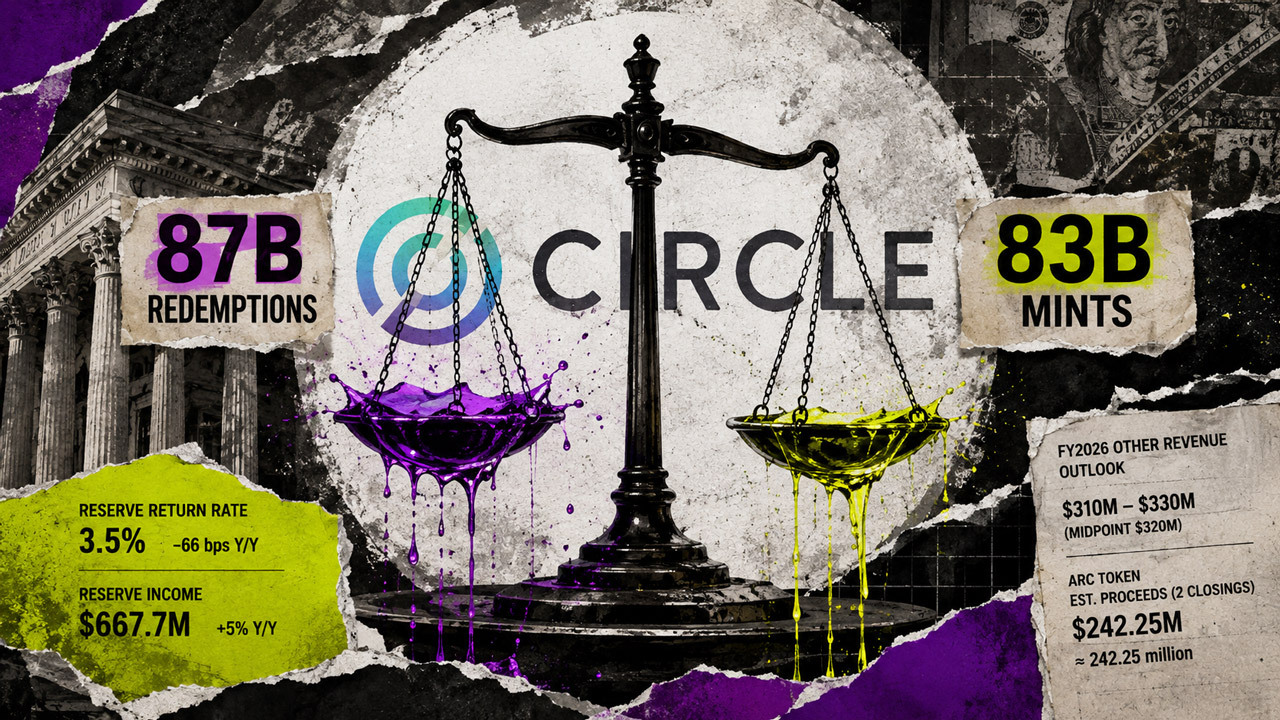
Other revenue outlook: Circle’s B USDC flow gap

Other revenue outlook: Circle’s $4B USDC flow gap

by theadvisertimes.com
August 5, 2026
0

Circle’s reserve engine absorbed a tough second quarter. Gross USDC redemptions exceeded mints by about $4 billion, and reserve yield...

Democrats Move to Block CLARITY Act Due to Stalled Ethics Talks

Democrats Move to Block CLARITY Act Due to Stalled Ethics Talks

by theadvisertimes.com
August 5, 2026
0

Key TakeawaysPunchbowl News has reported that Democrats will block cloture, citing stalled White House ethics talks.Sen. Ruben Gallego said Republicans...

Ethereum Proposal to Slash Staking Rewards Sparks Backlash

Ethereum Proposal to Slash Staking Rewards Sparks Backlash

by theadvisertimes.com
August 4, 2026
0

A group of six Ethereum researchers and developers, including Ethereum Foundation’s Justin Drake, has proposed changing the network’s issuance policy...

Next Post
Colorado TABOR Refund Update: Who Qualifies This Year and How Much You Could Receive

Colorado TABOR Refund Update: Who Qualifies This Year and How Much You Could Receive

The Best Dividend ETF to Buy With ,000 Right Now for Reliable Income

The Best Dividend ETF to Buy With $1,000 Right Now for Reliable Income

  • Trending
  • Comments
  • Latest
SEC pushes private market access, but retail is already in

SEC pushes private market access, but retail is already in

July 16, 2026
How I Maximize My Sapphire Reserve Dining Credit

How I Maximize My Sapphire Reserve Dining Credit

July 10, 2026
The Weekly Notable Startup Funding Report: 6/22/26 – AlleyWatch

The Weekly Notable Startup Funding Report: 6/22/26 – AlleyWatch

June 21, 2026
The 10 Largest NYC Tech Startup Funding Rounds of June 2026 – AlleyWatch

The 10 Largest NYC Tech Startup Funding Rounds of June 2026 – AlleyWatch

July 6, 2026
The Weekly Notable Startup Funding Report: 7/20/26 – AlleyWatch

The Weekly Notable Startup Funding Report: 7/20/26 – AlleyWatch

July 20, 2026
The Hidden Cost of Chaos: Challenges with Spreadsheet-Based Channel Management in 2026

The Hidden Cost of Chaos: Challenges with Spreadsheet-Based Channel Management in 2026

May 6, 2026
Sandisk bulls are probably eyeing this number on earnings day: AlphaSpace stat of the evening

Sandisk bulls are probably eyeing this number on earnings day: AlphaSpace stat of the evening

0
HHS Decertifies Kentucky Organ Donation Group Over Safety Concerns

HHS Decertifies Kentucky Organ Donation Group Over Safety Concerns

0
Agnico Eagle Mines – AEM: Es tut sich was bei Gold & Silber!

Agnico Eagle Mines – AEM: Es tut sich was bei Gold & Silber!

0
THE WATER WARS HAVE BEGUN

THE WATER WARS HAVE BEGUN

0
Channel Rebate Automation: The 2026 Guide to Scaling Incentives

Channel Rebate Automation: The 2026 Guide to Scaling Incentives

0
GIC subsidiary and promoter Sunu Mathew lead LEAP India’s pre-IPO placement round

GIC subsidiary and promoter Sunu Mathew lead LEAP India’s pre-IPO placement round

0
Utah Judge Rejects Kalshi’s Federal Shield From Gambling Laws

Utah Judge Rejects Kalshi’s Federal Shield From Gambling Laws

August 6, 2026
GIC subsidiary and promoter Sunu Mathew lead LEAP India’s pre-IPO placement round

GIC subsidiary and promoter Sunu Mathew lead LEAP India’s pre-IPO placement round

August 6, 2026
BBSI narrows 2026 outlook to 3%-4% gross billings growth as it targets 2.7%-2.75% gross margin (NASDAQ:BBSI)

BBSI narrows 2026 outlook to 3%-4% gross billings growth as it targets 2.7%-2.75% gross margin (NASDAQ:BBSI)

August 6, 2026
Agnico Eagle Mines – AEM: Es tut sich was bei Gold & Silber!

Agnico Eagle Mines – AEM: Es tut sich was bei Gold & Silber!

August 6, 2026
HHS Decertifies Kentucky Organ Donation Group Over Safety Concerns

HHS Decertifies Kentucky Organ Donation Group Over Safety Concerns

August 6, 2026
THE WATER WARS HAVE BEGUN

THE WATER WARS HAVE BEGUN

August 6, 2026
theadvisertimes.com

Get the latest news and follow the coverage of Business & Financial News, Stock Market Updates, Analysis, and more from the trusted sources.

CATEGORIES

  • Business
  • Cryptocurrency
  • Economy
  • Financial Planning
  • Investing
  • Market Analysis
  • Markets
  • Money
  • Personal Finance
  • Startups
  • Stock Market
  • Trading

LATEST UPDATES

  • Utah Judge Rejects Kalshi’s Federal Shield From Gambling Laws
  • GIC subsidiary and promoter Sunu Mathew lead LEAP India’s pre-IPO placement round
  • BBSI narrows 2026 outlook to 3%-4% gross billings growth as it targets 2.7%-2.75% gross margin (NASDAQ:BBSI)
  • Our Great Privacy Policy
  • Terms of Use, Legal Notices & Disclosures
  • About Us
  • Contact Us

© Copyright 2024 All Rights Reserved
See articles for original source and related links to external sites.

Welcome Back!

Login to your account below

Forgotten Password?

Retrieve your password

Please enter your username or email address to reset your password.

Log In
No Result
View All Result
  • Home
  • Business
  • Financial Planning
  • Personal Finance
  • Investing
  • Money
  • Economy
  • Markets
  • Stocks
  • Trading

© Copyright 2024 All Rights Reserved
See articles for original source and related links to external sites.