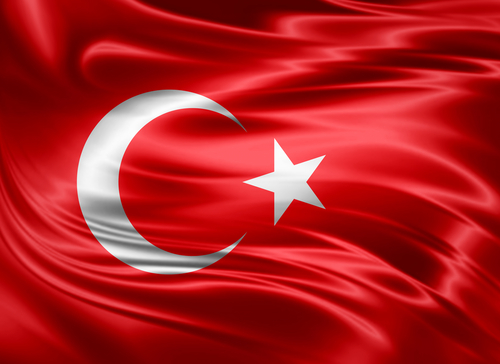
I have repeatedly warned that people need to watch Turkey. Most analysts view Turkey as simply another emerging market struggling with inflation, currency volatility, and political uncertainty. They are missing the larger picture. Turkey sits at the crossroads of Europe, Russia, the Middle East, and Asia. When capital shifts, when energy flows change, when geopolitical alliances begin to fracture, Turkey is often standing directly in the middle.
Now Turkey is negotiating with Russia to extend natural gas supply agreements beyond 2026. The discussions involve Turkey’s state energy company BOTAS and Russia’s Gazprom, with future supply volumes and contract terms still under negotiation. Russia remains one of Turkey’s most important suppliers through the TurkStream and Blue Stream pipelines.
Europe spent years proclaiming that it would permanently divorce itself from Russian energy. Sanctions were imposed and pipelines were destroyed. Yet the laws of economics do not care about political slogans. Energy must still move from where it is produced to where it is consumed. Russia still possesses enormous reserves. Europe still requires energy. Turkey increasingly controls one of the most important transit routes connecting those two realities. Today, TurkStream is effectively the last major route carrying Russian gas into parts of Europe.
This is precisely why Turkey has become so important in the emerging multipolar world. Erdogan has spent years balancing relations with NATO, Russia, China, Europe, and the United States. Western leaders often criticize him, yet they continue dealing with him because geography has given Turkey leverage that cannot be replaced. Turkey’s position allows it to act as a bridge between competing power blocs.
At the same time, Turkey is not merely relying on Russian gas. Ankara is expanding energy cooperation with Azerbaijan, investing roughly $30 billion into its electricity infrastructure, strengthening transmission links across the region, and attempting to position itself as the primary energy hub connecting Asia, the Caucasus, the Middle East, and Europe.
Turkey sits directly on the fault line of several major geopolitical trends at the same time. The war cycle, the fragmentation of Europe, tensions between NATO and Russia, instability in the Middle East, migration flows, and the global energy transition all converge in one place. Whenever multiple historical trends intersect in a single region, volatility follows.
What many fail to understand is that Turkey’s future is no longer tied exclusively to Europe. It is building relationships eastward and southward while maintaining one foot inside the Western system. That balancing act may become one of the most important geopolitical stories of the next decade.
People should watch Turkey carefully because it is increasingly becoming the barometer of the new world order. The old postwar structure is breaking apart. The nations positioned between competing power centers often become the biggest winners. Turkey may be one of them, provided it can navigate the storms that are clearly gathering into 2027 and beyond.