The markets are closed today, but I wanted to take a moment to wish you and your family a happy and prosperous Fourth of July.
Tomorrow, Americans celebrate one of history’s most important declarations of independence.
On July 4, 1776, a group of colonists decided they no longer wanted their future determined by a distant government.
They wanted the freedom to make their own choices, build their own businesses and chart their own course.
Nearly 250 years later, I believe we’re witnessing another kind of independence movement.
Not a political one, but a technological one.
A Company of One
Historically, the ability to build a business, conduct research, create media or reach a global audience has depended on having access to employees, expertise and capital.
But today, a single person with a laptop and the right AI tools can accomplish things that would have required an entire team only a few years ago.
And I believe that’s one of the most important technology stories unfolding right now.
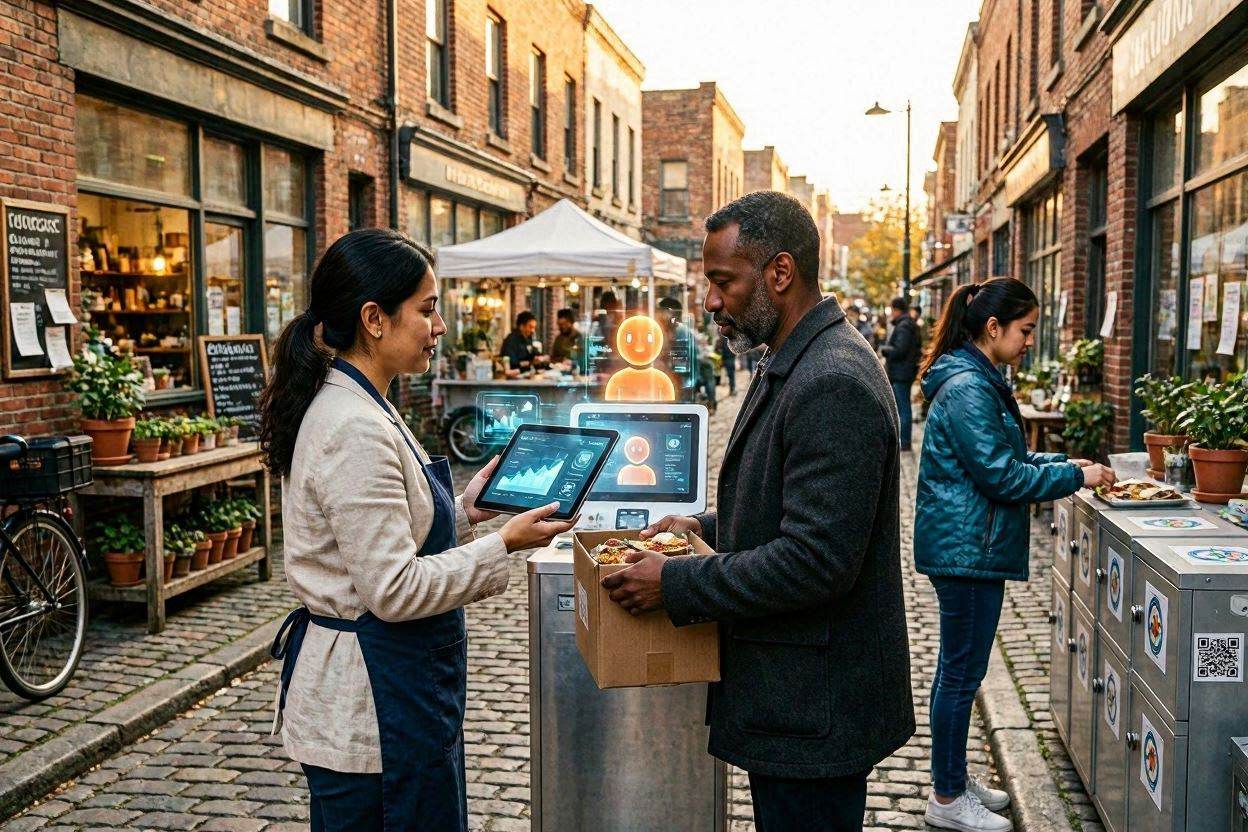
Consider what’s happening among small businesses.
According to a recent Goldman Sachs survey, 93% of small business owners using AI say the technology has a positive impact on their business, while 67% expect it to help them grow revenue.
Another survey found that 58% of small businesses using AI save more than 20 hours every month.
And the impact is even more obvious in Silicon Valley.
Last year, Microsoft said it saved $500 million by replacing call centers with AI.
And OpenAI CEO Sam Altman predicted that AI would eventually enable a billion-dollar company with only a single employee.
That prediction isn’t so far-fetched.
Because several AI-native startups are already generating extraordinary amounts of revenue with surprisingly small teams.
By mid-2025, the AI coding platform Cursor reportedly surpassed $500 million in annual recurring revenue with fewer than 60 employees.

That kind of productivity would have been unimaginable a decade ago.
And it highlights something investors may be overlooking.
Most discussions about AI focus on what the technology might replace. But a more important question may be what it enables.
After all, the internet didn’t simply replace existing businesses. It allowed entirely new business models to emerge.
Artificial intelligence appears to be doing something similar.
The same way the internet gave individuals access to global distribution, AI is giving them access to capabilities that once belonged almost exclusively to large organizations.
Here’s My Take
The Fourth of July celebrates political independence.
But we all know that economic independence can be just as powerful.
For most of the industrial age, accomplishing more usually meant hiring more people, raising more capital and building larger organizations.
Artificial intelligence is beginning to challenge that assumption.
A small business can now access capabilities that once required an entire department. An entrepreneur can launch products faster than ever before. And a single person can often accomplish work that previously required a team.
No one knows exactly how far this will go.
But if AI technology continues improving at its current pace, I’m confident that we’ll look back on this moment the same way we look back on the arrival of the internet.
As the point when technology dramatically expanded what one person could accomplish.
And that might prove to be one of the most important forms of independence yet.
Regards,
 Ian KingChief Strategist, Banyan Hill Publishing
Editor’s Note: We’d love to hear from you!
If you want to share your thoughts or suggestions about the Daily Disruptor, or if there are any specific topics you’d like us to cover, just send an email to [email protected].
Don’t worry, we won’t reveal your full name in the event we publish a response. So feel free to comment away!