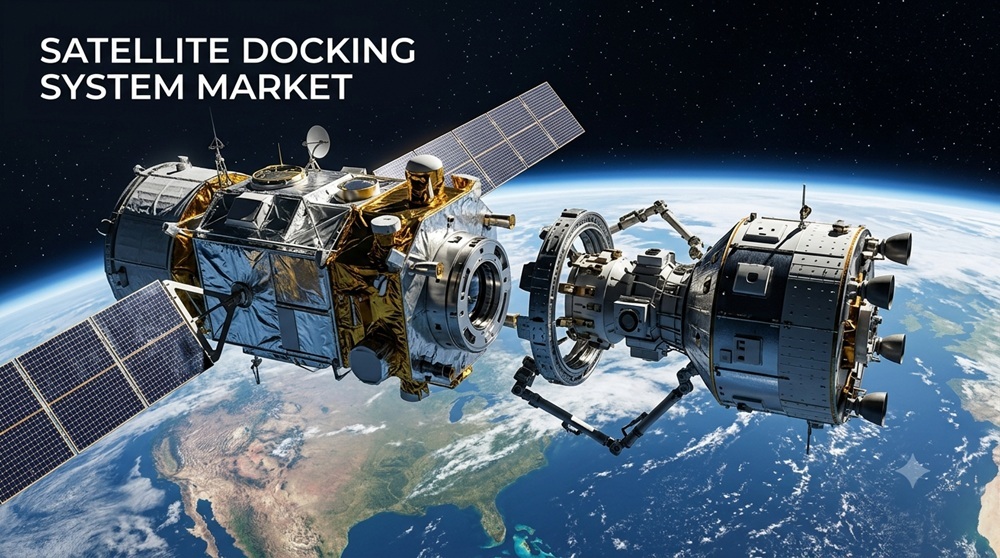
The Satellite Docking System Market is gaining momentum as the space industry increasingly focuses on extending satellite lifecycles and supporting sustainable orbital operations. Satellite docking technologies enable secure connections between spacecraft, making services such as refueling, inspection, repair, replacement, and de-orbiting possible. According to BIS Research, the market is projected to grow from $40.3 Million in 2021 to approximately $1,011.34 Million by 2032, reflecting a CAGR of 31.3% during the forecast period.
What are the Key Drivers of the Satellite Docking System Market?
Rising emphasis on sustainable space operations and responsible management of orbital assets.
Increasing adoption of in-orbit servicing to maximize satellite lifespan and improve operational efficiency.
Growing need to reduce the long-term costs associated with satellite replacement through servicing capabilities.
Strengthening regulatory focus on space sustainability, encouraging technologies that support satellite maintenance and debris mitigation.
What are the Emerging Trends in the Satellite Docking System Market?
Continued evolution of standardized satellite platforms designed to improve compatibility for future docking missions.
Expanding investment in rendezvous and proximity operation technologies, including software solutions that support autonomous servicing.
Growing industry focus on enabling technologies that improve the reliability and efficiency of in-orbit satellite operations.
How is the Regional Landscape Evolving?
North America remains a significant market due to its established space ecosystem and continued investments in satellite servicing technologies. Europe is strengthening its position through initiatives focused on sustainable space operations and advanced orbital infrastructure. Meanwhile, countries across the Asia-Pacific region are increasing investments in space capabilities, creating additional opportunities for satellite docking technologies as in-orbit servicing becomes more widely adopted.
Get an Updated Sample for Satellite Docking System Market – Focus on Service Type, End User, Spacecraft Type, and Country – Analysis and Forecast, 2022-2032
What Challenges and Opportunities Shape the Market?
One of the primary challenges is the absence of industry-wide standardization for docking interfaces, which can limit interoperability between spacecraft. Additionally, declining satellite manufacturing and launch costs may affect the economic case for certain servicing missions. At the same time, the market presents notable opportunities through the development of advanced rendezvous software, enabling technologies for proximity operations, and the continued adoption of standardized satellite platforms that simplify future docking missions.
Trending FAQs for Satellite Docking System Market
What is a satellite docking system?
A satellite docking system is a technology that enables two spacecraft or satellites to connect securely in orbit. It supports missions such as refueling, inspection, repair, component replacement, and de-orbiting, helping extend satellite operational life and improve space sustainability.
What factors are driving the growth of the Satellite Docking System Market?
The market is primarily driven by the growing demand for in-orbit satellite servicing, increasing focus on sustainable space operations, efforts to reduce satellite replacement costs, and advancements in autonomous rendezvous and docking technologies.
Which industries benefit from satellite docking systems?
Satellite docking systems primarily benefit the commercial space, government, and defense sectors by improving satellite maintenance capabilities and enhancing mission efficiency.
Get More Insights for Spacetech Market
Conclusion
The Satellite Docking System Market is positioned for substantial expansion as the global space sector prioritizes sustainable operations and efficient satellite lifecycle management. Increasing demand for in-orbit servicing, combined with technological advancements in docking capabilities and supportive regulatory developments, is expected to accelerate market growth throughout the forecast period. While standardization remains a key challenge, ongoing innovation and investment continue to strengthen the long-term outlook for satellite docking solutions.







-1024x683.jpg "Canada Admits Justin Trudeau’s Climate Agenda Was a Scam")