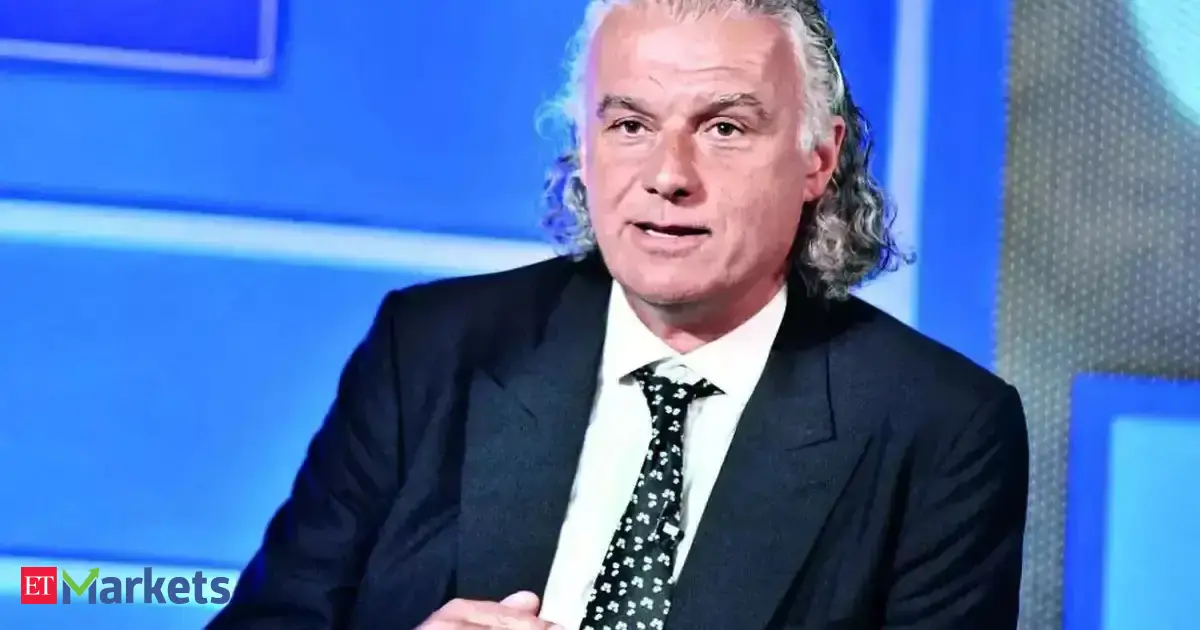
Wood describes the ongoing AI build-out as “the most dramatic capex cycle Greed & Fear has ever seen,” with hyperscalers and foundries ramping up spending at an unprecedented pace. Against that backdrop, he is explicitly “going to have to increase exposure to tech hardware in the various Greed & Fear portfolios,” adding SK Hynix and Kioxia to his global long-only book and increasing the weighting in Samsung Electronics.
In the updated global long-only portfolio, SK Hynix and Kioxia are included “with an initial 4% weighting each,” while the existing Samsung Electronics position is raised by one percentage point. “All this means that Greed & Fear is going to have to increase exposure to tech hardware,” Wood writes in his newsletter, emphasising that DRAM and NAND suppliers are at the heart of the AI trade three and a half years into the capex arms race.
Also Read | Chris Wood’s big warning: The specific risk that will finally trigger the end of AI trade
‘Mother of All Cycles’ and Jevons Paradox
The strategic shift is anchored in Wood’s conviction that falling token costs will drive explosive growth in compute demand, not a bust in AI usage. Citing Jevons Paradox, he argues that “falling token prices should lead to rising DRAM prices,” as cheaper AI services spur more usage and, in turn, greater consumption of memory and bandwidth.“So the increased demand triggered by cheaper prices should be good for the picks and shovels plays, which have already been by far the main beneficiaries of AI in stock market terms three and a half years into the AI capex arms race,” he notes, adding that “for now at least, there remains zero sign of AI capex slowing.” With AI-linked data centre investment driving boom-like conditions in Taiwan and record export orders, Wood views the entire supply chain, especially DRAM, as central to what he calls “the mother of all cycles.”Funding the Shift: India and Other CutsTo fund this hardware tilt, Wood is trimming exposure in India and other markets rather than adding overall risk. In the Asia ex-Japan long-only portfolio, “an initial 4% will be re-initiated in Hynix by removing PolicyBazaar,” while a one-percentage-point cut to Alibaba helps finance an increased stake in Samsung Electronics.
The India long-only portfolio also takes a hit. “Finally, in the India long-only portfolio, the investment in Ambuja Cements will be removed, while the investments in GMR Airports, JSW Energy and Adani Energy Solutions will be reduced by two percentage points, one percentage point and one percentage point respectively,” the note states.
These reallocations free up capital to deploy into the South Korean and Japanese memory complex, underscoring Wood’s preference to fund the AI hardware trade by rotating within equities rather than increasing overall exposure.
Wood’s conviction rests heavily on structural changes in the DRAM industry and the evolving role of memory in AI workloads. He highlights Micron CEO Sanjay Mehrotra’s assertion that “memory has evolved from a peripheral component into the core engine driving productivity in the AI era,” and points to long-term strategic customer agreements (SCAs) as evidence of newfound pricing power.
Micron has signed 16 SCAs covering roughly 20% of DRAM volumes and a third of NAND volumes, typically with five-year terms, signalling greater visibility and discipline across the industry. On valuations, Wood argues that “the story that the DRAM industry has changed structurally, and that the companies should now be valued on a price-to-earnings basis rather than on a price-to-book basis, looks to Greed & Fear an increasingly powerful argument.” Hynix, Samsung Electronics and Micron, he notes, are trading at 7.8x, 6.8x and 9.2x consensus 12-month forward earnings respectively.
How the AI Boom Might EndEven as he increases exposure, Wood is candid about what he sees as the defining risk of the AI trade. “Greed & Fear is personally convinced that concerns about malinvestment will be the most likely trigger for an end to the AI trade, or at least for a protracted pause to refresh, given the huge amounts now being spent by the main players,” he writes.
He warns that the “main risk to the picks and shovels story remains a sudden realisation by investors that hyperscalers and the likes of OpenAI and Anthropic will not be able to generate returns on their investment,” which could abruptly curtail funding for AI capex. Circular arrangements, such as Nvidia financing OpenAI so the latter can buy more Nvidia chips, could aggravate that unwinding once capital markets begin to question long-term returns.
Portfolio Track Record and Lessons LearnedWood also reflects on past positioning as he executes the latest reallocation. In the global portfolio, he is removing Alphabet and Alibaba to make room for SK Hynix and Kioxia, noting that Alphabet has risen 19% since its inclusion in November 2025, while Nvidia is up only 3.3% since being dropped in October 2025.
“In this sense, the trade worked. But clearly Greed & Fear would have done better to invest more in DRAM stocks,” he concedes, underlining the lesson that memory has been, and remains, the most leveraged way to play the AI theme.
Nvidia, he adds, “seems to have been used as the funding short by tech ‘pod’ platforms in recent months to bet on higher beta AI hardware plays,” further illustrating how investor focus has shifted towards component and capacity providers. That rotation is now being mirrored in his own model portfolios as he cuts India-centric positions and other non-hardware names to double down on South Korean chip giants at the heart of the AI capex cycle.
(Disclaimer: Recommendations, suggestions, views and opinions given by the experts are their own and do not represent the views of The Economic Times)