
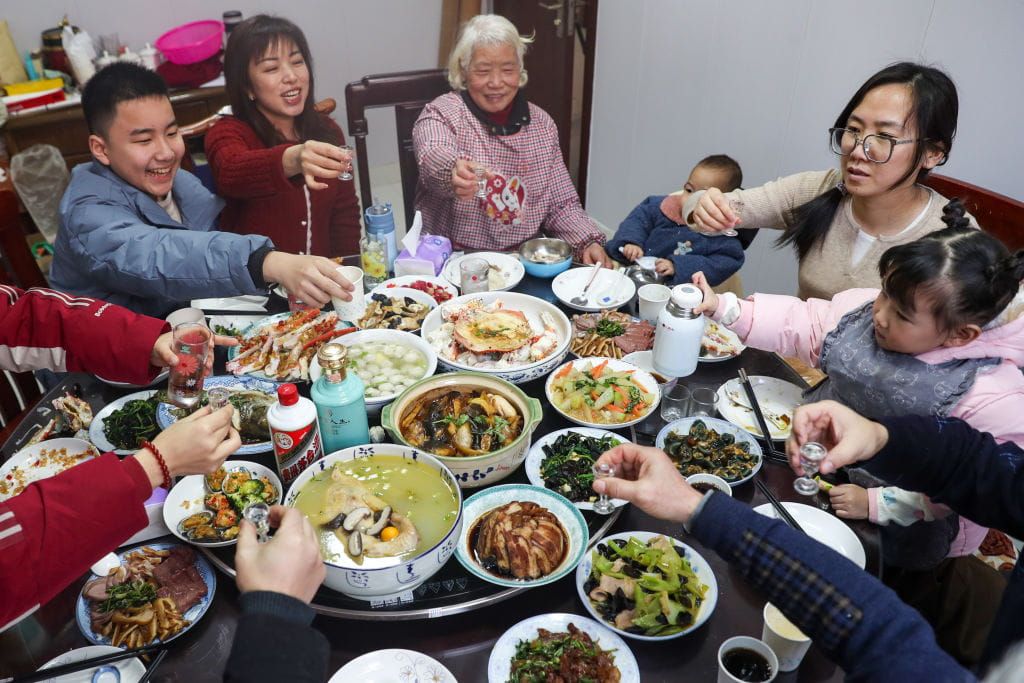
You don’t have to take a bite from someone’s food, share a toothbrush, or drink from the same glass to pick up their germs. Simply living under the same roof may be enough. New research suggests that the people in the same household share far more than meals, chores, and living space. They also share many of the same microbes, with scientists finding that family members, roommates, and romantic partners can influence each other’s gut health. In other words, the people you live with may be shaping your health in ways you never realized.
The Gut Health and Household Study
Microbes are tiny living organisms, including bacteria, that are so small you need a microscope to see them. Some are helpful, some are harmful, and many play important roles in keeping our bodies healthy. The collection of these microbes is called the microbiome. Think of your microbiome like a community. When there are many different types of helpful microbes living in your body, they can work together to keep things running smoothly. This variety helps your body digest food, fight off harmful germs, and stay healthy. If there aren’t enough different kinds of microbes, harmful bacteria may have an easier time causing problems. In general, a microbiome with lots of different microbes is stronger and better able to protect your health.
A study published in the Cell Press Blue journal found some amazing connections between households and gut health. People who live together share many of the same oral microbes, researchers found, regardless of the type of relationship, such as parents, children, and siblings. Perhaps not as enlightening is that romantic partners share even more oral microbes (44%) which may be because of smooching and intimate encounters.
Researchers looked at the gut and mouth microbiomes of 430 people living in 207 households in Italy and Fiji. They found that people who live in the same household, regardless of relationship, share about 19% of their gut microbes and around 26% of their mouth microbes. By comparison, people from different households shared only about 6% of their gut microbes and virtually none of their mouth microbes. The research suggests that our microbiome isn’t shaped by what we eat or how much we exercise, although those are important factors, too. The people we spend our time with may also play a role.
“Your microbiome is not just yours as an isolated entity, it is partly a reflection of the people you live with, and theirs is partly a reflection of you,” lead author Vitor Heidrich told the New York Post. “This also means that the health benefits and disease risks linked to specific microbiome members may themselves be transferable between people, which is something we are only beginning to understand.”
The study found that some of the microbes that spread most easily between people were linked to health problems such as type 2 diabetes and poor heart and metabolic health. Scientists discovered that some of the bacteria that are easily passed from person to person through the mouth have been associated with colon cancer and other illnesses. This doesn’t mean you will catch these diseases simply by living with someone who has them. Instead, scientists said they need to better understand how microbes move between people and how that affects health.
“Unless my strains physically travel from me to you, the same diet alone will not necessarily make us share more of our strains,” said Heidrich, a researcher at the University of Trento, Italy. “It’s more that if I pass one of my strains to you and we eat the same diet, that strain will find a similar nutritional environment in your gut to the one it was thriving in before, making it more likely to successfully colonize your gut.”
Don’t Panic and Move Out
We’re not just sharing our microbes with our roommates; researchers claim we also share them with those in our communities. “People living in different households but from the same community, like the same town, do share more strains than people from completely different populations,” Heidrich said. “This suggests that microbiome transmission extends beyond the household, likely through untraced social interactions, shared public spaces, or strains circulating in the local community. However, the effect is much weaker than what we see within households.”
This doesn’t mean you need to pack your bags and head for a remote island or corner of a jungle. Humans have been sharing microbes forever. As Heidrich explained: “Humans and our primate relatives have always lived in groups, so this kind of microbial exchange has likely been happening for millions of years, shaping the evolution of our microbiomes. It’s a mechanism intrinsic to the condition of being human and that we should not be afraid of.”
So the next time your child steals a sip of your drink, your spouse swipes a bite from your plate, or your roommate leaves you wondering what exactly is growing in that science experiment they call leftovers, remember that you’re already sharing plenty. The microscopic world inside us has likely been swapping residents for years. And, as they say, sharing is caring.






-1024x683.jpg "Inside the Races That Could Tip the Senate")















