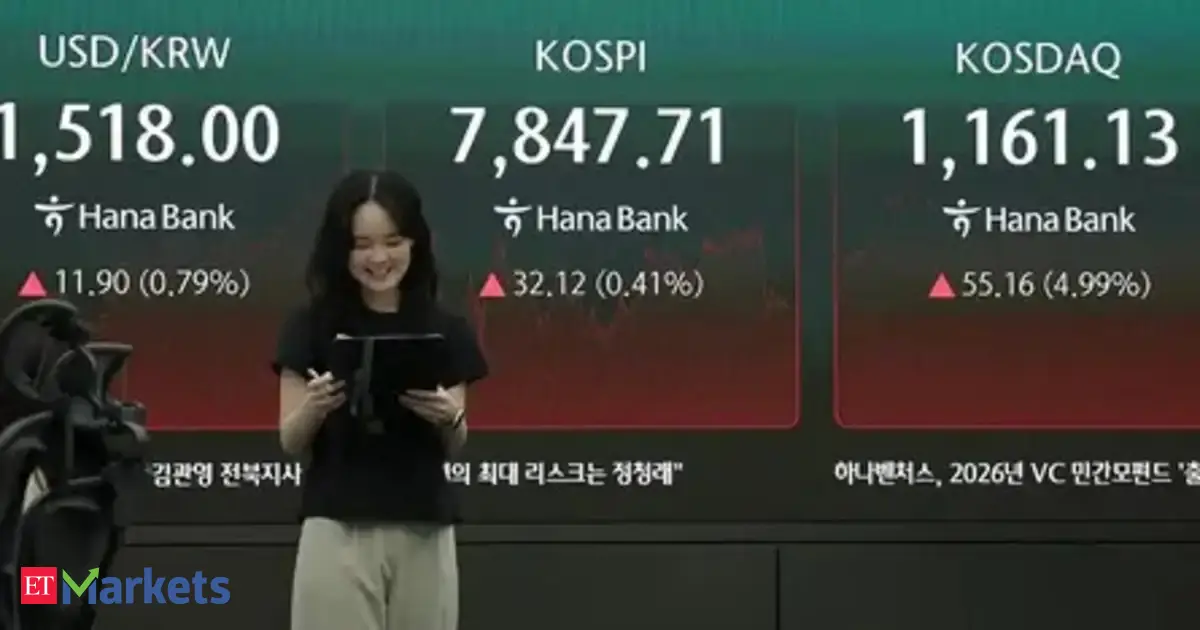
The benchmark KOSPI jumped 660 points, or 8.5%, to 8,424. The surge helped the index finish the week up 3.2%, reversing some of the damage from the previous week when it had fallen 3.7% amid a sharp global selloff in AI and technology stocks.
Despite the turbulence, the KOSPI remains the world’s top-performing stock index this year. The benchmark has surged 94% so far in 2026, largely powered by a rally in semiconductor stocks tied to the artificial intelligence boom.
Technology heavyweights led Friday’s advance. Samsung Electronics climbed 12.21%, while rival SK Hynix gained 8.85%. Battery maker LG Energy Solution rose 6.11%. Automakers also joined the rally, with Hyundai Motor advancing 6.03% and affiliate Kia Corp adding 4.81%. Steel producer POSCO Holdings gained 6.84%, while Samsung BioLogics edged up 1.01%.
The rebound came after Trump said on Thursday that the United States and Iran could sign a peace agreement as soon as this weekend, a move that would reopen the Strait of Hormuz to shipping. Iran, however, said it had not yet made a final decision on any agreement.
Trump also said discussions with Iran had been elevated to the highest levels of the Iranian leadership and received approval. According to him, key elements of the proposed agreement had been approved “in both concept and great detail” by parties including the United States, Israel, Saudi Arabia, the UAE, Qatar, Turkey, Pakistan, Bahrain, Kuwait, Jordan and Egypt, among others.Friday’s rally capped a week marked by extreme volatility. The KOSPI triggered “sidecar” trading curbs in four sessions, including Friday. Earlier in the week, circuit breakers were activated for the third time this year and the ninth time on record.Only days earlier, the world’s best-performing equity market had been caught in the global technology rout. AI and semiconductor stocks, the standout winners of 2025 and 2026, came under intense pressure as investors questioned whether the rally had run ahead of underlying fundamentals. The impact was particularly severe in South Korea, one of the markets most exposed to the AI supply chain, with index tumbling as much as 8% in a single session this week.
The pullback came despite a powerful long-term growth story. Demand for AI infrastructure has surged over the past year as technology companies worldwide race to develop advanced AI models and expand computing capacity. That has fuelled robust demand for high-bandwidth memory chips and channeled investor interest into South Korean chipmakers, which occupy a critical position in the global AI supply chain.
(Disclaimer: Recommendations, suggestions, views and opinions given by the experts are their own. These do not represent the views of The Economic Times)