
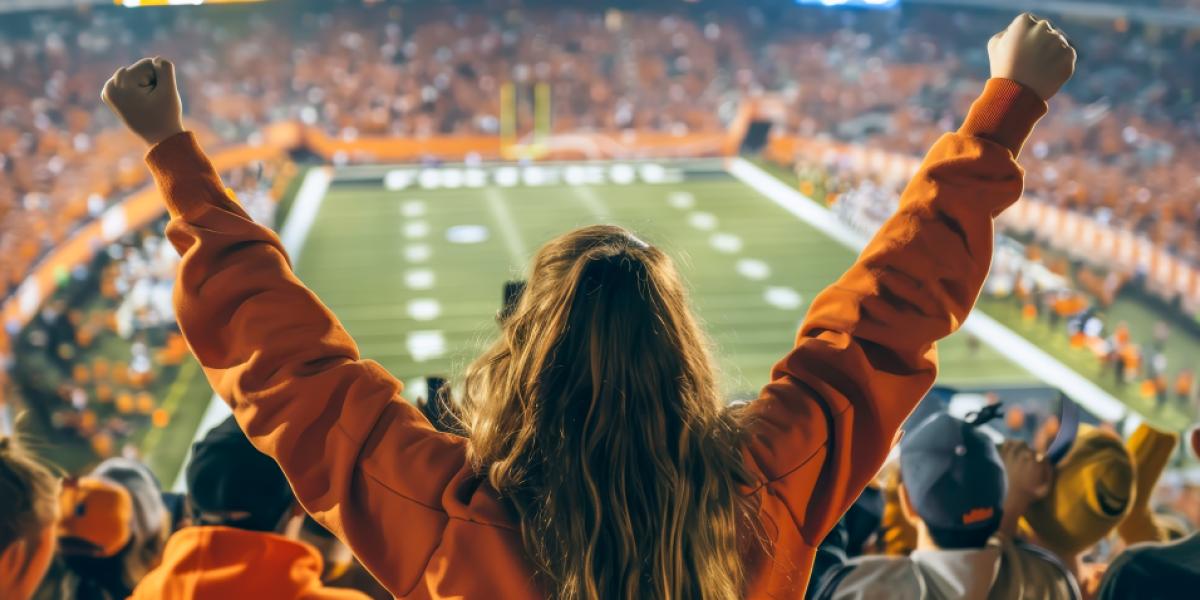
College athletics, particularly in the South, has long been one of the great institutions of this country. While the terminally anti-social may be quick to dismiss popular sports as “sportsball” and the latter half of “bread and circuses,” the reality is that popular sports have long served as an important connection in civil society, creating multi-generational stories of success and defeat, and providing valuable lessons about grit, hard work, and determination.
Unfortunately, college sports have been under constant assault from political institutions, serving as a striking example of the devastation that can be wrought by anarcho-tyranny—the state-driven phenomenon of criminalizing the enforcement of basic civic norms while increasingly restricting the liberties of law-abiding citizens. In the case of college athletics, the perpetrators have been America’s judicial class, while the admittedly-unsympathetic entity that has attempted to police the space has largely been the NCAA—an organization that has earned a reputation for inconsistency and bureaucratic stagnation. The true victims, however, are the average college sports fans watching an institution they love be destroyed around them, while the cost of their fandom continues to increase.
As Bill Anderson and I have discussed previously, many of the challenges facing college sports are the byproduct of their success. The changing entertainment consumption patterns of consumers have resulted in significant increases in college athletic revenue, particularly from the largest and most-beloved conferences and teams. As the balance sheets of athletic departments expanded, the more untenable the historic norms of college players only being legally eligible for scholarship compensation became untenable for the modern American judicial system. The result was a major change to college athletics resulting from legal rulings, the creation of the Name, Image, and Likeness (NIL) era, which has quickly escalated into a system of college players becoming yearly free agents, with rapidly-eroding guidelines handling eligibility. The result is college players becoming increasingly older, and even professional athletes entering college athletics after failing to achieve stardom in their respective professional counterparts.
It is worth noting, however, that the original sin of this judicial unraveling of collegiate athletics is the poisoned fruit of the labor theory of value. It is perhaps understandable, at a superficial level, to look at the rising financial valuations of college programs and see the exploitation of free college labor as driving the returns as an injustice that had to be fixed. That ignores, however, that the appeal of college athletics is driven by the logos on a player’s helmet, not the athletes themselves, as demonstrated by the fact that there was historically only a minor correlation between the most profitable teams in college sports and new championship trophies in school award shelves. Consumer demand drives television ratings, television ratings drive TV deals, and, in 2025, even the dysfunctional Auburn Tigers attracted more eyes than the eventual national champions from Bloomington, Indiana, during the regular season.
The market alternative to judicial tyranny, in this case, would have been the creation of a competitive professional league targeting college-aged talent, paying them for their participation. The lack of interest in such an arrangement is understandable, as startup football leagues have struggled to financially perform against the established brand loyalty of teams with over a century of tradition and consumer investment. A freshman five-star athlete who accepts an offer from the Texas Longhorns becomes a big man on campus; the same athlete playing for the UFL’s Houston Gamblers becomes a sports trivia answer.
Additionally, if we are to pretend that there was a sincere interest in the NCAA to allow revenue-producing sports to legally create a pathway to player compensation without state intervention, pre-existing civil rights laws created additional unavoidable issues. Title IX rules require state universities to provide equal opportunities to female athletes, despite the fact that male sports—particularly college football and basketball—overwhelmingly drive revenue to college programs. As such, laws trying to legislate “fairness” and “equality of opportunities” require ignoring basic economic reality, a dynamic that continues to plague college programs trying to adapt to the new state-imposed NIL era.
As the new era of college athletics provides athletes with the ability to point to actual financial compensation connected with their play, most restrictions on their eligibility have faced escalating challenges in enforcement. Ole Miss quarterback Trinidad Chambliss, for example, was able to document a NIL deal estimated at between $5-6 million when arguing that NCAA restrictions on his eligibility created unavoidable harm to his earning potential. The result is a Mississippi judge granting him a sixth year of eligibility to play during his age-24 season.
True absurdity came from the bench this Monday, with a Texas judge granting an injunction against the NCAA’s attempts to ban Texas Tech quarterback Brendan Sorsby from the sport after admitting to a laundry list of gambling-related offenses, including numerous bets on his own team and using third parties to place bets to avoid sportsbook restrictions. Regardless of one’s opinion about the normalization of sports gambling, the interests of both sports and gambling have in creating a firewall between active gambling by in-game participants is obvious. Despite this, the judicial system has prevented the most basic rule enforcement, and no longer meaningfully exists.
In doing so, they highlight one of the clear issues with the state’s near-monopolistic control over the adjudication of issues: resource restraints. After all, the won injunction does not mean the end of the case legally, only that Sorsby has received short-term protection from the NCAA’s long-established punishment of ending a player’s eligibility for violating rules of conduct, rules which every D-1 athlete signs to uphold. The NCAA will appeal this ruling, but the timeframe of the judicial system could prevent it from being considered until after the season ends, at which point Sorsby could drop his lawsuit entirely, having secured his season of play and the compensation connected to it.
The slow wheels of the judicial system are not unique to sports, as the state-managed legal system faces a broader tragedy-of-the-commons problem. The fact that collegiate sports—with many of their problems deriving directly from the increase in their revenue—cannot access a quicker process for adjudication is an illustration of the broader inadequacy of systems controlled by government monopolies.
In contrast, professional sports leagues do not face this same issue because of private arbitration structures that are the byproduct of their collective bargaining agreements between labor and management. Many point to this as the obvious solution to collegiate athletics and, therefore, dismiss complaints from the NCAA or other figures within the sport that refuse to adopt this change, which would require codifying athletes as employees under a broad labor union. Again, though, this legal change would require implementing a number of additional government-required obligations and responsibilities to these athletic programs, including broader questions related to Title IX equality rules, as interpreted by the Department of Education.
As such, college athletics finds itself in the position of being undermined from all sides by the state. Legislation to promote “gender equality” passed in the 1970s, as interpreted by the executive branch, could demand irrational compensation splits over fifty years later, if college athletics embrace athletes as employees. Without this change, the judicial system has neutered any ability for the collegiate sports industry to govern itself, even in cases involving explicitly agreed-upon student conduct rules that address issues involving the integrity of the product. One can acknowledge this reality without having a position against player compensation, as it is these layers of state control that make the player-payment system such a needlessly-complex issue.
The complete absurdity of this government-created fiasco has forced conferences like the SEC to consider full secession from the broader national sports ecosystem, with the belief that an individual conference would find it better able to impose rules without having the judicial system erase them under the guise of anti-trust protections. Whether or not this would be successful is an open question.
Additionally, both Congress and the White House have discussed various legislative fixes to the problem, with different legislative priorities. While some may dismiss Washington having a role in “fixing” sports, it is clear that Washington itself is to blame for many of the issues that plague college athletics. Whether Congress can actually function to address such a problem is a secondary question, as anything involving the political system quickly becomes its own form of clown show, dealing with issues that have nothing to do with meaningful questions at hand.
What is not open to debate is that college athletics, and the fans whose passion has made them such profitable entities, are watching one of their favorite pastimes be eroded year after year. Just another of the countless illustrations of how government forces undermine the well-being of those who just want to enjoy life’s simple pleasures that have long been embedded in the American experience, such as rolling Toomer’s Corner in Auburn.













