No Result
View All Result
  • Login
Sunday, August 23, 2026
theadvisertimes.com
  • Home
  • Business
  • Financial Planning
  • Personal Finance
  • Investing
  • Money
  • Economy
  • Markets
  • Stocks
  • Trading
  • Home
  • Business
  • Financial Planning
  • Personal Finance
  • Investing
  • Money
  • Economy
  • Markets
  • Stocks
  • Trading
No Result
View All Result
theadvisertimes.com
No Result
View All Result
Home Economy

Energy War Breaks OPEC: UAE Walks Away As Oil Supply Collapses

by theadvisertimes.com
4 months ago
in Economy
Reading Time: 4 mins read
A A
0
Energy War Breaks OPEC: UAE Walks Away As Oil Supply Collapses
Share on FacebookShare on TwitterShare on LInkedIn


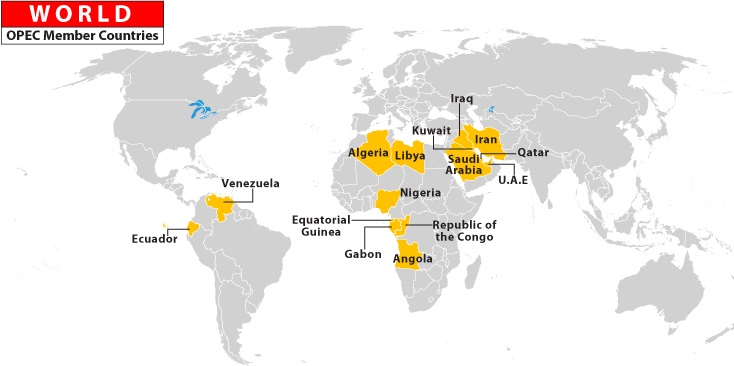
What is unfolding right now is not just another dispute inside OPEC. This is the beginning of the breakdown of coordinated global energy policy under the pressure of war. The decision by the United Arab Emirates to exit OPEC effective May 1 comes as oil supply is being physically disrupted, not merely negotiated.

Officials in the UAE have tried to frame this as a strategic move, stating they need “greater flexibility to manage production independently” and to expand output capacity without being constrained by quotas. That statement alone reveals the real issue. They have the ability to produce more oil, but OPEC restrictions have prevented them from doing so at a time when global supply is tightening. When a producer is sitting on capacity in the middle of a supply shock, remaining in a cartel becomes a liability rather than an advantage.
1617718521_world opec members countries map

The numbers here are critical. OPEC production has already fallen sharply, with estimates showing output around 20.79 million barrels per day in March, while disruptions tied to the Iran conflict are removing as much as 7–10 million barrels per day from global supply flows, particularly through the Strait of Hormuz. That is not a minor disruption. That is a structural shock to the system.

At the same time, oil prices are reacting exactly as expected. Brent crude has surged above 110 dollars per barrel, with U.S. crude crossing 100. Analysts have warned that “there is no clear end in sight to the supply disruption,” which means volatility is not temporary. It becomes embedded in the system.

The UAE has made it clear that it intends to increase production capacity toward 5 million barrels per day by 2027, well above its current quota near 3 million. That gap explains everything. By leaving OPEC, they can monetize that capacity immediately rather than waiting for collective agreements that no longer align with their national interest. Estimates suggest this could translate into tens of billions in additional annual revenue.

I have written many times that OPEC was never a permanent solution to managing energy markets. It was a political construct that worked only when member states had aligned interests and a shared incentive to restrict supply. The moment those interests diverge, the structure begins to fail. OPEC has historically struggled with compliance. Members routinely exceeded quotas when it suited them, particularly during periods of high prices or fiscal stress. That was always the underlying weakness.

What we are seeing now is that weakness being exposed under extreme conditions. War changes everything. When geopolitical survival overrides economic coordination, agreements collapse. OPEC cannot function when members are facing direct threats or when they see an opportunity to maximize revenue independently. This is precisely why these types of organizations tend to break down during periods of rising global tension.

The UAE’s decision signals something much larger about the future of OPEC. If one major producer walks away to pursue independent production, others will begin to reconsider their own participation. The incentive to cooperate declines as the incentive to produce increases. That creates a feedback loop where the cartel loses its ability to enforce discipline.

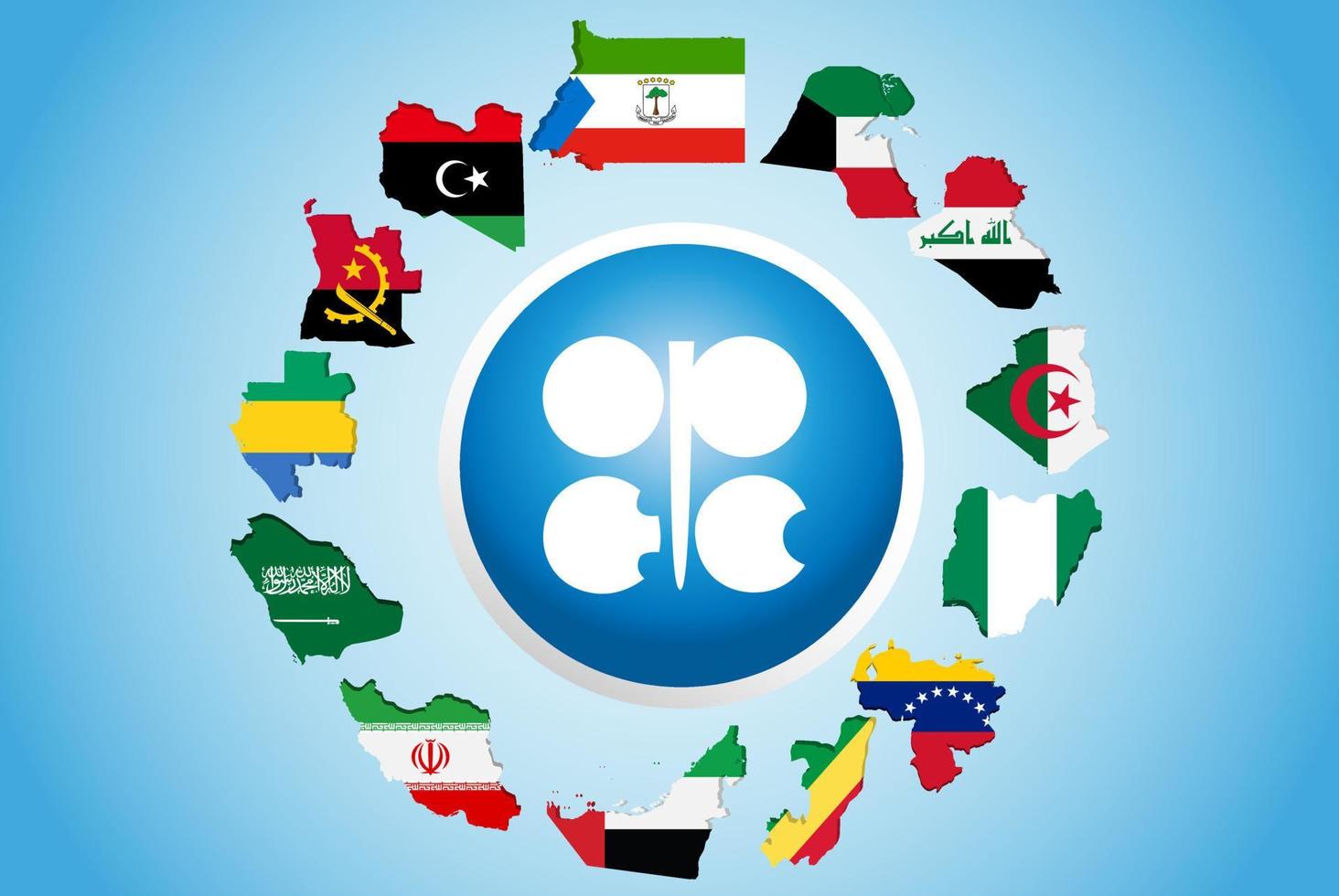
At the same time, the global energy landscape has already shifted. The United States has emerged as a dominant producer, reducing the relative influence of OPEC compared to previous decades. When OPEC was formed, it had far greater control over global supply. Today, that control is diluted, and fragmentation only accelerates that trend.
the national flags of the opec member countries are located below the logo of the organization of the petroleum exporting countries illustration vector

Looking forward, OPEC is unlikely to disappear overnight, but its role will change. Instead of acting as a unified force capable of stabilizing markets, it will become a looser alliance with diminishing influence. Pricing power will shift toward individual producers and market forces rather than coordinated quotas. That transition introduces far greater volatility because there is no longer a central mechanism to manage supply in times of crisis.

Geopolitical conflict will increasingly dictate energy flows. When supply routes are threatened and production becomes a strategic asset, countries will prioritize control over cooperation. Energy becomes a tool of leverage rather than a shared economic resource.

The contradiction globally is becoming impossible to ignore. While policymakers in Europe continue to push for eliminating fossil fuels, producers are expanding output and repositioning themselves to control supply. This divergence guarantees instability. There is no substitute capable of replacing this level of energy demand, and the attempt to force that transition is colliding directly with geopolitical reality.

The UAE’s exit is not an isolated event. It is a signal that the system is changing. Energy markets are moving away from coordinated control and toward fragmentation driven by national interest. Once that shift takes hold, it does not reverse easily.

The real takeaway is simple. When supply is disrupted, cooperation breaks down, and producers begin acting independently, the result is sustained volatility. Prices rise, markets become unstable, and geopolitical tension intensifies. This is not a short-term disruption. It is the early stage of a much larger transformation in the global energy order.



Source link

Tags: BreaksCollapsesenergyoilOPECSupplyUAEWalksWar
ShareTweetShare
Previous Post

Google Partners With The Pentagon To Sell Your Data

Next Post

Best fixed-income ETFs for Canadian investors 2026

Related Posts

The Unwinnable Iran War | Armstrong Economics

The Unwinnable Iran War | Armstrong Economics

by theadvisertimes.com
August 8, 2026
0

I have reported that Trump was mislead into this unwinnable war with Iran, which has been planning for it since...

Market Talk – August 7, 2026

Market Talk – August 7, 2026

by theadvisertimes.com
August 7, 2026
0

ASIA: The major Asian stock markets had a mixed day today: • NIKKEI 225 decreased 76.55 points or -0.12% to...

Jobs report July 2026:

Jobs report July 2026:

by theadvisertimes.com
August 7, 2026
0

The U.S. economy saw an unexpected declined in jobs during July while the unemployment rate edged lower, the Bureau of...

Here are three key takeaways from the disappointing July jobs report

Here are three key takeaways from the disappointing July jobs report

by theadvisertimes.com
August 7, 2026
0

Job seekers speak with employer representatives and browse information tables as they attend an Inspire Together job and resource fair...

Coffee Break: Gene Editing Gone Wrong, Plants that Eat Animals, and a Neanderthal Gene that Makes a Difference

Coffee Break: Gene Editing Gone Wrong, Plants that Eat Animals, and a Neanderthal Gene that Makes a Difference

by theadvisertimes.com
August 7, 2026
0

Part the First: If You Stretch Biomedical Science Too Far It Breaks, Every Time.  Gene editing using CRISPR technology has...

What Did You Expect? | Mises Institute

What Did You Expect? | Mises Institute

by theadvisertimes.com
August 7, 2026
0

As Murray Rothbard pointed out again and again, the government has no business getting involved in education. In a free...

Next Post
Best fixed-income ETFs for Canadian investors 2026

Best fixed-income ETFs for Canadian investors 2026

Best all-in-one ETFs for Canadian investors 2026

Best all-in-one ETFs for Canadian investors 2026

  • Trending
  • Comments
  • Latest
Wealth management has got junior advisors’ first 90 days covered. What happens on day 91?

Wealth management has got junior advisors’ first 90 days covered. What happens on day 91?

August 7, 2026
Biggerpockets Pro Members Can Now Turn Home Equity Into a Flexible Line of Credit With Aven

Biggerpockets Pro Members Can Now Turn Home Equity Into a Flexible Line of Credit With Aven

August 3, 2026
The 19 Largest Global Startup Funding Rounds of June 2026 – AlleyWatch

The 19 Largest Global Startup Funding Rounds of June 2026 – AlleyWatch

July 27, 2026
Fourth of July 2026 Freebies and Deals

Fourth of July 2026 Freebies and Deals

July 3, 2026
Kellogg’s Back to School Snacks Instant Savings: Save  off  Purchase + Deal Scenario!

Kellogg’s Back to School Snacks Instant Savings: Save $10 off $35 Purchase + Deal Scenario!

August 6, 2026
CVS Deals Under  This Week

CVS Deals Under $1 This Week

July 27, 2026
XRP Price Forecast as Binance Whale Activity Remains Elevated Amid XRPL Tokenization Push

XRP Price Forecast as Binance Whale Activity Remains Elevated Amid XRPL Tokenization Push

0
Wealth management has got junior advisors’ first 90 days covered. What happens on day 91?

Wealth management has got junior advisors’ first 90 days covered. What happens on day 91?

0
Is Lettuce Safe to Eat Now? What to Know Amid Cyclospora Outbreak

Is Lettuce Safe to Eat Now? What to Know Amid Cyclospora Outbreak

0
The Unwinnable Iran War | Armstrong Economics

The Unwinnable Iran War | Armstrong Economics

0
Bezeq declares NIS 515m dividend

Bezeq declares NIS 515m dividend

0
AI Will Clarify What Asset Managers Are Paid For

AI Will Clarify What Asset Managers Are Paid For

0
XRP Price Forecast as Binance Whale Activity Remains Elevated Amid XRPL Tokenization Push

XRP Price Forecast as Binance Whale Activity Remains Elevated Amid XRPL Tokenization Push

August 8, 2026
Is Lettuce Safe to Eat Now? What to Know Amid Cyclospora Outbreak

Is Lettuce Safe to Eat Now? What to Know Amid Cyclospora Outbreak

August 8, 2026
Bitcoin outlook: ,000 or ,000 this weekend

Bitcoin outlook: $70,000 or $60,000 this weekend

August 8, 2026
Mortgage and refinance interest rates today, Saturday, August 8, 2026: Rates mixed this weekend

Mortgage and refinance interest rates today, Saturday, August 8, 2026: Rates mixed this weekend

August 8, 2026
CEO of the world’s largest workspace provider says commuting will be extinct by 2040

CEO of the world’s largest workspace provider says commuting will be extinct by 2040

August 8, 2026
F&O Talk: Smallcaps look strong on charts, says Sudeep Shah; outlines Trent, Swiggy, Kalyan Jewellers strategy

F&O Talk: Smallcaps look strong on charts, says Sudeep Shah; outlines Trent, Swiggy, Kalyan Jewellers strategy

August 8, 2026
theadvisertimes.com

Get the latest news and follow the coverage of Business & Financial News, Stock Market Updates, Analysis, and more from the trusted sources.

CATEGORIES

  • Business
  • Cryptocurrency
  • Economy
  • Financial Planning
  • Investing
  • Market Analysis
  • Markets
  • Money
  • Personal Finance
  • Startups
  • Stock Market
  • Trading

LATEST UPDATES

  • XRP Price Forecast as Binance Whale Activity Remains Elevated Amid XRPL Tokenization Push
  • Is Lettuce Safe to Eat Now? What to Know Amid Cyclospora Outbreak
  • Bitcoin outlook: $70,000 or $60,000 this weekend
  • Our Great Privacy Policy
  • Terms of Use, Legal Notices & Disclosures
  • About Us
  • Contact Us

© Copyright 2024 All Rights Reserved
See articles for original source and related links to external sites.

Welcome Back!

Login to your account below

Forgotten Password?

Retrieve your password

Please enter your username or email address to reset your password.

Log In
No Result
View All Result
  • Home
  • Business
  • Financial Planning
  • Personal Finance
  • Investing
  • Money
  • Economy
  • Markets
  • Stocks
  • Trading

© Copyright 2024 All Rights Reserved
See articles for original source and related links to external sites.