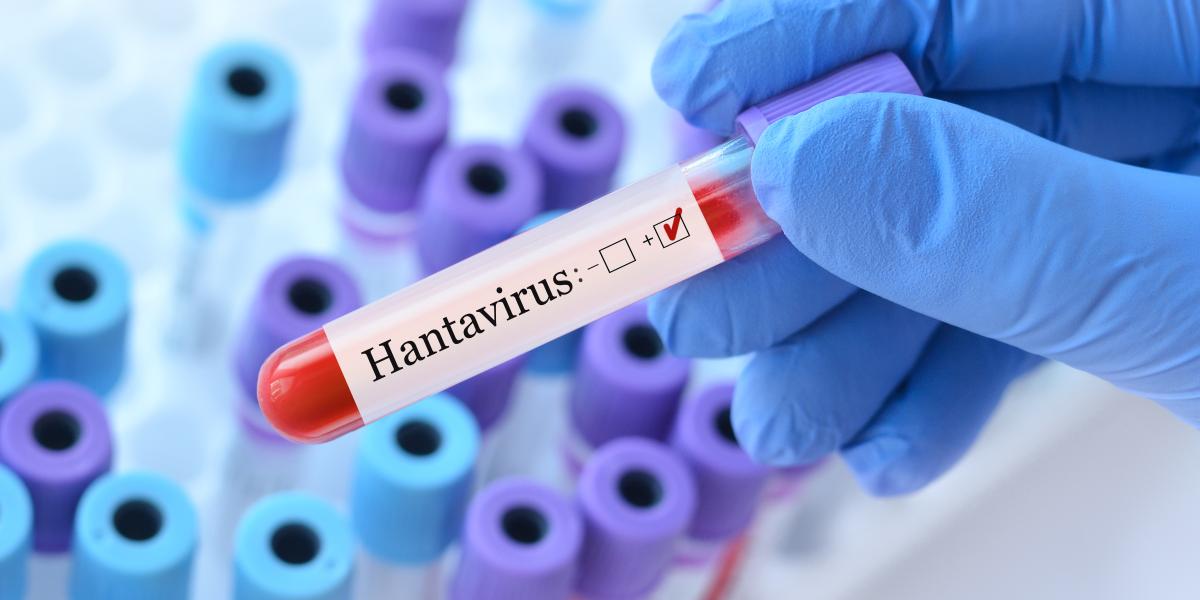
The story of the “outbreak” aboard the MV Hondius has had international repercussions. In short, two passengers died aboard, a third one dying shortly after disembarking, from what authorities think is Andes Hantavirus. This disease is normally contracted by touching something contaminated with rodent feces and then ingesting the contaminated residue, similar to food poisoning.
This particular type is suspected to be able to pass from human to human only through direct and sustained contact. It is a notifiable disease, meaning when a clinician suspects it they need to contact the authorities who then trigger a containment protocol. In the case at hand it meant the cruiser being diverted to Tenerife upon the offer of the Spanish government, and all passengers being disembarked, taken to their home countries and quarantined there for 42 days.
It is commonly accepted that this is the logical way of doing things. For statists, disease control is one of the areas of government intervention that cannot be argued against. In fact, a lot of libertarians either struggle to come up with arguments against this government intervention or directly avoid commenting.
Government Disease Control
But is it true? Is the government better positioned to navigate these events? Or could the free market do a better job?
The short answer is, as in every other area, government intervention is wasteful and far worse than private solutions. But to dwell into why, we have to understand two little-mentioned facts.
First, as in any other area, disease control is an area of discovery. Humans do not know what the best solutions are, and finding out is a process in which ideas need to be tested and either adopted or put aside.
Second, there is no such thing as black or white in disease control. Diseases are complex processes that act over the most complex machines yet invented, human bodies. So no, there is no such thing as “zero risk.” Containment of contagious diseases will always come with some risk. And no, no test is 100 percent. Anyone involved in any scientific study will understand that no matter what the results of studies say, tests always create false positives and false negatives.
Impossibility of Economic Calculation
For a public body, there is no way to compare two containment measures. Contrary to popular thinking, control measures are not a technical issue, they are an economic problem. Scarcity in time and resources means that not all courses of action can be done at the same time. Thus, priorities have to be made and measures have to be selected.
By making a decision to minimize risk, you are trying to obtain the best result with the least cost. We all make these kinds of decisions constantly. We compare the risk of driving somewhere against the value we put on going somewhere. When we compare different options, risk is one of the factors we consider. Even in simple decisions such as “Should I cook or order a takeaway?” risk is involved.
Different control measures will have different trade-offs. For example, in the MV Hondius should we quarantine everyone or should we test everyone? What test should we use? What measures should we take to transport possible contagious people? All these suppose different levels of risk and different costs.
But, to the government, any decision seems free. They will not pay for it nor suffer its consequences. Government cannot calculate costs as it takes resources by force. This means they do not exchange or pay for them, hence, to them all these resources seem free. In our specific case, for example, government officials can decide to do both—test passengers and quarantine everyone—as it is impossible to do a cost-benefit analysis in a public setting. This causes waste of resources, as in our case. For a disease that has no specific treatment it is absurd to test people that you are going to quarantine anyway. This waste of resources happens when someone decides to spend someone else’s money.
In a private setting, people would get advice from competing disease control agencies and could estimate which option would be more cost effective for them. For example, someone that works remotely would find it better to quarantine whilst someone who needs to go to work may prefer testing. The different tests would also be assessed in the same way. If the patient had to pay for them upfront they would try to find the most efficient.
Use of Knowledge
Knowledge in society is not only data-gathering, it is also ways of doing things. In our clinic, there are several clinicians that do the exact same thing as I do, but we each have our own flavor. This is beneficial for the business as some pet owners will prefer how I do things, others may prefer another clinician’s ways even though we are all doing the same thing. I remember my grandmother’s cake. She had a special way of doing it. We all loved it, but—no matter how much we tried—no one has been able to reproduce it exactly.
Governments, on the other hand, impose one way of doing something. In disease control, a board will decide one way of doing things. Contrary to a private setting, there are no competing options, and, by just doing it one way, the breadth of knowledge of different ways of doing things is completely lost.
This also means there is no trial and error. Governments do it one way and then claim absurd things as “lives are saved” or the “amount of contagions avoided.” In a private setting, some passengers of the MV Hondius would have followed one advice, others another. Also, while testing in real life with different containment options, the best ones can be selected. This is the discovery process the free market produces and is the basis for the advancement of knowledge.
Incentives
We impose only one way of containing this “outbreak,” and there is no way of knowing if it is good or bad. But at least everything is done for the containment of a dangerous disease, is it not?
This is where incentives enter. In a free setting, people do not want to pass on dangerous diseases. In our case, affected people seem to have accepted whatever the government has mandated. In a free setting, they would seek medical advice and would try to select the one most trusted. In a trial-and-error process, better and better systems and advice could be used. The people giving the advice would have a strong incentive to give the best advice possible. Similarly, the ones bearing the costs would also try to select the most efficient actions.
This includes a detail that tends to get forgotten. Who defines a medical emergency? Today, it is the OMS and governments. This creates a perverse incentive to create a crisis out of thin air. In the MV Hondius case we are dealing with a disease that is highly unlikely to pass on and which normal hygiene would control. This explains why passengers have been transported to be quarantined elsewhere instead of being secluded where they disembarked, and why biosecurity has been blatantly absent.
The Spanish government had a very strong incentive to create a health panic to divert attention from the corruption trials taking place. There was no reason for the cruise liner to stop at the Canary Islands instead of sailing for a few more days to Rotterdam.
There was also no point in testing passengers if all were going to be quarantined. The tests have also been abused to create more positives and thus magnify the “crisis.” These contradictions are what create incentives to elude control measures in some individuals.
The reality is that this was no “outbreak” of a contagious disease that needed containment. It was a tragic contamination akin to food poisoning. Cleanliness and patient care would have been far sufficient. We would have been spared the ridiculous images of people with face masks and even head coverings but no gloves on a disease spread mainly through surface contamination.
This was a politically-driven crisis. The added issue with crises is that they increase government power and intervention.
Conclusion
Entrusting disease control to government creates perverse incentives to create health crises that do not exist. Measures are completely arbitrary and their rationality cannot be established. And the process of discovering the best solution is curtailed. But the worst effect is the increase in power government officials get. Public opinion is shifted to more intervention, more resource allocation to government, and more destruction of individual decision capacity.
Far from being an outlier that justifies government intervention, disease control is a prime example of the damage of government interventions. Free markets would create solutions that would be far more efficient, cost effective, and benign for everyone involved. If we want to prevent disease contagion we need the freedom to learn how to do it.