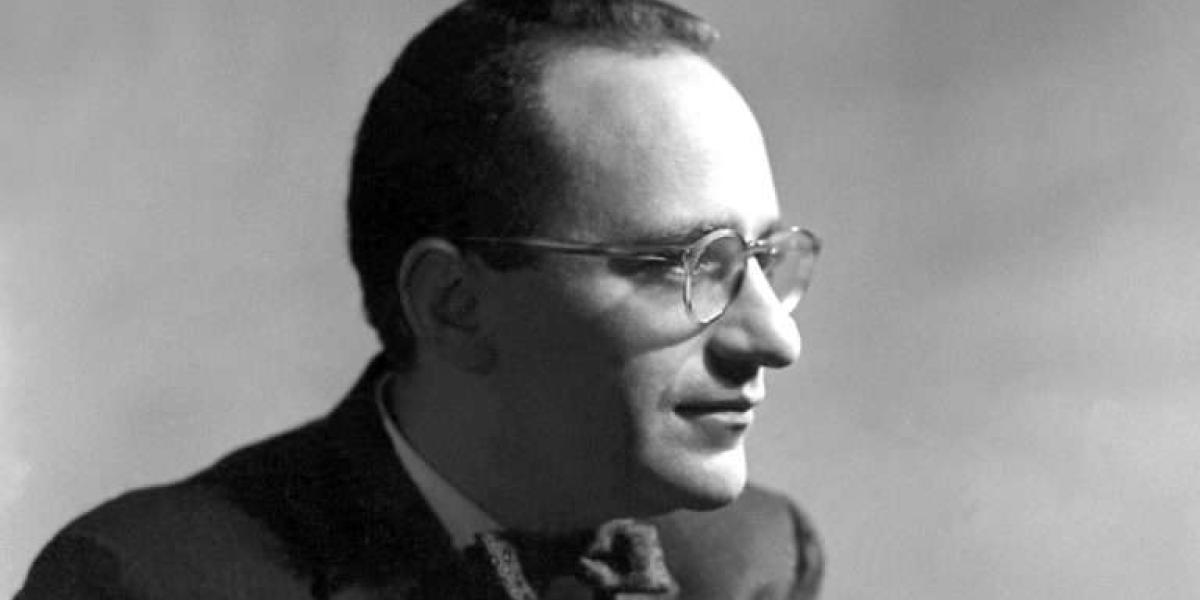
Few figures in modern intellectual history carried an idea to its logical conclusion as relentlessly as Murray Rothbard. Building upon the formidable theoretical structure developed by Ludwig von Mises, Rothbard accomplished a remarkable synthesis in economic and political thought. Where Mises constructed a rigorous scientific explanation of how economies function, Rothbard extended that framework into a comprehensive philosophy of social order. The result was the most radical and internally consistent libertarian vision ever articulated: a society organized entirely through voluntary exchange and private property, what Rothbard called anarcho-capitalism.
To understand Rothbard’s achievement, one must first appreciate the intellectual foundation provided by Mises. Mises had already dealt a devastating blow to socialist planning through his famous economic calculation argument. In works such as Human Action, he demonstrated that rational economic coordination requires market prices for capital goods, and such prices can only emerge where private property in the means of production exists. Without these price signals, central planners cannot know the relative value of competing uses of resources. They are left to operate blindly, allocating labor and capital without a reliable guide to efficiency or consumer demand. The result is inevitable misallocation, waste, and economic chaos.
For Mises, this insight represented a powerful defense of the market economy and a fatal indictment of socialism. Yet Mises himself remained within the classical liberal tradition. He believed that while markets should dominate economic life, a minimal state might still be necessary to provide courts, police, and national defense. Rothbard admired Mises deeply, he regarded him as the greatest economist of the twentieth century, but he also believed that the logic of Mises’s system pointed further than Mises himself had gone.
Rothbard recognized that the calculation problem did not merely undermine socialism; it cast doubt on all forms of state intervention. Governments do not allocate resources through voluntary exchange but through taxation, regulation, and political decree. Every government program substitutes bureaucratic judgment for the price-guided decisions of individuals in the market. If rational calculation requires private property and voluntary exchange, then the political allocation of resources suffers from the same informational blindness that doomed central planning. In Rothbard’s view, the state was not merely inefficient, it was structurally incapable of rational economic decision-making.
The intellectual leap Rothbard made was to fuse this Austrian economic analysis with a rigorous ethical theory of property rights. Mises had developed praxeology, the logic of human action: the idea that individuals act purposefully to improve their circumstances, employing scarce means to achieve chosen ends. This framework explained the universal patterns of economic behavior—exchange, production, consumption, and entrepreneurship—without relying on historical accident or ideological preference. Praxeology treated economics as a science grounded in the nature of human action itself.
Rothbard accepted this foundation but argued that a complete philosophy of society must address not only how people act but how they ought to interact. Drawing from the natural law tradition associated with thinkers such as Hugo Grotius and Samuel Pufendorf, he formulated what became the ethical core of libertarianism: the non-aggression principle. This principle holds that no individual or group has the right to initiate force against another person or that person’s legitimately-acquired property. From this simple axiom, Rothbard derived a sweeping theory of rights, law, and political legitimacy.
Property rights, in Rothbard’s system, are not merely convenient economic institutions. They are the moral precondition for peaceful social cooperation. Individuals acquire property either through original appropriation—homesteading unused resources—or through voluntary exchange with others. Once established, these rights create the boundaries within which human action can occur without conflict. When aggression occurs, it represents a violation not only of economic efficiency but of moral justice.
By combining Misesian economics with natural law ethics, Rothbard erased a longstanding divide in political philosophy. For centuries, economists and moral philosophers had often treated their disciplines as separate spheres, one describing how societies function, the other prescribing how they ought to behave. Rothbard showed that the two were intimately connected. The same institutions that make economic calculation possible—private property, voluntary exchange, and contractual cooperation—also form the ethical framework necessary for a peaceful and just society.
This synthesis led Rothbard to challenge a core assumption of classical liberalism: the legitimacy of the minimal state. Many libertarians accept markets as the dominant economic institution while still maintaining that certain services, law enforcement, courts, and defense, must remain under government monopoly. Rothbard argued that this position was inconsistent. If coercion is illegitimate for individuals, it cannot become legitimate simply because it is exercised by an institution calling itself a government.
Taxation, in this view, represents the forced extraction of property without consent. A state that finances its activities through taxation therefore violates the very property rights that libertarian theory seeks to defend. Moreover, monopoly—long criticized by economists for producing inefficiency and abuse—would be especially dangerous when applied to the use of force. A monopolistic provider of law and security would face no competitive pressures, no profit-and-loss feedback, and no voluntary customer choice.
History, Rothbard argued, confirmed this theoretical concern. Governments rarely remain limited. Even political systems founded with strong constitutional restraints tend to expand their authority over time. The incentives facing political actors—access to taxation, the ability to regulate industries, and the power to wage war—encourage continual growth of state power. A monopoly over coercion, once established, rarely contracts voluntarily.
In contrast, market institutions operate through a fundamentally different mechanism. Firms must persuade customers to purchase their goods and services. They receive constant feedback through profits and losses, which signal whether resources are being used effectively. Inefficient businesses fail, while successful ones expand. The market therefore coordinates human action without central direction, relying on decentralized knowledge dispersed among millions of individuals.
Rothbard extended this logic to services traditionally regarded as the exclusive domain of the state. Security, dispute resolution, and legal systems could, he argued, be provided by competing private organizations. Insurance companies, arbitration agencies, and protection firms could establish contractual networks that define legal standards and enforce agreements. Indeed, elements of such systems already exist. Private arbitration resolves countless commercial disputes more quickly than government courts, and private security services protect millions of people and businesses.
The key difference is that market institutions must rely on voluntary payment and reputation. A private protection agency that abused its clients would quickly lose business to competitors. A government police force, by contrast, retains its funding through taxation regardless of performance. Market provision therefore aligns incentives toward customer satisfaction and efficient service, while political monopolies operate without comparable discipline.
For Rothbard, these insights pointed toward a society organized through what he termed “ordered anarchy.” The phrase captures the essence of his synthesis. Anarchism, in the sense of the absence of a coercive state, need not imply chaos or disorder. On the contrary, order can emerge from voluntary institutions guided by property rights and market processes. Just as markets coordinate the production of food, housing, and transportation, they could also coordinate the production of law and security.
Whether one accepts Rothbard’s conclusions or not, the intellectual ambition of his project is undeniable. He took the economic science of Ludwig von Mises and integrated it with a sweeping moral philosophy rooted in natural rights. The result was not merely a critique of socialism or government intervention but a unified worldview explaining both how societies function and what principles should govern human interaction.
Rothbard’s work thus represents one of the most comprehensive attempts to extend economic reasoning into political philosophy. By insisting that the logic of voluntary exchange applies to all social institutions, he pushed the Austrian tradition to its furthest limits. His synthesis remains one of the most provocative and influential contributions to modern libertarian thought, an enduring challenge to anyone who believes that political authority can coexist comfortably with the principles of individual liberty.