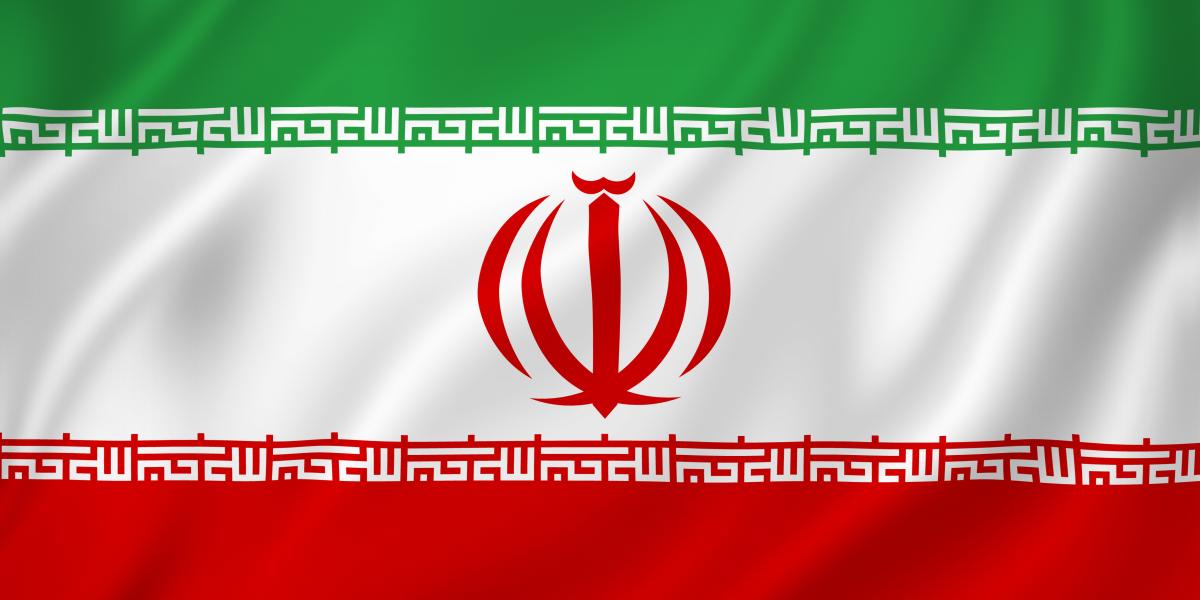
In light of the US’s actions against Iran and the overt goal of regime change, it is worth recalling the original, covert regime change the CIA brought about in Iran and its decades-long consequences. The 1953 Iran coup is widely recognized as the first major covert regime-change operation carried out by the CIA and served as a template for future interventions. It set key precedents in technique—bribery, propaganda, covert action, and the installation of a non-Communist, US-friendly repressive regime—that were replicated throughout the Cold War and later operations. The long-term geopolitical impact and resentment in the region still shape US-Iran relations.
A Brief Review of the History
In the early twentieth century, Iran possessed a constitutional monarchy with a parliament (the Majles), though it operated under significant British and later Anglo-Soviet influence. In 1951, the Western-educated nationalist Mohammad Mossadegh was elected prime minister and moved to nationalize Iran’s oil industry, which had been dominated by British interests. Concerned about Western access to oil and fearing that political instability might open the door to Soviet influence, British intelligence and the US Central Intelligence Agency orchestrated a covert operation—Operation Ajax—to overthrow Mossadegh. The coup succeeded in August 1953, but this was unknown to the American public.
Mossadegh was replaced by Mohammad Reza Shah, who consolidated power and ruled as an authoritarian monarch, aligned closely with the United States. In the decade following the coup, Iran received more than $1 billion in US aid (at taxpayer expense). While the Shah pursued modernization, his regime relied heavily on repression, particularly through the SAVAK secret police. Growing resentment toward his rule culminated in the 1979 Iranian Revolution, led by a coalition in which radical Islamic forces ultimately prevailed, forcing the Shah into exile.
When the Shah was later admitted to the United States for medical treatment, revolutionary factions in Iran—fearing another American-backed coup like that of 1953 and wanted to see the Shah returned for trial—stormed the US embassy in Tehran and took 52 Americans hostage. The 444-day hostage crisis permanently damaged US-Iran relations. In its aftermath, the United States tilted toward supporting Iraq during the Iran-Iraq War (1980-1988), even as the later Iran-Contra affair revealed that the Reagan administration had secretly facilitated limited arms transfers to Iran (initially via Israel).
The revolution strengthened militant Islamist elements. Ayatollah Ruhollah Khomeini became Supreme Leader in 1979, and—after his death in 1989—Ayatollah Ali Khamenei succeeded him. Khamenei later justified the regime’s uncompromising posture by contrasting it with leaders overthrown with CIA assistance: “We are not liberals like Allende and Mossadegh, whom the CIA can snuff out” (p. 203). The Islamic Republic established in 1979 remains in power today, despite the most recent US actions that killed Khamenei and other key leadership in March 2026.
“Ancient History” and the Next Century
On February 13, 1980, Jimmy Carter referred to the 1953 coup and the installation of Mohammad Reza Shah as “ancient history.” Yet that “ancient” event occurred only 27 years before Carter’s remark—and 72 years before 2026—and its consequences continue to reverberate today. History is necessarily selective; no society possesses a complete record of the past, nor could it meaningfully process one if it did. In politics, however, historical memory often becomes ideologically selective. Medieval Islamic wars and conquests from more than five centuries ago can be treated as ever-relevant, while the CIA’s 1953 coup is dismissed as “ancient history.” The 1979 Iranian Hostage Crisis and the 1983 Beirut barracks bombing remain ever-present in public memory, yet the Iran-Iraq War (1980-1988) and the Iran-Contra scandal of 1986 (with the underlying operations spanning 1985-1986) fade conveniently into the background.
As the US experiences the consequences of the covert regime change in Iran in 1953—72 years ago—and as the US government attempts an overt regime change in Iran in 2026, we would do well to consider some of the unintended consequences for the next 72 years—from now until 2098.
Unintended Consequences of 1953
Several of the quotes provided in this article come from Stephen Kinzer’s All the Shah’s Men: An American Coup and the Roots of Middle East Terror (2008). The book reads like a novel, but provides a history of Iran and the event. The book does not have footnotes, but provides a detailed notes section and a biography at the end. The final chapter—chapter 12 (esp. pp. 202-205)—provides a good summary of some of the consequences and impact of the 1953 coup. He also provides statements from other historians and scholars that are helpful for this topic. Below are some of the unintended consequences of the 1953 Iran coup.
Lessons for Surrounding Governments
Part of US Cold War foreign policy of containment included US support for non-Communist governments, however, this often meant in practice support for corrupt and/or authoritarian regimes. Operation Ajax (1953) became a template for this elsewhere in the world. Stephen Kinzer writes (p. 204),
The world has paid a heavy price for the lack of democracy in most of the Middle East. Operation Ajax taught tyrants and aspiring tyrants there that the world’s most powerful governments were willing to tolerate limitless oppression as long as oppressive regimes were friendly to the West and to Western oil companies. That helped tilt the political balance in a vast region away from freedom and toward dictatorship.
The consequences were not confined to Iran. US alignment with corrupt and/or authoritarian regimes in the Middle East—Jordan, Saudi Arabia, Kuwait, the UAE, Bahrain, Oman, Qatar, Yemen, and Egypt—became one of the grievances later cited by Osama bin Laden and al-Qaeda in justifying attacks against the United States. More broadly, this pattern exposed a persistent tension within American foreign policy—proclaiming liberty and self-government while supporting regimes and elements that suppressed both; opposing radical Islam in some contexts while partnering with illiberal regimes in others; waging a war on terrorism while at times empowering actors whose conduct fueled further instability.
The Rise of Political Islam
The overthrow of the Shah and the aftermath of 1953 helped empower the most radical religiously-based political movements within Iran. The Islamic Republic that emerged after 1979 was radicalized, in part, as a defensive reaction against feared foreign domination and intervention. Remember, Khamenei said, “We are not liberals like Allende and Mossadegh, whom the CIA can snuff out” (p. 203). Mostafa T. Zahrani—an Iranian scholar and foreign policy analyst, also quoted in Kinzer’s work—wrote in 2002, “For Americans, the unintended result was the rise of political Islam, leading to the 1979 revolution and the present continuing impasse in Iranian-U.S. relations.”
While many look to the medieval Islamic conquests of more than five centuries ago as determinative for modern Islamic suicide terrorism, it is worth noting that—while anti-American violence predates the 1980s—the modern era of sustained Islamist terrorism against US forces and interests began in the early 1980s. The historical record suggests a more proximate explanation.
In the early 2000s, Professor Robert Pape created the Database on Suicide Attacks (DSAT)—the first comprehensive dataset cataloging such attacks worldwide from 1980 onward, later extended back to 1974 and updated through 2019. He wrote an academic paper “The Strategic Logic of Suicide Terrorism” (2003), his influential book Dying to Win (2005), and co-authored another book with James Feldman called Cutting the Fuse (2010), in which he wrote (pp. 20, 23),
Examination of the universe of suicide terrorism around the world from 1980 to 2003 shows that the principal cause of suicide terrorism is resistance to foreign occupation, not Islamic fundamentalism. Even when religion matters, moreover, it functions mainly as a recruiting tool in the context of national resistance….
It is important to recall that 1990 was a benchmark year in America’s military deployment to the Persian Gulf. Before this point, the United States had only tiny numbers of troops stationed in Muslim countries (mostly guards protecting embassies), but no tank, armor, or tactical aircraft combat units since World War II. The United States deployed large numbers of combat forces to the region starting in August 1990 to deal with Iraq’s invasion of Kuwait and has kept tens of thousands of combat forces there ever since; Al Qaeda’s attacks began [in earnest] in 1995. Foreign occupation also accounts for the motives of individual suicide terrorists from 1980 to 2003.
If Pape is correct that modern suicide terrorism arises principally in response to foreign military presence, then the rise of political Islam and anti-American violence must be understood within a chain of events that includes 1979, and 1979 cannot be understood apart from 1953. The overthrow of Mossadegh strengthened an authoritarian monarchy, whose collapse empowered a revolutionary regime defined in part by its hostility to foreign intervention. That regime reshaped regional politics, altered American military commitments in the Persian Gulf, and contributed to the very conditions Pape identifies as drivers of suicide terrorism. The better explanatory story does not begin in the medieval period; it begins in the modern era, starting with 1953.
The Iranian Revolution and Hostage Crisis (1979-1981)
By implanting and sustaining an authoritarian pro-Western monarchy that suppressed nationalist and democratic movements, the 1953 coup helped create conditions for broad popular unrest. The 1979 Islamic Revolution overthrew the Shah and replaced him with a theocratic government under Ayatollah Ruhollah Khomeini. Further, when the Shah was overthrown, Jimmy Carter allowed him to enter the US. Many Iranians feared another 1953-like coup and that the US-CIA might attempt to reinstall the Shah (even if impossible). Also, many Iranians wanted Jimmy Carter to return the Shah to Iran for trial and execution. This led to the the Iranian Hostage Crisis. Revolutionaries seized the US embassy in Tehran in November 1979 and held 52 Americans hostage for 444 days. This crisis shattered US-Iran diplomatic relations. Kinzer’s All the Shah’s Men records (p. 203),
“In the back of everybody’s mind hung the suspicion that, with the admission of the Shah to the United States, the countdown to another coup d’etat had begun,” one of the hostage-takers explained years later. “Such was to be our fate again, we were convinced, and would be irreversible. We now had to reverse the irreversible.”
Context for the Iran-Iraq War (1980-1988)
While the connection between the Iranian Revolution and Saddam Hussein’s attack on Iran are more indirect, some scholars connect the events more closely. For example, Zahrani claims, “The hostage crisis, in turn, precipitated the Iraqi invasion of Iran, while the [Islamic] revolution itself played a part in the Soviet decision to invade Afghanistan.”
The revolution created a system that was strongly anti-Western and anti-status-quo, which reshaped Iran’s position in the Middle East. This arguably made neighboring states—like Saddam’s Ba’athist regime—view Iran as ideologically dangerous. Iran’s 1979 revolution inspired fears in Iraq that Shi’ite unrest might spread into its own large Shi’ite population and undermine Saddam’s secular, Arab-nationalist Ba’athist regime. Additionally, Iran had just undergone a massive upheaval; Saddam calculated Iran’s new regime was militarily and politically vulnerable. The war began on September 22, 1980, when Saddam Hussein launched a large-scale invasion across a long-disputed border region with Iran, particularly over the Shatt al-Arab waterway. Kinzer writes (p. 203),
The hostage episode changed the course of American political history and poisoned relations between Iran and the United States. It led the United States to support Iraq in the long and horrific war with Iran, in the process of consolidating the Iraqi dictatorship of Saddam Hussein. Within Iran, it strengthened the most militant elements of the revolutionary coalition.
For all the talk about Saddam Hussein’s use of chemical and biological weapons in the 1990s and beyond, the US government knowingly looked the other way when Hussein was importing “dual use” items to manufacture chemical and biological weapons against Iran a few years before during the Iran-Iraq War.
Conclusion
All the consequences—direct and indirect—cannot be explored, but hopefully this suffices to demonstrate that, while Jimmy Carter may have viewed 1953 as “ancient history” from 1980, that so-called ancient history has been consequential for over seven decades. Currently, the US government is engaged in an overt attempt at regime change against Iran which could affect another seven decades or more in unexpected ways. In one final quote to conclude this article, Mostafa T. Zahrani summarizes as he traced some of the direct and indirect consequences of these events in his academic article “The Coup That Changed the Middle East: Mossadeq V. the CIA in Retrospect,” World Policy Journal, 1 June 2002, 19(2): 93–99:
It is a reasonable argument that but for the coup, Iran would be a mature democracy. So traumatic was the coup’s legacy that when the Shah finally departed in 1979, many Iranians feared a repetition of 1953, which was one of the motivations for the student seizure of the U.S. embassy. The hostage crisis, in turn, precipitated the Iraqi invasion of Iran, while the [Islamic] revolution itself played a part in the Soviet decision to invade Afghanistan. A lot of history, in short, flowed from a single week in Tehran…. The 1953 coup and its consequences [were] the starting point for the political alignments in today’s Middle East and inner Asia. With hindsight, can anybody say that the Islamic Revolution of 1979 was inevitable? Or did it only become so once the aspirations of the Iranian people were temporarily expunged in 1953?