April 9, 2025: The White House has spent four days insisting the tariffs are here to stay. The president himself posted that morning: “BE COOL! Everything is going to work out well.” His trade advisor is on television, calling market panic “no big deal.” There will be no pause. The message is unambiguous.
At 1:00 pm, someone buys 5,105 call options on SPY—the fund that tracks the S&P 500. The position costs $2.14 million. It will be worthless by the end of the day unless the market surges dramatically. It is a bad bet.
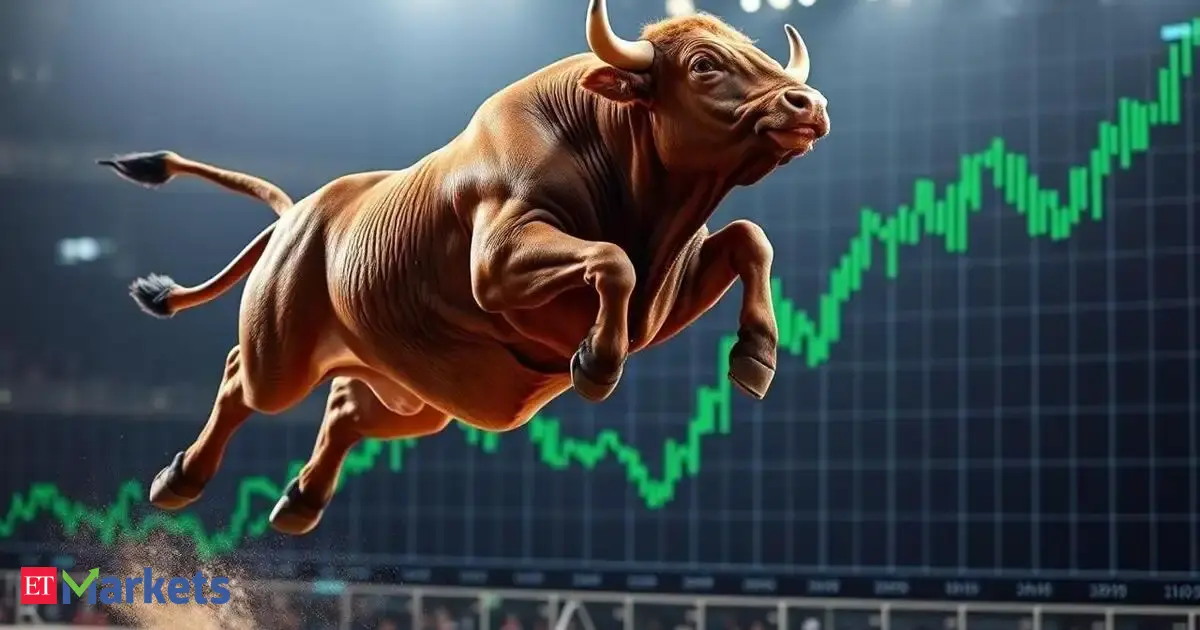
At 1:18 pm, Trump posts on Truth Social. The tariffs are paused. The market rockets upward—its largest single-day gain since 2008. The $2.14 million position is now worth over $21 million on paper, in eighteen minutes.
This was not a one-off. Reuters documented the pattern: a $500 million bet on falling oil prices in a single 60-second window, minutes before Trump announced a delay to strikes on Iran’s energy infrastructure; a $950 million crude futures position hours before a ceasefire announcement sent oil crashing 15 percent. In each case: precise timing, unidentified traders, no charges filed.
After each episode: hearings, bipartisan outrage, and then silence, nothing changes, because the debate always focuses on the wrong question. The question is never who made the trades. The question is why—in the world’s most sophisticated financial market—knowing what a politician is about to say has become one of the most valuable pieces of information that money cannot officially buy.
What a Price Is Actually Saying
Think of a price as a sentence in a language that millions of people are writing simultaneously, without coordination, without a central editor, each contributing one word based only on what they personally know. The resulting text—the price—somehow summarizes it all. It tells you what a business is worth to people who study it for a living, what risks the sharpest analysts see, what consumers are actually willing to pay, and what entrepreneurs believe about the future. It compresses an almost infinite amount of dispersed human knowledge into a single number.
Friedrich Hayek called this the price system’s most extraordinary feature: not that it allocates resources efficiently—though it does—but that it communicates knowledge that could never be gathered any other way. No government, no algorithm, no committee of geniuses could replicate what markets do automatically, constantly, and for free. The price of a stock at 1:00 pm is the sum of everything millions of informed people believe about that company’s future.
But here is the part that nobody mentions in the congressional hearings: this only works if the information flowing into prices is real.
When prices move because of genuine shifts in economic reality—a better product, a stronger quarter, a growing market—they are performing their function. They are sending a signal that every investor, entrepreneur, and ordinary saver can act on. When prices move because someone with political foreknowledge front-ran an announcement, the signal is a forgery. It looks like economic information. It carries the weight of economic information. But it is telling the market something that isn’t true about the world—and everyone who acts on it is being deceived.
This is not a metaphor. It is the mechanism by which insider trading harms people who were never party to a single suspicious trade.
A Bipartisan Lottery, With a Financial Interface
When a government announcement can move the S&P 500 by nearly 10 percent in minutes—as Trump’s tariff pause did—the market is no longer purely a mechanism for pricing economic reality. It becomes, in part, a mechanism for pricing political access. Whoever holds the winning ticket—whoever knows what the next announcement will say—collects. Everyone else plays blind.
This is not a Republican problem or a Democratic problem. It is a power problem, and it does not care which party holds power.
Paul Pelosi—husband of former House Speaker Nancy Pelosi—made $5.3 million on Alphabet options before a House panel took up antitrust action against Google’s parent company. A New York Times analysis found that one in five members of Congress traded stocks intersecting with their own committee work. The NANC ETF—which mirrors the disclosed trades of Democratic members of Congress—has attracted $263 million from investors who have rationally concluded that tracking politicians outperforms analysing businesses.
A quarter of a billion dollars is now managed on the premise that following a politician’s disclosed trades outperforms understanding the economy. That is not a market signal. That is a market’s admission of defeat.
Meanwhile, the law meant to prevent all of this—the STOCK Act, passed in 2012—has been almost entirely toothless. The penalty for the violation is $200—roughly the cost of a speeding ticket—against the potential for millions in profit. No member of Congress has ever been prosecuted under the act. Members file disclosures months, sometimes over a year, late. It was never built to stop insider trading hard enough to matter.
The Cost to Everyone Else
You do not have to be the direct victim of a specific insider trade to pay the price. The harm is more diffuse and more corrosive than that.
If you have a pension, a retirement account, or any savings tied to markets, you are making decisions based on what prices are telling you—relying on the assumption that the market’s collective judgment reflects something real: which companies are well-run, where risk is concentrated, what the economic future looks like.
Every time a well-timed trade precedes a government announcement, that assumption is violated. The price that moved did not tell you anything about the economy. It was telling you something about who was standing closest to the next tweet. For every participant who acted on that false signal—the fund manager who held, the retail investor who sold, the entrepreneur who read the market as pessimistic when it was about to surge—the corrupted information carried a real cost.
The market does not stop working; it works worse. And the people paying the price are the millions who had no idea the game was tilted.
Why More Rules Will Not Fix This
After every scandal, the proposed remedy is the same: tighter disclosure, steeper fines, mandatory blind trusts, and independent prosecutors. But they all share a common flaw: they treat the symptom while the disease goes untreated.
The information advantage that political insiders hold is not a defect in an otherwise fair system. It is the direct and inevitable product of the system’s design. Every new power the state acquires over economic life—every tariff, every subsidy, every executive order that can restructure an industry overnight—creates a new information gap between those who govern and those who are governed. And in markets, information gaps are always arbitraged away by someone. Legally or illegally, disclosed or hidden, under any administration of any party.
A $200 fine does not change this calculus, neither does a $200,000 fine. The only thing that changes the calculus is changing the size of the gap itself, which means limiting the government’s power to move markets in the first place. You cannot regulate away the profit motive of insiders while preserving the conditions that make them worth paying.
The Only Cure
A government limited to protecting property rights and enforcing contracts generates a certain kind of price: one that reflects what people actually know about the world. Entrepreneurs can read those prices and plan. Investors can trust them and commit. Savers can rely on them and sleep.
A government that can restructure global trade with a social media post generates a different kind of price: one that increasingly reflects what people know about the government. The most valuable skill in that market is not financial analysis or entrepreneurial judgment. It is in proximity to the next announcement. The winning move is not to understand the economy. It is to know, eighteen minutes early, what the president is about to say.
Hayek understood that the price system is not a luxury, it is how free societies transform dispersed individual knowledge into coordinated, spontaneous action—without anyone needing to be in charge. Corrupt it, and you do not just harm investors. You impair the nervous system of the economy itself.
We built a system where knowing what a politician will say next is worth tens of millions of dollars. That is not a market failure. It is a government success—the inevitable return on the power we handed the state to restructure industries, rewrite trade flows, and move the economy with a post. Until we are honest about that, the hearings will continue, the investigations will stall, and someone will keep collecting.
At 1:18 p.m. on April 9, someone already knew. The only question worth asking is what kind of government makes that knowledge worth $21 million?