No Result
View All Result
  • Login
Sunday, July 26, 2026
theadvisertimes.com
  • Home
  • Business
  • Financial Planning
  • Personal Finance
  • Investing
  • Money
  • Economy
  • Markets
  • Stocks
  • Trading
  • Home
  • Business
  • Financial Planning
  • Personal Finance
  • Investing
  • Money
  • Economy
  • Markets
  • Stocks
  • Trading
No Result
View All Result
theadvisertimes.com
No Result
View All Result
Home Economy

The Crisis at the Fed That No One Talks About

by theadvisertimes.com
1 month ago
in Economy
Reading Time: 3 mins read
A A
0
The Crisis at the Fed That No One Talks About
Share on FacebookShare on TwitterShare on LInkedIn


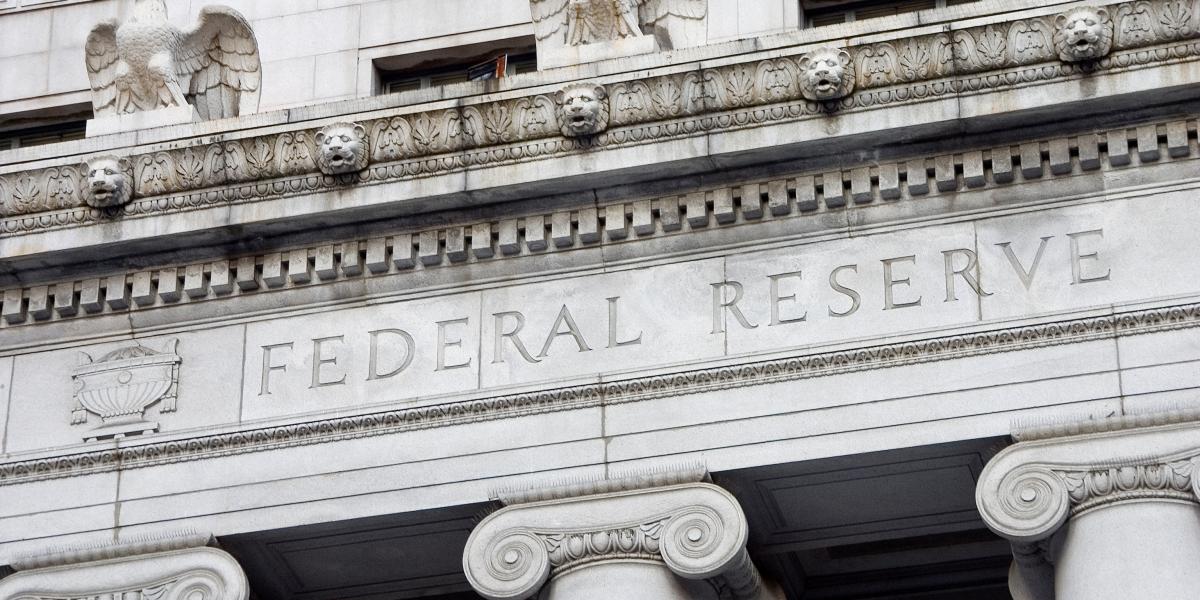
Of all the issues facing the Federal Reserve’s new chairman, Kevin Warsh, one that gets little public attention is the financial condition of the Fed itself.  In addition to its much-publicized roles of setting short-term interest rates, which may be headed back up, and creating inflation, which is already too high, the Fed is a giant financial enterprise.  It has total assets of $6.9 trillion as of March 31 combined with negative real capital. 

The Fed has lost hundreds of billions of dollars due to its huge interest rate risk position. This costly risk was established under the then-chairman, Ben Bernanke, who assured Congress it would be temporary. It wasn’t. It was continued under the regimes of Janet Yellen and Jerome Powell and remains embedded in the Fed’s balance sheet today, almost 18 years after Mr. Bernanke’s original gamble.

It’s waiting for Chairman Warsh. The interest rate risk position is fundamentally simple. It consists of making long-term, fixed rate investments financed by floating rate funding: invest long, borrow short. It closely resembles the risk of a typical 1980s savings and loan. Because it took this risk, the Fed reported large net losses for the three calendar years 2023, 2024, and 2025, with the losses totaling the egregious sum of $211 billion. 

This is more than four times the Fed’s total book capital of $46 billion, which means that its capital is gone, even though the Fed refuses to show any reduction in the capital on its financial statements. The Fed argues that it can on its own decide on a special accounting treatment for itself, different from everybody else, which it would never allow its regulated banks to follow.

In addition to the annual operating losses, the Fed has suffered as of March 31 mark-to-market losses of $857 billion. The Treasury securities the Fed owns are worth on the market $546 billion less than it paid for them. Its mortgage-backed securities are worth $311 billion less than it paid. The operating losses and mark-to-market losses together add up to more than $1 trillion and are 23 times the Fed’s reported book capital.  

The Fed has often claimed that no one should worry about its enormous losses, because it wasn’t set up to be a “profit maximizer.” However, the Fed most certainly was set up to make profits for the government. It forks over almost all its profits, which it always has had historically, to the Treasury. When it makes losses instead, payments don’t go to the Treasury, so the federal deficit and the national debt grow correspondingly bigger. The Fed’s losses are the Treasury’s and taxpayers’ losses.

The owners of the Fed’s stock should also care about its losses. All $39.7 billion of the Fed’s paid-in capital is owned by private banks.  Under a little-known provision of the Federal Reserve Act, they are liable to be assessed up to twice their investment in the stock to offset losses. This is disclosed in the Fed’s financial statements, although pretty well buried down in the footnotes.

The Fed could reduce its interest rate risk by selling some of its long-term Treasury securities and mortgage-backed securities. If it did, though, the mark-to-market losses would become permanent cash losses. The Fed could no longer claim they were only “paper losses.” On top of that, serious Fed selling would push long-term Treasury and mortgage interest rates higher: Not a political winner.

In the first quarter of 2026, the Fed reported a modest profit of $1.4 billion. Does this mean its profitability and interest rate risk problems are over?  It doesn’t. My estimate is that the Fed has — on a net basis — about $2.5 trillion in long-term assets funded short.  The bond market is now expecting short-term interest rates to rise again this year. If they do, it would cost the Fed $25 billion or so per year for a 1 percent rise in rates.

Read the full article at the New York Sun.



Source link

Tags: CrisisFedtalks
ShareTweetShare
Previous Post

Add Inflation, iPhones to List of Reasons for the Baby Bust

Next Post

Money in a Minute for the Week Ending June 12, 2026

Related Posts

The Sunday Morning Movie Presents: Cwal AKA At Full Gallop (1996) Run Time: 1H 44M Plus Bonuses!

The Sunday Morning Movie Presents: Cwal AKA At Full Gallop (1996) Run Time: 1H 44M Plus Bonuses!

by theadvisertimes.com
July 26, 2026
0

Greetings gentle readers and welcome to another installment of the Sunday Morning Movie. Today it’s a Polish film about childhood,...

The Real Conspiracy Behind COVID

The Real Conspiracy Behind COVID

by theadvisertimes.com
July 26, 2026
0

The claim that the World Economic Forum (WEF) used the COVID-19 pandemic to reverse nationalism that surface in the aftermath...

Links 7/25/2026 | naked capitalism

Links 7/25/2026 | naked capitalism

by theadvisertimes.com
July 25, 2026
0

Dear patient readers, In lieu of an Iran war post, you are getting extra Links with an Iran War section....

How Not to Run a Country: Putin’s Russia

How Not to Run a Country: Putin’s Russia

by theadvisertimes.com
July 25, 2026
0

“War is a continuation of politics by other means.” — Carl von Clausewitz, On WarPolitics can continue by other means...

Universal Principles of Liberalism and the Politics of Race

Universal Principles of Liberalism and the Politics of Race

by theadvisertimes.com
July 25, 2026
0

Thomas Sowell, the great economist, is not generally well regarded in some parts of the self-described “black community.” They call...

Humanity and Nature Through Social Production: Marx’s Materialism Unfolded from Epicurus

Humanity and Nature Through Social Production: Marx’s Materialism Unfolded from Epicurus

by theadvisertimes.com
July 25, 2026
0

Yves here. This is an intriguing discussion of the influences on some core elements of Marx’s thinking, of the connection...

Next Post
Money in a Minute for the Week Ending June 12, 2026

Money in a Minute for the Week Ending June 12, 2026

The Nvidia Moment for Space

The Nvidia Moment for Space

  • Trending
  • Comments
  • Latest
SEC pushes private market access, but retail is already in

SEC pushes private market access, but retail is already in

July 16, 2026
How I Maximize My Sapphire Reserve Dining Credit

How I Maximize My Sapphire Reserve Dining Credit

July 10, 2026
Fourth of July 2026 Freebies and Deals

Fourth of July 2026 Freebies and Deals

July 3, 2026
5 things financial therapists want every advisor to know

5 things financial therapists want every advisor to know

June 26, 2026
The Weekly Notable Startup Funding Report: 6/22/26 – AlleyWatch

The Weekly Notable Startup Funding Report: 6/22/26 – AlleyWatch

June 21, 2026
Weekend Reading For Financial Planners (June 27–28)

Weekend Reading For Financial Planners (June 27–28)

June 26, 2026
QUALCOMM (QCOM) Q3 2026 Preview: EPS Est. .23, Reports July 29

QUALCOMM (QCOM) Q3 2026 Preview: EPS Est. $2.23, Reports July 29

0
10 midcap stocks with massive upside potential up to 70%! Do you own any? – Analyst Picks

10 midcap stocks with massive upside potential up to 70%! Do you own any? – Analyst Picks

0
Banks Will Pay You 0-500 Just to Open a New Account

Banks Will Pay You $200-500 Just to Open a New Account

0
The Economics of AI | Mises Institute

The Economics of AI | Mises Institute

0
BitMart Winds Down Trading as Exchange Closures Pile Up

BitMart Winds Down Trading as Exchange Closures Pile Up

0
Jeff Bezos says working harder is the cure for anxiety

Jeff Bezos says working harder is the cure for anxiety

0
Jeff Bezos says working harder is the cure for anxiety

Jeff Bezos says working harder is the cure for anxiety

July 26, 2026
UnitedHealth Group – UNH: Bullenflagge zum 20er-EMA!

UnitedHealth Group – UNH: Bullenflagge zum 20er-EMA!

July 26, 2026
Top analysts back these 3 stocks for their long-term growth potential

Top analysts back these 3 stocks for their long-term growth potential

July 26, 2026
Some Tel Aviv home prices falling sharply, study finds

Some Tel Aviv home prices falling sharply, study finds

July 26, 2026
Podcast Maligns Melania Trump as ‘Epstein Hooker’

Podcast Maligns Melania Trump as ‘Epstein Hooker’

July 26, 2026
The Sunday Morning Movie Presents: Cwal AKA At Full Gallop (1996) Run Time: 1H 44M Plus Bonuses!

The Sunday Morning Movie Presents: Cwal AKA At Full Gallop (1996) Run Time: 1H 44M Plus Bonuses!

July 26, 2026
theadvisertimes.com

Get the latest news and follow the coverage of Business & Financial News, Stock Market Updates, Analysis, and more from the trusted sources.

CATEGORIES

  • Business
  • Cryptocurrency
  • Economy
  • Financial Planning
  • Investing
  • Market Analysis
  • Markets
  • Money
  • Personal Finance
  • Startups
  • Stock Market
  • Trading

LATEST UPDATES

  • Jeff Bezos says working harder is the cure for anxiety
  • UnitedHealth Group – UNH: Bullenflagge zum 20er-EMA!
  • Top analysts back these 3 stocks for their long-term growth potential
  • Our Great Privacy Policy
  • Terms of Use, Legal Notices & Disclosures
  • About Us
  • Contact Us

© Copyright 2024 All Rights Reserved
See articles for original source and related links to external sites.

Welcome Back!

Login to your account below

Forgotten Password?

Retrieve your password

Please enter your username or email address to reset your password.

Log In
No Result
View All Result
  • Home
  • Business
  • Financial Planning
  • Personal Finance
  • Investing
  • Money
  • Economy
  • Markets
  • Stocks
  • Trading

© Copyright 2024 All Rights Reserved
See articles for original source and related links to external sites.