No Result
View All Result
  • Login
Wednesday, August 26, 2026
theadvisertimes.com
  • Home
  • Business
  • Financial Planning
  • Personal Finance
  • Investing
  • Money
  • Economy
  • Markets
  • Stocks
  • Trading
  • Home
  • Business
  • Financial Planning
  • Personal Finance
  • Investing
  • Money
  • Economy
  • Markets
  • Stocks
  • Trading
No Result
View All Result
theadvisertimes.com
No Result
View All Result
Home Economy

The Next Food Pyramid: Lab-Grown Meat and the New Moral Orthodoxy

by theadvisertimes.com
4 months ago
in Economy
Reading Time: 4 mins read
A A
0
The Next Food Pyramid: Lab-Grown Meat and the New Moral Orthodoxy
Share on FacebookShare on TwitterShare on LInkedIn


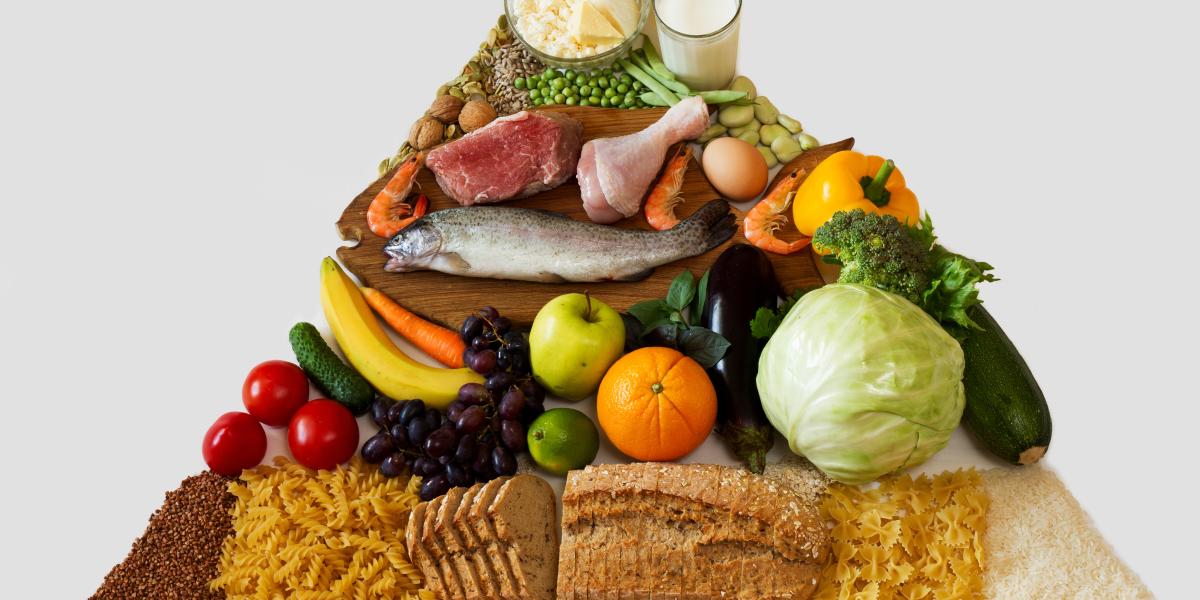
The honest version of this history is not that Seventh-day Adventists single-handedly invented the USDA’s 1992 Food Guide Pyramid. It is that they helped build the moral, institutional, and research ecosystem in which anti-meat ideas could move from sectarian conviction to nutrition orthodoxy. Adventism explicitly linked theology and food to encourage vegetarianism, and its health institutions helped pioneer breakfast cereals and meat analogues. Over time, Adventist researchers secured NIH funding, and major studies of Adventist populations contributed “greatly” to the broader understanding of nutrition and health.

That influence was not merely academic. Loma Linda researchers published a “vegetarian food guide pyramid” in 1999, explicitly presenting a new pyramid-shaped guide built around plant foods and introduced through the Third International Congress on Vegetarian Nutrition. Their stated aim was to stop treating vegetarian guidance as a mere adaptation of the ordinary omnivorous guide and instead create a new framework centered on vegetarian dietary patterns. That does not prove the federal pyramid was an Adventist artifact. It does show that Adventist institutions were actively translating a long-standing anti-meat moral vision into the same visual and policy language that official nutrition used.

And the official pyramid, of course, did not age well. Harvard’s Nutrition Source says the original 1992 Food Guide Pyramid “conveyed the wrong dietary advice”: too much emphasis on grains without distinguishing refined from whole grains, and a crude anti-fat message that obscured the difference between beneficial oils and harmful dietary patterns. The USDA itself eventually moved on, replacing the pyramid with MyPlate in 2011. That is the point worth remembering. When public authority hardens a fashionable dietary theory into bureaucracy, the errors do not stay private. They become school lunches, subsidies, procurement rules, educational materials, and years of institutional inertia.

None of this means every Adventist finding was false. Quite the opposite: even critics should admit that Adventist cohorts generated important hypotheses and useful observations. But even friendly reviews acknowledge the limits of the evidence. Adventist-associated authors note that cohort studies are not strong for proving relationships, only associations, and Walter Willett’s review of Adventist studies emphasized that important questions remained unresolved even while praising the value of the research program. That is precisely why moral enthusiasm should not be allowed to skip over scientific humility and land directly in state policy.

Now watch the same pattern repeat with cultivated meat. The Good Food Institute openly says it works with governments to advocate public investment in alternative proteins, while New Harvest says that “publicly-funded groups like ours” are needed to steer cellular agriculture toward the public good. By GFI’s own 2024 policy report, governments were estimated to disburse about $560 million on alternative proteins in 2024, with cultivated meat alone drawing $84 million in public investment that year, double the previous high. In the United States, USDA already put a historic $10 million grant into Tufts’ National Institute for Cellular Agriculture, where the research agenda includes consumer acceptance, willingness-to-pay, scalable cell lines, serum-free media, scaffolds, and process optimization.

That is not a picture of a market proving itself. It is a picture of advocates trying to socialize the cost of proving whether a market exists. GFI’s 2024 industry report says privately-held cultivated-meat companies raised $139 million in 2024, after a much hotter funding environment in prior years, and then argues that companies will need governments, philanthropists, and investors to develop new funding solutions because there are “no silver bullets” for the sector’s funding gap. Translation: when private capital gets cautious, the pressure shifts to the taxpayer. The state becomes the venture capitalist of last resort for a technology whose commercial viability remains unresolved enough that federally-funded researchers are still studying whether consumers will even pay for it.

And then comes the truly grotesque frontier: “bodyoids.” In 2025, proponents argued that brainless human or nonhuman bodies grown for instrumental use could relieve organ shortages, reduce animal experimentation, and even provide “meat or other products with no animal suffering or awareness.” Yet a later philosophical commentary on the proposal concluded that human bodyoids are “technically remote, economically untenable, and ethically troubling.” That combination should set off every alarm. When a proposal is biologically speculative, economically absurd, and ethically radioactive, the one thing government should not do is create a grant program for it.

I have not found evidence of a dedicated public bodyoid-funding pipeline yet. But that is not reassuring. It is simply the stage before the pitch deck. The moral rhetoric is already in place: reduce suffering, replace animals, solve shortages, modernize medicine. We have already watched adjacent advocacy groups build the case that alternative-protein research deserves public subsidy, public institutions, and public legitimacy. It takes very little imagination to see the same lobbying grammar being deployed for ever more speculative bio-industrial fantasies.

The libertarian lesson is straightforward. Let ethical vegans, animal-rights philanthropists, and true believers fund these projects voluntarily. Let investors bear the downside if the numbers never work. Let consumers decide whether the products deserve a market. But do not compel the public to finance a new generation of laboratory crusades merely because they are wrapped in the language of compassion, sustainability, and innovation. The lesson of the food-pyramid era is not that vegetarianism is worthless. It is that once a moralized diet theory captures expert prestige and state machinery, bad science becomes public policy, and taxpayers are forced to pay for both the mistake and the cleanup.



Source link

Tags: foodlabgrownMeatmoralorthodoxyPyramid
ShareTweetShare
Previous Post

The Fed’s High-Stakes Power Struggle Affects Much More Than Mortgage Rates

Next Post

‘CAR’ crash: Avis Budget stock plunge reminding some on Wall Street of GameStop

Related Posts

The Unwinnable Iran War | Armstrong Economics

The Unwinnable Iran War | Armstrong Economics

by theadvisertimes.com
August 8, 2026
0

I have reported that Trump was mislead into this unwinnable war with Iran, which has been planning for it since...

Market Talk – August 7, 2026

Market Talk – August 7, 2026

by theadvisertimes.com
August 7, 2026
0

ASIA: The major Asian stock markets had a mixed day today: • NIKKEI 225 decreased 76.55 points or -0.12% to...

Jobs report July 2026:

Jobs report July 2026:

by theadvisertimes.com
August 7, 2026
0

The U.S. economy saw an unexpected declined in jobs during July while the unemployment rate edged lower, the Bureau of...

Here are three key takeaways from the disappointing July jobs report

Here are three key takeaways from the disappointing July jobs report

by theadvisertimes.com
August 7, 2026
0

Job seekers speak with employer representatives and browse information tables as they attend an Inspire Together job and resource fair...

Coffee Break: Gene Editing Gone Wrong, Plants that Eat Animals, and a Neanderthal Gene that Makes a Difference

Coffee Break: Gene Editing Gone Wrong, Plants that Eat Animals, and a Neanderthal Gene that Makes a Difference

by theadvisertimes.com
August 7, 2026
0

Part the First: If You Stretch Biomedical Science Too Far It Breaks, Every Time.  Gene editing using CRISPR technology has...

What Did You Expect? | Mises Institute

What Did You Expect? | Mises Institute

by theadvisertimes.com
August 7, 2026
0

As Murray Rothbard pointed out again and again, the government has no business getting involved in education. In a free...

Next Post
‘CAR’ crash: Avis Budget stock plunge reminding some on Wall Street of GameStop

'CAR' crash: Avis Budget stock plunge reminding some on Wall Street of GameStop

Cyera buys Israeli startup Ryft for over 0m

Cyera buys Israeli startup Ryft for over $100m

  • Trending
  • Comments
  • Latest
Wealth management has got junior advisors’ first 90 days covered. What happens on day 91?

Wealth management has got junior advisors’ first 90 days covered. What happens on day 91?

August 7, 2026
Biggerpockets Pro Members Can Now Turn Home Equity Into a Flexible Line of Credit With Aven

Biggerpockets Pro Members Can Now Turn Home Equity Into a Flexible Line of Credit With Aven

August 3, 2026
The 19 Largest Global Startup Funding Rounds of June 2026 – AlleyWatch

The 19 Largest Global Startup Funding Rounds of June 2026 – AlleyWatch

July 27, 2026
Fourth of July 2026 Freebies and Deals

Fourth of July 2026 Freebies and Deals

July 3, 2026
Kellogg’s Back to School Snacks Instant Savings: Save  off  Purchase + Deal Scenario!

Kellogg’s Back to School Snacks Instant Savings: Save $10 off $35 Purchase + Deal Scenario!

August 6, 2026
CVS Deals Under  This Week

CVS Deals Under $1 This Week

July 27, 2026
XRP Price Forecast as Binance Whale Activity Remains Elevated Amid XRPL Tokenization Push

XRP Price Forecast as Binance Whale Activity Remains Elevated Amid XRPL Tokenization Push

0
Wealth management has got junior advisors’ first 90 days covered. What happens on day 91?

Wealth management has got junior advisors’ first 90 days covered. What happens on day 91?

0
Is Lettuce Safe to Eat Now? What to Know Amid Cyclospora Outbreak

Is Lettuce Safe to Eat Now? What to Know Amid Cyclospora Outbreak

0
The Unwinnable Iran War | Armstrong Economics

The Unwinnable Iran War | Armstrong Economics

0
Bezeq declares NIS 515m dividend

Bezeq declares NIS 515m dividend

0
AI Will Clarify What Asset Managers Are Paid For

AI Will Clarify What Asset Managers Are Paid For

0
XRP Price Forecast as Binance Whale Activity Remains Elevated Amid XRPL Tokenization Push

XRP Price Forecast as Binance Whale Activity Remains Elevated Amid XRPL Tokenization Push

August 8, 2026
Is Lettuce Safe to Eat Now? What to Know Amid Cyclospora Outbreak

Is Lettuce Safe to Eat Now? What to Know Amid Cyclospora Outbreak

August 8, 2026
Bitcoin outlook: ,000 or ,000 this weekend

Bitcoin outlook: $70,000 or $60,000 this weekend

August 8, 2026
Mortgage and refinance interest rates today, Saturday, August 8, 2026: Rates mixed this weekend

Mortgage and refinance interest rates today, Saturday, August 8, 2026: Rates mixed this weekend

August 8, 2026
CEO of the world’s largest workspace provider says commuting will be extinct by 2040

CEO of the world’s largest workspace provider says commuting will be extinct by 2040

August 8, 2026
F&O Talk: Smallcaps look strong on charts, says Sudeep Shah; outlines Trent, Swiggy, Kalyan Jewellers strategy

F&O Talk: Smallcaps look strong on charts, says Sudeep Shah; outlines Trent, Swiggy, Kalyan Jewellers strategy

August 8, 2026
theadvisertimes.com

Get the latest news and follow the coverage of Business & Financial News, Stock Market Updates, Analysis, and more from the trusted sources.

CATEGORIES

  • Business
  • Cryptocurrency
  • Economy
  • Financial Planning
  • Investing
  • Market Analysis
  • Markets
  • Money
  • Personal Finance
  • Startups
  • Stock Market
  • Trading

LATEST UPDATES

  • XRP Price Forecast as Binance Whale Activity Remains Elevated Amid XRPL Tokenization Push
  • Is Lettuce Safe to Eat Now? What to Know Amid Cyclospora Outbreak
  • Bitcoin outlook: $70,000 or $60,000 this weekend
  • Our Great Privacy Policy
  • Terms of Use, Legal Notices & Disclosures
  • About Us
  • Contact Us

© Copyright 2024 All Rights Reserved
See articles for original source and related links to external sites.

Welcome Back!

Login to your account below

Forgotten Password?

Retrieve your password

Please enter your username or email address to reset your password.

Log In
No Result
View All Result
  • Home
  • Business
  • Financial Planning
  • Personal Finance
  • Investing
  • Money
  • Economy
  • Markets
  • Stocks
  • Trading

© Copyright 2024 All Rights Reserved
See articles for original source and related links to external sites.