Conor here: In case it wasn’t obvious enough, the US announced Friday that it had conducted an extrajudicial execution in Venezuela and thanked acting President Delcy Rodriguez for her support. And Secretary of War Hegseth said in a Sunday interview that US forces were “invited” by Venezuela and that further operations are to be expected. Who are they killing? From Venezuelanalysis:
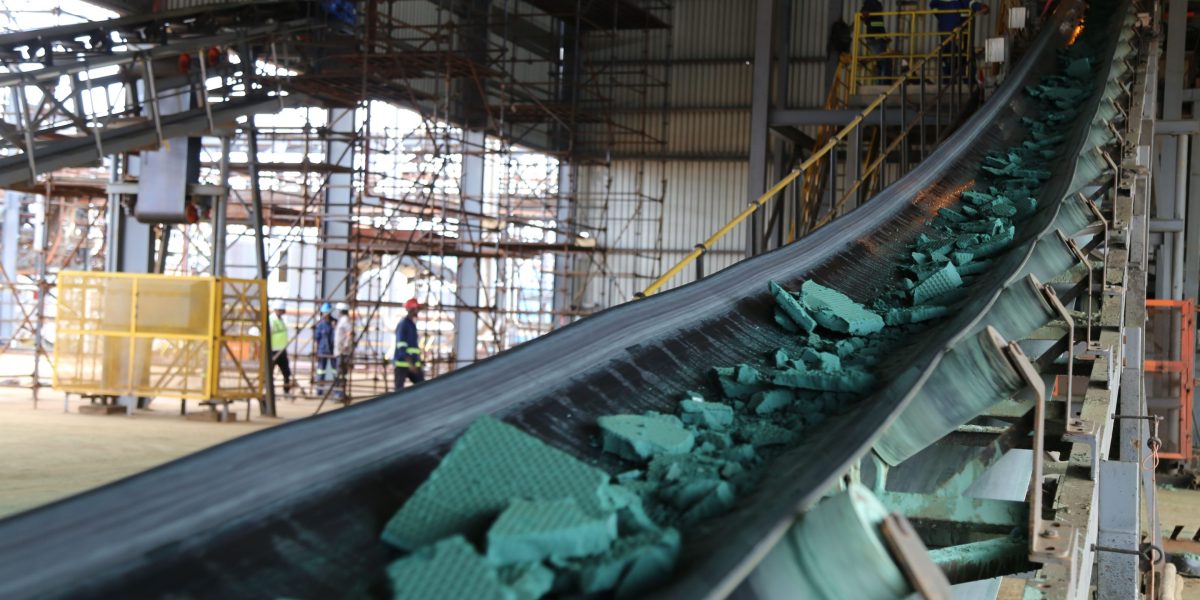
The military procedure coincided with a Venezuelan armed forces deployment to dislodge illegal mining outfits from mineral-rich Bolívar state as Western corporations eye lucrative exploration projects under a new, pro-business mining law. Tren de Aragua was alleged to be one of several criminal groups operating in the area.
By Rodrigo Acuña who holds a PhD on Venezuelan foreign policy from Macquarie University. Together with journalist Nicolas Ford, last year he released his first documentary Venezuela: The Cost of Challenging an Empire. Rodrigo has been writing on Latin American politics for close to 20 years and publishes a newsletter on Latin America. Originally published at Truthout.
Venezuela is under United States occupation, albeit without the physical presence of U.S. troops on the ground. Since January 3 — when the Trump administration attacked the country and kidnapped President Nicolás Maduro and First Lady Cilia Flores on highly questionable drug and weapons charges — Venezuela has lost control of its oil, minerals, and foreign policy.
In Maduro’s absence Delcy Rodríguez, previously the country’s vice president, took office as interim president. Together with her brother Jorge Rodríguez — head of Venezuela’s National Assembly — they have been speaking to U.S. and Spanish media outlets about moving Venezuela towards a market-friendly economy while welcoming U.S. diplomats and delegations into the country.
Reporting on Rodríguez’s interim presidency, an article in The Washington Post recently noted that “the country has largely avoided revolutionary convulsions while a Wild West marketplace swarms with U.S. companies and investors.” Focusing on the Cuban American lawyer Mauricio Claver-Carone, the Post notes that since the military operation that deposed Maduro, Claver-Carone has become the “unofficial U.S. viceroy of Venezuela, helping to implement the administration’s plan to work with Delcy Rodríguez and exploit the South American country’s vast oil wealth.”
A Government of Occupation
Tony Boza, an economist and former National Assembly legislator for the ruling United Socialist Party of Venezuela (PSUV), told Truthout that the Rodríguez administration should be viewed as “a government of occupation.” Its job, in his view, is to “rapidly and hastily transform a series of laws, practically without consultation, while fulfilling all of the requirements being imposed upon it.” In this process, Boza says Venezuela’s financial independence has been decimated.
“The resources that are being sold — in the case of oil and gold — are being handled with complete opacity, and nobody knows under what exact conditions they are being sold,” Boza said, “because all of that passed under the direct control of the group surrounding Donald Trump, even in violation of U.S. law itself, because there was never any declaration of war.”
On January 29, 2026, the National Assembly passed the Organic Hydrocarbons Law, which has been seen as the most important change to Venezuela’s oil-sector framework since changes made in 2006 and 2007, when the government of Hugo Chávez forced foreign oil companies operating in the Orinoco Belt to convert their projects into mixed enterprises (empresas mixtas) in which Venezuela’s state oil company would hold at least 60 percent ownership.
According to Boza, the central issue is that the royalties that the state receives from the energy sector for granting it the right to extract and sell oil are now contingent on a company’s profitability. That means if a business does not generate profits on paper, royalty payments could fall to as little as 1 percent or even zero, since there is no guaranteed minimum threshold. In the future, he says, “disputes arising from the management of the oil business” will be “transferred abroad” because of the constitutional changes made under Rodríguez. This will mean that energy disputes will most likely end up in U.S. courts — the same judiciary that a few years ago seized Venezuela’s state-owned Citgo company under the umbrella of U.S. sanctions.
Venezuelan trade union activist Adelmo Becerra, from the National Institute for Training and Socialist Education (INCES), has a similar opinion. Speaking to Truthout, Becerra said the changes to Venezuela’s Organic Hydrocarbons Law, which took place in late January, have seen the country regress “more than 100 years, back to the era of Juan Vicente Gómez when the oil industry was transnational and the country obtained minimal income from petroleum, while those companies received almost all of the profits generated by oil revenues.” While he has been critical of the lack of transparency in Maduro’s government, Becerra notes that, “there was direct administration by the state and government over oil revenues.” Now, however, “The U.S. government appropriates, controls, and allocates resources from those revenues according to its own interests.”
Since 2018, many trade unions became critical of the Maduro government for weakening collective bargaining in order to attract international investments and kickstart the economy due to the impact of U.S. sanctions. In Becerra’s view, Rodríguez has continued with policies that disempower organised labor.
Speaking recently to Germany’s weekly Der Spiegel, Nicolás Maduro Guerra — the only son of President Maduro — said Chavismo had to apologise for “excesses” during the Maduro administration. A political movement founded by the late president Chávez, Chavismo historically has combined left-wing nationalism, anti-imperialism, state intervention in the economy, social welfare programs, and the goal of building a participatory form of democracy in Venezuela while forging Latin American unity. In Maduro Guerra’s view, Chavismo under his father made several errors, including “the actions of the police,” “the justice system, which has not always guaranteed fair processes,” and “the right to defense.”
In late February, the Rodríguez administration passed new legislation that gave amnesty to hundreds of people who were incarcerated and charged with certain crimes deemed to be political in nature. The Trump administration put pressure on Venezuela’s government to pass the legislation. Some proponents of Chavismo have pushed back on that decision, including long time media commentator and hard-left member of the PSUV, Mario Silva. He rejected the amnesty law, arguing that the people who were incarcerated had committed crimes against the country, referencing several anti-government demonstrations during both the administrations of Hugo Chávez and Maduro, with the years 2014 and 2017 seeing the worst of the violence. A body known as the Committee of Victims of the Guarimba has sought for many years to hold accountable the perpetrators of ultra right-wing violence during those protests, who, in the committee’s view, have caused dozens of deaths and hundreds of serious injuries.
Silva also released an open letter to Minister of the Interior and PSUV member Diosdado Cabello, who, given the power of his ministry, has allowed Rodríguez to oversee reforms opening the nation’s national resources to private enterprise. In the letter, Silva again critiqued his party and Rodríguez’s government. From Silva’s perspective: “No amount of pressure can justify collaborating with an aggressor who, to date, has offered no guarantees regarding commitments that would represent progress or improvement for the Venezuelan people.”
Elías Jaua, former vice president under Hugo Chávez, has also recently spoken out against what he calls a U.S. occupation of Venezuela. Jaua said that the Trump administration “is controlling Venezuela’s oil sales and depositing the income into a U.S. Treasury Department administered fund,” a claim that U.S. Secretary of Energy Chris Wright has confirmed himself. According to Jaua, “only some money will be handed back to allow the Venezuelan state to keep functioning” which, “is nothing more than tutelage under coercion and the neo-colonial administration of one government by another.”
Venezuelan government officials, including Venezuela’s current diplomatic envoy to the U.S., repeatedly declined to be interviewed for this article.
Extradition of Alex Saab
On May 23, the Venezuelan government allowed the U.S. military to conduct a “rapid response exercise involving Marines and military aircraft” at the U.S. Embassy in Caracas — an action that would have been unthinkable under Maduro or Chávez. A few days before that, the Rodríguez administration handed over businessman and former Venezuelan minister Alex Saab to U.S. authorities. A Colombian-born Venezuelan, Saab was previously connected to the Maduro administration as he worked with allies like Iran to get around U.S. economic sanctions and import food and medicine into Venezuela for the Local Committees for Supply and Production (CLAP) program designed to distribute food to the country’s poorest communities.
In 2020, Saab was detained in Cape Verde and extradited to the United States, where he was accused of money laundering. His wife Camila Fabri Saab claimed in 2022 that Saab was “suffering torture and inhumane treatment every day in the United States.” The Maduro administration lobbied hard for his release, which was achieved in December 2023. In exchange for Saab, Caracas released 10 U.S. citizens, two of them mercenaries for Silvercorp USA, which had attempted to overthrow Maduro in 2019. In October 2024, Saab was made Venezuela’s Minister of Popular Power for Industry and National Production — a position he held until January 16, 2026.
After the U.S. military attack on Venezuela in January this year, according to Reuters, Washington put pressure on Rodríguez to arrest Saab and extradite him. Had Rodríguez not carried out this action, among a long list of demands from the Trump administration, Washington might have indicted her like Maduro as Reuters notes it was building up a case against her.
On May 18, Diosdado Cabello publicly stated that Saab committed “frauds of all kinds” that are being investigated while he had carried a “fraudulent” Venezuelan identity card since 2004. “There is no file that certifies that that person is Venezuelan,” Cabello added. A day later, President Rodríguez declared that Saab’s deportation took place “out of national interest.”
Silva, for his part, asked on his program La Hojilla two simple questions: Firstly, if Saab had carried a fraudulent Venezuelan identity card since 2004, why was this irregularity not detected in 22 years? Secondly, how did Saab end up working as diplomat and then a minister for the government of Venezuela under Maduro?
Neoliberalism and Censorship
Silva’s program — which was known for its harsh critiques of the ultra-right inside Venezuela and of U.S. foreign policy, and once commanded one of the largest late night television audiences on the public broadcaster Venezolana de Televisión (VTV) — was taken off the air in March of this year. That same month, another popular leftist political program, Zurda Konducta (Left Conduct) was also removed from VTV.
The elimination of such voices from Venezuelan state television appears to be an effort to diminish criticism of Caracas’s forced rapprochement with Washington, and the global institutions over which the U.S. exerts enormous influence.
Earlier this month, members of Rodríguez’s government met with officials from the International Monetary Fund (IMF). While Venezuela had been a member of the IMF and the World Bank since 1946, in the 2000s President Chávez withdrew his country from these bodies, which he labelled “instruments of U.S. imperialism.” While Chávez attempted to promote alternative regional bodies like the Bank of the South, Brazil’s lack of commitment (despite initial enthusiasm) never allowed the institution to be consolidated. By 2017, a collapse in international oil prices, declining oil production, a depletion of foreign reserves, and heavy U.S. economic sanctions led Venezuela to start defaulting on its international debts, which today stand at US$170 billion.
According to Reuters, the Rodríguez administration hired U.S. firm Centerview Partners “without a formal competitive process” to renegotiate Venezuela’s massive external debt burden and facilitate the country’s reintegration into international financial markets. The recommendation to hire the firm reportedly came from Claver-Carone, an ex-Trump government official and close associate of Secretary of State Marco Rubio.
Commenting to Truthout on the new ties between Caracas and the IMF, Becerra said “there is no transparent information” concerning the objectives of the new relationship. However, “based on global experience,” Becerra added that it is clear that countries that negotiate with the IMF “subordinate their economic policy to well-known neoliberal measures that are contrary to the economic and social rights of the great majority of the population.”
In February 1989, after the government of the corrupt President Carlos Andrés Pérez applied the IMF’s austerity measures, a massive wave of protests broke out throughout Venezuela that were suppressed by the country’s armed forces, resulting in the deaths of roughly 1,000 to 3,000 civilians. By 1992, a young lieutenant colonel named Hugo Chávez attempted a military coup against Andrés Pérez because of the IMF’s polices, Caracas’s subservience to Washington, and the failure to reinvest oil revenues to benefit working class Venezuelans.
Should Delcy Rodríguez continue to bend to Trump’s orders, perhaps her government will one day be forced to deal with its own version of Hugo Chávez.