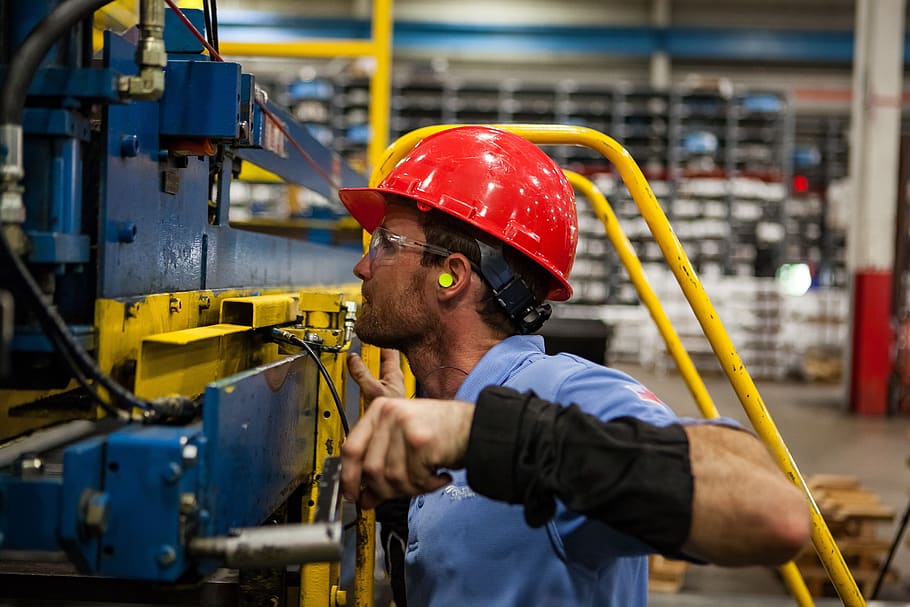
CNBC reported on the latest Institute for Supply Management survey, and the comments from manufacturers should frighten anyone who thinks inflation has been defeated. One electrical-equipment producer said pricing volatility and delivery delays are “arguably worse than the pandemic era,” with both moving relentlessly higher. A primary-metals manufacturer was even more blunt: “It makes me yearn for the coronavirus pandemic chaos, which was more manageable than whatever this is that we are in.” This is what lies beneath the government’s sanitized inflation statistics: factories are expanding, but the cost and difficulty of obtaining the materials needed to produce anything have become worse than during the supply-chain nightmare of COVID.
The headline Manufacturing Purchasing Managers’ Index surged to 55.6% in July from 53.3% in June, far above the consensus estimate of 54%. Any reading above 50% signals manufacturing expansion, and the July figure was the strongest since May 2022. Manufacturing has now expanded for seven consecutive months following ten months of contraction, while the ISM says the July result is consistent with annualized real GDP growth of approximately 2.8%.
New orders increased for the seventh consecutive month, rising to 56.7% from 56%. Production exploded to 58.5% from 52.2%, reaching its highest level since November 2021. Backlogged orders increased to 55% from 50.5%, while employment finally moved into expansion territory at 52.8%, up from 49.7%. That was the first manufacturing-employment expansion in 33 months.
Fifteen manufacturing industries reported growth, led by computer and electronic products, machinery, petroleum and coal products, and other sectors tied to AI infrastructure, defense, transportation, and capital investment. Customers’ inventories remain too low, new orders are rising, and factories are rebuilding backlogs. There is genuine demand here, particularly from the construction of data centers, the AI spending boom, defense production, and the reshoring of certain supply chains.

However, the same expansion is colliding with a supply system that is already strained. Supplier deliveries deteriorated again, with that index rising to 58.9% from 57.4%. In the ISM survey, a number above 50% means deliveries are slowing, and the present delays are not merely the healthy result of stronger orders. Manufacturers cited shortages, transportation disruption, extended lead times, metals chaos, computer-chip demand, energy costs, tariffs, and geopolitical uncertainty throughout the Middle East.
The Prices Index remained at a punishing 71.1%. That was down from 73% in June and below the 84.6% recorded in April, but a reading above 70% still means broad and aggressive price increases. Celebrating a decline from an extreme level is like celebrating because the house is now burning through only one floor instead of two. The rate of deterioration may have moderated, but input prices are still rising throughout the manufacturing chain.
The Federal Reserve has now been placed in the impossible position that government repeatedly creates for central banks. Manufacturing is growing at its fastest pace in more than four years, production is surging, orders are expanding, factory employment has finally turned positive, and price pressures remain severe. This is not the environment that justifies cutting interest rates merely because Wall Street and Washington demand cheaper money.
The Fed held the federal funds rate at 3.50% to 3.75% on July 29, but three members dissented and wanted a quarter-point increase. That was an unusually divided vote, and it demonstrates that internal pressure is building. The Fed’s statement admitted that inflation remained elevated above its 2% objective while economic activity continued expanding at a “solid pace.” The ISM report has now reinforced both sides of that statement.
The preferred PCE inflation gauge stood at 3.7% in June, down from 4.1% in May but still nearly twice the Fed’s target. Core PCE, which excludes food and energy, remained at 3.3%. Inflation did not disappear because one monthly headline index declined by 0.1% after energy prices pulled back. The underlying annual rate remains entrenched well above target, and manufacturers are warning that the next wave of costs is already moving through the production pipeline.
The political class will blame the Fed regardless of what happens. If the Fed raises rates to fight inflation, politicians will accuse it of damaging housing, employment, and government finances. If it cuts rates while manufacturing prices are surging, the same politicians will blame it when consumer prices accelerate again..
Interest rates do not rise solely because of inflation. Rates also rise when the demand for capital increases, the economy expands, government competes with the private sector for financing, and investors demand a greater return for lending money. The United States is attempting to finance AI data centers, semiconductor plants, defense production, infrastructure, energy development, and enormous federal deficits simultaneously. That creates competition for labor, materials, electricity, machinery, and credit.
The Fed cannot manufacture transformers, reopen shipping lanes, increase refinery capacity, produce computer chips, or resolve a shortage of skilled labor. Raising interest rates will not make a cargo vessel travel faster or produce additional copper. It can only suppress demand elsewhere in the economy until weaker businesses and indebted consumers are forced to retreat. That is the dirty truth of monetary policy that academics rarely admit: the Fed often “fights inflation” by inflicting enough financial pain to reduce somebody else’s ability to purchase goods, hire workers, or obtain credit.
Nor can the Fed safely cut rates simply because the supply problem is outside its control. Cheaper money would feed additional demand into an economy where orders are already rising and suppliers cannot keep pace. It would reward leverage, encourage more speculative investment, support further government borrowing, and potentially push even more money into commodities, equities, real estate, and AI infrastructure. A supply-constrained economy does not need another artificial demand stimulus.
The July ISM report is positive for American manufacturing, but it is poisonous for the fantasy that the Fed can deliver immediate rate cuts without consequences. Production at 58.5%, new orders at 56.7%, employment at 52.8%, and prices at 71.1% describe an economy that is expanding while simultaneously suffering severe cost pressures.
Washington will try to sell this as proof that every policy is working. The administration will point to the strongest manufacturing reading since 2022, while the opposition will point to inflation and pretend it was produced by one man or one party. Neither side will admit that decades of debt, monetary manipulation, geopolitical intervention, outsourcing, underinvestment in infrastructure, and dependence on fragile international supply chains created this mess.
Manufacturers are telling us in plain English that the present chaos is less manageable than the pandemic. Their testimony matters more than another speech from a politician or economist who has never purchased a ton of steel, shipped a container, operated a factory, or met a payroll. The United States may be entering a powerful manufacturing expansion, but it is doing so with insufficient capacity, unstable supply lines, high borrowing needs, and government spending that refuses to retreat.