No Result
View All Result
  • Login
Monday, July 13, 2026
theadvisertimes.com
  • Home
  • Business
  • Financial Planning
  • Personal Finance
  • Investing
  • Money
  • Economy
  • Markets
  • Stocks
  • Trading
  • Home
  • Business
  • Financial Planning
  • Personal Finance
  • Investing
  • Money
  • Economy
  • Markets
  • Stocks
  • Trading
No Result
View All Result
theadvisertimes.com
No Result
View All Result
Home Economy

Why America’s Money Always Follows War

by theadvisertimes.com
3 months ago
in Economy
Reading Time: 4 mins read
A A
0
Why America’s Money Always Follows War
Share on FacebookShare on TwitterShare on LInkedIn


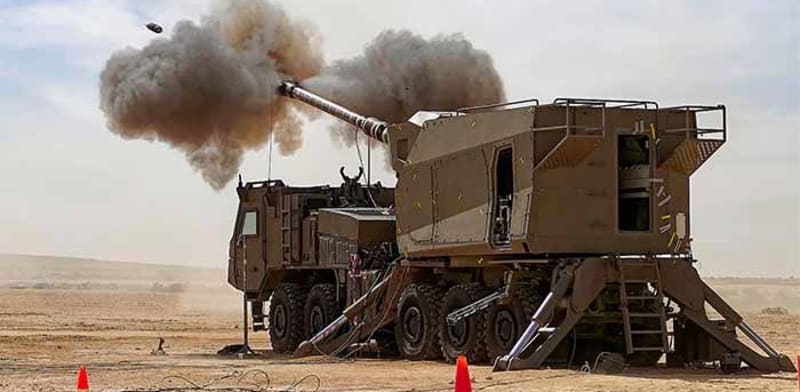
When you strip away the propaganda, foreign aid is rarely about charity. It is about strategy, war, and buying influence. The latest long-run data show that from 1946 through 2024, more than $1 trillion in inflation-adjusted U.S. foreign aid went to just five recipients: Israel at $337.0 billion, Egypt at $198.9 billion, former South Vietnam at $193.8 billion, Afghanistan at $168.5 billion, and South Korea at $127.6 billion. Together, those five alone absorbed roughly 30% of all U.S. foreign aid since World War II. In fiscal 2024, overall U.S. foreign aid obligations were about $82.3 billion, covering 177 countries, and about two-thirds of that aid was classified as economic while roughly one-third was military. That is the first clue. Washington calls it aid, but the money consistently follows conflict zones, military alliances, and geopolitical choke points.

Israel sits at the top because it has long served as Washington’s anchor in the Middle East. The Council on Foreign Relations notes that Israel has received over $300 billion in total U.S. economic and military aid since its founding, and under the current memorandum of understanding the United States agreed to provide $3.8 billion per year through 2028, including $500 million annually for missile defense. Nearly all modern U.S. aid to Israel is military. That tells you exactly what this is. This is not a poverty program. This is a long-term military investment in maintaining a regional outpost that aligns with U.S. policy and projects power into one of the most unstable regions on earth.

Egypt comes second for a similar reason, but from the opposite side of the same equation. Cairo has for decades been paid to remain inside the American orbit and preserve the regional balance surrounding Israel and the Suez Canal. Reuters reported that the Biden administration granted Egypt its full $1.3 billion allocation in military aid in 2024, despite human rights concerns, because Washington considered Egypt vital to U.S. national security priorities, ceasefire negotiations, hostage talks, and humanitarian logistics linked to Gaza. In other words, Egypt is funded not because Washington admires its internal governance, but because it occupies critical real estate and performs a strategic function. If Israel is the spear point, Egypt is part of the containment framework around it.

Vietnam was pure Cold War spending disguised as nation-building. The National Archives notes that American assistance to Vietnam began before 1954 and continued after the Republic of Vietnam declared independence in the South, with U.S. backing sustaining the Diem government and then the wider anti-communist war effort. The Council on Foreign Relations summarizes it plainly: the United States poured money into South Vietnam to support the military and promote stability during the war, and when South Vietnam fell, the aid ended. That is the key point. If this had truly been development assistance, it would have continued after the war. It did not. The money was there to try to hold a strategic line against communist expansion in Southeast Asia. Once the line broke, so did the funding.

Afghanistan was Vietnam repeated in another century. According to SIGAR, by March 2021, U.S. appropriations for Afghanistan reconstruction alone had reached $144.4 billion, with the report warning that the investment was at serious risk of waste, fraud, abuse, or outright failure. SIGAR also found that more than $2.4 billion had been spent on capital assets that were unused, abandoned, misused, deteriorated, or destroyed. That was reconstruction money alone, before counting the much larger war costs. SIGAR cited a broader estimate of $2.26 trillion in total Afghanistan war costs, while even the Defense Department’s own estimate put cumulative obligations at $824.9 billion.

This is what Washington does. It invades, installs a model, funds the system to keep it alive, and then calls the expenditure foreign aid. Afghanistan ranked so high because it was not a normal aid recipient. It was a twenty-year attempt to subsidize an occupation, build a client state, and hold a strategic position in Central Asia.

South Korea is the one case on the list that Washington can point to as a relative success, but even there the motive was never altruism. Korea was funded because it sat on the front line of the Cold War, directly adjacent to communist North Korea and within range of China. Korean development archives state that foreign aid raised South Korea’s capital stock in education, health, roads, railways, power, water, sanitation, and industrial financing. A historical GAO review found that by the early 1970s the United States had provided South Korea with over $5.4 billion in grant military aid and significant economic assistance, while also bearing $9.8 billion in costs for maintaining U.S. forces in Korea from 1954 through 1972. Washington underwrote South Korea because it needed an anti-communist stronghold in Asia. The aid worked far better there than in Vietnam or Afghanistan, but the strategic intent was the same.

Once you line these five up side by side, the pattern is impossible to miss. Israel, Egypt, and South Korea were paid to anchor American influence in strategically vital regions. South Vietnam and Afghanistan were funded as war theaters and client-state experiments. None of this was random, and none of it was primarily humanitarian. The money followed military doctrine, containment strategy, logistics, and regime support. That is why foreign aid should always be analyzed as an extension of foreign policy, not as benevolence. Even the U.S. government’s own descriptions of assistance emphasize national security, influence, and regional stability.

The real lesson is that Washington does not hand out money because it has excess compassion. It deploys money where it wants control. That is why the same names keep appearing decade after decade. Aid is simply the cleaner word for financing alliances, subsidizing wars, and maintaining imperial reach. When the strategic value is there, the money flows.



Source link

Tags: AmericasMoneyWar
ShareTweetShare
Previous Post

North Korean IT Worker Gets Hacked, Secrets Revealed

Next Post

Europe Begins Energy Rationing As The Crisis Moves Into Daily Life

Related Posts

Will the Trump Admin Buy Into OpenAI & Save Softbank?

Will the Trump Admin Buy Into OpenAI & Save Softbank?

by theadvisertimes.com
July 13, 2026
0

Earlier this month OpenAI CEO Sam Altman suggested that the US government take a 5% ownership stake in the spectacularly...

The Fallacy of the Keynesian Theory of Insufficient Demand

The Fallacy of the Keynesian Theory of Insufficient Demand

by theadvisertimes.com
July 13, 2026
0

Most experts believe that the key driver of economic growth is total demand for goods and services. Whenever an economy...

From Sawdust to Paw Patrol: The Spin Master Story (with Ronnen Harary)

From Sawdust to Paw Patrol: The Spin Master Story (with Ronnen Harary)

by theadvisertimes.com
July 13, 2026
0

0:37Intro. Russ Roberts: Today is May 28th, 2026, and I want to remind listeners before introducing today's guest that we're...

Don’t Blame the Billionaires, Change the Incentives

Don’t Blame the Billionaires, Change the Incentives

by theadvisertimes.com
July 13, 2026
0

If you read enough commentary you’ll find various versions of the idea that our ruination is the result of powerful...

Italy Says NO To Blank Checks For Ukraine

Italy Says NO To Blank Checks For Ukraine

by theadvisertimes.com
July 13, 2026
0

The political mood across Europe is beginning to shift, and even governments that have strongly backed Ukraine are discovering that...

Texas Hospital Advertises Birth Tourism At Mexico Border

Texas Hospital Advertises Birth Tourism At Mexico Border

by theadvisertimes.com
July 13, 2026
0

Every government eventually reaches the point where people stop asking whether the law exists and begin asking whether anyone intends...

Next Post
Europe Begins Energy Rationing As The Crisis Moves Into Daily Life

Europe Begins Energy Rationing As The Crisis Moves Into Daily Life

Israel reopens amid uncertainty in north

Israel reopens amid uncertainty in north

  • Trending
  • Comments
  • Latest
Should You Offer a Concession to Get Your Apartment Leased Faster?

Should You Offer a Concession to Get Your Apartment Leased Faster?

June 15, 2026
How I Maximize My Sapphire Reserve Dining Credit

How I Maximize My Sapphire Reserve Dining Credit

July 10, 2026
Fourth of July 2026 Freebies and Deals

Fourth of July 2026 Freebies and Deals

July 3, 2026
5 things financial therapists want every advisor to know

5 things financial therapists want every advisor to know

June 26, 2026
The 10 Largest NYC Tech Startup Funding Rounds of June 2026 – AlleyWatch

The 10 Largest NYC Tech Startup Funding Rounds of June 2026 – AlleyWatch

July 6, 2026
Prime Day, June 2026: How Retailers Competed With Amazon

Prime Day, June 2026: How Retailers Competed With Amazon

June 29, 2026
8,924 in Esports Bets Reveal the Esports World Cup’s Biggest Week 2 Favorites

$558,924 in Esports Bets Reveal the Esports World Cup’s Biggest Week 2 Favorites

0
These Are the Top Companies to Watch for Remote Jobs in 2026

These Are the Top Companies to Watch for Remote Jobs in 2026

0
The Fallacy of the Keynesian Theory of Insufficient Demand

The Fallacy of the Keynesian Theory of Insufficient Demand

0
Germany opposes EU trade embargo on settlements

Germany opposes EU trade embargo on settlements

0
Ford Recalls Nearly 1M Vehicles in 2 Weeks. Is Your Car on the List?

Ford Recalls Nearly 1M Vehicles in 2 Weeks. Is Your Car on the List?

0
Goldman Sachs quietly snags a corner of America’s retirement money

Goldman Sachs quietly snags a corner of America’s retirement money

0
8,924 in Esports Bets Reveal the Esports World Cup’s Biggest Week 2 Favorites

$558,924 in Esports Bets Reveal the Esports World Cup’s Biggest Week 2 Favorites

July 13, 2026
Ford Recalls Nearly 1M Vehicles in 2 Weeks. Is Your Car on the List?

Ford Recalls Nearly 1M Vehicles in 2 Weeks. Is Your Car on the List?

July 13, 2026
How Outdated EBT Cards Are Fueling a Surge in SNAP Benefit Theft

How Outdated EBT Cards Are Fueling a Surge in SNAP Benefit Theft

July 13, 2026
US stocks today: US stocks end lower as Iran tensions dampen risk appetite; chipmakers drop

US stocks today: US stocks end lower as Iran tensions dampen risk appetite; chipmakers drop

July 13, 2026
These Are the Top Companies to Watch for Remote Jobs in 2026

These Are the Top Companies to Watch for Remote Jobs in 2026

July 13, 2026
Waller says Fed shouldn’t ‘fight the last war’ on inflation but warns hikes still possible

Waller says Fed shouldn’t ‘fight the last war’ on inflation but warns hikes still possible

July 13, 2026
theadvisertimes.com

Get the latest news and follow the coverage of Business & Financial News, Stock Market Updates, Analysis, and more from the trusted sources.

CATEGORIES

  • Business
  • Cryptocurrency
  • Economy
  • Financial Planning
  • Investing
  • Market Analysis
  • Markets
  • Money
  • Personal Finance
  • Startups
  • Stock Market
  • Trading

LATEST UPDATES

  • $558,924 in Esports Bets Reveal the Esports World Cup’s Biggest Week 2 Favorites
  • Ford Recalls Nearly 1M Vehicles in 2 Weeks. Is Your Car on the List?
  • How Outdated EBT Cards Are Fueling a Surge in SNAP Benefit Theft
  • Our Great Privacy Policy
  • Terms of Use, Legal Notices & Disclosures
  • About Us
  • Contact Us

© Copyright 2024 All Rights Reserved
See articles for original source and related links to external sites.

Welcome Back!

Login to your account below

Forgotten Password?

Retrieve your password

Please enter your username or email address to reset your password.

Log In
No Result
View All Result
  • Home
  • Business
  • Financial Planning
  • Personal Finance
  • Investing
  • Money
  • Economy
  • Markets
  • Stocks
  • Trading

© Copyright 2024 All Rights Reserved
See articles for original source and related links to external sites.