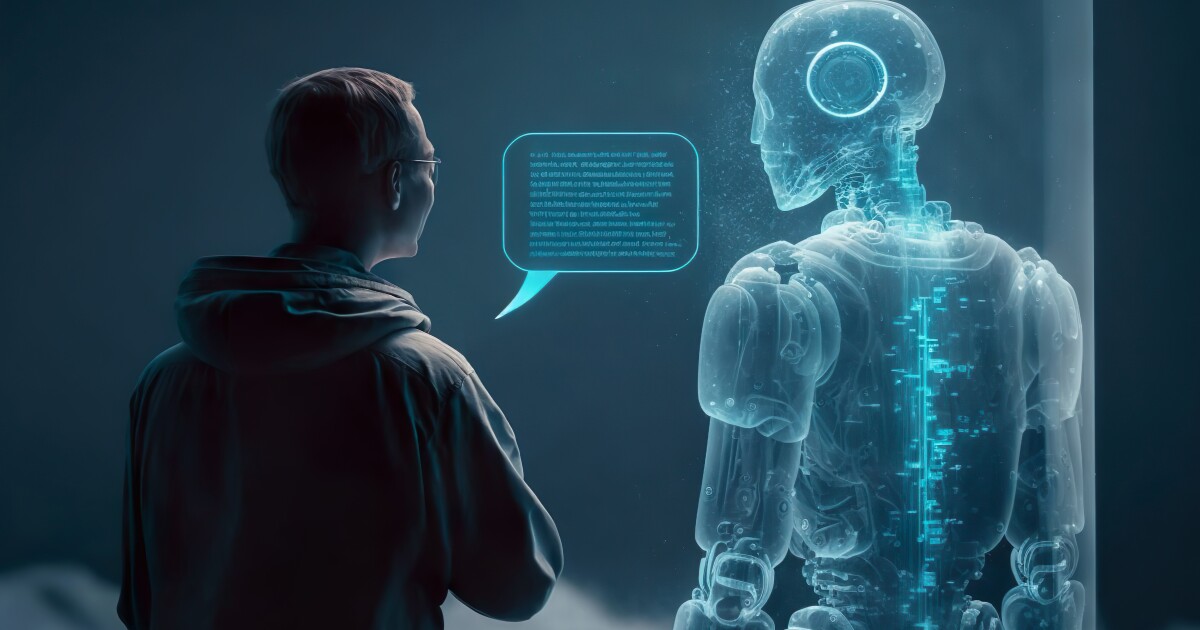
Modern societies increasingly seek certainty. Governments, corporations, and experts increasingly rely on ever more sophisticated technologies to predict behavior, manage risk, coordinate complex systems, and reduce uncertainty. Artificial intelligence promises unprecedented efficiency. Algorithms detect patterns invisible to the human eye. Vast administrative networks collect and process information on a scale that previous generations could scarcely have imagined.
These developments offer genuine benefits. They can improve communication, increase productivity, and help solve difficult problems. Yet they also create a powerful temptation: the belief that social life itself can be optimized like a technical process. This temptation is hardly new. Throughout history, rulers and planners have sought greater order, predictability, and control. What is new is the scale at which modern technologies seem to make these ambitions achievable. But there is a problem.
Human societies are not machines. They consist of individuals with diverse experiences, preferences, loyalties, beliefs, and aspirations. The more institutions try to eliminate uncertainty, the more they risk overlooking the very human complexity that makes free societies adaptive and resilient. The question, therefore, is not whether advanced technologies should exist. It is a question of whether they will be used to expand human freedom or to pursue an unattainable ideal of complete social predictability.
The Hayekian Problem
In The Road to Serfdom, Friedrich Hayek warned against the belief that complex societies could be effectively directed from the center. His concern was not merely economic, it was epistemological.
Knowledge in society is dispersed. No individual, institution, or committee has all the information needed to coordinate human affairs perfectly. Much of what people know is local, practical, subjective, and difficult to codify in formal rules. Individuals constantly adapt to changing circumstances, drawing on knowledge that centralized authorities lack.
Efforts to overcome this limitation often rely on simplifying. To make societies more manageable, institutions classify, standardize, and reduce complexity. Administrative systems categorize diverse populations, and policies increasingly rely on measurable indicators. What cannot be quantified may be gradually ignored.
This tendency becomes even more pronounced as technological capabilities expand. Large-scale data collection, predictive algorithms, and increasingly integrated administrative systems create the impression that uncertainty can be mastered. Yet the fundamental problem Hayek identified persists.
The more policymakers assume they have sufficient knowledge to direct social outcomes, the more likely they are to underestimate the spontaneous processes by which societies actually function. Markets, communities, traditions, and voluntary associations often coordinate human activity precisely because they allow countless individuals to adapt independently to changing conditions.
The issue is not whether planning has a role. Every organization plans. The issue is whether planners recognize the limits of their knowledge. Free societies are not effective because they eliminate uncertainty, they are effective because they preserve the flexibility to respond when expectations prove mistaken. The dream of complete predictability is therefore not merely unrealistic. It risks undermining the mechanisms of adaptation that enable social resilience.
Technological Closure
Technological progress has transformed modern life in extraordinary ways. Information travels instantly across continents. Financial transactions occur in fractions of a second. Complex logistics networks coordinate the production and distribution of goods on a global scale. Artificial intelligence promises even greater efficiency in the years ahead. None of these developments is inherently incompatible with freedom.
The problem arises when technological capabilities foster the belief that social life itself can be engineered with greater precision. As technological systems become more deeply integrated into everyday life, participation and dependence increasingly overlap. Communication, employment, banking, education, healthcare, transportation, and access to information all rely on infrastructures that few individuals fully understand, making meaningful disengagement increasingly difficult.
Under such conditions, social stability may stem not only from legitimacy but also from functional integration. People may question institutions even as they continue to depend on the systems those institutions administer. Public trust may weaken even as daily routines remain largely unchanged. A society can therefore appear stable despite growing dissatisfaction beneath the surface. This distinction matters.
Operational resilience is distinct from legitimacy. Advanced systems can continue to function remarkably well even as large segments of the population grow skeptical of prevailing institutions. Their complexity allows them to absorb tensions that might have destabilized earlier forms of social organization.
At the same time, these systems influence the environments in which individuals make judgments and decisions. Technological platforms increasingly shape what people see, what they pay attention to, and how public discussions unfold. The result is not necessarily uniformity of thought. More often, it is fragmentation, distraction, and a growing difficulty in sustaining a shared civic understanding.
The danger, therefore, is not simply excessive state power or technological innovation taken in isolation. The greater danger lies in assuming that increasingly sophisticated systems can permanently resolve the uncertainties inherent in human affairs.
The Problem of Unintended Consequences
History repeatedly shows that attempts to impose lasting certainty often lead to unexpected outcomes. Efforts to centralize authority have often sparked calls for decentralization. Renewed assertions of individuality and independence have sometimes followed periods of intense conformity. Systems designed to maximize efficiency may inadvertently weaken the very social bonds on which legitimacy depends.
Carl Jung used the term enantiodromia to describe the tendency of forces pushed to extremes to produce compensatory movements in the opposite direction. Whether or not one accepts Jung’s broader psychological theories, the insight remains useful. Human beings rarely adapt indefinitely to conditions that suppress autonomy, meaning, or spontaneity. Pressures that remain invisible for long periods can eventually resurface in unexpected ways.
Importantly, this process is non-deterministic. No historical law guarantees that centralized systems will collapse or that freedom will inevitably prevail. Many institutions prove remarkably adaptable. Advanced societies possess an extraordinary capacity to absorb dissent, accommodate reform, and maintain continuity during periods of stress.
The point is more modest. Attempts to eliminate uncertainty may inadvertently introduce new forms of uncertainty. Policies designed to reduce complexity may encourage behaviors that planners did not anticipate. Administrative solutions may create problems that require additional layers of administration. Technological systems intended to improve coordination may stimulate renewed interest in localism, decentralization, and alternative forms of association.
The lesson is not that planning is always harmful. Rather, humility remains essential. The future cannot be engineered with complete confidence because the knowledge required to guide complex societies remains dispersed among millions of individuals, each responding creatively to changing circumstances. Freedom matters, in part, because it preserves the capacity for self-correction when expectations inevitably clash with reality.
Why Freedom Matters
One of the paradoxes of modern society is that the more capable our systems become, the more tempting it is to believe that freedom is unnecessary. If experts can predict outcomes accurately enough, why tolerate the inefficiencies of disagreement? If algorithms can optimize decisions, why rely on individuals’ imperfect judgment? If social problems can be identified through data analysis, why preserve institutions that allow people to make different choices? The answer lies within the bounds of human knowledge.
No authority—no matter how technically sophisticated—can anticipate every consequence of its decisions. People continually adapt to changing circumstances in ways that cannot be fully predicted or centrally coordinated. New information emerges unexpectedly, preferences evolve, local conditions vary, and what seems reasonable from above may prove harmful on the ground. Freedom therefore serves a practical purpose beyond its moral value.
Free societies allow experimentation. Different communities adopt different solutions, individuals pursue diverse goals, mistakes remain limited rather than becoming universal. When failures occur, alternative approaches are already available.
This process of discovery is not always efficient. It can be frustrating, disorderly, and contentious. Yet it preserves something centralized systems struggle to maintain: the capacity for self-correction. A society that seeks to eliminate uncertainty risks eliminating the mechanisms that enable adaptation.
The issue, then, is not whether to use advanced technologies. The issue is whether they will reinforce the decentralizing principles of a free society or perpetuate the illusion that complex human realities can be permanently managed from the center. History suggests that humility remains the wiser course.
Conclusion
The greatest challenge facing modern societies may not be technological change itself. It may be the growing belief that technological sophistication can finally overcome the uncertainties that have always accompanied human freedom.
Throughout history, institutions have sought greater order, predictability, and stability. In many cases, these efforts have produced remarkable achievements. Yet they have also revealed a recurring limitation: the knowledge required to organize society is too widely dispersed, and human aspirations too diverse, to be fully incorporated into any comprehensive design.
This does not mean planning is futile or that institutions serve no useful purpose. Rather, it means even the most advanced systems must remain open to revision, criticism, and adaptation. Free societies endure not because they eliminate uncertainty, but because they learn to live with it.
The temptation to trade freedom for certainty is understandable, especially during periods of rapid technological change. But certainty bought at the expense of openness may ultimately prove self-defeating. Systems that become too rigid risk losing the flexibility needed to adapt when circumstances change.
History remains open because human beings remain capable of imagination, judgment, innovation, and dissent. The future cannot be planned in every detail because the knowledge needed to shape it continues to emerge from countless interactions among free individuals.
The most resilient societies, therefore, may not be those that seek to master uncertainty, but those that preserve the institutional and cultural conditions that enable people to confront uncertainty together. In an age increasingly defined by technological power, this distinction may be more important than ever before.