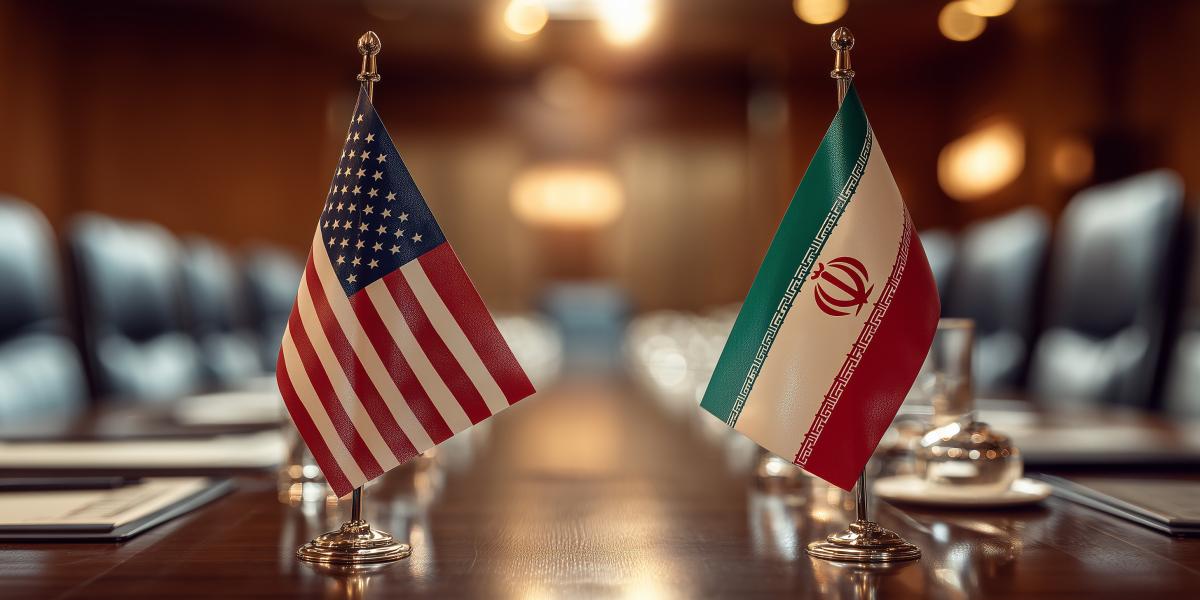
Donald Trump today, in a post on his social media platform Truth Social, stated that his goal for the current war with Iran is unconditional surrender. Specifically, he wrote: “There will be no deal with Iran except UNCONDITIONAL SURRENDER!”
Moreover, Trump specified that the US will have final say on “the selection of a GREAT & ACCEPTABLE Leader(s).”
In stating all this, however, Trump is essentially announcing that the US will be at war for an extended period.
Historians have long noted that demands for unconditional surrender have worked to prolong conflicts rather than shorten them, leading to needless death on both sides. After all, Trump is essentially saying that the Iranians should put themselves in a position of accepting whatever terms the United States seeks to unilaterally impose, including the total dissolution of the Iranian state, plus sanctions, punishments, occupations and other humiliations. What government would accede to this? Very few would, which is why only very weak, small, and relatively unarmed regimes can be forced into accepting unconditional surrender after anything less than a protracted war.
Iran, however, is not weak, small, or relatively unarmed. And, geography is in its favor. Indeed, in an interview earlier this week, international-relations expert John Mearsheimer spoke at length about the likely outcomes of the US. “It is almost impossible for me to see how Israel and the US win this war,” Mearsheimer concluded, largely because the prospects for regime change—i.e., unconditional surrender—are extremely small. Moreover, in order to get the kind of regime change that Trump is talking about, any new regime would also have to be permanently aligned with the United States. That is, a new regime isn’t enough. It has to also be a regime that takes orders from the United States. Given the reality on the ground in Iran, Mearsheimer continued, any new regime will be hostile to the United States. This fact is hinted at in the fact the the new Ayatollah, who has now replaced the 86-year old Ayatollah Khamenei, is far more radical than the old one. For example, the older Ayatollah, assassinated by the US this week, was against nuclear enrichment and was a moderate. The new leadership is not.
Thus, Mearsheimer concludes that, in order to win this conflict, “All the Iranians have to do is survive.” The Iranians know that “unconditional surrender” means turning Iran into a perennial puppet state of the US regime. This is not something that governments—or even their subject populations—tend to accept without first engaging in a long war of self-preservation.
Not that the current administration will trouble itself with these sorts of details. Nonetheless, the reality of the situation means that so long as Trump actually sticks to a goal of unconditional surrender, it is very likely he is committing the United States to a lengthy war.
It’s Time to End the American Obsession with “Unconditional Surrender”
The American maximalist approach of “unconditional surrender” has its origins in the Second World War during which the United States sought to follow the lead of the British and French allies who had imposed near-unilateral terms of surrender on the Germans at the end of the First World War. This had been done with very limited concession to German negotiators. The lopsided nature of the “negotiations” can be seen in the way the Germans were forced to accept the “war guilt” clause. Explicitly assigning total guilt to one side in a war was unheard of in modern international law up to that time.
Yet, the idea of forcing total capitulation on one side, without any negotiation, became a hallmark of the Second World War, when both the Germans and the Japanese were said to be subject to unconditional surrender. The basic operating procedure in these cases is simply to keep bombing the enemy country until its regime gives the victor everything it wants without any conditions.
Yet, historians have long pointed out that this policy tends to prolong wars needlessly. For example, B.H. Liddell Hart, in his History of the Second World War, concluded that the demand for unconditional surrender stiffened German resolve and was exploited by Nazi Propagandist Joseph Goebbels to maintain support for the National Socialists among the general population. Liddell Hart maintained that German resistance during the last two years of the war was far stronger than it would have been in the absence of demands for unconditional surrender. Eventual surrender only came after the deaths of 104,000 Americans killed in action during the last year of the war in Europe.
In practice, however, unconditional surrender is such an extreme position that it rarely materializes in actual practice. For example, as international relations scholar Paul Poast has noted, the Americans were ultimately unable to impose total “unconditional surrender” demands in the case in the US-Japanese conflict. The Japanese refused to surrender unless the US pledged to not attempt to abolish the Japanese monarchy. The Americans eventually agreed.
The capitulation of the National Socialists and Imperial Japan, and the Treaty of Versailles, are all extreme cases. The fact is that very few wars are ended along the lines of anything we would call “unconditional surrender.” This has been known for a long time, and was explored in detail by Coleman Phillipson in his 1916 book Termination of War and Treaties of Peace. Phillipson notes that in cases where total “subjugation” of another state occurs, there was no reason for concluding a negotiated settlement, as the imposition of the conqueror’s will on the conquered nation involved merely a unilateral arrangement.” The normal, far more common mode of bringing about peace in international conflicts, however, is a “compromise ad hoc, involving an agreement as to demands made on both sides, and settling all the matters in dispute.”
Indeed, many military personnel in World War II were alarmed by the administration’s adoption of the new doctrine with General Dwight Eisenhower’s naval aide Captain Harry Butcher stating privately that “any military person knows that there are conditions to every surrender.”
Berenice Carroll concludes (in “How Wars End: An Analysis of Some Current Hypotheses”) that it is not actually all that easy to determine the “victor” from the “loser” in an international conflict once all of the costs have actually been analyzed. Or, as Lewis Coser has put it, because of this, “most conflicts end in compromises in which it is often quite hard to specify which side has gained relative advantage.”
For all these reasons, it’s important to think long and hard about doubling down on a “strategy” that’s guaranteed to prolong a conflict.
Yet, from the point of view of the current warhawks, it may be that no “sacrifice” is too great for ordinary Americans to bear in the name of fighting the Iranians at the behest of the Israel lobby in the United States. After all, the administration refuses to rule out a ground invasion into Iran, a mountainous country armed with tens of thousands of missiles.
Fortunately, though, we’ve already seen the Americans abandon earlier calls for unconditional surrender in recent years. In 2022, in the wake of the Russian invasion of eastern Ukraine, President Biden called for regime change in Russia, which, in the Russian context, would likely have required the imposition of unconditional surrender. This, however, was conveniently forgotten when it became clear that a war of that nature would require a long, bloody war for the Americans, and risk nuclear war.
So, if good sense prevails, the American regime will “forget” that Trump called for unconditional surrender, and instead pursue a more sane, negotiated resolution.