Many financial advisory firms start out with a single founder – in part because, early on, the founder might also be the only employee. Over time, as the firm grows in terms of clients, revenue, and team members, the founder may consider opening up ownership opportunities to employees, whether to reward key team members, foster a greater sense of ownership among staff, or support a long-term succession plan. However, taking that step can come with challenges, from determining the appropriate buy-in structure to overcoming the mental hurdle of no longer being the firm’s sole owner.
In this guest post, Tim Goodwin, founder and CEO of Goodwin Investment Advisory, discusses the strategic thinking behind offering equity ownership opportunities to employees in his firm, the framework he used to expand ownership, and how other founders can prepare to share ownership in their own firms.
At a fundamental level, Tim wanted to offer equity to his employees to foster a greater sense of ownership. Being an owner – and receiving distributions based on the firm’s profitability – can heighten employees’ focus on the firm’s efficiency, client experience, and long-term enterprise value. For instance, his employee-owners are incentivized to identify potential cost-saving opportunities, such as whether certain subscriptions are truly necessary.
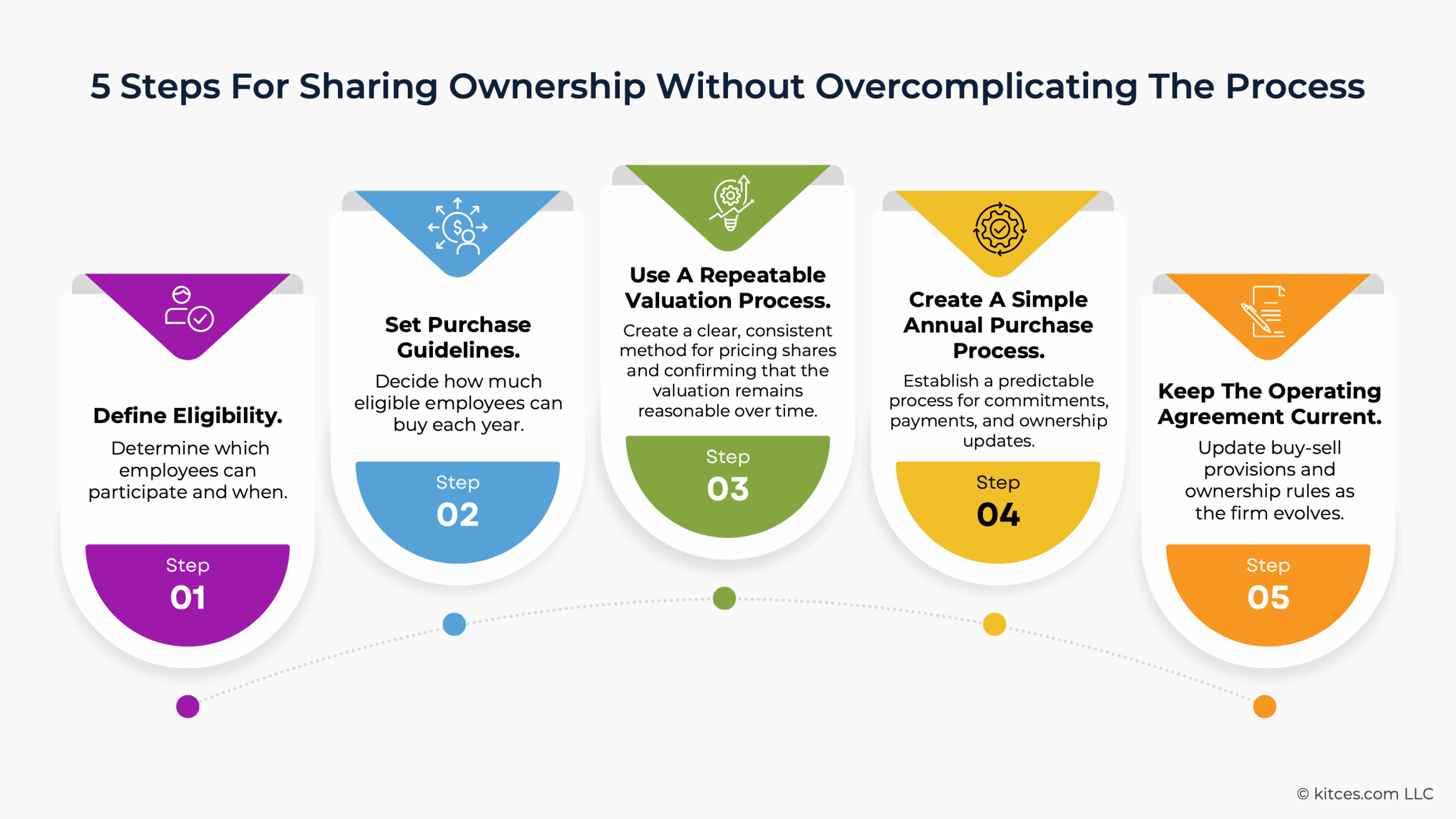
Tim found that preparation was crucial before sharing equity, as having clean books, a current operating agreement, clear buy-sell language, a reasonable valuation process, and enough financial transparency to educate employee-owners can smooth the transition and help avoid conflicts down the line. Once the business is prepared to bring on additional owners, the next steps include defining which employees can participate and when, setting guidelines for how much eligible employees can buy each year, using a repeatable valuation process to price shares, creating a simple annual process for commitments, payments, and ownership updates, and keeping the operating agreement current as the firm evolves.
In Tim’s case, equity buy-in opportunities are offered to all employees who have been with the firm for at least one year, which creates greater alignment across the staff and recognizes the contributions non-advisory staff make to the firm’s profitability. He allows employees to buy additional shares once per year at a revenue- and profitability-based valuation, and he also allows employees to sell their shares if, for example, they need liquidity for a major purchase. Employee-owners are required to liquidate their shares when they leave the company unless they retire, in which case they can retain ownership for no more than 10% for 10 years This helps keep ownership centered on current firm staff.
Ultimately, the key point is that allowing employees to buy equity ownership interests in the firm is not just a way to reward key personnel. It can foster a psychological sense of ownership across the team, support stronger alignment around growth and profitability, and potentially create stronger long-term outcomes for both the founder and employees!
Read More…