Financial advisors have “very high awareness, low concern and surprisingly limited preparedness” for guiding clients through the “great wealth transfer,” according to a new study.
Processing Content
At least 97% of advisors in the U.S., U.K. and Canada are aware of the looming transfer of tens of trillions of dollars to baby boomers’ heirs, according to an independent poll released last month by estate planning technology firm Empathy. But 72% said they’re not “highly concerned” about the great wealth transfer, and only 44% described themselves as prepared for the impact on their clients.
This “telling three-way divergence” reflects how advisors’ grasp of the subject “has not yet translated into operational change” across the wealth management industry, the report said.
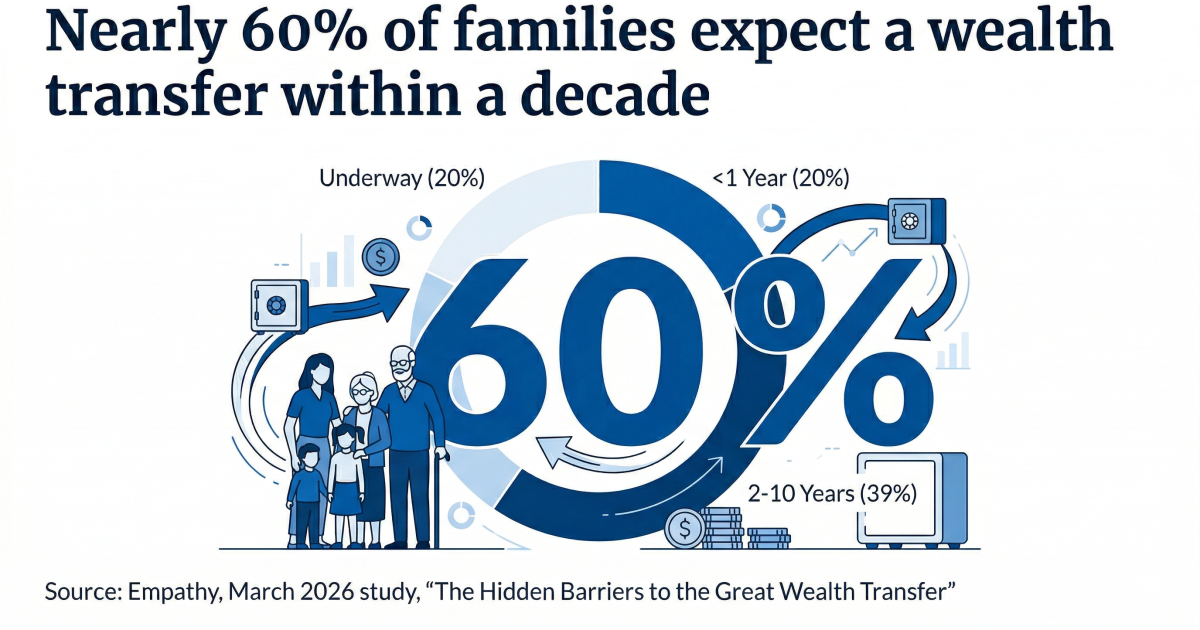
That’s a problem for client retention and organic growth, considering that 93% of the more than 6,000 consumers surveyed reported that current challenges are hindering their ability to transfer wealth. With nearly 60% expecting the transition to occur within the next decade, only 28% anticipate an easy transfer, and just 30% have formal estate or financial plans in place.
None of these data points came as a surprise to Mary Clements Evans, the founder of Emmaus, Pennsylvania-based advisory practice Evans Wealth Strategies.
“This is a dreaded discussion,” Clements Evans said in an email. “It requires three highly emotional subjects: death, money and how responsible the kids are or are not. Very few people WANT to have this discussion, even though they know they need to. This is where a properly trained advisor can be invaluable. I’ve always found that it’s easier to have the discussion if led by an objective third party. A good advisor can point out the negative consequences of not having the discussion.”
Families need advisors’ assistance to get past barriers that are “mostly deeply emotional and structural” rather than “just legal or financial” in nature, Empathy CEO Ron Gura said in an email. Their “avoidance and day‑to‑day financial pressure make it incredibly hard to sit down, have difficult conversations and turn intentions into actual plans and a road map,” Gura said. However, very few advisors specifically offer financial education, which was the No. 1 service survey participants said they most wanted, he noted.
Empathy
“In that gap, you get what we call an illusion of preparedness: Families think they’re ‘set’ because they have an advisor or a policy, advisors think their clients are covered because accounts exist, but the hard work of conversations, documents, roles and expectations hasn’t actually happened,” Gura said. “The industry hasn’t fully rewired around the human side of this transfer — grief, conflict, avoidance, caregiving — which means wealth planning is still optimized for assets on a balance sheet, not for the messy reality of how families live, age and pass things on.”
READ MORE: Investors want ‘peace of mind’ from financial advisors. But what is that?
Digging into the findings
To examine these trends, Empathy commissioned polling firm Censuswide’s survey of 6,001 American, English and Canadian consumers who were at least 35 years old and expecting to transfer or receive inherited wealth in their lifetimes. In a separate poll, the firm queried 555 licensed advisors in the three countries. It conducted the online surveys in January and February using samples designed to be nationally representative.
At as much as $124 trillion in wealth inherited from boomers or other generations by 2048, the great wealth transfer is beginning. One out of five consumers say a transition to heirs is already happening, another 18% told the pollsters that their timeline is unpredictable and the average timeline among respondents was only seven years. But 87% anticipated a wealth transfer at some point. The vast majority of consumers, 82%, have discussed the wealth transfer, but only 32% have spoken in detail about it with their families and reached collective, concrete decisions. Over half, 53%, admitted that their estate documents are either out-of-date, incomplete or nonexistent. And just 31% said they had carried out the basic step of completing a will. As a result, 53% expect to encounter problems, delays or conflict in transferring wealth.
As the “largest intergenerational transfer in history,” almost “every family, every advisor and every financial institution will be affected by it,” the report said. “What we found reveals a paradox at the heart of this moment: the great wealth transfer is simultaneously the most anticipated and the least prepared-for financial event of our era. Most families believe they are taking steps. Most advisors believe their clients have time. The data challenges both assumptions.”
Importantly for advisors, consumers listed them near the top when asked where they would go first for advice on the wealth transfer. At 19%, advisors rated above attorneys or estate planning professionals (16%), trusted peers or relatives (16%), unsure (12%) and accountants or tax pros (9%). But they ranked well below “self-directed online research or AI,” at 29%. That may be due in part to “a critical misalignment between client needs and current advisory offerings,” the report said. At 26%, “education to make confident decisions” ranked No. 1 in what consumers most want to support their wealth transfers, followed closely by “clear guidance on what to do next and why” (24%) and “help optimizing financial outcomes” (24%).
Among the advisors, though, only 4% said they provide “client education and financial well-being” among their services. Just 22% said they offer financial planning, and 41% said they offer estate planning. And 56% of the advisors described themselves as “only somewhat or minimally prepared to support clients” through a transfer of wealth. Perhaps they don’t believe that clients will require that assistance, as 83% of the advisors told the pollsters that fewer than half their clients will go through a wealth transfer of any kind. Or maybe they could be struggling with the various barriers to wealth-transfer planning many reported: incomplete client estate planning (51%), “client avoidance and delay” (49%), “client reluctance to involve heirs early” (49%), family dynamics (47%), disengagement of heirs (44%) and “unclear family decision authority” (43%).
“When asked to identify the biggest obstacles in managing intergenerational transitions, advisors reveal that the hardest problems are not technical, they are human,” the report said. “And they mirror the exact barriers families themselves report.”
READ MORE: New project aims to translate client reviews into ‘relationship alpha’
Professional and business development implications
The findings point to the need for advisors, and the industry in general, to bulk up professional development resources that could enable them to better address those problems, according to Clements Evans. The industry emphasizes retaining assets after a client dies, but the message to simply “meet the child” of any customers who intend to pass down their wealth isn’t enough, she said.
The Authority Company
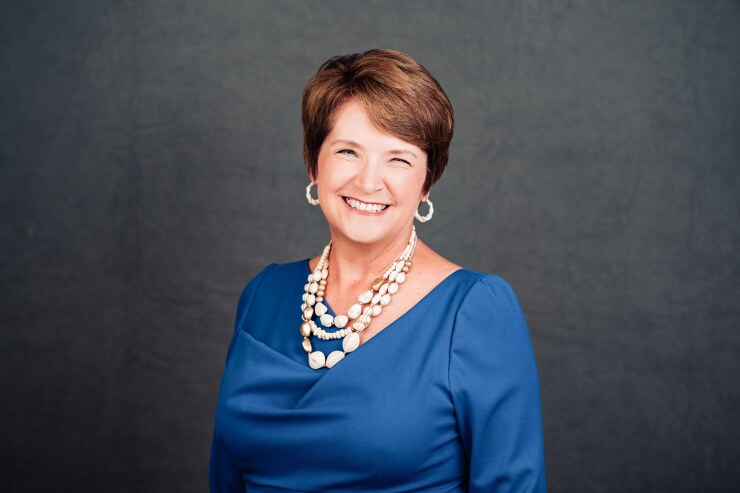
“I believe it goes way beyond that and requires two skills many advisors are not very well versed on,” Clements Evans said. “The first is behavioral finance. Both the parents and the child are facing very emotional money decisions. This requires training for the FA to lead these discussions and navigate them to a good solution. The other skill is having an extensive knowledge of estate planning, including wills, trusts and probate laws.”
So it’s no wonder that advisors view the great wealth transfer “as a moment of significant growth opportunity, but also heightened business risk if transitions aren’t managed effectively,” according to the report.
And the state of planning today for those transitions in the not-too-distant future suggests that “families are unprepared, advisors are under-resourced and the current model is misaligned with client needs,” it said. The report outlined “four strategic imperatives” for advisors:
Nudge clients to immediately discuss wealth transfers with their families; Adapt digital estate planning tools into their businesses, Build educational guidance, rather than product pitches, for clients who want to transfer wealth; and Boost “facilitation, empathy and structured conversations” across their customer base.
“One thing I’d want advisors to hear is that this report isn’t just a warning; it’s a road map for where your advice is most needed right now,” Gura said. “The report keeps validating what we hear from every institution we work with: Families want help, advisors want to provide it, and what’s been missing is the infrastructure to connect the two, before, during and after the moments that matter most.”