No Result
View All Result
  • Login
Tuesday, July 14, 2026
theadvisertimes.com
  • Home
  • Business
  • Financial Planning
  • Personal Finance
  • Investing
  • Money
  • Economy
  • Markets
  • Stocks
  • Trading
  • Home
  • Business
  • Financial Planning
  • Personal Finance
  • Investing
  • Money
  • Economy
  • Markets
  • Stocks
  • Trading
No Result
View All Result
theadvisertimes.com
No Result
View All Result
Home Startups

7 things lower-middle-class people say about rich people that reveal a very specific kind of resentment

by theadvisertimes.com
6 months ago
in Startups
Reading Time: 5 mins read
A A
0
7 things lower-middle-class people say about rich people that reveal a very specific kind of resentment
Share on FacebookShare on TwitterShare on LInkedIn


“They don’t deserve it. They probably inherited it or got lucky.”

I overheard this at a pub last week, and it stopped me cold. Not because I hadn’t heard it before, but because I recognized the exact tone from my childhood. Growing up outside Manchester, these phrases were the soundtrack to every family gathering whenever someone local had made it big.

Now, after years of studying political narratives and how we talk about wealth and class, I’ve noticed something fascinating. The things we say about rich people often reveal more about our own relationship with money and opportunity than about the wealthy themselves.

What strikes me most isn’t the criticism itself. It’s the specific kind of resentment that runs underneath certain phrases. Not all criticism of wealth inequality is resentment, of course. Much of it is legitimate frustration with genuine unfairness. But there’s a particular flavor of bitterness that keeps people stuck, focusing their energy on tearing others down rather than building themselves up.

Here are seven things I’ve heard repeatedly that reveal this pattern.

1. “They’re not actually smart, just lucky”

This one hits close to home. When I was the first in my family to go to university, I watched relatives dismiss successful people as “just lucky” constantly. The implication? Intelligence and hard work don’t really matter.

Sure, luck plays a role in success. Being born into the right circumstances, meeting the right people, timing. All of these matter. But this phrase often becomes a blanket statement that erases any possibility of earned success.

What’s revealing here is how it protects us from uncomfortable questions. If success is purely luck, then we don’t have to examine our own choices, habits, or missed opportunities. We don’t have to wonder if we could have worked differently, not just harder.

The resentment shows in the absolute nature of the statement. Not “luck helped them” but “they’re JUST lucky.” It’s a way of making their success completely unrelated to any positive qualities they might have.

2. “Money changes people”

I’ve noticed this gets said most often about people we actually know who’ve become successful. A cousin who started a business. A school friend who made partner at their firm.

Sometimes money does reveal character flaws that were always there. But often what’s really happening is that success creates distance from old social circles, and that distance gets interpreted as betrayal.

When someone from your background succeeds, they become a walking reminder of roads not taken. The resentment isn’t really about them changing. It’s about them proving that change was possible all along.

3. “Rich people don’t understand real struggle”

Growing up, this was gospel in my neighborhood. And there’s truth to it. Many wealthy people genuinely don’t understand what it’s like to choose between heating and eating.

But here’s what I’ve learned since moving to London and navigating circles where everyone seemed to know each other from school: using this phrase as a weapon keeps us trapped in our own struggles.

I once worked with someone who’d grown up wealthy but had severe depression. When he opened up about it, a colleague dismissed him with “must be nice when that’s your biggest problem.” That’s when I realized this phrase can become a way of competing for who suffers most, rather than recognizing that different types of struggle exist.

The specific resentment here is in the gatekeeping of authenticity. Only our struggles are “real.” It’s a way of claiming moral superiority through suffering.

4. “They’re all tax dodgers”

My father, who worked in a factory and got involved in the union, taught me about how tax systems can favor the wealthy. There are genuine issues with tax avoidance and loopholes that need addressing.

But I’ve noticed this phrase often gets applied universally, as if every person with money is actively scheming to avoid their responsibilities. It becomes less about systemic reform and more about painting all wealthy people with the same criminal brush.

The resentment reveals itself in the satisfaction people seem to take in this accusation. It’s not said with sadness about inequality. It’s said with a kind of glee, as if we’ve caught them all red-handed.

5. “It’s easy when you have money”

Of course it’s easier to take risks when you have a safety net. Of course it’s easier to start a business when you’re not worried about next month’s rent.

But I’ve watched this truth morph into something else entirely. It becomes a way of dismissing any effort or decision-making by wealthy people. Every success gets attributed to the money, never to the person.

The specific resentment here is in the word “easy.” Not “easier,” but “easy.” As if having resources removes all challenge, all possibility of failure, all need for good judgment.

6. “They look down on people like us”

Sometimes they do. I’ve been in rooms where I felt the condescension like a physical weight. Class prejudice is real, and it flows in multiple directions.

But I’ve also noticed how often this gets assumed without evidence. It becomes a preemptive strike, rejecting them before they can reject us.

The resentment here is defensive, building walls before anyone can hurt us. It’s understandable, but it also keeps us isolated from opportunities and connections that might actually help.

7. “The system is rigged for them”

This is perhaps the most complex one because it contains substantial truth. The system does favor those with capital. Networks matter. Inheritance matters. Access matters.

But when this becomes the only lens through which we see success, it breeds a specific kind of hopelessness. If the system is completely rigged, why try? Why save? Why take any risk at all?

I’ve mentioned this before but the danger isn’t in recognizing systemic inequality. It’s in using that recognition as an excuse for complete disengagement.

The bottom line

Writing this feels risky. I can already hear the accusations: “You’re defending the rich!” “You’ve forgotten where you came from!”

But that’s exactly the point. These phrases often shut down nuanced conversation about class, success, and inequality. They turn complex issues into simple us-versus-them narratives.

The specific resentment I’m talking about isn’t about wanting fairness or calling out genuine problems. It’s the kind that keeps us focused on what others have rather than what we might build. It’s the kind that makes their success feel like our failure.

Real change requires examining systems of inequality AND taking whatever agency we do have seriously. It means fighting for fairness while also refusing to let resentment become our defining emotion.

Because here’s what I’ve learned: that specific kind of resentment doesn’t hurt the rich. They don’t even know it exists most of the time. It only hurts us, keeping us trapped in patterns of thinking that confirm our worst fears about how the world works.

What would happen if we channeled that energy differently? Not into defending inequality or accepting unfairness, but into something more constructive than bitter resignation?

That’s the question worth asking.


Source link

Tags: KindlowermiddleclasspeopleResentmentRevealRichspecific
ShareTweetShare
Previous Post

After months of slowdown, consumer demand rebounds in Oct–Dec on GST cuts, softer inflation

Next Post

Microsoft’s Satya Nadella Makes Microslop a Trending Term

Related Posts

Sperm whales dive to depths of nearly 2,250 metres on a single breath, their heads packed with a waxy oil called spermaceti that solidifies under cold pressure and helps them sink like a stone toward prey they hunt in total darkness

Sperm whales dive to depths of nearly 2,250 metres on a single breath, their heads packed with a waxy oil called spermaceti that solidifies under cold pressure and helps them sink like a stone toward prey they hunt in total darkness

by theadvisertimes.com
July 13, 2026
0

A sperm whale can hold its breath for over an hour and drop nearly 2,250 metres below the surface —...

The Weekly Notable Startup Funding Report: 7/13/26 – AlleyWatch

The Weekly Notable Startup Funding Report: 7/13/26 – AlleyWatch

by theadvisertimes.com
July 13, 2026
0

The Weekly Notable Startup Funding Report takes us on a trip across various ecosystems in the US, highlighting some of...

We tend to think detachment means becoming cold or disengaged, but occupational psychology uses the word differently: research finds that mentally switching off from work during your free time is associated with less exhaustion, fewer sleep problems and greater life satisfaction

We tend to think detachment means becoming cold or disengaged, but occupational psychology uses the word differently: research finds that mentally switching off from work during your free time is associated with less exhaustion, fewer sleep problems and greater life satisfaction

by theadvisertimes.com
July 12, 2026
0

Detachment has a chilly reputation. In ordinary conversation, it can sound like emotional distance, cynicism or a slow retreat from...

We’re taught that failure is the price of ambition, but psychologists studying explanatory style found that what happens after a setback depends partly on the story a person tells themselves about it: those who see failure as permanent and personal are more likely to become helpless, while those who treat it as temporary and specific are more likely to keep going.

We’re taught that failure is the price of ambition, but psychologists studying explanatory style found that what happens after a setback depends partly on the story a person tells themselves about it: those who see failure as permanent and personal are more likely to become helpless, while those who treat it as temporary and specific are more likely to keep going.

by theadvisertimes.com
July 12, 2026
0

Ambition has a standard story about failure. You take the hit, learn the lesson, and keep moving. It is clean,...

The American dream can be put in a number, and that number has halved: 9 in 10 children born in 1940 grew up to out-earn their parents; for those born in the 1980s it is now about 1 in 2 — barely a coin toss

The American dream can be put in a number, and that number has halved: 9 in 10 children born in 1940 grew up to out-earn their parents; for those born in the 1980s it is now about 1 in 2 — barely a coin toss

by theadvisertimes.com
July 11, 2026
0

About 90 percent of American children born in 1940 grew up to earn more than their parents did at the...

The Sahel is home to roughly 300 million people on the Sahara’s southern edge — a strip of thin soil and scarce rain where a single failed harvest becomes a crisis with no safety net

The Sahel is home to roughly 300 million people on the Sahara’s southern edge — a strip of thin soil and scarce rain where a single failed harvest becomes a crisis with no safety net

by theadvisertimes.com
July 11, 2026
0

The Sahel runs across Africa like a bruise between the Sahara and the savanna, a semi-arid belt stretching from Senegal...

Next Post
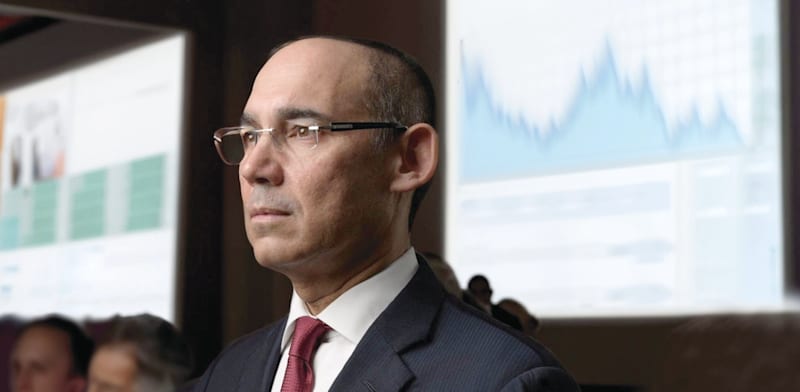
BoI Governor slams gov’t efforts to reduce cost of living

BoI Governor slams gov’t efforts to reduce cost of living

Why the Mexican Peso Could Keep Crushing the U.S. Dollar in 2026

Why the Mexican Peso Could Keep Crushing the U.S. Dollar in 2026

  • Trending
  • Comments
  • Latest
Should You Offer a Concession to Get Your Apartment Leased Faster?

Should You Offer a Concession to Get Your Apartment Leased Faster?

June 15, 2026
How I Maximize My Sapphire Reserve Dining Credit

How I Maximize My Sapphire Reserve Dining Credit

July 10, 2026
Fourth of July 2026 Freebies and Deals

Fourth of July 2026 Freebies and Deals

July 3, 2026
5 things financial therapists want every advisor to know

5 things financial therapists want every advisor to know

June 26, 2026
The 10 Largest NYC Tech Startup Funding Rounds of June 2026 – AlleyWatch

The 10 Largest NYC Tech Startup Funding Rounds of June 2026 – AlleyWatch

July 6, 2026
Prime Day, June 2026: How Retailers Competed With Amazon

Prime Day, June 2026: How Retailers Competed With Amazon

June 29, 2026
Halliburton to deliver drilling services at Suriname’s GranMorgu field

Halliburton to deliver drilling services at Suriname’s GranMorgu field

0
Bank earnings: JPMorgan Chase, Goldman Sachs, Bank of America

Bank earnings: JPMorgan Chase, Goldman Sachs, Bank of America

0
Vijay Kedia’s new smallcap bet revealed; FIIs raise stake, stock up 15% in one month

Vijay Kedia’s new smallcap bet revealed; FIIs raise stake, stock up 15% in one month

0
Crypto exchanges are becoming the new distribution channel for Wall Street assets

Crypto exchanges are becoming the new distribution channel for Wall Street assets

0
These Recalled Bed Rails May Still Be in Homes After Two Reported Deaths

These Recalled Bed Rails May Still Be in Homes After Two Reported Deaths

0
The Nationalization of Credit? | Mises Institute

The Nationalization of Credit? | Mises Institute

0
Halliburton to deliver drilling services at Suriname’s GranMorgu field

Halliburton to deliver drilling services at Suriname’s GranMorgu field

July 14, 2026
Bank earnings: JPMorgan Chase, Goldman Sachs, Bank of America

Bank earnings: JPMorgan Chase, Goldman Sachs, Bank of America

July 14, 2026
9 Stocks With Strong Rebound Potential in the Second Half of 2026

9 Stocks With Strong Rebound Potential in the Second Half of 2026

July 14, 2026
WISeKey sees 115% H1 revenue growth, maintains FY guidance (WKEY:NASDAQ)

WISeKey sees 115% H1 revenue growth, maintains FY guidance (WKEY:NASDAQ)

July 14, 2026
How Adobe’s CMO is preparing for AI-driven brand discovery

How Adobe’s CMO is preparing for AI-driven brand discovery

July 14, 2026
Vijay Kedia’s new smallcap bet revealed; FIIs raise stake, stock up 15% in one month

Vijay Kedia’s new smallcap bet revealed; FIIs raise stake, stock up 15% in one month

July 14, 2026
theadvisertimes.com

Get the latest news and follow the coverage of Business & Financial News, Stock Market Updates, Analysis, and more from the trusted sources.

CATEGORIES

  • Business
  • Cryptocurrency
  • Economy
  • Financial Planning
  • Investing
  • Market Analysis
  • Markets
  • Money
  • Personal Finance
  • Startups
  • Stock Market
  • Trading

LATEST UPDATES

  • Halliburton to deliver drilling services at Suriname’s GranMorgu field
  • Bank earnings: JPMorgan Chase, Goldman Sachs, Bank of America
  • 9 Stocks With Strong Rebound Potential in the Second Half of 2026
  • Our Great Privacy Policy
  • Terms of Use, Legal Notices & Disclosures
  • About Us
  • Contact Us

© Copyright 2024 All Rights Reserved
See articles for original source and related links to external sites.

Welcome Back!

Login to your account below

Forgotten Password?

Retrieve your password

Please enter your username or email address to reset your password.

Log In
No Result
View All Result
  • Home
  • Business
  • Financial Planning
  • Personal Finance
  • Investing
  • Money
  • Economy
  • Markets
  • Stocks
  • Trading

© Copyright 2024 All Rights Reserved
See articles for original source and related links to external sites.