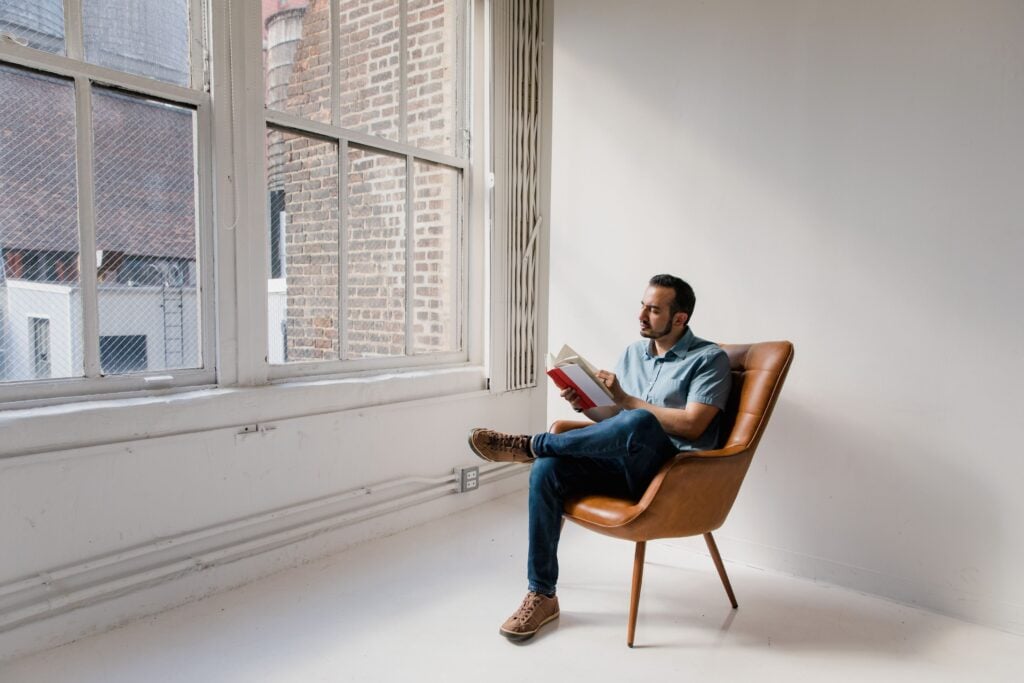
The assumption that introverts are the ones who genuinely enjoy time alone, while everyone else merely tolerates it, is common enough to go unquestioned. A 2022 study in PLOS ONE, led by the psychologist Thuy-vy Nguyen with Richard Ryan, one of the co-creators of self-determination theory, tested that assumption directly and found no evidence for it at all.
Across two separate diary studies, university students completed personality measures and then reported daily on their experiences of time spent alone over a full week. The researchers were careful to separate two things that get treated as the same trait in casual conversation: preference for solitude, simply wanting time to oneself over other people’s company, and self-determined motivation for solitude, actually finding time alone enjoyable and personally meaningful. Introversion, measured using the standard Big Five personality framework, predicted neither one. People who scored higher on introversion were not more likely to say they preferred being alone, and they were not more likely to say they found it enjoyable.
This is one pair of linked studies, conducted with university students specifically, and it does not settle every question about who ends up alone or why. But the design, tracking real daily experiences over a full week rather than asking people to guess at their own general preferences in a single survey, makes the null result for introversion considerably harder to dismiss as a fluke.
The trait that actually predicted enjoying solitude
What did predict self-determined motivation for solitude was something else entirely: dispositional autonomy, a concept from self-determination theory describing a general tendency to act from a sense of internal congruence and genuine interest rather than from external pressure or internal compulsion. People higher in this trait consistently reported finding their alone time more enjoyable and meaningful, across both studies. Notably, dispositional autonomy was unrelated to simple preference for solitude. It specifically predicted whether time alone felt good, not whether someone wanted more of it in the first place.
That distinction reframes what “enjoying solitude” actually depends on. It is not primarily a matter of introversion versus extraversion, sociability versus shyness, or any of the trait categories usually invoked to explain why some people seek out time alone. It is closer to a question of whether someone can be alone by genuine choice and interest, rather than out of habit, avoidance, or a felt obligation to withdraw.
What “dispositional autonomy” actually means
The concept comes from self-determination theory, a framework Richard Ryan helped establish decades ago alongside Edward Deci, which distinguishes between behavior that is autonomously regulated, done because it genuinely reflects a person’s interests and values, and behavior that is controlled, done because of external pressure, guilt, or a sense of obligation. Dispositional autonomy is the more general, trait-like version of this: some people tend to approach most of their choices, across many areas of life, from that internally congruent place more consistently than others. The 2022 study’s finding is that this general tendency, not a specific fondness for people or a specific aversion to them, is what predicted whether solitude actually felt good. Someone high in dispositional autonomy who chooses to spend an evening alone is drawing on the same underlying capacity they would use choosing anything else for genuinely self-endorsed reasons, rather than tapping into some separate, solitude-specific trait.
Why this matters for how remote and solo-focused work gets designed
This has a direct, practical implication for anyone building tools, schedules, or workplace norms around solo, focused work, an increasingly large share of knowledge work generally. The instinct to route naturally quiet, introverted-seeming employees toward solitary work and assume they will thrive there is not supported by what this research actually measured. Whether solo time is experienced as restorative appears to depend less on a personality label and more on whether the person has real autonomy over how and why they are working alone, choosing the solitude rather than having it assigned to them by default.
A schedule that forces heads-down solo work onto someone, introverted or not, without giving them a felt sense of choice over it, is not obviously going to produce the calm, focused experience the “introverts love working alone” assumption implies. The research points toward autonomy over the structure of solitary time, not personality type, as the more relevant lever. That distinction has a fairly direct design implication: a policy that lets an employee decide when and how their focused solo blocks happen is targeting the trait this research actually identified as predictive of enjoyment, while a fixed, mandated quiet-hours policy applied uniformly is not, regardless of how many introverts happen to be on the team.
What this does not prove
The sample in both studies was university students, a group that differs from a general working population in age, life stage, and daily obligations, and it is not yet established how far this pattern extends to older adults or to people in full-time employment specifically. The study also measured self-reported experiences of solitude over one week, not long-term wellbeing outcomes, and it cannot say whether high dispositional autonomy causes greater enjoyment of solitude or simply tends to occur alongside it. What the research does establish, across two separately conducted studies using a week of real daily data rather than a single retrospective guess, is that the common assumption linking introversion to a genuine love of solitude does not hold up, and that a different, less discussed trait accounts for the pattern far better.
It is also worth noting this is not the only relevant finding in this area, and the broader literature is not fully settled. Other day-to-day diary research the same paper discusses has found that people higher in extraversion tend to report more positive affect generally, both while interacting with others and while alone, which is a different question than what specifically makes solitude itself feel rewarding rather than merely neutral. The 2022 study’s contribution is narrower and more specific: among the traits it directly tested, introversion did not predict who finds solitude enjoyable, and dispositional autonomy did.