No Result
View All Result
  • Login
Thursday, August 6, 2026
theadvisertimes.com
  • Home
  • Business
  • Financial Planning
  • Personal Finance
  • Investing
  • Money
  • Economy
  • Markets
  • Stocks
  • Trading
  • Home
  • Business
  • Financial Planning
  • Personal Finance
  • Investing
  • Money
  • Economy
  • Markets
  • Stocks
  • Trading
No Result
View All Result
theadvisertimes.com
No Result
View All Result
Home Startups

A two-year-old robotics startup with about thirty million dollars in revenue was just valued at more than fourteen billion, which is the clearest sign yet that the AI money has decided robots are next and that reliability can come later

by theadvisertimes.com
1 month ago
in Startups
Reading Time: 4 mins read
A A
0
A two-year-old robotics startup with about thirty million dollars in revenue was just valued at more than fourteen billion, which is the clearest sign yet that the AI money has decided robots are next and that reliability can come later
Share on FacebookShare on TwitterShare on LInkedIn


Here is the rewritten reliability is a hardware problem, when in fact the unsolved part is autonomy in a world the engineers do not control. The Skild AI round makes the point unusually cleanly. A two-year-old company with around 30 million dollars in revenue has just been valued at more than 14 billion. That is several hundred times sales for a product that, in the strict sense, does not yet exist as a shipping thing.

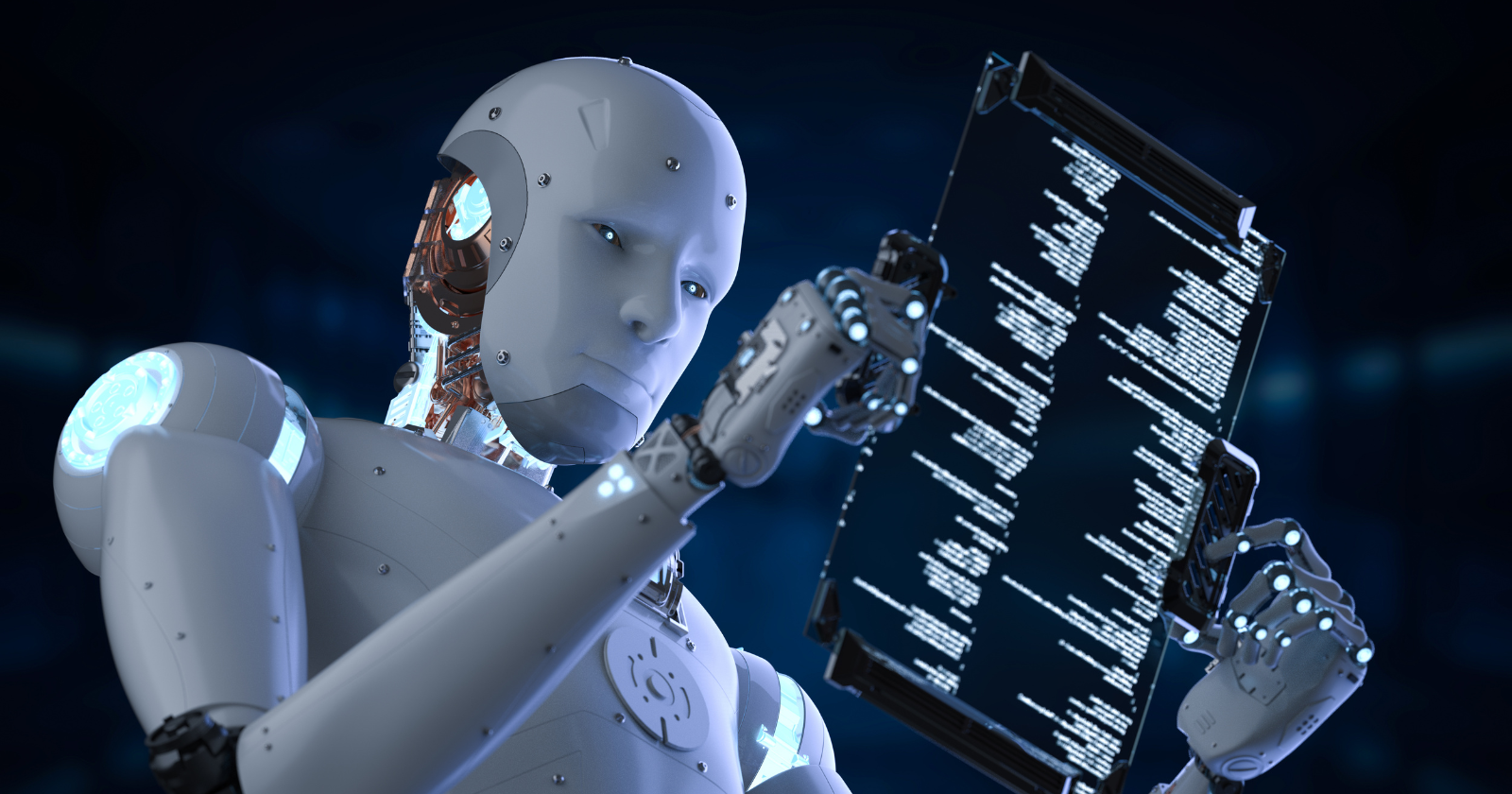
In January 2026, the Pittsburgh company, founded in 2023, raised close to 1.4 billion dollars in a round led by SoftBank, lifting its valuation past 14 billion. Skild is not building a robot. It is building what it calls the Skild Brain, a single artificial intelligence meant to control almost any robot, and it told reporters it had grown from nothing to roughly 30 million dollars in revenue during 2025. The interesting figure here is not the cheque. It is what the people writing it have decided to believe.

What they have bought into is a thesis the industry now calls physical AI. The idea is to do for robots what large language models did for text: instead of programming a machine task by task, you pretrain one general model on enormous amounts of data and then adapt it to particular jobs. Sergey Levine, co-founder of the San Francisco lab Physical Intelligence, has described the goal plainly as ChatGPT, but for robots, and the money has followed the analogy hard. That same lab’s valuation reportedly moved from 5.6 billion dollars to around 11 billion in roughly four months. Humanoid makers like Figure and 1X are raising at similar scale, and Nvidia, Google DeepMind and Tesla are all pushing into the same territory. The shared premise is that the bottleneck in robotics is no longer the hardware but the intelligence, and that whoever builds the brain will own the platform every robot runs on.

The premise runs into its first hard problem almost immediately, and it is one the companies do not hide. Language models had the internet, a near-bottomless corpus of human text to learn from. There is no equivalent internet of robot movement, so the data simply does not exist at the scale the method wants. The workarounds are ingenious. Skild trains partly by watching videos of humans and partly inside physics simulations. But a clip of a person pouring coffee is not the same as the friction, weight and small failures a machine encounters when it tries the same thing, and simulations only approximate the messiness of a real room. The data that matters most for a robot in your kitchen is precisely the data nobody has collected yet.

The second problem is the one worth slowing down on, because it is where the field’s confidence and its evidence come apart. Physical AI is sold largely through demonstration videos, and several of the most striking ones have turned out to be less than they appeared. When 1X showed its NEO humanoid doing housework, much of the footage was later acknowledged to have been teleoperated, a human steering the robot from behind the camera rather than the machine acting on its own. A separate clip tied to a Google DeepMind partner was eventually admitted to be computer-generated entirely. The honest distinction here is the old one between a demo and a shipping product, and robotics has a notorious last stretch: getting from an impressive controlled demonstration to something that works reliably in a stranger’s home is the part that has stalled well-funded pioneers before. As things stand there are almost no independent reviews of these robots working autonomously in ordinary households, and the ratio of human teleoperation to genuine autonomy in early deployments is mostly unquantified.

None of this means the promise is empty, and it is worth saying so clearly. Some demonstrations do run genuinely on the robot’s own hardware, such as Nvidia’s GR00T model controlling a humanoid prototype at its developer conference. The underlying research is advancing at real speed. And the demand is concrete rather than imagined: manufacturers and logistics firms facing labour shortages would happily put a capable machine on the dull, heavy or hazardous jobs people increasingly will not do. The bet could pay off. The trouble is that “could pay off” is being priced as though it already has. Wall Street banks have floated addressable-market figures running into the tens of trillions of dollars, and the valuations now assume that the single hardest unsolved problem in the field, reliable autonomy in an unpredictable world, is essentially a matter of scaling up what already works.

Robotics has taught this lesson before. It is a long game, and impatient money has a poor record in it. The cautionary case making the rounds among practitioners is Sanctuary, a company whose backers reportedly pushed out a level-headed chief executive when the returns did not arrive on a venture-capital timetable. The risk in the current wave is not that robots will never work. It is the mismatch between capital moving at software speed and progress bound by physics. A model that adapts smoothly in a lab can still fail on the thousandth edge case of a real house, and the cost of a robot’s mistake, a dropped knife or a fall near a child, is not the same as a wrong word in a chat window.

So here is the question worth putting to anyone reading this from a European desk. The companies setting the pace in physical AI are almost all American or Chinese. If this does turn into the next computing platform, on what plausible path does Europe end up anywhere other than as a customer? What has actually been proven in early 2026 is not that the robots work. It is that the money believes they will. Are you willing to wait and see which of those two turns out to matter more, or to admit that, by the time it is obvious, the decision has already been made somewhere else?




Source link

Tags: BillionclearestDecidedDollarsfourteenMillionMoneyReliabilityRevenueroboticsRobotsSignStartupTwoyearoldvalued
ShareTweetShare
Previous Post

Hearing Aids Linked to 33% Lower Dementia Risk—Why Early Prescription Matters

Next Post

Maryland’s ‘Longevity Ready’ Law Creates a Blueprint for 100-Year Lives—What Other States Can Learn

Related Posts

Why Transparency Wins Long-Term in Business: The Competitive Advantage Most Companies Ignore

Why Transparency Wins Long-Term in Business: The Competitive Advantage Most Companies Ignore

by theadvisertimes.com
August 5, 2026
0

When people talk about business growth, the conversation usually centers around the visible levers that naturally attract attention, such as...

The Dunning-Kruger effect isn’t what everyone thinks it is: the original 1999 study found bottom-quartile performers overestimated their standing by about 50 percentile points, not that confident people are stupid

The Dunning-Kruger effect isn’t what everyone thinks it is: the original 1999 study found bottom-quartile performers overestimated their standing by about 50 percentile points, not that confident people are stupid

by theadvisertimes.com
August 5, 2026
0

The Dunning-Kruger effect may be the most misused finding in pop psychology, and the way people misuse it often says...

The AlleyWatch July 2026 New York Venture Capital Funding Report – AlleyWatch

The AlleyWatch July 2026 New York Venture Capital Funding Report – AlleyWatch

by theadvisertimes.com
August 4, 2026
0

New York City startups raised $1.81B across 53 deals in July 2026, a purposeful step down from June’s exceptional $3.90B...

The men who consume the most information — podcasts queued, newsletters unread, tabs left open for weeks — are often the ones who have quietly stopped asking whether any of it is changing how they think

The men who consume the most information — podcasts queued, newsletters unread, tabs left open for weeks — are often the ones who have quietly stopped asking whether any of it is changing how they think

by theadvisertimes.com
August 4, 2026
0

I know a guy with eleven podcast episodes queued, forty-something newsletters sitting unread, and a browser with so many tabs...

The Value Creation Engine: How Growth Equity Firms Turn Strategy Into Results

The Value Creation Engine: How Growth Equity Firms Turn Strategy Into Results

by theadvisertimes.com
August 3, 2026
0

You know the pattern. The value creation plan is sharp, the management team agrees, and the initiatives get owners, milestones,...

The idea that Gen Z is lazy misreads the data: full-time workers aged 20 to 24 averaged 40.5 hours a week, and visible enthusiasm is not the same as effort

The idea that Gen Z is lazy misreads the data: full-time workers aged 20 to 24 averaged 40.5 hours a week, and visible enthusiasm is not the same as effort

by theadvisertimes.com
August 3, 2026
0

The 74% figure is real, but it does not mean what the lazy-Gen-Z argument needs it to mean. ResumeBuilder reported...

Next Post
Maryland’s ‘Longevity Ready’ Law Creates a Blueprint for 100-Year Lives—What Other States Can Learn

Maryland’s ‘Longevity Ready’ Law Creates a Blueprint for 100-Year Lives—What Other States Can Learn

US aircraft attack Iran after drone strike on cargo ship that Tehran called ‘ceasefire management’

US aircraft attack Iran after drone strike on cargo ship that Tehran called 'ceasefire management'

  • Trending
  • Comments
  • Latest
SEC pushes private market access, but retail is already in

SEC pushes private market access, but retail is already in

July 16, 2026
How I Maximize My Sapphire Reserve Dining Credit

How I Maximize My Sapphire Reserve Dining Credit

July 10, 2026
The Weekly Notable Startup Funding Report: 6/22/26 – AlleyWatch

The Weekly Notable Startup Funding Report: 6/22/26 – AlleyWatch

June 21, 2026
The 10 Largest NYC Tech Startup Funding Rounds of June 2026 – AlleyWatch

The 10 Largest NYC Tech Startup Funding Rounds of June 2026 – AlleyWatch

July 6, 2026
The Weekly Notable Startup Funding Report: 7/20/26 – AlleyWatch

The Weekly Notable Startup Funding Report: 7/20/26 – AlleyWatch

July 20, 2026
The Hidden Cost of Chaos: Challenges with Spreadsheet-Based Channel Management in 2026

The Hidden Cost of Chaos: Challenges with Spreadsheet-Based Channel Management in 2026

May 6, 2026
A .5B wirehouse team considered independence but jumped to Merrill

A $1.5B wirehouse team considered independence but jumped to Merrill

0
Chart of the Week: The AI Adoption Gap

Chart of the Week: The AI Adoption Gap

0
‘Pure insanity’ — Elon Musk details SpaceX’s plan to turn the moon into a manufacturing site

‘Pure insanity’ — Elon Musk details SpaceX’s plan to turn the moon into a manufacturing site

0
5 Ways to Turn Downtime, Debt and Discounts Into Real Money

5 Ways to Turn Downtime, Debt and Discounts Into Real Money

0
Tucker Carlson lays out his vision for third party.

Tucker Carlson lays out his vision for third party.

0
Human Flourishing and Marginal Utility

Human Flourishing and Marginal Utility

0
Kellogg’s Back to School Snacks Instant Savings: Save  off  Purchase + Deal Scenario!

Kellogg’s Back to School Snacks Instant Savings: Save $10 off $35 Purchase + Deal Scenario!

August 6, 2026
‘Pure insanity’ — Elon Musk details SpaceX’s plan to turn the moon into a manufacturing site

‘Pure insanity’ — Elon Musk details SpaceX’s plan to turn the moon into a manufacturing site

August 6, 2026
Tucker Carlson lays out his vision for third party.

Tucker Carlson lays out his vision for third party.

August 6, 2026
Crypto dark pools make institutional trades harder to read

Crypto dark pools make institutional trades harder to read

August 6, 2026
5 Ways to Turn Downtime, Debt and Discounts Into Real Money

5 Ways to Turn Downtime, Debt and Discounts Into Real Money

August 6, 2026
Chart of the Week: The AI Adoption Gap

Chart of the Week: The AI Adoption Gap

August 6, 2026
theadvisertimes.com

Get the latest news and follow the coverage of Business & Financial News, Stock Market Updates, Analysis, and more from the trusted sources.

CATEGORIES

  • Business
  • Cryptocurrency
  • Economy
  • Financial Planning
  • Investing
  • Market Analysis
  • Markets
  • Money
  • Personal Finance
  • Startups
  • Stock Market
  • Trading

LATEST UPDATES

  • Kellogg’s Back to School Snacks Instant Savings: Save $10 off $35 Purchase + Deal Scenario!
  • ‘Pure insanity’ — Elon Musk details SpaceX’s plan to turn the moon into a manufacturing site
  • Tucker Carlson lays out his vision for third party.
  • Our Great Privacy Policy
  • Terms of Use, Legal Notices & Disclosures
  • About Us
  • Contact Us

© Copyright 2024 All Rights Reserved
See articles for original source and related links to external sites.

Welcome Back!

Login to your account below

Forgotten Password?

Retrieve your password

Please enter your username or email address to reset your password.

Log In
No Result
View All Result
  • Home
  • Business
  • Financial Planning
  • Personal Finance
  • Investing
  • Money
  • Economy
  • Markets
  • Stocks
  • Trading

© Copyright 2024 All Rights Reserved
See articles for original source and related links to external sites.