The person at the dinner table who shrugs and says they don’t mind and defers the choice to others is rarely the laid-back saint they’re being credited as being. They’re often someone who learned, very early, that having a preference came with a cost they couldn’t pay.
Most people read that shrug as easygoingness. A gift to the group. Low maintenance. The conventional read is that some adults just genuinely don’t care about Thai versus Italian, and the rest of us should be more like them.
What I’ve come to think, after watching this pattern in friends, in business partners, and honestly in myself for long stretches, is that a sizeable chunk of these adults aren’t easygoing at all. They’re vigilant. The shrug is the residue of a childhood where stating a preference drew a kind of attention that wasn’t safe to draw.
The shrug is a strategy, not a personality
Children are extraordinary readers of emotional weather. Long before they can name what’s happening in a room, they can feel it in their bodies, and they adjust accordingly.
If a kid grows up in a home where Dad’s mood determines whether dinner is calm or catastrophic, that kid learns very fast that asking for spaghetti instead of what’s on the table is not a neutral act. It’s a request for visibility in a system where visibility is dangerous.
Children in unstable or conflict-heavy homes often internalize the chaos around them as their own responsibility, telling themselves that if they were better, their parents wouldn’t fight. One of the cleanest ways a child can become better in that calculus is to stop needing things. Stop wanting things. Stop having opinions that might tip the room. The shrug, in other words, is a calibrated piece of survival.
What having a preference actually meant
It’s worth being concrete about what “drawing attention you couldn’t afford” looked like, because the phrase can sound abstract.
It looked like a seven-year-old saying she wanted to go to the park, and the resulting argument between her parents lasting the rest of the afternoon. It looked like a ten-year-old asking for a specific birthday cake and being told, sharply, that he was ungrateful. It looked like a teenager picking the movie one Friday night, the family hating it, and that pick becoming a running joke for years.
It also looked, in plenty of homes, like physical consequence. The data on this is grim and specific. Around 56% of US adults still agree that it is sometimes necessary to discipline a child with spanking, and 19 states still permit corporal punishment in public schools. Researchers have linked this kind of punishment to lower executive functioning in children and a higher risk of mental health and substance issues later in life.
You don’t have to have been hit to develop the shrug. But if expressing a preference ever ended in being hit, mocked, ignored, or made to feel selfish, the nervous system files that away. It learns that opinions cost something. It builds a workaround.
Why this gets misread as a virtue
Adult culture rewards the shrug. The friend who never has a strong opinion about the restaurant is often the easiest to plan with. The colleague who is fine with whatever the team decides looks collaborative. The partner who defers on every weekend plan looks generous.
So the adaptation gets reinforced in adulthood by the very people benefiting from it. Nobody is going to push back on the most agreeable person in the room.
This is why it tends to persist for decades without ever being interrogated. A psychotherapist whose short video on the link between adult behaviors and childhood patterns went viral on social media tapped exactly this nerve. People recognize themselves, but they’ve spent so long calling the behavior a personality trait that the recognition feels almost illegal.
The Type C personality nobody names
We hear a lot about Type A (driven, competitive) and Type B (relaxed, flexible). What we hear less about is what some clinicians call a third pattern, characterized by chronic suppression of emotion and preference in the service of keeping the peace.
The person who looks like Type B from the outside (chill, agreeable, hard to ruffle) is sometimes Type C on the inside (suppressing, scanning, deferring). The behaviors look identical. The internal cost is not.
The tell, in my experience, is what happens when you actually pin them down. Ask someone genuinely easygoing where they want to eat and they might suggest two specific options and note that either would work well. Ask someone running the shrug strategy and you get a flicker of panic, a follow-up question asking what you’re in the mood for, and an answer that mirrors yours back.
The genuinely easygoing person has preferences. They’re just light. The other person has gone twenty years without practicing the muscle.
How attachment shapes the muscle
This isn’t just about discipline or volatility. It’s also about whether the small bids a kid makes throughout the day get met or get punished.
A child expresses dislike for a particular food like peas. In one home, the parent accepts this and offers an alternative. In another home, the parent issues an ultimatum about eating what’s served or going to bed hungry. In a third home, the parent erupts. Same bid. Three completely different lessons about whether your inner life is information or a problem.
Research into how parental attachment styles produce distinct child outcomes has found that disorganized parental profiles are linked to harsher discipline and emotional unavailability. Children who develop certain attachment patterns tend to learn that the safest move is to need less, ask less, prefer less.
Years later, those same kids order whatever everyone else is ordering.
The cost most adults don’t see
The cost of the shrug isn’t borne by other people. It’s borne by the shrugger.
If you’ve spent thirty years not registering your own preferences, you don’t actually know what you want. The signal has atrophied. You sit at the restaurant and you genuinely cannot tell whether you’d rather have the pasta or the steak. The information isn’t reaching you because you trained the channel shut.
This is the part that’s hardest to explain to someone who hasn’t lived it. It isn’t that you’re hiding what you want from the table. It’s that you can’t find what you want yourself.
And the small thing (where to eat, what to watch) is never just a small thing. It scales. The same nervous system that won’t pick the restaurant won’t pick the career, won’t push back on the boss, won’t tell the partner what’s actually wrong. Preference is a muscle. If it’s weak at the dinner table, it’s weak everywhere.
The pattern shows up everywhere once you see it
Once you start looking, you’ll notice the shrug has cousins. Silicon Canals has covered several of them: the adult who keeps every receipt and warranty card in a labeled folder, the one who always offers to help but never asks for it, the one who holds affection at arm’s length even when it finally shows up.
They’re all the same architecture. A kid figured out, very young, what behavior would keep them safe in the specific weather of their specific home, and that strategy hardened into adult identity. The receipt-keeper learned paperwork could save you. The over-helper learned usefulness could earn you a place. The shrugger learned preferences could cost you one.
None of these are character flaws. They’re load-bearing walls.
What changes the pattern
The honest answer is that nobody breaks this by being told to break it. Telling someone to just say what they want is a useless instruction for someone whose entire system is wired to scan the room before consulting themselves.
What I’ve watched work, in friends and in my own life, is much smaller and slower. You start with stakes that don’t matter. Coffee instead of tea. The window seat instead of the aisle. You let yourself actually want one thing in a context where being wrong costs nothing, and you practice noticing that no one died.
The nervous system has to relearn that having a preference is not the same as detonating the room. That relearning takes years, not weekends. The body that decided at six that wanting things was dangerous is going to need a long time to be convinced otherwise.
The reframe for the people around them
If someone in your life runs the shrug, the most useful thing you can do is not what most advice columns suggest. Forcing them to choose tends to reactivate the original threat. They’re not learning autonomy in that moment. They’re being put back in the chair where having a preference used to mean trouble.
What helps more is offering a small, specific menu. Not asking an open-ended question about where they want to go, but offering something like Vietnamese or pizza while making clear that either option genuinely works for you. You’re shrinking the surface area of the choice and signaling that both options are genuinely fine. You’re removing the part of the equation their nervous system is trying to solve, which is: which preference will cost me the least.
And when they do pick, you don’t make a big deal of it. You just go. The lesson has to be that preferences don’t trigger anything: not punishment, not praise, not commentary. Just a Tuesday night and a meal.
The deeper claim
The deeper point I’d want anyone reading this to take away is that a lot of what we call personality is actually accommodation. The agreeable friend, the chill partner, the easy colleague. Some of them really are easygoing. Plenty of them are running a strategy they put together when they were eight, in a kitchen we never saw, in a country we don’t know, after a fight they couldn’t stop.
Calling the shrug a virtue is comfortable for everyone except the shrugger. It lets the rest of us off the hook for ever asking what they actually want. It lets them stay invisible in the way they trained themselves to be.
I’ve written before about how saying yes used to mean rearranging my life around someone else’s plan, and how I’m still flinching at a contract nobody is asking me to sign anymore. The shrug is the same shape of problem. The contract was: don’t have needs and the room will stay calm. Most of us are still honoring it long after the room is gone.
The next time someone tells you they don’t have a preference, don’t take it as a gift. Take it as information. They might mean it. They also might be telling you, in the most polite way they know how, that they learned a long time ago not to.

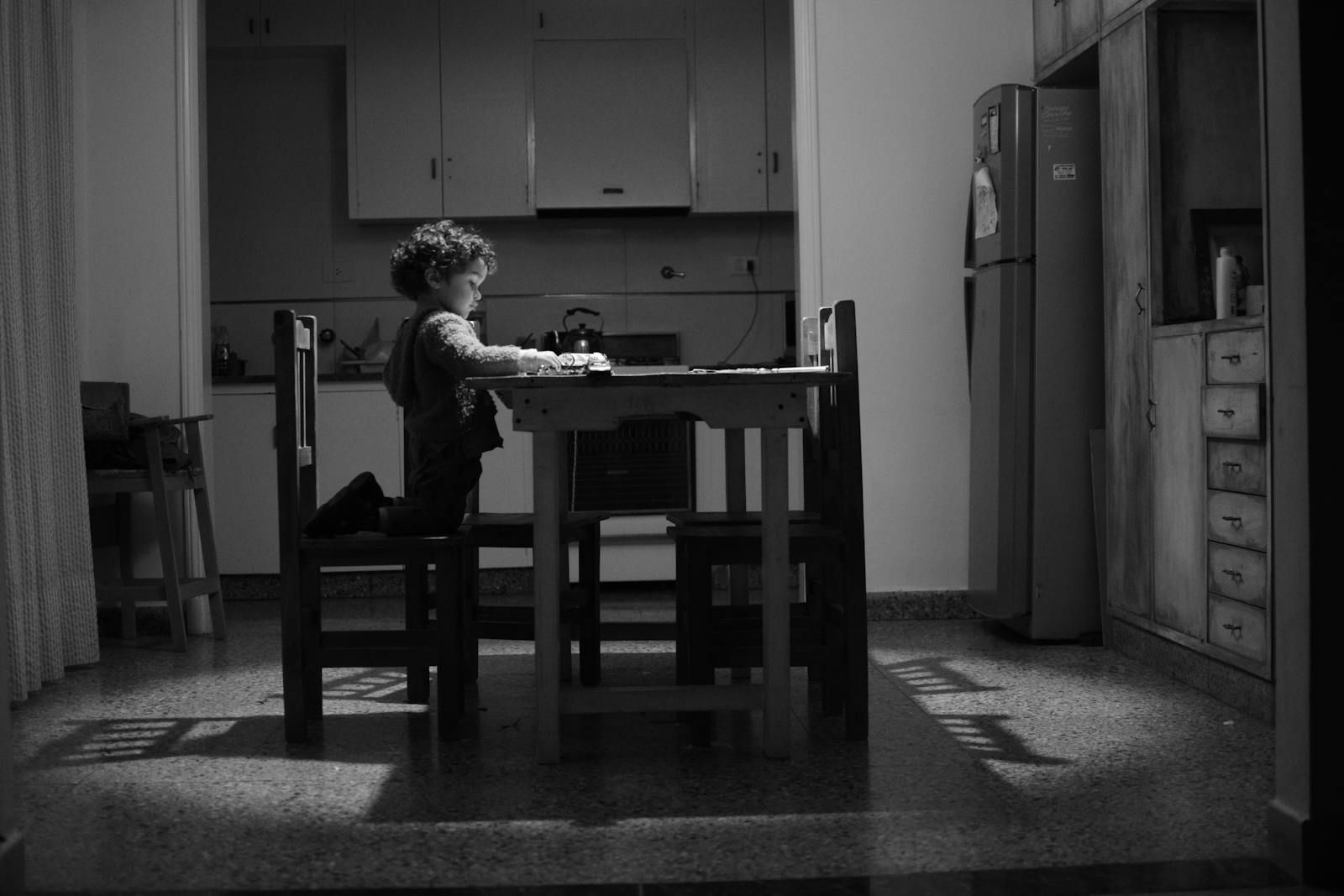
Feature image by Natalia Olivera on Pexels
About this article
This article is for general information and reflection. It is not medical, mental-health, or professional advice. The patterns described draw on published research and editorial observation, not clinical assessment. If you’re dealing with a serious situation, speak with a qualified professional or local support service. Editorial policy →