No Result
View All Result
  • Login
Tuesday, June 23, 2026
theadvisertimes.com
  • Home
  • Business
  • Financial Planning
  • Personal Finance
  • Investing
  • Money
  • Economy
  • Markets
  • Stocks
  • Trading
  • Home
  • Business
  • Financial Planning
  • Personal Finance
  • Investing
  • Money
  • Economy
  • Markets
  • Stocks
  • Trading
No Result
View All Result
theadvisertimes.com
No Result
View All Result
Home Startups

I noticed I have been saying I am tired for ten years when the more accurate word is unwitnessed, and tired was just the version of the truth that nobody would follow up on

by theadvisertimes.com
2 months ago
in Startups
Reading Time: 5 mins read
A A
0
I noticed I have been saying I am tired for ten years when the more accurate word is unwitnessed, and tired was just the version of the truth that nobody would follow up on
Share on FacebookShare on TwitterShare on LInkedIn


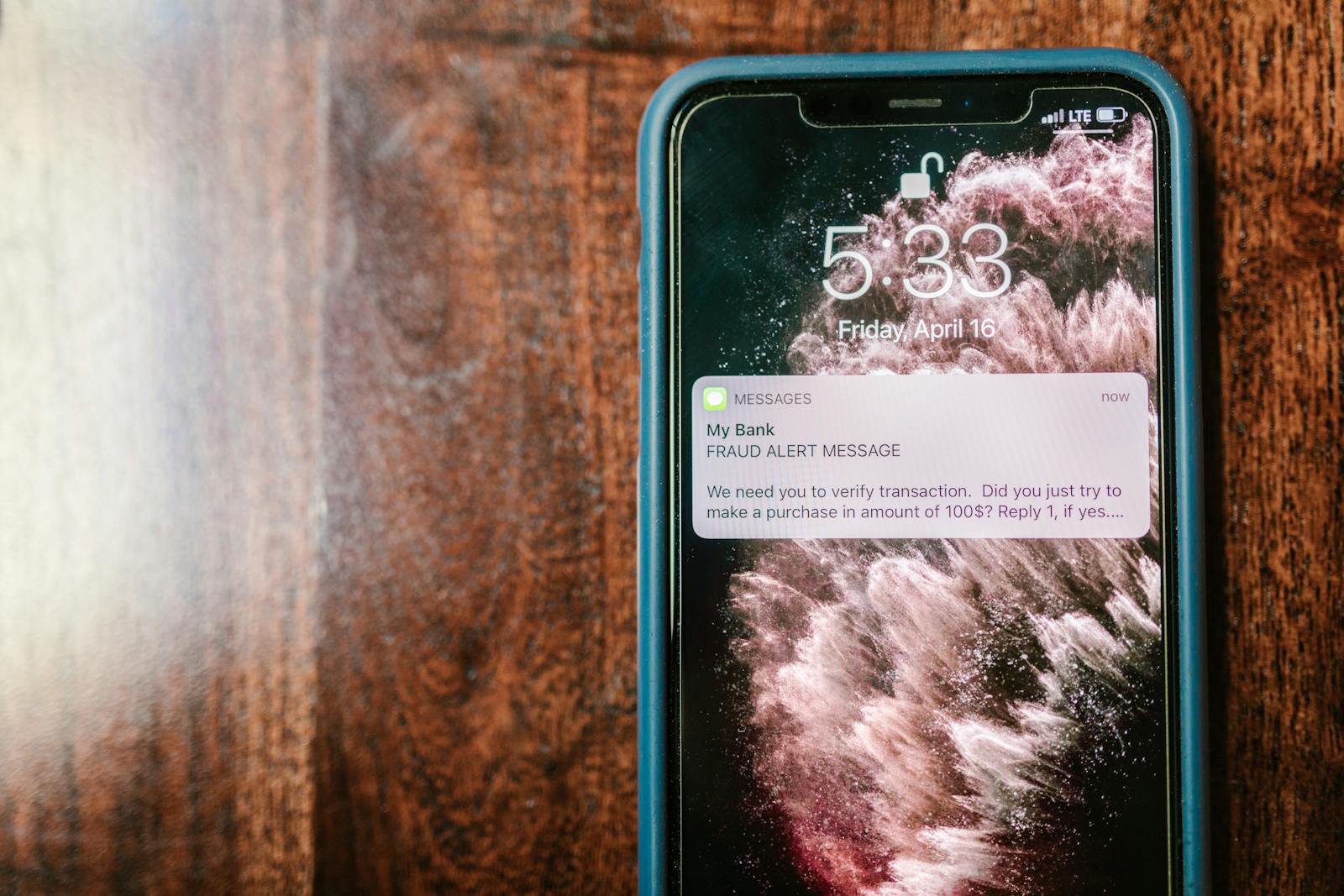
I noticed it on a Wednesday evening, halfway through reheating leftover pasta while my phone lit up with three messages I wasn’t going to answer that night. A friend had asked how I was, and before my thumb had even finished typing, the word was already there: tired. Not exhausted. Not stretched. Just tired. The same word I’d been using since I was 34. The same word I’d typed in different time zones, different apartments, different relationship configurations, different career chapters. Ten years of the same four letters doing the same quiet job.

What struck me wasn’t the repetition. It was the realisation that tired had never actually been the truth. It had been the version of the truth that nobody would follow up on.

Most people, if you ask them why they default to vague language about their inner life, will tell you it’s because they don’t want to burden anyone. That’s the polite explanation. It’s also incomplete. The more honest version is that we choose words that close the conversation rather than open it. Tired is a door that swings shut. Unwitnessed is a door that requires the other person to walk through.

The word I was actually looking for

Unwitnessed isn’t clinical. You won’t find it in the DSM. If I had to define it: unwitnessed is the state of being functional in a life where nobody is tracking the cost of the function. It’s being competent without being seen. It’s getting reliable feedback on your output and almost none on your interior. It’s the specific fatigue of being a person whose external life is going well enough that nobody thinks to check on the inside.

You’re not lonely in the standard sense. You have people. You have group chats. You have a calendar that fills up. What you don’t have is someone who notices the difference between the version of you that showed up and the version of you that’s underneath.

And so you say tired, because tired is a word that gets a sympathetic emoji and nothing else.

Why we pick the word that ends the conversation

Humans across cultures tend to cluster their feeling-words around a small number of central hubs. Work on emotional language has found that emotional vocabulary, even across very different languages, tends to organise itself around a few core anchors. Which means we have an enormous palette available to us, and most of us reach for the same three or four colours.

There’s a reason for that, and it isn’t laziness. It’s social engineering. We learn very early which words invite follow-up and which words don’t. Tired doesn’t. Busy doesn’t. Fine definitely doesn’t. These are protective words. They function the way airline safety cards function. Acknowledged, scanned, immediately forgotten.

Saying the accurate word would require the other person to ask a second question. And most of us, by 44, have learned that asking for a second question is a kind of risk we don’t take casually.

Repression dressed up as composure

One of the more useful frames I’ve found comes from Dr. Andriana Eliadis, an executive coach at Cornell, who writes about the difference between emotional repression and emotional regulation. Her argument is that we keep confusing the two. Composure that comes from suppression looks identical, on the outside, to composure that comes from regulation. But the internal cost is wildly different.

Repression, she writes, leads to chronic stress, disengagement, and passive-aggressive behaviour. Regulation, by contrast, involves accurate labelling, strategic pauses, and a willingness to actually name what you’re feeling rather than translate it into a more palatable substitute.

This is the part that matters. When I said tired, I wasn’t regulating. I was repressing, and the repression was so smooth and so socially well-received that I’d mistaken it for self-management. It wasn’t. It was a habit of substituting an acceptable word for an accurate one, repeated so many times it had become reflex.

It also has a cost the nervous system actually registers. Affect labelling—putting an accurate word on a feeling—appears to reduce activity in the amygdala. Naming what you feel calms the system that produced the feeling. Naming it inaccurately does not. Which means every time I said tired when the truer word was unwitnessed, I wasn’t just protecting the other person from a heavier conversation. I was denying my own nervous system the small relief that comes from being precise. Ten years of small denials. That adds up to something.

What changed when I started using the accurate word

I’m going to be careful here, because I don’t want to suggest that swapping one word for another solved anything. It didn’t. But it did do one thing I wasn’t expecting.

It changed who replied.

When I started occasionally saying the more accurate word to the small number of people I trusted, two things happened. Most people didn’t know what to do with it, which was fine and expected. But a few people, the people who had been quietly waiting for me to say something that wasn’t tired, immediately moved closer. Not dramatically. Just a follow-up question. A specific one. The kind of question you can only ask when the other person has given you something specific to ask about.

That’s the thing nobody warned me about. Tired doesn’t just close the conversation. It sorts your relationships into a default mode where everyone treats you the same. The accurate word is what lets the people who actually want to know you do the thing they’ve been waiting to do.

In my recent piece on people who can’t stop being useful at someone else’s house, I was circling the same territory from a different angle. The patterns we develop to be acceptable in our families of origin become the same patterns that prevent us from being known later. The vocabulary is part of that. Tired is the adult version of I’m fine, don’t worry about me.

Photo by An Date on Pexels

The small experiment I’d suggest

Next time someone asks how you are, and the word tired rises automatically to the front of your mouth, pause for half a second and ask yourself if that’s actually the most accurate word available. Sometimes it is. You might genuinely be tired. But sometimes there’s another word underneath, something more specific: unseen, unmet, over-functioning, unwitnessed, not-checked-on, performing.

You don’t have to say the truer word out loud. You don’t owe anyone your accurate inner weather. But try this for a week: keep a single note on your phone, and every time you catch yourself typing tired, write down the word you would have used if the listener could handle it. Don’t send it. Just record it. After seven days, read the list. That list is the conversation you’ve been having with yourself in a language nobody else gets to hear, and it’s usually the first honest map of what’s actually going on.

Ten years is a long time to use the wrong word about your own life. Forty-four feels like a reasonable age to stop.
window light quiet kitchen
Photo by Dương Nhân on Pexels

Feature image by Alena Darmel on Pexels

About this article

This article is for general information and reflection. It is not medical, mental-health, or professional advice. The patterns described draw on published research and editorial observation, not clinical assessment. If you’re dealing with a serious situation, speak with a qualified professional or local support service. Editorial policy →




Source link

Tags: accurateFollowNoticedTenTiredTruthunwitnessedVersionwordYears
ShareTweetShare
Previous Post

1 Stock to Buy, 1 Stock to Sell This Week: Palantir, Walt Disney

Next Post

I stopped offering my opinion in family group chats six months ago, no commentary, no reactions, no jumping in to smooth things over, just to see who would notice my absence, and the silence taught me something I had been working hard not to know for about twenty years

Related Posts

We give people a few days and expect them back as themselves, when the science of loss says grief takes no days off at all, and the shame around admitting that is its own quiet cruelty

We give people a few days and expect them back as themselves, when the science of loss says grief takes no days off at all, and the shame around admitting that is its own quiet cruelty

by theadvisertimes.com
June 22, 2026
0

The average bereavement policy in Europe gives employees somewhere between three and five days for the death of an immediate...

Psychology suggests that people who fear AI are often not only afraid of the technology itself — they’re afraid of what it threatens to erase: the status, competence, identity, and sense of usefulness they spent years building.

Psychology suggests that people who fear AI are often not only afraid of the technology itself — they’re afraid of what it threatens to erase: the status, competence, identity, and sense of usefulness they spent years building.

by theadvisertimes.com
June 22, 2026
0

In late 2024, the Pew Research Center surveyed more than 5,000 employed Americans and found that 52 per cent were...

The Weekly Notable Startup Funding Report: 6/22/26 – AlleyWatch

The Weekly Notable Startup Funding Report: 6/22/26 – AlleyWatch

by theadvisertimes.com
June 21, 2026
0

The Weekly Notable Startup Funding Report takes us on a trip across various ecosystems in the US, highlighting some of...

McKinsey’s 2025 global AI survey: 88% of organizations now use AI in at least one function, up from 78% — but most are still stuck in pilot mode, and only a minority can point to any real impact on profit

McKinsey’s 2025 global AI survey: 88% of organizations now use AI in at least one function, up from 78% — but most are still stuck in pilot mode, and only a minority can point to any real impact on profit

by theadvisertimes.com
June 21, 2026
0

Two numbers from McKinsey’s 2025 survey sit awkwardly next to each other. The first is 88 percent, the share of...

The oldest known written customer complaint is a 3,750-year-old clay tablet from ancient Ur, where a furious customer named Nanni accused the merchant Ea-nasir of delivering sub-standard copper — proof that bad reviews are almost as old as writing itself

The oldest known written customer complaint is a 3,750-year-old clay tablet from ancient Ur, where a furious customer named Nanni accused the merchant Ea-nasir of delivering sub-standard copper — proof that bad reviews are almost as old as writing itself

by theadvisertimes.com
June 20, 2026
0

In the British Museum’s Mesopotamian collection sits a palm-sized rectangle of baked clay, catalogued as UET V 81. It is...

I asked ChatGPT why reaching every goal still leaves me flat. The answer wasn’t the one I was expecting.

I asked ChatGPT why reaching every goal still leaves me flat. The answer wasn’t the one I was expecting.

by theadvisertimes.com
June 20, 2026
0

I typed it out plainly: “Based on everything you know about me, why does reaching my goals still leave me...

Next Post
I stopped offering my opinion in family group chats six months ago, no commentary, no reactions, no jumping in to smooth things over, just to see who would notice my absence, and the silence taught me something I had been working hard not to know for about twenty years

I stopped offering my opinion in family group chats six months ago, no commentary, no reactions, no jumping in to smooth things over, just to see who would notice my absence, and the silence taught me something I had been working hard not to know for about twenty years

Rent Now, Pay Later? The Housing Affordability Crisis Goes Fintech

Rent Now, Pay Later? The Housing Affordability Crisis Goes Fintech

  • Trending
  • Comments
  • Latest
Should You Offer a Concession to Get Your Apartment Leased Faster?

Should You Offer a Concession to Get Your Apartment Leased Faster?

June 15, 2026
6 Hotels Where Chase’s Points Boost Yields 2.5x

6 Hotels Where Chase’s Points Boost Yields 2.5x

May 22, 2026
Understanding risk remains a major investor blind spot: TIAA Institute

Understanding risk remains a major investor blind spot: TIAA Institute

June 5, 2026
Anthropic’s confidential S-1 signals summer AI IPO race could heat up fast

Anthropic’s confidential S-1 signals summer AI IPO race could heat up fast

June 2, 2026
Memorial Day 2026: Take Advantage of Food Freebies, Deals

Memorial Day 2026: Take Advantage of Food Freebies, Deals

May 23, 2026
9 Best Cheap Cell Phone Plans That Will Save You Money

9 Best Cheap Cell Phone Plans That Will Save You Money

June 3, 2026
Cutsinger’s Solution: Veggies and Noodles

Cutsinger’s Solution: Veggies and Noodles

0
8 Places to Sell Printables Online for Cash

8 Places to Sell Printables Online for Cash

0
Vedanta Power, Oil & Gas, and Iron shares rally up to 5%; Aluminium sheds 3%. Should you buy, sell or hold?

Vedanta Power, Oil & Gas, and Iron shares rally up to 5%; Aluminium sheds 3%. Should you buy, sell or hold?

0
The Board-Lot Reckoning: Access, Liquidity, and Governance

The Board-Lot Reckoning: Access, Liquidity, and Governance

0
EU Committee Advances Digital Euro CBDC Bill After Vote

EU Committee Advances Digital Euro CBDC Bill After Vote

0
Cisco Systems (CSCO): Neues Fundament nach Kurssprung!

Cisco Systems (CSCO): Neues Fundament nach Kurssprung!

0
EU Committee Advances Digital Euro CBDC Bill After Vote

EU Committee Advances Digital Euro CBDC Bill After Vote

June 23, 2026
Roku (ROKU) Has a CTV Operating-System and Ad Platform Bigger Than a Hardware Narrative

Roku (ROKU) Has a CTV Operating-System and Ad Platform Bigger Than a Hardware Narrative

June 23, 2026
Cisco Systems (CSCO): Neues Fundament nach Kurssprung!

Cisco Systems (CSCO): Neues Fundament nach Kurssprung!

June 23, 2026
Gen Z: if you want to succeed at work, you need to start friction-maxxing

Gen Z: if you want to succeed at work, you need to start friction-maxxing

June 23, 2026
266. “I carry the household, the bills, and the stress”

266. “I carry the household, the bills, and the stress”

June 23, 2026
Cutsinger’s Solution: Veggies and Noodles

Cutsinger’s Solution: Veggies and Noodles

June 23, 2026
theadvisertimes.com

Get the latest news and follow the coverage of Business & Financial News, Stock Market Updates, Analysis, and more from the trusted sources.

CATEGORIES

  • Business
  • Cryptocurrency
  • Economy
  • Financial Planning
  • Investing
  • Market Analysis
  • Markets
  • Money
  • Personal Finance
  • Startups
  • Stock Market
  • Trading

LATEST UPDATES

  • EU Committee Advances Digital Euro CBDC Bill After Vote
  • Roku (ROKU) Has a CTV Operating-System and Ad Platform Bigger Than a Hardware Narrative
  • Cisco Systems (CSCO): Neues Fundament nach Kurssprung!
  • Our Great Privacy Policy
  • Terms of Use, Legal Notices & Disclosures
  • About Us
  • Contact Us

© Copyright 2024 All Rights Reserved
See articles for original source and related links to external sites.

Welcome Back!

Login to your account below

Forgotten Password?

Retrieve your password

Please enter your username or email address to reset your password.

Log In
No Result
View All Result
  • Home
  • Business
  • Financial Planning
  • Personal Finance
  • Investing
  • Money
  • Economy
  • Markets
  • Stocks
  • Trading

© Copyright 2024 All Rights Reserved
See articles for original source and related links to external sites.