I’ve written about vulnerability for a living. I’ve quoted Brene Brown. I’ve referenced the research on emotional openness and relationship satisfaction. I’ve told millions of readers that showing your true self is the bravest thing you can do. And for most of my adult life, I had absolutely no idea what any of that actually meant.
I thought I did. I thought vulnerability was what I practiced when I wrote honestly about my struggles with anxiety. When I told an audience that I’d felt lost in my twenties. When I published personal essays about working in a warehouse and feeling like a failure. That felt vulnerable. People told me it was brave. I believed them.
Then one night about a year ago, my partner asked me what was wrong. And instead of saying “nothing,” which is what I’d said approximately four thousand times before, I told her the truth. I told her I was scared. Not about anything specific – just a general, shapeless fear that I was going to mess everything up. The business. Fatherhood. Our marriage. All of it.
And the feeling of saying that – not to a screen, not to readers, not to a crowd of people who would click “like” and move on – but to the person lying next to me in the dark, the person whose opinion actually matters, the person who would still be there in the morning and would remember what I said – that was vulnerability. Real vulnerability. And it was nothing like the version I’d been performing for years.
The difference between public and private brave
I think there’s something the personal development world gets fundamentally wrong about vulnerability, and I say this as someone who contributed to the problem. We’ve turned it into a public act. A TED talk moment. A social media post where you share your lowest point and people applaud your courage.
And that kind of sharing has value. I’m not dismissing it. Reading someone else’s honest account of struggle can be genuinely helpful when you’re in the middle of your own. I’ve received enough emails from readers to know that.
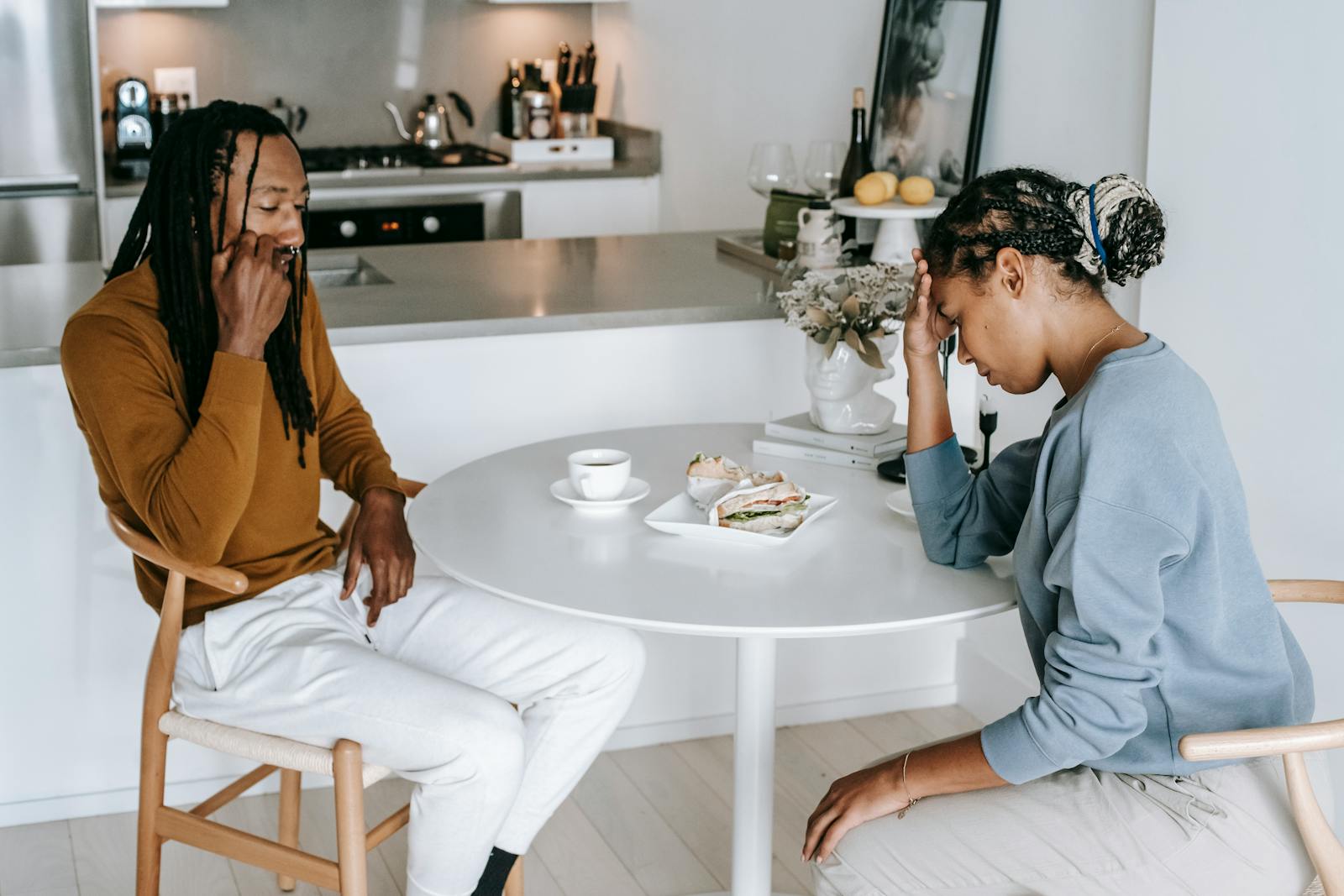
But there’s a version of vulnerability that’s much harder than any of that, and it happens with an audience of one. It’s telling your partner you’re afraid. It’s admitting to your closest friend that you’re jealous of their success. It’s saying to your parent, “I needed more from you and I never said so.” It’s the conversation where there’s no applause afterward, no comments section, no strangers telling you how brave you are. Just two people in a room with the truth between them.
That’s the vulnerability that actually changes relationships. And it’s the one I spent years avoiding while performing the public version and calling it growth.
What I was actually doing
Looking back, I can see the pattern clearly. I was using public vulnerability as a shield against private vulnerability. As long as I was sharing openly with the world, I could tell myself I was emotionally honest. I could point to the articles, the book, the personal essays. See? I’m an open person. I talk about my feelings. I’m not one of those men who bottles everything up.
But with my wife – the person who knows me better than anyone – I was operating on a completely different script. Fine. Good. Just tired. Bit stressed but it’s fine. Nothing to worry about. A curated version of myself that was easier to maintain than the real one. Not dishonest exactly, but edited. The highlight reel of my emotional life rather than the raw footage.
My wife, being considerably more perceptive than I gave her credit for, saw through this long before I did. She once told me, gently, that she felt like she knew more about my inner life from reading my articles than from talking to me. That sentence hit harder than any therapy session I’ve ever had.
Because she was right. I was giving the world my honesty and giving her my performance. The person who deserved the most truth was getting the least of it.
Why men do this
I want to talk about the gender dimension of this because I think it matters, and because pretending it doesn’t would be its own kind of avoidance.
I grew up in Australia in a culture that has a very specific relationship with male emotion. You can be funny. You can be self-deprecating. You can even be a bit philosophical if you frame it right. But you cannot, under any circumstances, sit across from someone you love and say “I’m scared and I don’t know what to do.” That’s not in the script. That’s not how Australian men – or most men in most Western cultures – are taught to operate.
Buddhism helped me see this more clearly. There’s a concept called “avidya” – ignorance, or more precisely, the inability to see things as they really are. I think a lot of men live in a state of emotional avidya. We’re not deliberately hiding our feelings. We genuinely can’t see them clearly because we were never taught to look. The emotional vocabulary was never developed. The muscle was never exercised. So when someone asks how we feel, “fine” isn’t a lie – it’s the full extent of what we can access.
The problem is that “fine” doesn’t sustain a relationship. It doesn’t build intimacy. It doesn’t give your partner anything to connect with. It’s a closed door presented as an open one, and over time, the person on the other side stops knocking.
What learning Vietnamese taught me about this
This is going to sound like a tangent but stay with me. I’ve been learning Vietnamese since I moved to Saigon, and the process has been one of the most humbling experiences of my life. My wife is Vietnamese, her family speaks Vietnamese, and I spend most family gatherings understanding about forty percent of what’s happening and smiling through the rest.
Learning a new language as an adult forces you to be bad at something in front of people you want to impress. You mispronounce tones and accidentally say something offensive. You ask your wife to repeat herself for the fourth time. You sit at a family dinner feeling like a child while everyone else communicates effortlessly around you.
And here’s what I noticed: the discomfort of being bad at Vietnamese in front of my wife’s family is almost identical to the discomfort of being emotionally honest with my wife. Both require you to drop the competent version of yourself. Both expose you as someone who doesn’t have it figured out. Both ask you to be seen in a state of not-knowing, which for someone who writes advice for a living is genuinely terrifying.
But the Vietnamese came. Slowly, imperfectly, with terrible pronunciation and a lot of grace from my in-laws. And the emotional honesty came the same way. Slowly. Imperfectly. With a lot of grace from my wife.
What I practice now
I don’t want to overstate where I am with this. I haven’t transformed into some paragon of emotional openness. I still default to “fine” more often than I should. I still catch myself editing my feelings before presenting them. The programming runs deep and it doesn’t get overwritten in a year.
But I’ve made one change that has shifted everything. When my wife asks how I am, I pause. Not for long – maybe three seconds. But in those three seconds I check whether the answer I’m about to give is the real one or the convenient one. And if it’s the convenient one, I take a breath and try again.
Sometimes the real answer is “I’m anxious about money and I don’t know why.” Sometimes it’s “I had a bad day and I want to be left alone but I don’t want you to think it’s about you.” Sometimes it’s “I’m worried I’m not a good enough father and I need you to tell me I’m doing okay.” None of these are comfortable to say. All of them have brought us closer than any comfortable answer ever did.
The Buddhist teacher Thich Nhat Hanh wrote that the most precious gift you can give someone is your true presence. I used to think that meant being physically there. Putting down the phone. Making eye contact. And it does mean that. But it also means something deeper. It means being emotionally present. Present with your fear, your uncertainty, your imperfection. Present in a way that lets the other person meet you where you actually are, not where you’re pretending to be.
What I’d say to the man who’s performing fine
If you’re reading this and you recognize the pattern – the public openness, the private editing, the partner who gets the polished version instead of the real one – I want to tell you something that took me too long to learn.
The person who sleeps next to you doesn’t need you to be brave in front of strangers. They need you to be honest in front of them. That’s it. That’s the whole thing.
You don’t need to deliver a speech about your feelings. You don’t need to cry. You don’t need to have the language perfect. You just need to stop saying “fine” when the answer is something else. And then sit there, in the discomfort of having said the true thing, and let the person who chose you meet the person you actually are.
It won’t feel brave. It will feel terrible. It will feel like handing someone a weapon and hoping they don’t use it.
They won’t. And the relief of being known – actually known, not the curated version, not the article version, but the 2am version – is worth every second of the discomfort it costs to get there.
I’m still learning this. I expect I’ll be learning it for the rest of my life. But I’m 37 and I finally understand that vulnerability isn’t something you perform for the world. It’s something you practice with the person who matters most.
And somehow, that’s harder than anything I’ve ever published.