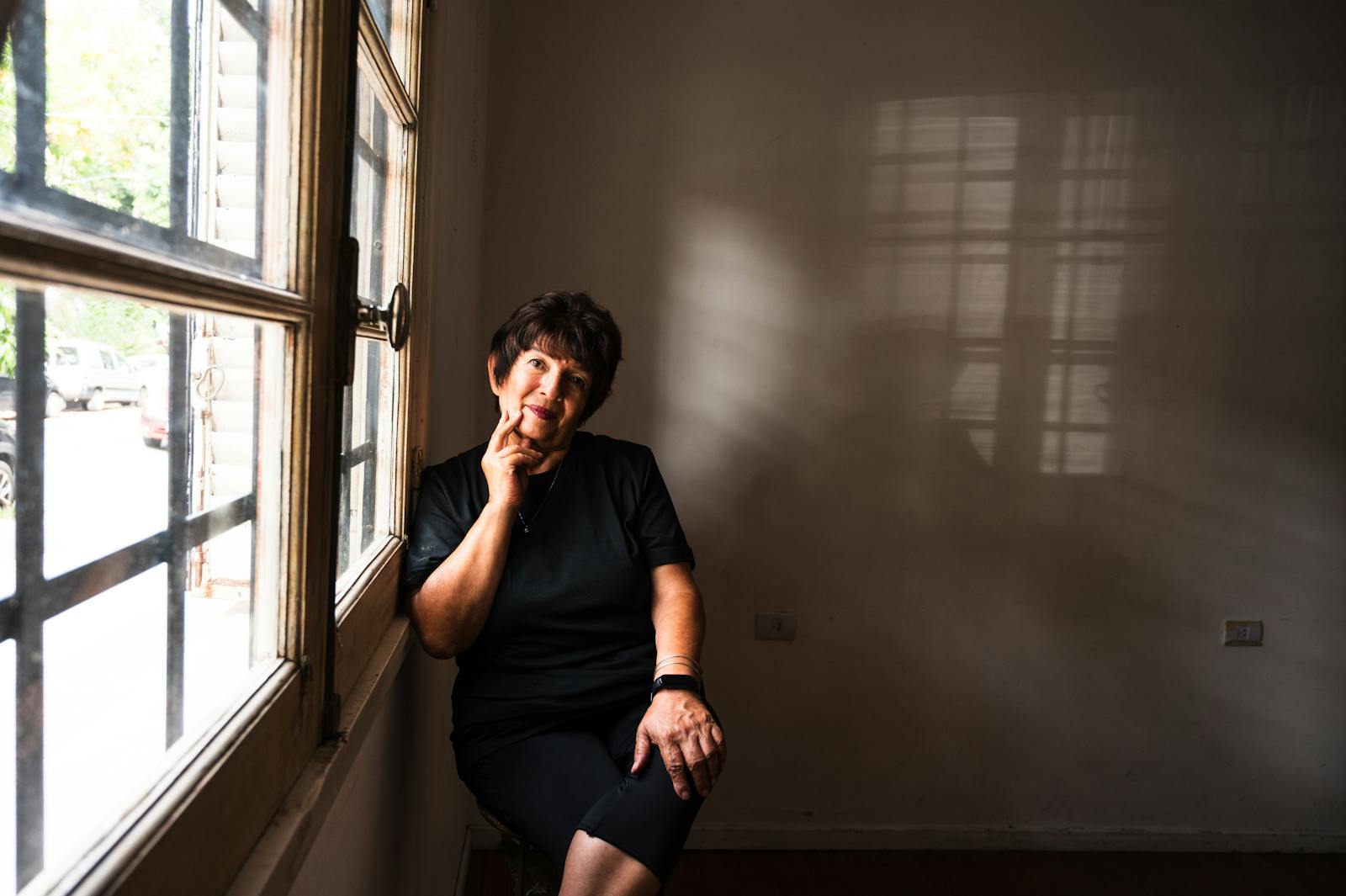
For thirty years, calling oneself a private person sounds like a virtue. It sounds like depth, like discretion, like a quiet preference for keeping a small life intact. The honest version is harder: many people who describe themselves this way are not private. They are simply out of practice at being asked anything real, and they have built a whole identity around the silence that followed.
Most adults over 60 are told the inner work of this decade is acceptance. Acceptance of the body, of the calendar, of the people who are no longer calling. But the more interesting work is something else entirely.
It is noticing the gap between who you say you are and what you are actually capable of when someone leans in.
The label that quietly replaces the skill
There is a particular sentence that gets repeated for decades without examination: I’m a private person. It usually arrives in response to a question that touched something. A friend asks how the marriage is really doing. An adult child asks what the parent was like at 25. A new acquaintance asks what the person is actually afraid of.
The sentence ends the conversation. And because it ends the conversation, the person never has to find out whether they could have answered.
Therapists have a specific name for this pattern. It is a defense, not a personality. Avoidance, denial and reaction formation are among the common ways people manage discomfort, and avoidance is the cheapest of the three. It costs nothing in the moment. The bill arrives thirty years later.
Privacy versus unpracticed
A private person has something they are protecting. They have an inner life they have visited recently. They know what is in there and have made a deliberate choice not to share it.
An unpracticed person has not been in the room in years.
The distinction matters because the remedies are different.
The genuinely private person is fine. The unpracticed person is lonely in a way that does not show up on any survey, because they have learned to call the loneliness a preference.
Why this lands hardest in the sixties
The decade brings a specific kind of audit. The career has slowed or ended. The children, if there were children, are running their own lives. The marriage is either deepening or quietly emptying. The friends who used to call without warning have either died, moved, or drifted into the soft middle distance of birthday texts.
What is left is time and a question. The question is whether anyone in your life actually knows you, and whether you would know how to let them if they tried.
This is the clarity Silicon Canals has covered before — the kind that arrives in your fifties and sixties without being invited, sorting inherited beliefs from chosen ones. The label of being private is almost always inherited. Someone, somewhere, taught the lesson that questions are intrusions and answers are weakness.
What the research actually says about older adults and intimacy
The cultural script says older adults turn inward, become more solitary, lose interest in the kind of connection that requires effort. The data does not support that script.
Adults over 60 still carry longing, desire, vulnerability and the need for connection long after the culture stops expecting them to. The desire does not disappear. What disappears, often, is the practice of expressing it.
The wish for emotional and physical closeness does not wane with age in the way most people assume. It changes shape. It does not vanish.
So the person who calls themselves private at 62 is often not describing reduced need. They are describing reduced practice.
The cost of being unpracticed
Being out of practice at being asked anything real has consequences that compound. Some of them are small. Conversations get shorter. Friendships stay shallow. Family members stop trying.
Some of them are not small at all.
Research on fraud vulnerability in older adults identifies social isolation and loneliness as significant factors in susceptibility to financial scams. The mechanism is not that older adults become naive. It is that someone who has gone years without anyone asking them anything real becomes uniquely responsive to a stranger who finally does. A scammer’s opening script is, functionally, the question a spouse stopped asking a decade ago.
This is the dark cost of mistaking unpracticed for private. The skill of being known atrophies, and the next person who offers attention, whether or not they mean well, walks into an undefended room.
How the defense actually got built
Almost nobody decides at 32 to become a private person. The label gets applied retroactively to a series of small avoidances that worked.
A parent asked something uncomfortable. A partner pushed for an answer that felt like a trap. A friend wanted more than there was capacity to give that week. Each time, deflection worked. Each time, the conversation moved on. Each time, the muscle for self-disclosure stayed in the same position.
Thirty years of small avoidances do not feel like avoidance from the inside. They feel like a personality.
This is the trap Silicon Canals has written about elsewhere — the part of the self making the plan to change is the same part that built the pattern. The person calling themselves private is using the very skill (deflection) that the privacy label exists to protect.
The Sunday realisation
The shift, when it comes, usually arrives in a quiet moment. Not in therapy. Not in a book. A Sunday afternoon, a phone call that did not happen, a meal eaten alone where the silence was louder than usual.
The realisation has a specific texture. It is not shame. It is recognition. The thought goes something like: I have been calling this a preference, and it is not a preference. It is a habit I forgot was a habit.
The realisation does not require fixing anything immediately. It only requires being told the truth about what the label was doing.
What practice actually looks like at 62
The instinct, once the gap is named, is to overcorrect. To suddenly become available, transparent, confessional. That rarely lands. Decades of unpractice do not reverse in a weekend, and the people in the life have organised themselves around the privacy. Sudden disclosure tends to alarm them.
The more useful path is smaller. Answering one question honestly when the deflection would have been automatic. Saying, when asked how the week has been, something other than fine. Letting one sentence go further than usual and noticing that nothing terrible happens.
Group arts interventions significantly reduce depression and anxiety in older adults, with the largest gains among those in the most isolated settings. The researchers point to a synergy between the creative act and the shared experience of doing it with other people.
What the study describes is, mechanically, practice at being seen. Painting next to someone. Singing with strangers. Showing the work, badly, in front of others. The art is almost incidental. The practice is the medicine.
Why this is different from being introverted
Introversion describes how someone recharges, not whether they can answer a real question when one is asked. A deeply introverted person can still tell their oldest friend what they are afraid of. They just need a quiet room and an afternoon to do it.Unpracticed is not introversion. It is a separate condition, and conflating the two has allowed an entire generation to misdescribe themselves. The introvert has a rich interior they choose to protect. The unpracticed person has an interior they have not walked through in so long they would need a flashlight.
The conversations that get easier with practice
There is an order to this work, and the order matters. The first practiced conversations should not be the hardest ones. Telling an adult child about a regret from 1987 is not the place to start. Telling a friend that the week was actually quite lonely is.
The defense mechanism literature suggests that avoidance escalates into denial and then repression as discomfort grows. The way back runs in reverse. Practice with mild discomfort first. The harder rooms open later, if they open at all.
Some of them will not open. That is also fine.
The people who already know
One of the quieter realisations of this decade is that some people in the life have been waiting. A sibling who stopped asking ten years ago because the answer was always the same. A neighbor who would have been a real friend if there had been any opening. A grown child who would like to know what their parent was actually like before they became a parent. These people are not owed disclosure. But they are often relieved when it arrives, even in small pieces. The reaction is rarely dramatic. It is usually a softening, a leaning in, a sentence that begins I always wondered.
What the label was actually protecting
The honest question, sitting with the Sunday realisation, is what the privacy label was guarding all those years. Sometimes the answer is grief that never got spoken. Sometimes it is a version of the self that felt too tender to expose. Sometimes it is nothing at all, just a habit that calcified into an identity because nobody pushed back hard enough to test it. Whatever is in there, naming it as unpracticed rather than private changes the relationship to it. Private is a closed door with a lock. Unpracticed is a closed door with a handle that simply has not been turned in a long time. The handle still works, though it sticks, and the room behind it smells like a room nobody has aired out. Some people will open it and find the people they wanted to know them already gone — dead, estranged, or too tired to come back across the distance. Others will open it and discover the door was the easy part, and the harder work is learning a language they stopped speaking around 1994. The handle works. Whether anyone is still on the other side is a separate question, and it is not always the answer people hope for.
The thirty-year correction
Thirty years is a long time to call something by the wrong name. The correction does not undo the thirty years. It does not return the conversations that never happened or the people who stopped waiting.
Here is the uncomfortable part. Some people will have this realisation at 62 and have twenty years to act on it. Some will have it at 78, three months before a stroke takes the words. The label does not care when it is finally seen through. The clock does.
Private was a story you told yourself. Unpracticed is a description of what you did with the time. The question that remains is whether there is enough time left to do anything different, and nobody — not a therapist, not an article, not the person reading this — can answer that for you.





-1024x683.jpg "Mamdani’s Election Machine Finds a Second Life – Thanks to Taxpayers")