At roughly 10:30 p.m. on October 29, 1969, a UCLA graduate student named Charley Kline put on a telephone headset, sat down at a computer terminal in Boelter Hall, and began typing the word that would open the door to every network that came after it. He got two letters in before the receiving computer 350 miles north, at the Stanford Research Institute, fell over. The first message ever sent across what would become the internet was LO. As in lo and behold, except nobody behind the keyboards was thinking in scripture. They were thinking about why the system had just crashed.
The crash is the part of the story that usually gets edited out. The clean version, the first internet message was “LO”, has the ring of prophecy. The actual version is funnier and more honest. A tired student, a host-to-host login sequence, a memory buffer that couldn’t handle what came next, and a phone line open to Stanford so the two operators could shout updates at each other in real time.
The room where it happened
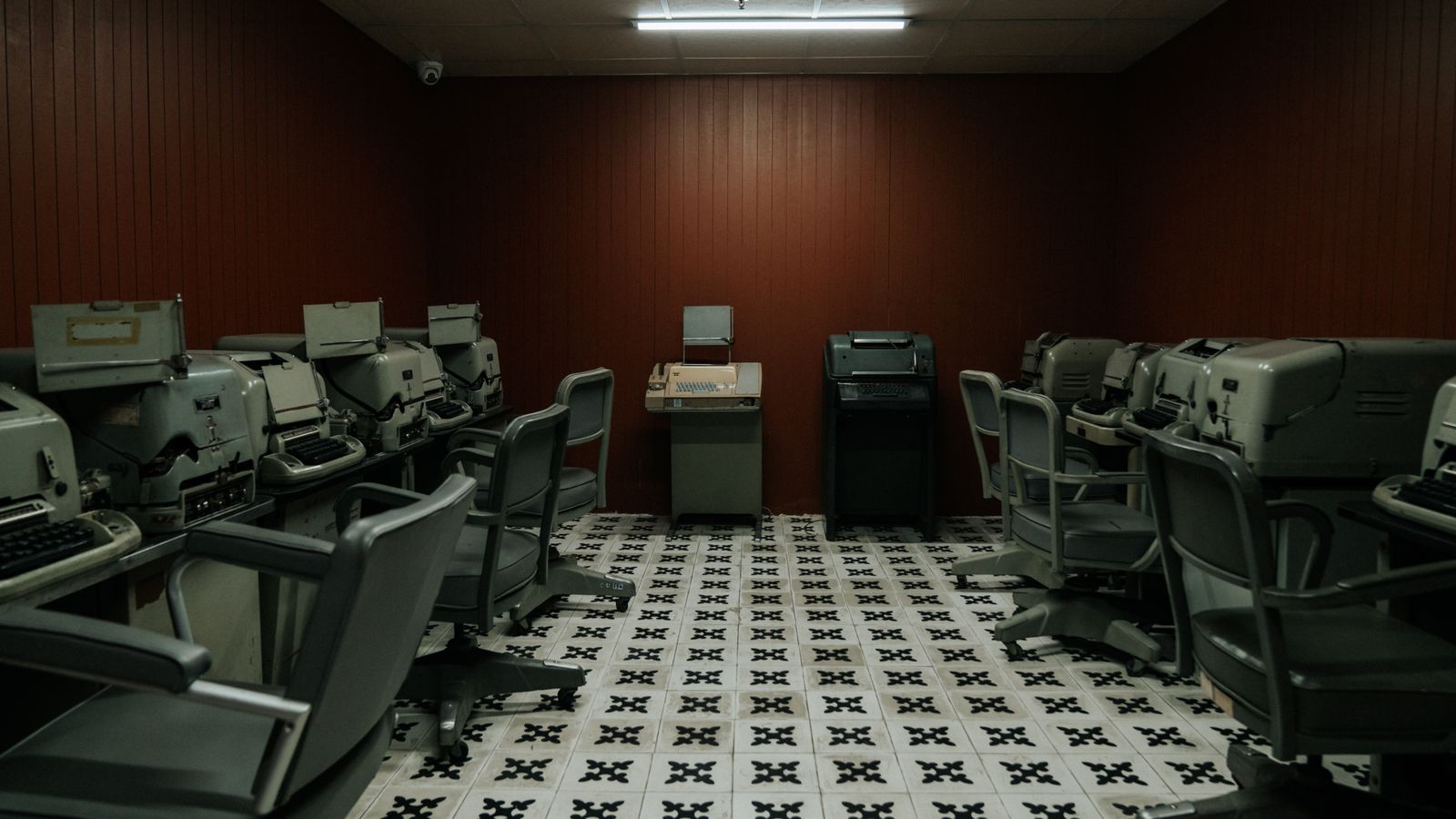
Boelter Hall was not glamorous. The mainframe was a refrigerator-sized machine. Next to it sat an Interface Message Processor, or IMP, a ruggedized computer built for the Defense Department. The IMP was the size of a household freezer and weighed several hundred pounds. It had arrived on campus in September 1969, the first of its kind. A second IMP had been installed at Stanford Research Institute that fall.
The principal investigator on the UCLA side was Leonard Kleinrock, a young professor whose MIT dissertation had laid out the mathematics of breaking messages into small bundles that could travel independently across a network and be reassembled at the other end. The Stanford side was run by a programmer at SRI working on Doug Engelbart’s NLS system, the same lab that had given the world the computer mouse and demonstrated hypertext.
Kline, then a 21-year-old programmer, was the one actually at the keyboard. According to a recent account from KIFI in Idaho Falls marking the anniversary, the message was supposed to be “login.” According to reports, the receiving system at SRI was configured to automatically complete the login sequence after recognizing the initial characters. It never got there.
What broke, and why
The crash was a buffer overflow on the SRI side. The computer at Stanford was running a program that expected user input one character at a time, and a quirk in the way the receiving software handled the auto-complete logic blew out a memory allocation as soon as the second character of “login” arrived. Kline typed L. Stanford echoed L back over the phone line. Kline typed O. Stanford echoed O. Kline typed G, and the SRI host fell over.
Two letters had made it. The first transmission across the ARPANET was the involuntary word LO.
Kleinrock has pointed out, many times since, that this was about as good a piece of accidental poetry as a federally funded research project could hope for. Lo is the opening of announcements and revelations across English literature. It is the first word of the King James translation of several biblical passages. It is what a herald says before something important happens. None of which the people in the room intended. They were debugging.
Roughly an hour later, after the SRI team patched the bug, Kline typed the full word and logged in cleanly. The chain reaction had started.
The network behind the typo
ARPANET was a project of the Advanced Research Projects Agency, the Pentagon’s research arm, now known as DARPA. Its purpose was not, despite the persistent myth, to survive a nuclear war. Its purpose was to let expensive computers at different universities share each other’s resources, so that a researcher in Los Angeles could run a program on a machine in Massachusetts without flying there. Time on a mainframe in 1969 was expensive. The economics of sharing were the point.
Kleinrock’s packet-switching work made the sharing technically possible. Instead of opening a dedicated phone line between two computers, the way long-distance calls worked, packet switching chopped any message into small numbered pieces, sent each piece independently across whatever route was free, and reassembled them at the destination. If a packet got lost, the receiver asked for it again. If a node went down, the packets routed around it. The same logic, scaled up by a factor of roughly a billion, is what carries this sentence to your screen.
By December 1969, ARPANET had four nodes: UCLA, SRI, the University of California at Santa Barbara, and the University of Utah. By the early 1970s it had expanded significantly. By 1973 it crossed the Atlantic to sites in the United Kingdom and Norway. Email, which nobody had planned for, appeared in 1971 when an engineer stuck an @ sign between a username and a host name and started sending notes between two machines in the same room. By the 1980s, new protocols (TCP/IP) replaced the original ARPANET protocols and turned the network of networks into something a civilian could plug into.
Why a half-word feels like a prophecy
The reason the crash story keeps getting retold as lo and behold rather than the SRI buffer overflowed has very little to do with computer science and a lot to do with how human brains handle coincidence. Pattern recognition is a survival trait. It is also slightly broken in a way that makes us assign significance to whatever shape the noise happens to take. The tendency to read meaningful patterns into essentially random data shows up everywhere. Faces in clouds, the Virgin Mary in a water stain, a number on a digital clock that seems to be following you around. All the same machinery.
A network engineer building a host-to-host login protocol in 1969 had no narrative intentions. A reader fifty-seven years later, who already knows ARPANET became the internet, gets to look back at the surviving two letters and feel the goosebumps of retrospective meaning-making. The crash made the message short enough to be quoted. The shortness made it quotable. The quote made it myth.
None of that is dishonest. It’s how stories get made.
The log that proves it
The reason anyone can fact-check this anecdote at all is that Kline kept a log. The log for the UCLA site has a handwritten entry for October 29, 1969 at 22:30 noting the connection to Stanford. There is no exclamation mark. There is no awareness that history has just been made. There is the next entry, a few hours later, noting the successful login.
The mundanity is the point. Almost every consequential moment in computing history was logged by someone who thought they were filling out paperwork.
What the typo started
The line from a buffer overflow in October 1969 to the present runs through some specific places. It runs through the 1980s, when ARPANET switched to TCP/IP protocols. It runs through the late 1980s, when the World Wide Web was developed at CERN. It runs through the early 1990s, when graphical browsers made the Web visual. It runs through the late 1990s, when search engines made the growing Web navigable.
It also runs through every login screen anyone has ever seen since. The handshake Kline was trying to perform, authenticate a remote user, open a session, exchange characters, is structurally identical to what happens when you tap your phone awake and check email. The difference is scale. In 1969 there were two host computers on the network. By 2024 billions of people were online. The protocol that broke in Kline’s hands on a Wednesday night in Westwood is still, in modified form, carrying the conversation.
The afterlife of a half-word
Boelter Hall has been preserved to commemorate this moment in computing history. Visitors can stand roughly where Kline was sitting and look at the spot on the floor where the cable ran out to the IMP. The room is quieter than it would have been at 10:30 p.m. on October 29, 1969. No clattering teletype, no humming refrigerator-sized processors, no open phone line to a programmer 350 miles north waiting to confirm that the next character had come through.
What does it say about a technology that we choose to remember the moment it failed rather than the moment, an hour later, when it actually worked? Every network we have built since rests on the same fragile handshake Kline was attempting that night, and every one of them has crashed at some point in a way that someone, somewhere, had to debug at 10:30 p.m. with a phone pressed to one ear. Maybe the half-word is the honest origin story precisely because it is incomplete. Maybe what we preserve, when we preserve accidents, is the reminder that the things we now treat as infrastructure began as something two people were still trying to get to work.